 Firearms Republic
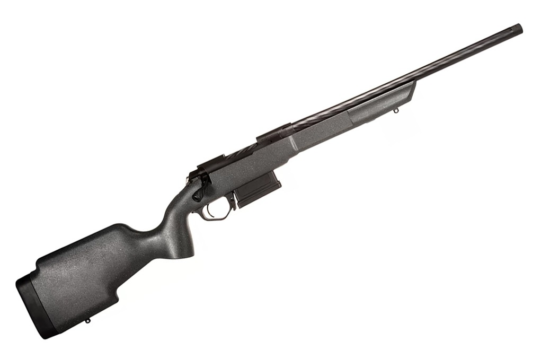
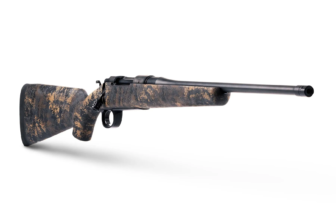
The Taurus Expedition 6.5 Creedmoor is a bold move from a brand better known for handguns. Taurus is entering the bolt-action market with a rifle built on the Remington 700 footprint – the broadest aftermarket ecosystem in bolt-action history – at a street price of $499–$599. That’s an interesting proposition. The adjustable cheek riser, threaded barrel, and cold hammer forged barrel are genuine features at this price tier. The question isn’t whether the specs look good on paper – they do. The question is whether Taurus can deliver on them.
| Specification | Details |
|---|---|
| Barrel Length | 22″ |
| Barrel Twist | 1:8 |
| Barrel Contour | Sporter |
| Weight | 6.8 lbs |
| Trigger | Adjustable 2.5–5 lbs, factory ~3.5 lbs |
| Magazine | Detachable box, 5 rounds |
| MSRP | $699 |
| Street Price | $499–$599 |
| Stock | Synthetic, adjustable cheek riser |
| Threaded Barrel | Yes – 5/8×24 |
| Action | 2-lug, Remington 700 footprint, 90-degree bolt lift |
| Finish | Matte black |
| Scope Base | Drilled and tapped; Picatinny bases available |
Quick Verdict – Is It Worth Your Money?
✓ Best for: Budget hunters who want the Rem 700 aftermarket ecosystem under $600
✓ Price: $499–$599 street
✓ Key strength: Remington 700 footprint with adjustable cheek riser at this price tier
✗ Not ideal for: Buyers who need a proven, long-term platform with established reliability data
Real-World Performance on Paper and in the Field
The Taurus Expedition 6.5 Creedmoor runs a 22″ cold hammer forged barrel with a 1:8 twist – the right combination for stabilizing 140–147gr projectiles, which is where 6.5 Creedmoor really performs. Hornady 143gr ELD-X clocks around 2,700 fps from this barrel, generating roughly 2,315 ft-lbs at the muzzle, and the 140gr ELD-M pushes closer to 2,750 fps. Early independent testing shows groups running 0.8–1.2 MOA, which is honest budget bolt-action territory – not a sub-MOA guarantee, but consistent enough for hunting applications out to 500 yards with a quality optic. At 6.8 lbs, the rifle manages the approximately 11 ft-lbs of 6.5 CM recoil comfortably. The cold hammer forged barrel is the real confidence builder here – it should deliver consistent rifling quality across the production run, though long-term barrel life data is still accumulating given how new this platform is to market.
Applications & Use Cases – Hunting and Beyond
Deer hunting is the primary use case, and the Taurus Expedition 6.5 Creedmoor handles it well. The 143gr ELD-X at 2,700 fps is a proven deer load, and 500-yard shots are realistic with a solid 4–12x optic. The 6.8 lb weight is manageable in a blind or from a tripod, though it’s not a mountain rifle. For elk at moderate range – inside 400 yards – the 6.5 CM cartridge is adequate with proper bullet selection, and the Expedition delivers the velocity needed for reliable terminal performance. Suppressor hosting is a legitimate use case here: the factory 5/8×24 thread pitch is ready to go without an adapter, making this one of the more suppressor-friendly options at sub-$600. For a first bolt-action, the Expedition’s Rem 700 footprint means a buyer isn’t locked into a dead-end platform – they can upgrade the trigger, stock, or chassis as budget allows, which is a meaningful long-term advantage over proprietary-footprint competitors at this price.
Ergonomics & Handling – How It Feels to Shoot
The synthetic stock is functional rather than impressive, but the adjustable cheek riser is a genuine differentiator at this price – most competitors at $499–$599 offer fixed combs, which creates eye alignment problems when adding taller optics. The 90-degree bolt lift is the one ergonomic compromise worth noting; it’s smooth enough for hunting cadence but slower than the 60-degree lifts found on higher-end actions. At 43″ overall length, the rifle balances reasonably well, though the 6.8 lb weight is noticeable compared to the Ruger American Gen II 6.5 Creedmoor at 6.3 lbs – half a pound matters after a long pack-out. The 5-round detachable magazine feeds reliably and offers more capacity than most competitors at this tier, though it’s not AICS compatible, which limits magazine sourcing options.
Aftermarket & Upgrade Path – The Rem 700 Advantage
The Remington 700 footprint is the single biggest reason to consider the Taurus Expedition 6.5 Creedmoor over similarly priced competitors. The trigger upgrades alone – TriggerTech Rem 700 at $130 or Timney 510 at $195 – are proven drop-in options that transform the shooting experience. Stock options include the Magpul Hunter 700 at $275 and the MDT LSS-XL chassis at $450, which would convert this into a genuine precision platform. Picatinny bases run around $30, and a Vortex Crossfire II 4–12×44 at $200 is a natural optic pairing – putting a complete, suppressor-ready hunting setup at roughly $779. One important caveat: confirm specific Rem 700 compatibility before ordering stocks, as new-brand actions occasionally have dimensional variations that affect fitment. The factory trigger adjusts down to 2.5 lbs – start there before spending money on aftermarket parts.
Pros & Cons – Honest Breakdown at This Price
Strengths:
✓ Remington 700 footprint – widest aftermarket in bolt-action at sub-$600
✓ Adjustable cheek riser standard – unusual feature at this price tier
✓ Factory-threaded 5/8×24 – suppressor-ready with no adapter cost
✓ 5-round detachable magazine – higher capacity than most budget competitors
✓ Cold hammer forged barrel – consistent rifling quality
✓ Adjustable trigger 2.5–5 lbs – tunable without aftermarket spend
✓ Taurus lifetime warranty – manufacturer standing behind the product
✓ 6.5 CM ballistics – 2,700 fps with 143gr ELD-X from 22″ barrel
Limitations:
✗ 6.8 lbs – heavier than Ruger American Gen II (6.3 lbs) at similar price
✗ New brand in bolt-actions – limited long-term reliability data available
✗ Factory trigger at 3.5 lbs – functional but not refined; needs adjustment
✗ Magazine NOT AICS compatible – proprietary footprint limits sourcing
✗ No printed sub-MOA accuracy guarantee – 0.8–1.2 MOA is budget-tier honest
✗ Limited dealer network – difficult to evaluate in-store before purchase
✗ Unknown resale value – new brand, uncertain depreciation curve
Competitors & Alternatives – How It Stacks Up
| Feature | Taurus Expedition | Ruger American Gen II | CVA Cascade | Mossberg Patriot |
|---|---|---|---|---|
| Price | $499–$599 | $649 | $549 | $449 |
| Weight | 6.8 lbs | 6.3 lbs | 6.9 lbs | 6.5 lbs |
| Trigger | 3.5 lbs adj. | Marksman adj. | 3.0 lbs adj. | 3.0–7.0 lbs |
| Magazine | Proprietary 5-rd | AICS 10-rd | AICS 4-rd | Internal 5-rd |
| Accuracy | 0.8–1.2 MOA | 0.75–1.0 MOA | 0.75–1.0 MOA | 1.0–1.5 MOA |
The Ruger American Gen II 6.5 Creedmoor is the safer buy at this tier – AICS magazine compatibility, lighter weight, and a more refined trigger make it the proven choice, though it costs $50–$150 more and lacks the Rem 700 footprint. The CVA Cascade 6.5 Creedmoor is a close price competitor with AICS magazine compatibility, but again, no Rem 700 footprint. The Mossberg Patriot Predator 6.5 Creedmoor undercuts on price but uses an internal magazine and offers no real upgrade path. The Taurus wins specifically on the Rem 700 footprint argument – no other rifle at this price delivers that ecosystem access.
Who Should Buy This Rifle – and Who Shouldn’t
Ideal for the budget hunter who wants the Rem 700 aftermarket ecosystem without spending $900–$1,200 for a Bergara or Tikka – the Expedition gets you into that upgrade path for $499. Also a strong fit for buyers who want a suppressor-ready host at minimum entry cost, or hunters who appreciate the adjustable cheek riser for optic height management. Look elsewhere if you need a proven, long-term platform with years of documented reliability – the Ruger American Gen II 6.5 Creedmoor is the safer choice. If AICS magazine compatibility matters to your existing gear setup, the CVA Cascade 6.5 Creedmoor is the better fit.
Frequently Asked Questions About the Expedition
Q: Is the Taurus Expedition magazine AICS compatible?
A: No – it uses a proprietary Rem 700-style detachable box magazine. AICS magazines will not fit.
Q: What is the factory trigger pull weight?
A: Factory ships at approximately 3.5 lbs. It’s user-adjustable from 2.5–5 lbs without tools.
Q: Will Remington 700 stocks fit the Expedition?
A: Generally yes, but confirm dimensional compatibility before ordering – new-brand actions can have minor variations.
Q: Is the barrel threaded from the factory?
A: Yes – 5/8×24 thread pitch, compatible with standard .264 caliber suppressors and muzzle devices.
Q: What accuracy can I expect?
A: Early testing shows 0.8–1.2 MOA with quality ammunition – honest budget bolt-action performance.
Q: Does Taurus offer a warranty on the Expedition?
A: Yes – Taurus provides a lifetime warranty on the Expedition, consistent with their handgun warranty policy.
Final Verdict – Budget Bolt-Action Worth Considering
The Taurus Expedition 6.5 Creedmoor is a legitimate option for budget hunters who want the Rem 700 aftermarket ecosystem at sub-$600 – that’s a real differentiator no competitor at this price matches. The adjustable cheek riser and factory-threaded barrel add practical value. The unknowns are real: limited reliability data, uncertain resale value, and a brand still proving itself in long guns. If you’re willing to be an early adopter, the upgrade path is wider than anything else at this price.
The Taurus Expedition sits at an interesting crossroads – it offers genuine features that matter to practical hunters and future-minded buyers, wrapped in the uncertainty of a new brand in an established market. The Rem 700 footprint is a compelling argument at $499–$599, and the adjustable cheek riser and threaded barrel are real-world benefits, not spec-sheet filler. Buyers who need certainty should look at the Ruger American Gen II or CVA Cascade. Buyers who want the broadest upgrade path at the lowest entry cost have a reason to take the Expedition seriously.