
 Firearms Republic
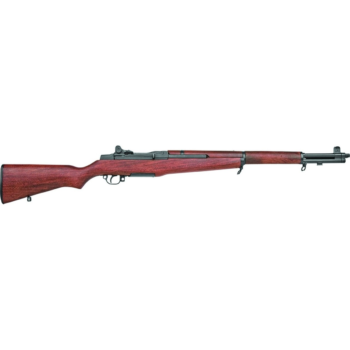
The M1 Garand remains the only US military service rifle a civilian can still buy directly from a government program, and that alone makes it worth understanding before you spend $700–$2,500 on one. Chambered in .30-06 Springfield, this 9.5 lb semi-auto with its iconic 8-round en-bloc clip isn’t built for hunting or precision shooting – it’s built for history. Whether sourced through CMP or the commercial market, this is a rifle that demands respect for its limitations and its legacy.
Specifications
| Specification | Details |
|---|---|
| Barrel Length | 24″ |
| Barrel Twist | 1:10 |
| Barrel Contour | Standard M1 profile |
| Weight | 9.5 lbs |
| Trigger | Two-stage military pattern, 5.5–6.5 lbs |
| Magazine | 8-round en-bloc clip (not detachable) |
| MSRP | N/A (surplus/CMP pricing) |
| Street Price | $700–$2,500 |
| Stock | American walnut (original) or composite (newer builds) |
| Threaded Barrel | No |
| Action | Semi-automatic, direct gas piston (operating rod), rotating bolt |
| Finish | Parkerized (military) or blued (commercial) |
| Scope Base | None standard |
Quick Verdict
✓ Best for: CMP competition, historical collecting, living history events
✓ Price: $700–$2,500 depending on grade
✓ Key strength: Genuine US military surplus history with functional accuracy
✗ Not ideal for: Hunting or modern precision shooting applications

Real-World Performance
The 24″ barrel with 1:10 twist was designed around 150–172gr military ball ammunition, and it still performs best there. A M1 Garand 30-06 Springfield shooting Federal 168gr Gold Medal Match – the reference Garand-safe load – typically groups 1.0–2.0 MOA depending on individual rifle condition, bore wear, and whether the gas system has been properly maintained. Hornady’s 150gr FMJBT runs around 2,880 fps and tends to shoot flatter and more consistently in rifles with looser tolerances. National Match-prepped M1 Garand 30-06 Springfield rifles, with tightened op-rods and properly bedded stocks, can tighten that down to 0.7–1.0 MOA, which is genuinely impressive for a 80-year-old military design. Effective range with iron sights realistically sits around 300 yards for most shooters, though the rifle is mechanically capable of more. What matters most here is ammunition selection – modern 180gr+ magnum-pressure loads can bend or damage the operating rod, so shooters need to stick to standard-pressure loads under 47,500 psi. This isn’t a rifle you feed whatever’s on the shelf; it’s a rifle you feed deliberately.

Applications & Use Cases
CMP Competition: The M1 Garand Match is a dedicated event, and shooting your own CMP-purchased rifle in it is part of the appeal. Verdict: this is the rifle’s home turf.
Historical Collecting: Every CMP-sourced M1 Garand 30-06 Springfield carries genuine service history, often traceable by serial number to specific arsenals and eras. Verdict: irreplaceable for collectors who value provenance over ballistic performance.
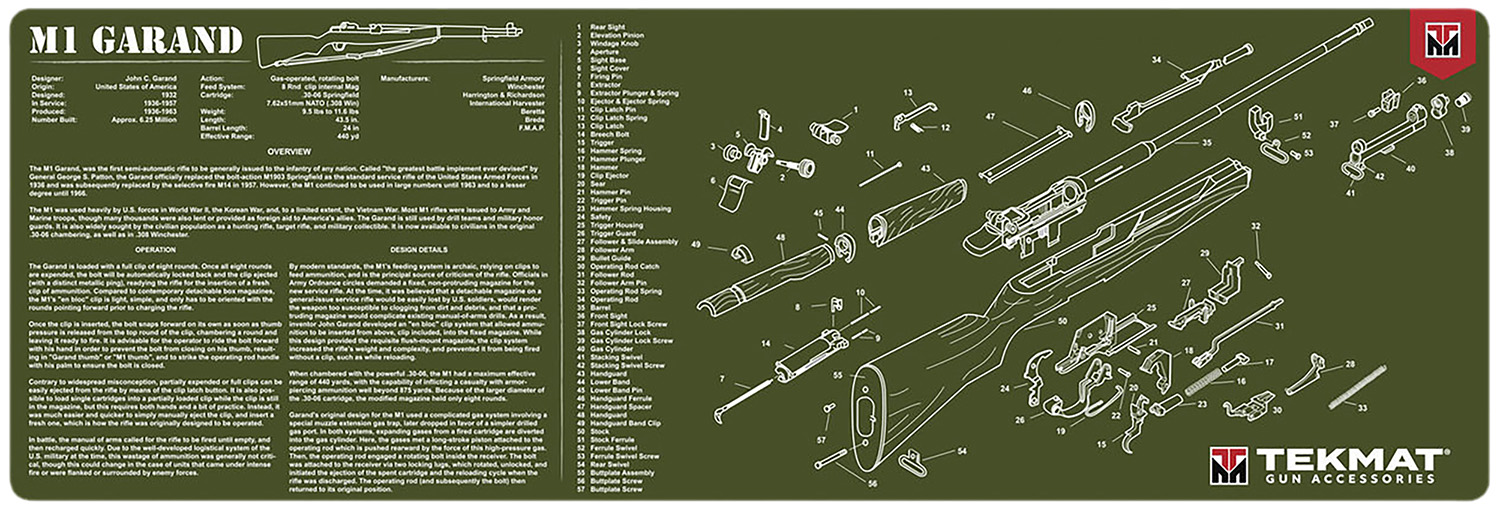
Living History and Re-enactment: The manual of arms, the en-bloc clip loading, and the distinctive “ping” on the last round out make this rifle central to WWII and Korea reenactment circles. Verdict: no substitute exists for the real experience.
Hunting: At 9.5 lbs unloaded, this is the heaviest rifle most shooters will ever carry afield, and the 8-round capacity with a slow reload (compared to detachable box magazines) doesn’t help. Verdict: technically capable in .30-06, but impractical compared to modern hunting rifles.
Ergonomics & Handling
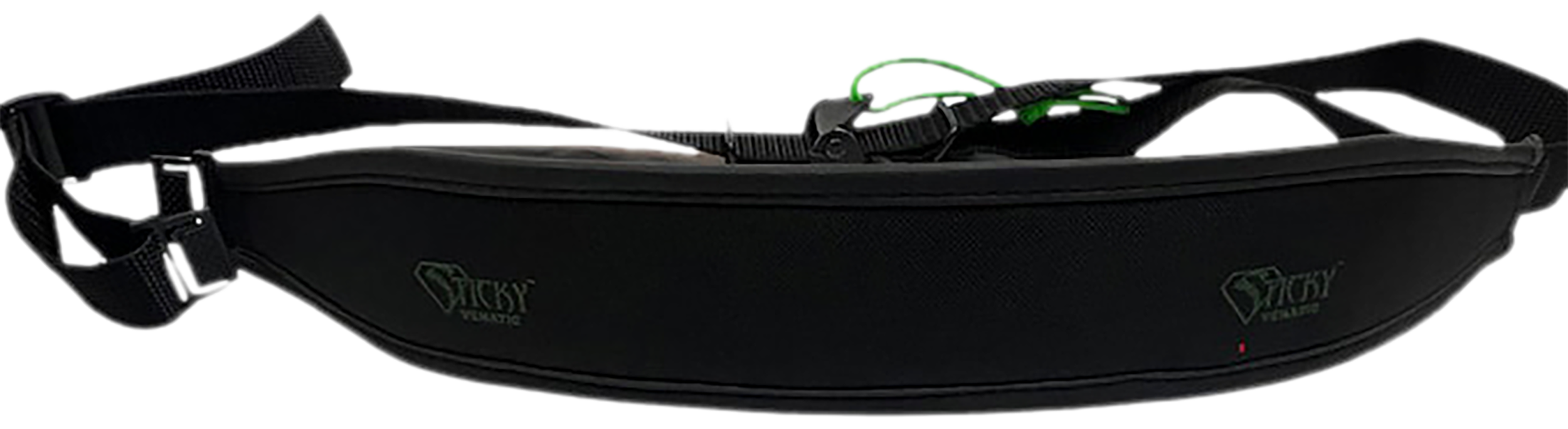
At 9.5 lbs and 43.6″ overall, the M1 Garand 30-06 Springfield is not a light or compact rifle – carrying it for extended periods reminds you why soldiers were issued slings, not shoulder straps. The walnut stock (or composite on newer builds) has a straight-line design that manages recoil well despite the rifle’s heft, and the two-stage military trigger, while heavy at 5.5–6.5 lbs, is predictable once you learn the take-up. Loading the en-bloc clip takes practice – thumb placement matters, and “Garand thumb” is a real injury for the careless. The safety, located at the front of the trigger guard, is fast to operate once muscle memory kicks in but feels foreign to shooters used to modern tang or bolt safeties. Balance sits slightly forward due to the barrel weight, which actually helps steady offhand shooting despite the rifle’s overall mass.
Aftermarket & Upgrade Path
The aftermarket for the M1 Garand 30-06 Springfield is smaller and more specialized than modern sporting rifles, focused mainly on replacement parts rather than modifications – op-rods, gas cylinders, and stocks are readily available through CMP and specialty vendors like Fulton Armory. National Match conversions are the main “upgrade path,” involving glass bedding, tightened op-rod springs, and precision barrels that can bring accuracy down toward 0.7 MOA. Some shooters install modern synthetic stocks for durability in field or match use, though this sacrifices the historical authenticity many buyers are after in the first place. There’s no rail system, no optics mounting without gunsmithing work, and no modular furniture – this is a rifle you maintain and tune, not one you build out like an AR platform.
Pros & Cons
Strengths:
✓ Genuine US military surplus history with traceable provenance
✓ CMP eligibility supports marksmanship programs nationwide
✓ 1.0–2.0 MOA accuracy with Garand-safe 168gr loads
✓ Reliable direct gas piston system after 80 years of design maturity
✓ Widely available .30-06 ammunition compatibility
✓ Iconic en-bloc clip system and distinctive “ping” reload sound
✓ Strong community support through CMP and collector networks
Limitations:
✗ 9.5 lbs – heaviest rifle in its class, impractical for hunting
✗ 8-round non-detachable en-bloc clip limits capacity and reload speed
✗ Cannot safely use modern 180gr+ magnum-pressure loads
✗ CMP eligibility requires citizenship and club membership documentation
✗ Used/surplus condition varies significantly rifle to rifle
✗ Heavy 5.5–6.5 lb trigger pull limits precision applications
✗ No optics mounting without aftermarket gunsmithing

Competitors & Alternatives
| Feature | M1 Garand | M1A/M14 | K31 Swiss | Mosin-Nagant 91/30 |
|---|---|---|---|---|
| Price | $700–$2,500 | $1,500–$2,800 | $400–$700 | $200–$500 |
| Weight | 9.5 lbs | 9.2 lbs | 8.8 lbs | 8.8 lbs |
| Trigger | 5.5–6.5 lbs | 4.5–6 lbs | 4–5 lbs | 4–6 lbs |
| Magazine | 8rd en-bloc | 20rd detachable | 6rd internal | 5rd internal |
| Accuracy | 1.0–2.0 MOA | 1.0–1.5 MOA | 1.5–2.5 MOA | 2.0–3.5 MOA |
The M1A 308 Winchester offers a detachable magazine and similar semi-auto operation but lacks the historical significance of the Garand’s WWII lineage. The K31 Swiss 7.5×55 and Mosin-Nagant 91/30 7.62x54R are cheaper bolt-action alternatives for history-minded shooters, but neither matches the Garand’s cultural weight or CMP program access – if budget is the primary concern, they’re worth considering, but they’re a different collecting experience entirely.
Who Should Buy This
Ideal for the history enthusiast who wants a direct connection to WWII and Korea-era American service, and for CMP competitors who value shooting a rifle purchased through the same program that supports marksmanship training nationwide. The M1 Garand 30-06 Springfield also suits collectors who appreciate documented military provenance over pure ballistic performance. Look elsewhere if you need a practical hunting rifle – a modern bolt-action in .30-06 will outperform it in weight and capacity every time. Also look elsewhere if you’re not willing to navigate CMP eligibility requirements or learn en-bloc clip loading technique properly.
Frequently Asked Questions
Can I buy an M1 Garand without CMP eligibility?
Yes, through the commercial market ($1,200–$2,500), though CMP typically offers better documented history and lower prices.
What ammunition is safe to use?
Stick to 150–168gr loads at standard pressure under 47,500 psi; avoid 180gr+ magnum loads that can damage the operating rod.
How accurate is a stock M1 Garand?
Expect 1.0–2.0 MOA with quality ammunition like Federal 168gr Gold Medal Match, depending on individual rifle condition.
Is the en-bloc clip hard to load?
It takes practice to avoid “Garand thumb,” but becomes second nature after a few range sessions.
Can I mount a scope?
Not without aftermarket gunsmithing work – there’s no factory rail or scope base.
Is CMP membership required to buy from CMP?
Yes – citizenship, club membership, and documented shooting activity are required for eligibility.
Final Verdict
The M1 Garand 30-06 Springfield isn’t practical by modern standards, and it was never meant to compete with today’s hunting or precision rifles. For collectors, CMP competitors, and history enthusiasts who want to own and shoot a genuine piece of American military heritage, it remains irreplaceable. Buy it for what it represents, not for what it can outperform.
The M1 Garand endures not because it’s the best tool for any single modern job, but because it connects shooters directly to the rifles that carried American servicemen through two World Wars and Korea. If that history matters to you, no substitute will do.