 Maksym Kovaliov
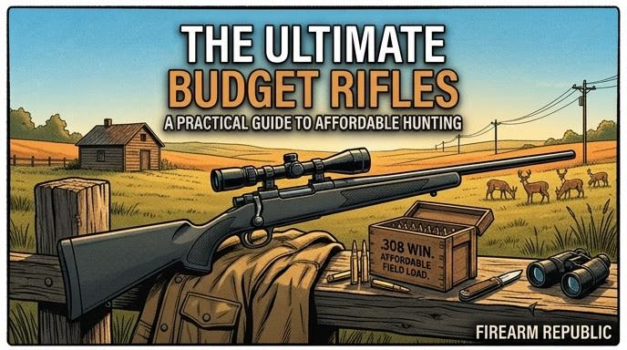
The best hunting rifle is the one that you shoot enough to be accurate with it, and the one you can afford to shoot enough to be accurate with it. A $2,000 lightweight precision rifle that sits in the safe because the hunter cannot justify the cost of 200 rounds of practice ammo per year is less effective than a $450 Savage Axis II that gets shot 300 rounds per year because the ammo budget is the same. This guide covers every hunting rifle that consistently delivers genuine field accuracy – the kind needed to take deer, elk-qualifying shots for experienced hunters, and medium game cleanly at practical hunting distances – for under $600 at street price. Not every rifle in this price range is worthy of inclusion; some budget rifles are genuinely poor values. The ones here consistently deliver 1 MOA or better accuracy, reliable function, and the features that matter for field hunting use.
What You Can Realistically Expect Under $600
Setting honest expectations prevents disappointment and allows informed decision-making.
Accuracy: The best budget rifles under $600 consistently deliver 0.75–1.0 MOA groups with quality factory ammunition. This is genuine hunting accuracy – more than adequate for 300-yard deer hunting and respectable by any standard. Budget rifles do not consistently achieve 0.5 MOA with factory ammo; that territory requires custom work or premium production rifles at $900+. If a budget rifle produces sub-0.5 MOA groups occasionally, that is a bonus rather than the expectation.
Triggers: Factory triggers on budget rifles have improved dramatically over the past decade. The Savage AccuTrigger (2.5–6 lbs adjustable), Ruger Marksman Adjustable (3–5 lbs), and Mossberg’s LBA (Lightning Bolt Action, 2–7 lbs adjustable) represent a genuine shift in what budget rifles offer. Triggers that would have required aftermarket replacement now come standard. Budget rifles with non-adjustable triggers that break above 5 lbs consistently – Remington’s factory trigger before the Model 783 redesign, for example – should be evaluated against the cost of an aftermarket drop-in.
Stocks: Budget stocks are the most visible limitation. Injection-molded synthetic stocks are universally used because they cost less to produce than laminate or fiberglass. They function adequately but flex more than rigid alternatives, which can produce minor point-of-impact shifts when the barrel is contacted or when temperature extremes change stock dimensions. Free-floating the barrel with a dollar bill test (the bill should slide freely from action to muzzle without catching) verifies that the stock is not touching the barrel.
Metalwork: Budget rifles use less hand-fitting than premium alternatives. Machine marks, rough actions, and cosmetically imperfect metal finishes are common and do not affect function. Bolts may not cycle as smoothly as Tikka T3x actions; this is expected at the price point. The test is function and accuracy, not feel.
Top Budget Hunting Rifles Under $600
1. Savage Axis II – Best Value Under $500
Street price: $380–$450 Available calibers: .223 Rem, .243 Win, 6.5 CM, .308 Win, .30-06, 7mm Rem Mag, .300 Win Mag (varies by configuration)
The Savage Axis II is the most recommended first hunting rifle in America for good reason: it delivers genuinely competitive accuracy with the best trigger available under $500 while costing less than any serious competitor. The AccuTrigger – Savage’s flagship adjustable trigger – is standard on the Axis II and adjusts from 2.5 to 6 lbs without tools. At $380–$450 retail, the Axis II’s closest competition costs $100–$150 more.
Accuracy: 0.75–1.0 MOA with quality factory ammo is consistent across the caliber range. Some Axis II rifles shoot sub-0.5 MOA groups with handloads or premium factory ammo – a level of accuracy that exceeds expectation at this price.
What it lacks: The injection-molded stock is functional but plain. The action is not as smooth as Tikka or CZ alternatives. The single-stack internal box magazine requires feeding individual rounds rather than accepting a detachable magazine. The trigger guard and bottom metal are plastic rather than aluminum.
Who it is for: First-time hunters who need a reliable, accurate rifle without a large investment. Youth hunters whose rifle will be upgraded when they grow into adult configurations. Budget-conscious hunters who understand that the Axis II’s accuracy exceeds any ballistic requirement they will place on it.
Best caliber choices: 6.5 CM for versatility, .243 Win for youth and recoil-sensitive hunters, .308 Win for hunters who prioritize ammo availability.
Recommended optic pairing: Vortex Crossfire II 3–9×40 ($150–$180). Complete setup under $650.
2. Ruger American Gen II – Best Feature Set Under $650
Street price: $599–$649 Available calibers: 6.5 CM, .308 Win, .30-06, .450 Bushmaster, .243 Win, 7mm-08, .350 Legend, others
The Ruger American Gen II edges above the strict $600 threshold at most retailers but consistently appears at $599–$649 street price and earns inclusion based on its feature set relative to alternatives. It offers three capabilities that the Axis II does not: an AICS-compatible detachable box magazine, a factory-threaded barrel, and a genuinely Picatinny-style optics rail from the factory.
AICS magazine compatibility means the American Gen II accepts the same 10-round magazines used by competition precision shooters and premium tactical rifles. This is an unusual feature at any price under $800 and makes the American Gen II a platform that can run 5-round hunting magazines or 10-round practice magazines interchangeably.
Factory-threaded barrel means a suppressor can be added without gunsmithing or barrel replacement. For hunters considering NFA suppressor ownership, this eliminates one barrier.
Accuracy: 0.7–0.9 MOA with quality ammo, comparable to the Axis II. The Marksman Adjustable trigger at 3–5 lbs is not as adjustable as the AccuTrigger but performs well for hunting use.
Who it is for: Hunters who want modern platform features – detachable magazine, threaded barrel, optics rail – without paying the $800+ premium that Tikka, Bergara, and Browning charge for similar features. See our Ruger American Complete Guide for full coverage.
Recommended optic pairing: Vortex Viper HD 4–16×44 ($450–$500) for a complete precision hunting setup at $1,050–$1,150.
3. Mossberg Patriot – Most Affordable per Feature
Street price: $350–$420 Available calibers: .243 Win, 7mm-08, 6.5 CM, .308 Win, .30-06, 7mm Rem Mag, .300 Win Mag, others
The Mossberg Patriot is the most affordable rifle in this guide and consistently delivers adequate performance at its price. The Lightning Bolt Action (LBA) trigger adjusts from 2 to 7 lbs – even more adjustable than the AccuTrigger – and a free-floating barrel is standard. The spiral-fluted bolt is a cosmetic feature that also aids smooth cycling. At $350–$400 street price, the Patriot frequently costs $50–$100 less than the Axis II for comparable specifications.
Accuracy: 0.9–1.5 MOA with quality factory ammo – slightly less consistent than the Axis II or American across the production range. Some Patriot rifles shoot significantly better than this; others are at the high end of the range. Production variance is higher than at competitors at slightly higher price points.
Patriot Bantam: The Patriot Bantam configuration with a 12-inch length of pull is worth specific mention for youth hunters. At $350–$400 in .243 Win or 7mm-08, it provides a properly fitting rifle for hunters 10–14 years old at a price that makes the investment appropriate for a platform the hunter may outgrow.
Who it is for: Budget-maximizing hunters who want the lowest entry cost to a functional, adjustable-trigger hunting rifle. Youth hunters in the Bantam configuration.
Recommended optic pairing: Nikon ProStaff 3–9×40 ($150–$175). Complete setup under $600.
4. Winchester XPR – Best Mid-Budget Bolt-Action
Street price: $550–$650 Available calibers: 6.5 CM, .308 Win, .30-06, 7mm Rem Mag, .300 Win Mag, .243 Win, others
The Winchester XPR represents the step between the entry-level Axis II/Patriot class and the mid-tier Tikka/Bergara level. At $550–$650, it offers noticeably smoother action cycling, better metalwork quality, and the M.O.A. trigger system (adjustable from 3 to 5 lbs from the factory) in a rifle that feels meaningfully more refined than the Axis II without approaching the premium tier’s pricing.
Accuracy: 0.75–1.0 MOA with quality ammo, consistent with the Axis II at this price tier. The detachable rotary magazine is a practical feature for hunting use. The inflex recoil pad is a genuine improvement for hunters sensitive to felt recoil.
Who it is for: Hunters who want a step up in feel and ergonomics from the entry-level class without the full premium price of Tikka or Bergara. Hunters who appreciate Winchester’s heritage and want a functional modern version of it.
Recommended optic pairing: Leupold VX-3HD 3.5–10×40 ($400–$450) for a complete mid-tier hunting setup at $950–$1,100.
5. Savage Axis II Youth – Best Under $500 for Youth Hunters
Street price: $380–$450 Available calibers: .243 Win, 7mm-08 (primary youth calibers)
The Savage Axis II Youth configuration with a 12.5-inch length of pull and compact stock fits shooters aged 10–14 correctly – a practical necessity for developing accurate shooting habits and preventing the flinch that develops when young hunters are forced to shoot rifles that do not fit them. The same AccuTrigger accuracy package as the adult Axis II in youth-appropriate calibers makes this the most recommended youth hunting rifle at any price.
Who it is for: Youth hunters 10–14 years old who need a properly fitting first deer rifle. The .243 Win is the first-choice caliber for the youngest hunters; the 7mm-08 for those 14+ who want to step up to more terminal performance. See our Youth Hunting Rifles Guide.
6. Ruger American Compact – Best Compact for Timber Hunting
Street price: $450–$550 Available calibers: .308 Win, .30-06, .243 Win, others
The Ruger American Compact with an 18-inch barrel and 12.5-inch length of pull serves two distinct audiences: youth hunters and timber hunters who want a compact, maneuverable rifle that handles well in brush. At 38 inches overall length in .308 Win, it runs shorter than most lever-actions while delivering a modern cartridge’s performance. For timber deer hunting where shots break inside 100 yards and maneuverability matters, the Compact’s shorter OAL is a genuine advantage over full-length alternatives. See our dense timber hunting rifles guide.
Budget Rifles by Hunting Application
For Deer Hunting Under $500:
Best choice: Savage Axis II in 6.5 CM or .308 Win Why: Sub-1 MOA accuracy, AccuTrigger, and the most widely available deer hunting cartridges. Handles food plot shots to 300 yards and timber shots to 100 yards with equal competence.
For Deer Hunting – Maximum Versatility Under $650:
Best choice: Ruger American Gen II in 6.5 CM Why: AICS magazines, threaded barrel, Picatinny rail, and 0.7–0.9 MOA accuracy in the best all-around deer hunting cartridge. Leaves no features out that would be found on a $900 rifle.
For Youth Hunters Under $500:
Best choice: Savage Axis II Youth in .243 Win or Mossberg Patriot Bantam in .243 Win Why: Proper length of pull (12–12.5 inches), lowest recoil deer-capable cartridge, AccuTrigger or LBA trigger adjustable for small hands and light pull preference.
For Elk Hunting Under $600:
Best choice: Ruger American Gen II in 6.5 PRC or .300 Win Mag Why: The Gen II in 6.5 PRC or .300 Win Mag provides elk-capable performance at the budget price. The 6.5 PRC at 15–17 ft-lbs recoil is manageable for practice volume; the .300 Win Mag provides maximum elk cartridge performance. Accuracy at 0.7–0.9 MOA is sufficient for 400-yard elk work. Note: budget rifles in magnum configurations should be verified for consistent accuracy with the specific magnum load before hunting season.
For Western Open-Country Hunting Under $600:
Best choice: Ruger American Gen II or Savage Axis II in 6.5 CM Why: The 6.5 CM in either platform provides the wind-resistant high-BC performance needed for 300–400 yard western hunting at the lowest possible entry cost.
For Hog and Predator Hunting Under $500:
Best choice: Savage Axis II in .223 Rem or Mossberg Patriot in .243 Win Why: The .223 Rem Axis II is the most affordable way to a functional precision predator/varmint rifle. The .243 Win Patriot extends range and adds deer season versatility.
Getting the Most From a Budget Rifle
Optics Matter More Than the Rifle
The most important principle for budget rifle hunters: a $350 rifle with a $400 scope outperforms a $500 rifle with a $150 scope for most hunting applications. The rifle’s accuracy limitation at 1 MOA becomes irrelevant if the scope cannot resolve the target clearly at hunting distances. Budget hunters should allocate at minimum 40–50% of their total rifle-plus-scope budget to the optic.
The $600 complete hunting setup: Savage Axis II ($400) + Vortex Crossfire II 3–9×40 ($160) = $560. This is a 300-yard deer hunting setup that is limited more by the shooter’s skill than by the equipment.
The $900 complete hunting setup: Ruger American Gen II ($620) + Vortex Viper HD 4–16×44 ($480) = $1,100. Stretching the budget produces a meaningfully better optic that extends the setup’s practical utility.
Handloading Extends Performance
A budget rifle that costs $400 and shoots 1.0 MOA with factory ammo at $1.50 per round can often be pushed to 0.75 MOA or better with handloads that cost $0.50–$0.75 per round. The combination of lower practice cost and improved accuracy from matched handloads is one of the strongest arguments for budget rifle buyers to consider reloading. The initial investment in a basic single-stage press setup ($150–$250) pays back within the first 500 rounds at the practice frequency that produces accurate hunters.
Bedding and Free-Floating
Budget injection-molded stocks sometimes contact the barrel in ways that shift point of impact with temperature and humidity changes. A dollar-bill free-float test (slide a dollar bill between barrel and stock from action to muzzle – it should move freely throughout) identifies contact points. Pillar bedding and action bedding – simple DIY projects with Acraglas gel or Marine-Tex – improve stock-to-action fit and often produce noticeable accuracy improvements in budget rifles. This modification costs $20–$40 and can convert a 1.2 MOA rifle to a 0.8 MOA rifle through improved mechanical consistency.
Trigger Adjustment
Both the Savage AccuTrigger and Ruger Marksman Adjustable trigger can be set lighter at home without gunsmithing. The AccuTrigger includes a T15 Torx adjustment tool; the Ruger Marksman uses a flathead screwdriver. Adjusting the trigger to 2.5–3 lbs – while remaining within the safe range the manufacturer specifies – produces a noticeably cleaner break that improves accuracy across all shooting conditions. Do not attempt to adjust triggers below manufacturer minimum specifications; this removes safety features.
Ammo Testing
Budget rifles show more ammo sensitivity than premium alternatives because tighter tolerances and more consistent lock-up in premium rifles reduce the impact of ammo variation. Testing three to four quality factory loads in the rifle before selecting a hunting load is time well spent. A rifle that shoots 1.5 MOA with Federal American Eagle may shoot 0.8 MOA with Hornady ELD-X. The difference costs one range session and produces better hunting outcomes.
Frequently Asked Questions
Q: Is a $400 rifle accurate enough for deer hunting?
A: Yes. The Savage Axis II at $380–$450 consistently delivers 0.75–1.0 MOA with quality factory ammo – more than sufficient for a 300-yard deer hunt where the target presents a 10-inch vital zone. At 300 yards, a 1 MOA rifle with a confident shooter and stable rest places shots within 3 inches of the aim point. That is a clean kill every time on a broadside deer. The limiting factor past 300 yards is typically the shooter’s field accuracy, wind reading, and rangefinder use – not the rifle’s mechanical precision.
Q: What is the difference between a $400 and a $900 hunting rifle?
A: Feel, refinement, and options – not hunting accuracy. A Tikka T3x at $875 has a smoother bolt, better trigger feel out of the box, more refined metalwork, and typically a slightly more consistent production accuracy than a Savage Axis II at $400. In the field at 200 yards on a deer, the practical difference in outcomes is minimal. Where the Tikka earns its premium is in extended precision use at 400+ yards where its tighter tolerances and smoother action produce more consistent results over many shots. For hunters who shoot 40–60 rounds per year on a deer hunt, a budget rifle is adequate. For hunters who put 500+ rounds through their rifle annually in practice and competition, the premium tier is worth the investment.
Q: Should I buy a budget rifle and upgrade later, or save for a premium rifle?
A: Buy the budget rifle if you need a rifle now and cannot comfortably afford the premium alternative. A Savage Axis II in 6.5 CM purchased today will take deer this fall. The same money spent waiting two years for a Tikka T3x means two seasons without a rifle. The exception is if you are very close to the $800–$900 tier – if adding $200–$300 to the budget is achievable within a few months, stretching for the Tikka or Bergara produces a rifle you will not want to replace, whereas the Axis II is often sold when the hunter’s budget allows an upgrade.
Q: What caliber should I choose for a first hunting rifle under $600?
A: 6.5 Creedmoor for hunters who want versatility across deer and medium game to 400 yards and the best available factory ammo selection. .308 Winchester for hunters who prioritize universal availability and elk-season potential. .243 Winchester for youth hunters and recoil-sensitive adults who exclusively hunt deer inside 300 yards. All three are available in the top rifles at this price point.
Q: Is the Remington Model 783 or 700 worth considering under $600?
A: The Model 783 ($400–$500) is a functional budget rifle with acceptable accuracy and a decent trigger. It is a step below the Axis II in trigger quality and does not stand out relative to its competitors. The original Model 700 has been largely replaced in production by the Model 700 Classic variants; current production Model 700 rifles in the $600 range represent diminishing value relative to the Ruger American Gen II and Savage Axis II at comparable or lower pricing. Remington’s bankruptcy and production disruptions have affected quality consistency enough that the Axis II and American Gen II are safer recommendations for budget hunters.
Q: Do I need a detachable magazine on a budget hunting rifle?
A: Not strictly necessary for most hunting use cases, but genuinely useful. A detachable box magazine allows loading the rifle with a pre-loaded magazine rather than feeding individual rounds, topping off without fully removing remaining rounds, and clearing the chamber cleanly in a single action. For hunters who switch between hunting loads and practice loads, the magazine swap is a practical convenience. The Ruger American Gen II’s AICS-compatible magazine is the only budget rifle under $650 with this feature at its price point.