
 Firearms Republic
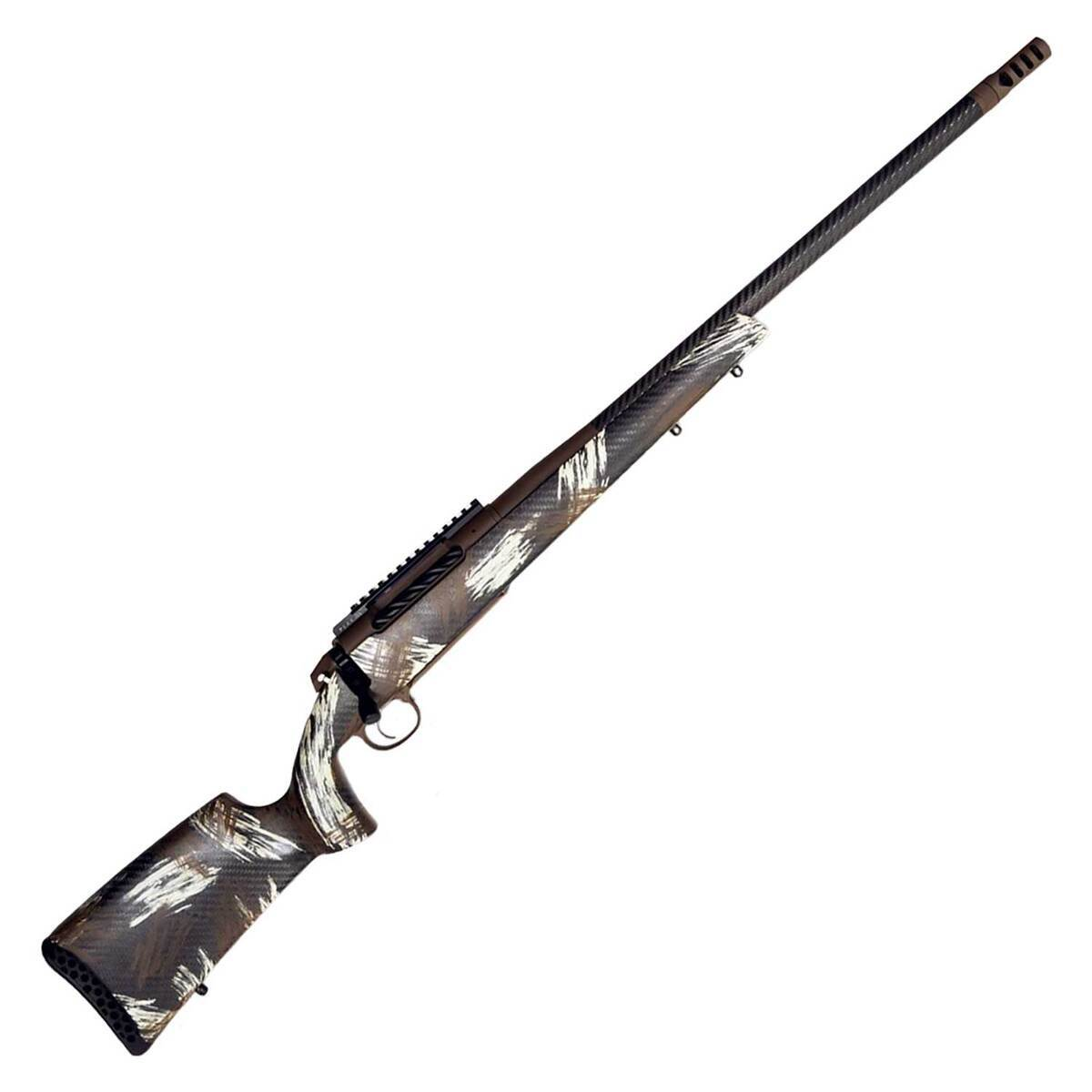
The Weatherby Model 307 Alpine represents Weatherby’s serious attempt to capture the mountain hunting market without the Christensen Arms price tag. Built around a 6-lug action with a 54-degree bolt throw and available in 6.5 Creedmoor, the Alpine ST tips the scales at just 5.9 lbs – making it one of the lightest factory bolt-actions in this caliber. With a factory-threaded 22" barrel at 5/8×24, a two-stage adjustable trigger, and a Remington 700 footprint for full aftermarket compatibility, it’s targeting serious backcountry hunters who want a refined, lightweight platform at a $999 street price. The question is whether it actually delivers.
Quick Verdict
✓ Best for: Mountain and backcountry hunters prioritizing weight savings over all else
✓ Price: $999–$1,049 street (Alpine ST)
✓ Key strength: 5.9 lbs with suppressor-ready threaded barrel and full Rem 700 aftermarket access
✗ Not ideal for: High-volume shooters, recoil-sensitive shooters, or anyone wanting AICS magazine compatibility
The Model 307 Alpine ST is a genuinely impressive lightweight hunting rifle at a price point that undercuts most serious competition. It’s not perfect – the proprietary magazine and thin barrel profile are real limitations – but for its intended purpose, it hits the mark.
Real-World Performance
The 22" barrel with a 1:8 twist handles the full range of 6.5 Creedmoor projectiles without complaint. Running Hornady 143gr ELD-X factory loads, you’re looking at approximately 2,680 fps – about 50–70 fps behind what a 24" barrel would deliver, but the practical hunting impact at 400 yards is negligible. The 140gr ELD-M sits around 2,700 fps, and the heavier 147gr ELD-M drops to roughly 2,600 fps. None of these numbers are cause for concern.
Accuracy is where the Alpine earns its keep in the field. Cold bore consistency is excellent – the first shot typically lands dead center of the group, which is the only shot that matters on a sheep hunt at 11,000 feet. Factory loads with Hornady or Federal Gold Medal consistently produce 0.6–0.9 MOA groups in the first three to five shots. Push beyond that, and the lightweight #2 sporter barrel profile starts working against you. After eight to ten rounds, groups open to 1.5 MOA or worse as heat builds. That’s not a flaw for a hunting rifle – it’s a design trade-off you accept knowingly. If you’re shooting 50-round range sessions, this isn’t your rifle. If you’re putting one cold shot into a ram at 300 yards, it absolutely is.
The two-stage trigger is factory set between 2.5 and 3.5 lbs. It’s clean, predictable, and safe for field carry with a round chambered. It won’t replace a TriggerTech Diamond for precision work, but it’s meaningfully better than most factory hunting triggers and appropriate for the rifle’s intended role. Recoil is noticeable – a 5.9 lb rifle in 6.5 Creedmoor hits harder than a 7.5 lb version, roughly 20–25% more felt recoil. A suppressor helps significantly and pairs naturally with the threaded muzzle.
Applications & Use Cases
Mountain Hunting – Sheep, Goat, High-Altitude Elk
This is where the Alpine was designed to live. A full hunting setup – rifle, Leupold VX-5HD 3-15x, rings, loaded magazine – runs about 7.8 lbs unsuppressed. Compare that to 9.5–10.5 lbs with a heavier rifle and comparable optic, and you’re saving 1.5–2 lbs over 8+ miles of vertical terrain. That difference is real and cumulative. Cold bore accuracy is excellent, and most mountain shots are single cold-bore events anyway. The Cerakote finish handles moisture and temperature swings without complaint.
Verdict: This is the rifle’s wheelhouse – buy it for this purpose specifically.
Backcountry Mule Deer and Antelope
Multi-day backcountry hunts where you’re covering 8–12 miles daily benefit directly from the weight savings. The 22" barrel is maneuverable through timber without sacrificing meaningful velocity. At 350–500 yards on antelope from prone, the rifle’s cold bore accuracy and 6.5 Creedmoor ballistics are more than adequate. Suppressed with a 7" can, the 29" overall length balances well and recoil becomes genuinely mild.
Verdict: Excellent choice – weight savings translate directly to less fatigue and better shooting at the end of a long day.
Suppressed Hunting
The factory 5/8×24 thread pitch accepts standard suppressors without adapters. Adding a 0.8–1.2 lb can brings total weight to 6.7–7.1 lbs – still lightweight by any standard. The suppressor also meaningfully reduces felt recoil, which is a practical benefit on a rifle this light. Accuracy typically holds or improves slightly with a suppressor attached.
Verdict: One of the better sub-$1,100 suppressor-ready platforms available.
Range and Competition Use
Don’t. Barrel heat degrades groups after five to eight rounds. The light weight makes positional shooting less stable. Recoil becomes fatiguing over extended sessions. The Alpine is a hunting rifle, and using it as a range gun fights its design at every turn.
Verdict: Wrong tool for this job – look at the heavier Alpine MDT variant or a Bergara B-14 instead.
Ergonomics & Handling
At 5.9 lbs, the Alpine ST feels almost startlingly light when you first pick it up. The synthetic stock has a 13.5" length of pull with an integrated recoil pad that does reasonable work softening the increased felt recoil of a lightweight platform. Balance is forward-neutral without a suppressor and shifts slightly muzzle-heavy with a can attached – which most shooters find steadying rather than problematic.
The 6-lug bolt with its 54-degree throw is the handling highlight. Cycling is fast and smooth – not quite the buttery feel of a Tikka’s 3-lug 70-degree system, but meaningfully better than any 90-degree 2-lug action. Short bolt lift allows faster follow-up cycling without breaking cheek weld significantly. Loading the proprietary 4-round magazine is straightforward, though the limited capacity and non-AICS format mean spare magazines are both harder to find and more expensive than you’d like. The included 20 MOA Picatinny rail is a nice touch that eliminates one purchase from your setup list. Overall, the rifle handles like a purpose-built mountain tool – which is exactly what it is.
Aftermarket & Upgrade Path
The Remington 700 footprint is arguably the Alpine’s most underrated feature. Nearly every aftermarket trigger, stock, chassis, and scope base designed for the Rem 700 drops directly into this action, which dramatically expands the rifle’s long-term potential.
The most common first upgrade is the trigger. The factory two-stage is serviceable, but a TriggerTech Special at around $250 drops the pull to 1.5–2 lbs with a crisper break – a meaningful improvement for precision hunting. Timney 510 at $200 is another solid option. Stock upgrades are less urgent since the factory synthetic is adequate, but McMillan Game Scout and Manners LRH stocks fit directly for hunters wanting premium material. For anyone wanting AICS magazine compatibility, Hawkins Hunter bottom metal at roughly $300 solves the proprietary magazine problem cleanly.
The barrel is replaceable with any Rem 700 prefit – Proof Research carbon fiber prefits maintain the lightweight ethos while adding rigidity, though at $850 it’s a significant investment after the rifle’s useful barrel life of roughly 2,500 rounds. Chassis conversions using MDT ESS or KRG Bravo are possible if you want to pivot toward precision shooting, though at that point you’re building a different rifle. The upgrade path here is genuinely flexible – the action is the foundation, and it’s a good one.
Pros & Cons
Strengths:
✓ 5.9 lbs (Alpine ST) – among the lightest factory 6.5 Creedmoor rifles available under $1,100
✓ 54-degree bolt throw – faster cycling and less wrist rotation than 90-degree competitors
✓ Remington 700 footprint – full aftermarket ecosystem for triggers, stocks, chassis, and bottom metal
✓ Factory-threaded 5/8×24 – suppressor-ready without additional machining costs
✓ Cerakote Elite finish included – corrosion and scratch resistance ideal for backcountry conditions
✓ Sub-MOA guarantee with premium ammunition – 0.6–0.9 MOA cold bore consistently achievable
✓ Two-stage adjustable trigger (2.5–3.5 lbs) – safer and more refined than most factory hunting triggers
✓ 20 MOA Picatinny rail included – eliminates one purchase from your setup budget
✓ Fluted barrel – reduces weight and aids heat dissipation marginally
✓ Multiple color options in Cerakote – FDE, OD Green, Tungsten, Graphite Black available at no upcharge
Limitations:
✗ Proprietary 4-round magazine – not AICS compatible, spare mags expensive and harder to source
✗ Barrel heats quickly – groups open to 1.5+ MOA after 8–10 rounds due to #2 lightweight profile
✗ Increased felt recoil – approximately 25% more than a 7.5 lb rifle in the same caliber
✗ 22" barrel loses 50–80 fps vs 24" – minor but worth noting for maximum long-range performance
✗ Factory trigger good but not exceptional – TriggerTech upgrade ($200–250) commonly recommended
✗ Price premium over Tikka T3x Lite – $125–175 more for similar weight with different trade-offs
✗ Carbon fiber stock (CT model) adds $200+ – significant jump for 0.3 lb savings
✗ Not ideal for high-volume shooting – barrel heat and recoil fatigue limit practical round count
Competitors & Alternatives
| Feature | 307 Alpine ST | Tikka T3x Lite | Bergara B-14 Ridge | Christensen Ridgeline FFT | Savage IMPULSE Ultralite Pro |
|---|---|---|---|---|---|
| Price | $999 | $875 | $1,050 | $2,400 | $1,699 |
| Weight | 5.9 lbs | 6.2 lbs | 7.3 lbs | 5.5 lbs | 6.2 lbs |
| Trigger | 2.5–3.5 lbs | ~3.0 lbs | ~3.0 lbs | ~3.0 lbs | ~2.5 lbs |
| Magazine | Proprietary 4-rd | Proprietary 3-rd | AICS 4-rd | Proprietary 4-rd | Proprietary 4-rd |
| Accuracy | 0.6–0.9 MOA | 0.6–0.9 MOA | 0.5 MOA | 0.5–0.75 MOA | 0.75–1.0 MOA |
The Tikka T3x Lite is the most direct value comparison. It’s 0.3 lbs heavier, runs a smoother 3-lug bolt, has a better factory trigger, and costs $125 less. What the Weatherby offers in return is the 54-degree throw, Cerakote finish, factory threading, and Rem 700 aftermarket access. For most hunters, the Tikka is the smarter value purchase. The Weatherby makes more sense if you specifically want suppressor-ready out of the box or plan to upgrade components over time.
The Bergara B-14 Ridge is heavier at 7.3 lbs but shoots tighter groups – consistent 0.5 MOA with quality ammunition – and comes with AICS magazine compatibility. If raw accuracy and magazine ecosystem matter more than weight, the Bergara wins at nearly the same price. Choose the Weatherby if you’re hiking serious miles; choose the Bergara B-14 Ridge if you’re shooting from a truck or base camp.
The Christensen Ridgeline FFT at $2,400 is the premium alternative – 0.4 lbs lighter with a carbon fiber barrel and premium fit. It’s a better rifle in objective terms, but at $1,400 more it needs to be. The Weatherby delivers roughly 80% of the Christensen experience at 40% of the price, which is a compelling value argument. The Savage IMPULSE Ultralite Pro at $1,699 brings a straight-pull action for faster cycling, but costs $700 more for 0.3 lbs additional weight – hard to justify unless the action type is specifically important to you.
Who Should Buy This
Ideal for the serious mountain hunter who counts every ounce – sheep, goat, and high-altitude elk hunters covering 8+ miles daily in steep terrain will feel the 1.5–2 lb savings over a conventional hunting rifle in a real and cumulative way. Cold bore accuracy is excellent, which is what matters when you get one shot after a four-hour stalk.
Also great for suppressor users who want a lightweight, threaded platform without custom work. The factory 5/8×24 threading and 22" barrel create a well-balanced suppressed setup at a price point that leaves room in the budget for a quality can.
Look elsewhere if you’re budget-focused and weight isn’t a primary concern – the Tikka T3x Lite saves $125 with a better trigger and smoother bolt. Also look elsewhere if you want AICS magazine compatibility or plan to shoot more than 20 rounds in a session regularly.
Frequently Asked Questions
Q: Does the Model 307 Alpine actually shoot sub-MOA?
A: Yes, consistently – but conditions matter. With Hornady 143gr ELD-X or Federal Gold Medal 140gr, cold bore three-shot groups of 0.6–0.9 MOA are realistic. Five-shot groups in the same session run slightly larger. Push past eight rounds without cooling and groups open to 1.5+ MOA as the thin barrel heats.
Q: Is the proprietary magazine a dealbreaker?
A: For most hunters, no. Four rounds is adequate for any hunting scenario. The limitation is sourcing spares – expect to pay more and wait longer than AICS alternatives. If you want AICS compatibility, Hawkins Hunter bottom metal at around $300 solves the problem.
Q: How does the 54-degree bolt throw compare to other actions?
A: It’s meaningfully faster and requires less wrist rotation than 90-degree competitors like most Remington 700-based rifles. It’s not quite as smooth as Tikka’s 70-degree 3-lug system, but it’s a genuine functional advantage for fast follow-up shots.
Q: What scope would you recommend for this rifle?
A: The Leupold VX-5HD 3-15×44 at 1.3 lbs is a natural match – quality glass, reasonable weight, won’t overwhelm the lightweight platform. Budget option: Vortex Viper PST Gen II 3-15x at similar weight and lower cost.
Q: Is the Alpine ST or Alpine CT worth the extra $200?
A: For most hunters, the ST is the better value. The CT’s carbon fiber stock saves 0.3 lbs for $200 more. Unless you’re counting every gram for a serious mountain hunt, that’s a poor return. Spend the $200 on a better trigger instead.
Q: How does it handle in cold weather?
A: The Cerakote finish performs well in wet and cold conditions. The synthetic stock doesn’t swell or warp with moisture. Bolt cycling remains smooth in cold temperatures – no reported issues with the 6-lug system in sub-zero conditions.
Q: What’s the effective hunting range in 6.5 Creedmoor from a 22" barrel?
A: 500 yards on deer and antelope with quality ammunition and solid fundamentals. 400 yards on elk, where terminal performance with the 143gr ELD-X remains reliable. The 50–80 fps velocity loss vs a 24" barrel has negligible practical impact at these ranges.
Final Verdict
- Hunting: 5/5
- Long-Range: 3.5/5
- Competition: 1.5/5
- Value: 4/5