
 Firearms Republic
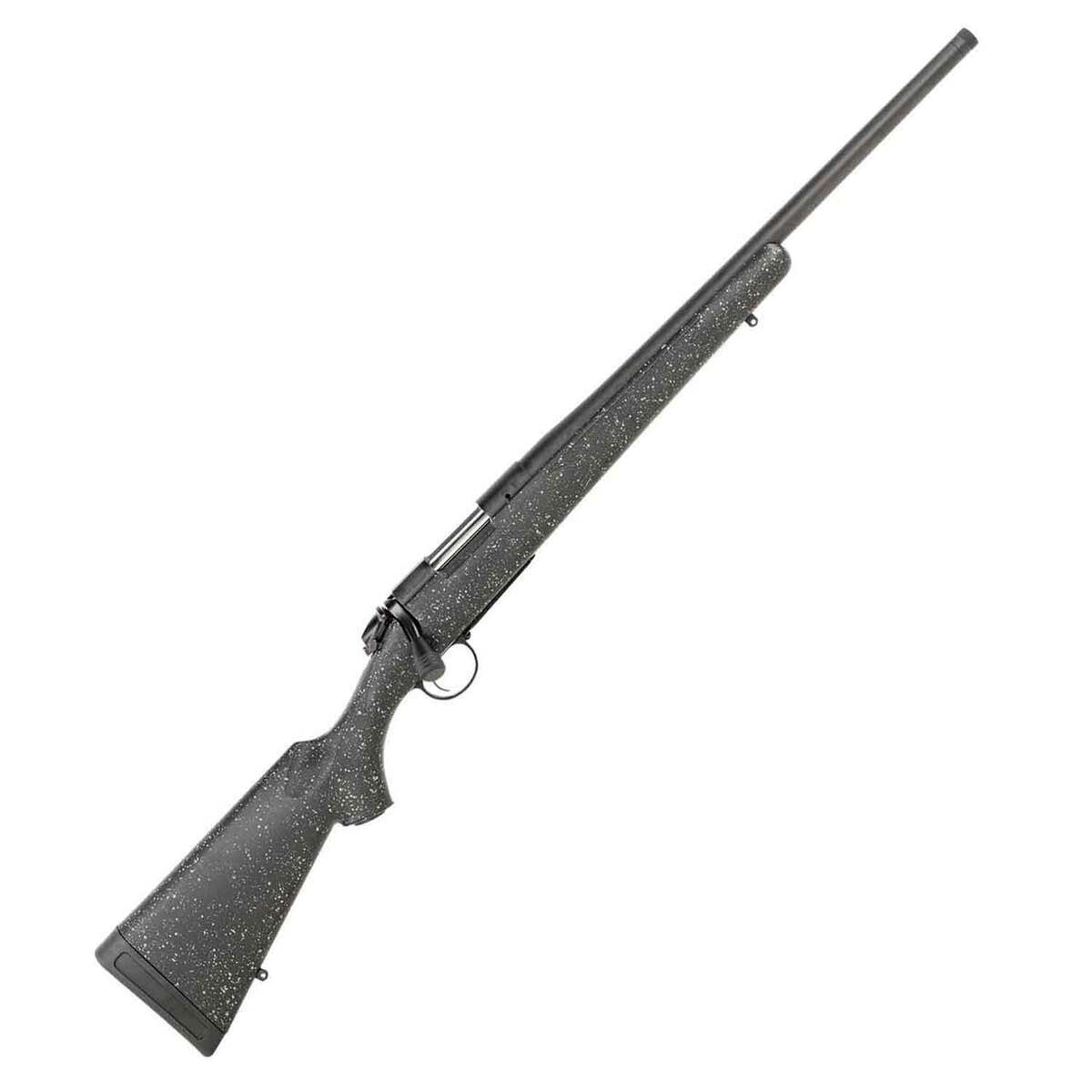
The Bergara B-14 Ridge in 6mm Creedmoor occupies an interesting niche – accurate enough for precision shooting, light enough for hunting, and built around a caliber that splits the difference between flat trajectory and manageable recoil. With a 22″ medium-heavy barrel, Remington 700 footprint, and AICS magazine compatibility, Bergara is clearly targeting shooters who want sub-MOA accuracy without the weight penalty of pure competition rifles. At $1,050 street price, it competes directly with Tikka’s CTR and Christensen’s Mesa, but brings Bergara’s reputation for barrel quality to the fight. The 6mm Creedmoor chambering adds another layer – excellent ballistics but limited factory ammunition availability.
Quick Verdict – Precision Hybrid
✓ Best for: Long-range precision hunters and PRS beginners prioritizing accuracy over weight
✓ Price: $1,000-$1,100 street (MSRP $1,150)
✓ Key strength: 0.4-0.6 MOA accuracy with Rem 700 aftermarket ecosystem
✗ Not ideal for: Mountain hunters (7.3 lbs heavy) or factory ammo shooters (6mm CM availability spotty)
Real-World Performance – Range & Field
The 22″ barrel with 1:7.5 twist stabilizes heavy 6mm bullets perfectly, delivering 3,050 fps with 103gr ELD-X factory loads and 2,950 fps with 109gr ELD-M. This translates to noticeably flatter trajectory than 6.5 Creedmoor – about 15% less wind drift at 600 yards and 8 inches less drop at that distance. Accuracy runs 0.4-0.7 MOA with quality ammunition, tightening to 0.3-0.5 MOA with developed handloads. The medium-heavy #4 contour barrel maintains this precision through 10-shot strings without significant heat-related degradation, a real advantage for prairie dog sessions or extended range work.
Field performance reveals the hybrid nature clearly. At 550 yards on mule deer, the flat trajectory and 1,200 ft-lbs of remaining energy make shot placement straightforward with minimal holdover. Recoil stays mild at 12-13 ft-lbs – noticeably less than 6.5 Creedmoor and allowing easy spotting of impacts through the scope. The 7.3 lb weight feels neutral from shooting positions but becomes noticeable after several miles of hiking. Cold bore accuracy remains excellent, with first shots consistently printing within 0.3 MOA of group center. The threaded 5/8×24 muzzle accepts suppressors easily, and the rifle handles the added weight without balance issues.
Applications & Use Cases
Precision Hunting (600+ yards): The 6mm Creedmoor shines here with laser-flat trajectory and wind-bucking capability. A 550-yard shot on antelope requires minimal holdover, and the accuracy potential ensures ethical shot placement. Energy remains adequate for deer-sized game to 600 yards (1,100+ ft-lbs), though elk hunters should look elsewhere – the 6mm lacks sufficient energy even at close range. From blinds, stands, or vehicle-supported positions, the 7.3 lb weight is irrelevant, and the precision capability becomes the defining characteristic.
Long-Range Target Shooting (600-1,000 yards): This rifle excels at steel-ringing sessions, where the low recoil and flat trajectory make hits easy to call and corrections simple. The medium-heavy barrel stays cool enough for reasonable strings, and sub-0.5 MOA accuracy translates to consistent impacts on 10-inch plates at 800 yards. For PRS club matches, it’s competitive in Production Division, though the 7.3 lb weight feels light in some barricade positions compared to 12 lb competition rigs. The AICS magazine system feeds reliably, and the Remington 700 footprint means aftermarket chassis upgrades are straightforward when competition becomes serious.
Varmint Hunting (200-400 yards): Prairie dog towns and coyote calling benefit from the accuracy and velocity combination. The mild recoil allows spotting hits through the scope, critical for adjusting follow-up shots on small targets. However, barrel life becomes a consideration – 2,500-3,500 rounds means a dedicated varmint hunter might wear out the barrel in two seasons of heavy use. The 6mm Creedmoor’s velocity advantage over 6.5 Creedmoor matters less on varmints than the accuracy does, making this caliber choice more about ballistics preference than practical necessity.
Mountain/Backcountry Hunting: Here the Ridge falters. At 7.3 lbs bare and nearly 10 lbs scoped, it’s 1-2 pounds heavier than ultralight hunting rifles like the Christensen Mesa or Weatherby 307 Range. That difference feels minimal for the first mile but compounds over distance and elevation gain. The accuracy advantage matters little inside 400 yards where most mountain shots occur, making lighter rifles more practical for this application despite giving up precision capability.
Ergonomics & Handling – 7.3 lb Balance
The synthetic stock feels functional rather than premium, with molded texturing providing adequate grip but lacking the refinement of higher-end composites. Length of pull measures 13.5 inches – suitable for most shooters but not adjustable without spacers or stock replacement. The stock’s relatively straight comb works well with moderate-height scope mounts, though shooters running large-objective optics may want a cheek riser. Recoil pad handles the mild 6mm Creedmoor kick easily, and the stock’s rigidity prevents accuracy-robbing flex during positional shooting.
The two-lug action cycles smoothly but lacks the butter-slick feel of Tikka’s three-lug design. Bolt lift measures 90 degrees – standard for Remington 700 clones – requiring more hand repositioning than 60-degree throws but providing excellent primary extraction on tight cases. The AICS magazine seats positively with an audible click and drops free reliably, though the 5-round capacity feels limiting compared to 10-round options available aftermarket. The Bergara Premier trigger breaks cleanly at 2.5 lbs from the factory – excellent for hunting and adequate for precision work, though competition shooters will likely upgrade to a TriggerTech or Timney. Balance point sits just forward of the magazine well, creating neutral handling that transitions smoothly between shooting positions.
Aftermarket & Upgrade Path
The Remington 700 footprint opens massive aftermarket possibilities. Triggers from TriggerTech, Timney, and Jewell drop in directly, with the TriggerTech Special ($250) being the common first upgrade for precision shooters wanting adjustable pull weight and overtravel. Stock upgrades include chassis systems like the KRG Bravo ($450) or MDT ESS ($900), adding adjustability and weight for competition use. When the barrel reaches its 2,500-3,500 round lifespan, Remington 700 prefits from Proof Research ($850 carbon) or Bartlein ($450 steel) thread on without gunsmith work, extending the rifle’s service life indefinitely.
Scope base options are unlimited – any Remington 700 rail works, with Seekins and EGW 20 MOA rails being popular choices under $100. Bottom metal upgrades from Hawkins or Badger Ordnance improve magazine seating and release, though the factory AICS setup works adequately for most users. This aftermarket ecosystem means the B-14 Ridge can grow with the shooter’s skills and priorities, starting as a $1,050 hunting rifle and evolving into a $3,000 precision rig through incremental upgrades. The only limitation is the action itself – while excellent, it can’t match custom actions’ refinement, setting a ceiling on ultimate performance potential.
Pros & Cons – B-14 Ridge Analysis
Strengths:
✓ Sub-0.5 MOA accuracy typical with quality ammunition – rivals custom rifles
✓ 6mm Creedmoor ballistics: 200-300 fps faster than 6.5 CM with similar BC
✓ Remington 700 footprint provides unlimited aftermarket compatibility
✓ 1:7.5 twist stabilizes heavy 6mm bullets (105-115gr) perfectly
✓ Factory threaded 5/8×24 – suppressor-ready without gunsmith work
✓ AICS magazine system – industry standard, aftermarket options plentiful
✓ Medium-heavy barrel balances accuracy and heat management well
✓ Bergara barrel quality rivals custom barrel makers at fraction of cost
Limitations:
✗ 7.3 lbs – 1-2 pounds heavier than ultralight hunting rifles, light for pure competition
✗ 6mm Creedmoor ammunition limited availability, expensive ($2.50-3.50/round)
✗ Handloading nearly mandatory for cost-effective shooting and best accuracy
✗ Barrel life shorter than 6.5 CM (2,500-3,500 vs 3,000-5,000 rounds)
✗ Synthetic stock functional but not adjustable – chassis upgrade common
✗ Two-lug 90-degree bolt slower than Tikka’s 60-degree throw
✗ 5-round magazine capacity limiting for competition use
✗ $1,050 price premium over budget rifles like Ruger American ($650)
Competitors & Alternatives
| Feature | B-14 Ridge | Tikka T3x CTR | Christensen Mesa | Weatherby 307 Range |
|---|---|---|---|---|
| Price | $1,050 | $1,100 | $1,000 | $999 |
| Weight | 7.3 lbs | 7.5 lbs | 6.5 lbs | 6.8 lbs |
| Accuracy | 0.5 MOA | 0.7 MOA | 0.7 MOA | 0.8 MOA |
| Caliber | 6mm CM | 6.5 CM | 6mm CM | 6mm CM |
| Action | Rem 700 | Tikka T3 | Rem 700 | Weatherby |
| Magazine | AICS 5rd | AICS 10rd | AICS 4rd | Internal 3rd |
The Tikka T3x CTR offers a smoother action and proven 6.5 Creedmoor chambering with ubiquitous ammunition availability, but gives up accuracy potential and Remington 700 aftermarket compatibility. Choose Tikka for hunting versatility and factory ammo reliance; choose Bergara for precision capability and upgrade path. The Christensen Mesa saves nearly a pound with its carbon fiber barrel but sacrifices some accuracy and stock quality. It’s the better pure hunting rifle for mountain work, while the Bergara excels for precision-focused applications.
The Weatherby 307 Range comes in $50 cheaper with similar specifications but lacks Bergara’s barrel reputation and accuracy guarantee. For budget-conscious buyers prioritizing hunting over precision, it’s worth considering. The Savage 110 Elite Precision adds $300 to the price but includes a full chassis system and heavier barrel – better for pure competition but overkill for the hunting-precision hybrid role. The B-14 Ridge occupies a sweet spot between these extremes, offering custom-level accuracy in a hunting-weight package with competition potential through aftermarket upgrades.
Who Should Buy This – Target Audience
Ideal for precision-oriented hunters who take most shots beyond 400 yards and want maximum trajectory advantage without stepping up to magnum cartridges. The accuracy and ballistics justify the weight for hunters shooting from fixed positions – blinds, stands, or vehicle-supported setups. PRS beginners wanting a competition-capable platform that can also hunt will appreciate the Remington 700 aftermarket ecosystem, allowing gradual upgrades as skills develop. Handloaders seeking cutting-edge 6mm performance will find the 1:7.5 twist and quality barrel rewarding.
Look elsewhere if you prioritize lightweight mountain hunting – the Christensen Mesa or Weatherby 307 Range save meaningful pounds. Factory ammunition shooters should consider 6.5 Creedmoor variants for better availability and lower costs. Casual hunters shooting inside 300 yards don’t need 6mm Creedmoor’s ballistic advantages and would be better served by more common chamberings. Budget-conscious buyers can find adequate accuracy in rifles costing $400 less, though they’ll sacrifice the precision ceiling and aftermarket potential.
Frequently Asked Questions
Q: How does 6mm Creedmoor compare to 6.5 Creedmoor for hunting?
A: The 6mm runs 200-300 fps faster with 15% less wind drift at 600 yards, but carries less energy. For deer-sized game to 600 yards, the 6mm excels. For larger game or closer ranges where trajectory matters less, 6.5 Creedmoor’s better ammunition availability and energy make more sense.
Q: Is the factory trigger adequate or should I upgrade immediately?
A: The Bergara Premier trigger at 2.5 lbs works well for hunting and casual precision shooting. Upgrade to TriggerTech or Timney only if pursuing serious competition or wanting adjustability – the factory unit doesn’t limit practical accuracy.
Q: What barrel life should I expect with 6mm Creedmoor?
A: Expect 2,500-3,500 rounds before accuracy degrades noticeably. That’s 500-1,000 rounds less than 6.5 Creedmoor due to higher pressure and velocity. For hunters shooting 100 rounds annually, that’s 25+ years; for competitors shooting 200 rounds monthly, 12-18 months.
Q: Can I shoot factory ammunition or is handloading required?
A: Factory ammunition from Hornady and Federal works well, delivering 0.5-0.7 MOA accuracy. However, availability is spotty and cost runs $2.50-3.50 per round. Handloading drops costs to $1.25-1.75 per round and improves accuracy to 0.3-0.5 MOA, making it highly recommended.
Q: How does the B-14 Ridge compare to the heavier B-14 HMR?
A: The HMR weighs 9.5 lbs with a heavier barrel and mini-chassis stock, better for pure precision work. The Ridge at 7.3 lbs balances hunting portability with precision capability. Choose HMR if never hunting; choose Ridge for hybrid use.
Q: What scope and rings should I pair with this rifle?
A: Budget $1,000-1,500 for quality long-range glass like Vortex Viper PST Gen II 5-25x or Nightforce SHV 5-20x. Use medium-height rings (0.97″ Seekins or Vortex) for proper eye relief and cheek weld with the straight-comb stock.
Final Verdict – Worth $1,050?
The Bergara B-14 Ridge in 6mm Creedmoor delivers on its precision hybrid promise for shooters willing to accept the caliber’s limitations. The sub-0.5 MOA accuracy and excellent ballistics justify the $1,050 price for long-range hunters and precision shooters, while the Remington 700 footprint provides a clear upgrade path as needs evolve. However, the 6mm Creedmoor chambering demands commitment – either to handloading or accepting expensive, sometimes-scarce factory ammunition. For hunters prioritizing lightweight portability or shooters wanting factory ammo convenience, alternatives make more sense. But for the shooter who values accuracy above all and shoots primarily beyond 400 yards, this rifle punches well above its price point, delivering custom-level performance in a hunting-weight package.