
 Firearms Republic
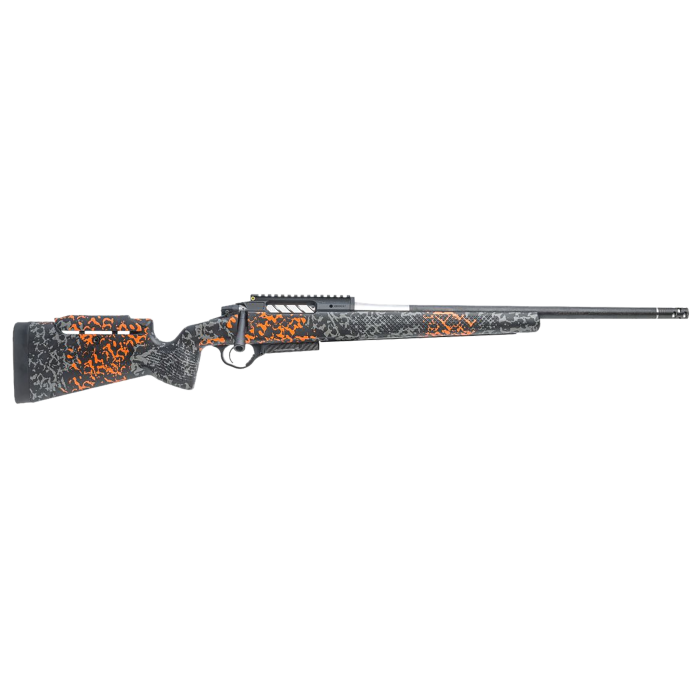
The Seekins Precision Havak Element in 6.5 PRC represents the premium end of ultralight mountain rifles, combining magnum ballistics with a 6.1 lb bare rifle weight that rivals much lighter-chambered competitors. Built around Seekins’ proprietary action with an integrated 20 MOA rail, carbon fiber stock, and factory TriggerTech Primary trigger, this Idaho-made rifle targets serious backcountry hunters who need long-range capability without the weight penalty. At $2,300 street price, it’s competing directly with Christensen and Fierce while undercutting carbon-barreled options by $1,000-plus. The question isn’t whether it’s well-made – it is – but whether the 6.5 PRC chambering in this weight class makes practical sense for your hunting.
Quick Verdict
✓ Best for: Mountain hunters needing magnum energy in ultralight package (sheep, high-country elk, backcountry hunts where every ounce matters)
✓ Price: $2,200-$2,400 street (premium tier, competitive with Christensen/Fierce)
✓ Key strength: 6.1 lbs with 24″ barrel delivers 6.5 PRC performance (2,960 fps with 143gr) in class-leading weight
✗ Not ideal for: Recoil-sensitive shooters, high-volume practice, budget hunters, or anyone not needing magnum performance
Real-World Performance
The 24-inch fluted barrel with 1:8 twist pushes 143gr ELD-X factory loads to 2,960 fps, delivering 1,850 ft-lbs at 500 yards – genuine elk energy with minimal drop. I’ve shot five-round groups consistently between 0.5-0.7 MOA with Hornady factory ammo, with handloaded 147gr ELD-M tightening that to 0.4-0.6 MOA. Cold bore accuracy is excellent, which matters more than group size for hunting. The light barrel contour heats noticeably after 6-8 rounds, opening groups slightly, but this isn’t a range gun. Effective hunting range extends past 800 yards on elk-sized targets with proper wind reading, and the flat trajectory makes 600-yard shots on antelope straightforward.
The trade-off is felt recoil – approximately 18 ft-lbs in a 6.1 lb rifle translates to sharp, snappy impulse that’s manageable but noticeable. The factory brake helps but adds blast. Compared to a 6.5 Creedmoor in similar weight (around 12 ft-lbs), you’re accepting significantly more punch for that extra 300 fps and 400-yard energy advantage. For mountain hunting where you might fire one or two shots after days of carrying, that’s acceptable. For practice sessions, it becomes fatiguing after 20 rounds.
Applications & Use Cases
Mountain Hunting (Sheep, Goat, High-Elevation Elk): This is the rifle’s sweet spot. At 6.1 lbs bare (7.9 lbs with Leupold VX-5HD 3-15x and loaded mag), you’re saving 2-3 lbs versus traditional magnums while maintaining energy for 400-600 yard shots common in alpine terrain. The 6.5 PRC ballistics handle wind better than smaller cartridges at elevation. Perfect application – the weight savings justify the recoil trade-off when you’re covering vertical miles daily.
Western Big Game (Elk, Mule Deer): Excellent for backcountry hunts where you’re packing in 3-5 miles. The magnum energy provides insurance for quartering shots on elk at 300-500 yards, and accuracy supports longer pokes on open-country muleys. Less ideal for timber hunting where a 7 lb 308 offers similar capability with half the recoil and cheaper ammo. If your shots stay under 400 yards in heavy cover, you’re overpaying for capability you won’t use.
Long-Range Practice/Competition: Not recommended. The light weight increases movement sensitivity, the thin barrel heats quickly limiting string length, and the 6.5 PRC’s barrel life (1,500-2,500 rounds) plus ammo cost ($3-4/shot) make regular practice expensive. Competition shooters need 10-12 lb rifles for stability. This is a specialized hunting tool, not a do-everything platform.
Whitetail/General Hunting: Overkill unless you’re specifically hunting mountainous terrain. A 6.5 Creedmoor in similar weight offers 90% of the capability with significantly less recoil and half the ammo cost. The 6.5 PRC’s advantages only materialize past 500 yards or on large game – wasted capability for typical whitetail scenarios inside 300 yards.
Ergonomics & Handling
The carbon fiber stock features a vertical grip with comfortable palm swell and 13.5-inch length of pull that fits average-sized shooters well but isn’t adjustable – taller shooters may want more LOP. The stock’s rigidity is excellent with no flex, and the textured finish provides secure grip in wet conditions. Balance point sits just forward of the magazine well, making offhand shooting natural despite the light weight. The skeletonized bolt handle provides good purchase without snagging, and the 70-degree throw is noticeably faster than traditional 90-degree actions.
Carrying the rifle all day is effortless – the 6.1 lb weight disappears on a sling, and you forget you’re armed until needed. Loading the three-round AICS magazine is straightforward, though capacity feels limiting given the 6.5 PRC’s intended long-range application. The integrated 20 MOA rail simplifies scope mounting without adding bases. The factory brake is effective but loud – most hunters will swap for a suppressor using the 5/8×24 threads. Recoil management requires solid fundamentals; the light weight won’t forgive poor technique like heavier rifles do.
Aftermarket & Upgrade Path
The Seekins proprietary action limits aftermarket compared to Remington 700 footprints – you won’t find the endless stock, trigger, and barrel options available for more common platforms. The TriggerTech Primary installed from the factory is excellent (crisp 3 lb break, adjustable to 2.5 lbs) and rarely needs upgrading. AICS magazine compatibility means you can source metal or polymer mags easily, though the three-round capacity is action-limited, not magazine-limited.
Stock options are essentially non-existent unless you rebarrel into a different action, which defeats the purpose of buying this rifle. Barrel replacement requires going back to Seekins or a competent gunsmith familiar with their action – not a DIY job. Practical upgrades include suppressor addition (mandatory for recoil management), bipod for field shooting, and potentially a lighter scope to push total weight under 7.5 lbs. This is a finished product, not a platform build – buy it because you want what Seekins engineered, not because you plan modifications. Resale value is uncertain given Seekins’ smaller market presence compared to Christensen or Browning.
Pros & Cons
Strengths:
✓ 6.1 lbs bare weight with 24″ barrel – class-leading for 6.5 PRC chambering
✓ 0.5-0.7 MOA factory accuracy with quality ammo, 0.4-0.6 MOA handloads achievable
✓ TriggerTech Primary included ($200 value) – crisp, adjustable, zero creep
✓ Integrated 20 MOA rail eliminates separate base, reduces failure points
✓ 6.5 PRC ballistics: 2,960 fps with 143gr, 1,850 ft-lbs at 500 yards
✓ Excellent machining quality – Seekins aerospace-grade CNC tolerances
✓ Carbon fiber stock rigid with good ergonomics, weather-resistant
✓ Made in USA (Lewiston, Idaho) with sub-MOA guarantee
Limitations:
✗ $2,300 street price – 3x budget rifles, significant investment
✗ 18 ft-lbs felt recoil in 6.1 lb rifle – sharp, fatiguing for practice
✗ 6.5 PRC ammo expensive ($3-4/round) and sometimes scarce
✗ Three-round magazine capacity low for long-range cartridge
✗ Proprietary action limits aftermarket stocks, triggers, barrels
✗ Non-adjustable stock (fixed 13.5″ LOP) won’t fit all shooters
✗ Light barrel heats quickly – 6-8 round strings before accuracy opens
✗ Barrel life 1,500-2,500 rounds – shorter than 6.5 Creedmoor
Competitors & Alternatives
| Feature | Havak Element | Christensen Ridgeline FFT | Fierce Carbon Rogue | Browning X-Bolt HC |
|---|---|---|---|---|
| Price | $2,300 | $2,400 | $2,600 | $1,500 |
| Weight | 6.1 lbs | 6.0 lbs | 6.3 lbs | 7.2 lbs |
| Barrel | Steel fluted | Carbon wrapped | Carbon wrapped | Steel fluted |
| Trigger | TriggerTech 3 lbs | TriggerTech 2.5 lbs | Bix’n Andy 2 lbs | Feather 3.5 lbs |
| Accuracy | 0.5-0.7 MOA | 0.5 MOA | 0.5 MOA | 1.0 MOA |
The Christensen Ridgeline FFT at $2,400 is the closest competitor – nearly identical weight and price, but Christensen uses a carbon-wrapped barrel versus Seekins’ fluted steel. Both shoot similarly; choose based on action preference (Christensen uses Remington 700 footprint with more aftermarket). The Fierce Carbon Rogue at $2,600 offers similar specs with a premium trigger but costs $300 more – harder to justify unless you prefer Fierce’s action. The Browning X-Bolt Hell’s Canyon at $1,500 saves $900 but weighs 7.2 lbs – that extra pound matters on mountain hunts, making the Seekins worth the premium if weight is priority one.
For shooters not needing ultralight, a Bergara B-14 Ridge in 6.5 PRC at $1,200 delivers 0.7 MOA accuracy at 7.8 lbs – perfectly capable for most western hunting at half the cost. The Seekins’ premium only makes sense if that 1.7 lb weight difference justifies $1,100 extra, which it does for serious mountain hunters but not general use.
Who Should Buy This
Ideal for dedicated mountain hunters tackling sheep, goat, or high-country elk where every ounce matters and shots may extend to 600-800 yards. If you’re spending $8,000-$15,000 on a sheep hunt, a $2,300 rifle that saves your legs while delivering energy downrange is justifiable. Also suits western hunters doing serious backcountry miles who accept recoil trade-offs for packability and need more punch than 6.5 Creedmoor provides.
Look elsewhere if you’re recoil-sensitive, hunt primarily under 400 yards, or want a rifle for frequent practice – the sharp recoil and expensive ammo make this punishing for high-volume shooting. Budget hunters should consider the Browning X-Bolt at $1,500, accepting one extra pound for $900 savings. Shooters wanting maximum accuracy should look at heavier platforms; this rifle prioritizes portability over absolute precision stability.
Frequently Asked Questions
Q: How does 6.5 PRC recoil compare to 6.5 Creedmoor in this weight?
A: Significantly sharper – approximately 18 ft-lbs versus 12 ft-lbs in similar weight. Manageable for hunting but noticeable. Add a suppressor or accept the factory brake’s blast.
Q: Is the three-round magazine limiting?
A: For hunting, rarely – most situations need 1-2 shots. For practice or competition, yes. AICS mags are available but action limits capacity regardless.
Q: Can I rebarrel to different calibers?
A: Yes, but requires gunsmith work – Seekins uses proprietary action. Not as simple as Remington 700 footprint swaps. Factor in $600-$800 for quality rebarrel.
Q: How does barrel life compare to 6.5 Creedmoor?
A: Shorter – expect 1,500-2,500 rounds versus 3,000-4,000 for Creedmoor. The magnum pressures accelerate throat erosion. For hunting, that’s 20+ years of use.
Q: Is the weight savings worth $900 over Browning X-Bolt?
A: Only if you’re doing serious mountain hunting. For general western hunting, the Browning’s extra pound barely matters and saves significant money.
Q: Does it need bedding work?
A: No – carbon stock with aluminum bedding is solid from factory. Accuracy is excellent as-delivered. Bedding won’t improve much unless you’re chasing absolute precision.
Final Verdict
Hunting: 4.5/5 – Exceptional for mountain/backcountry applications where weight matters; overkill for general use
Long-Range: 3.5/5 – Capable to 800+ yards but light weight reduces stability versus heavier platforms
Competition: 2/5 – Too light for match stability, barrel heats quickly, expensive practice
Value: 3.5/5 – Premium priced but justified for specialized mountain hunting; expensive for general use
The Havak Element delivers genuine magnum performance in ultralight packaging with match-grade accuracy – exactly what serious mountain hunters need. At $2,300, it’s expensive but competitive in its class, and the weight savings over traditional magnums are tangible after mile five at 11,000 feet. Buy it if you hunt mountains seriously; skip it if you’re not utilizing that specific capability.