
 Firearms Republic
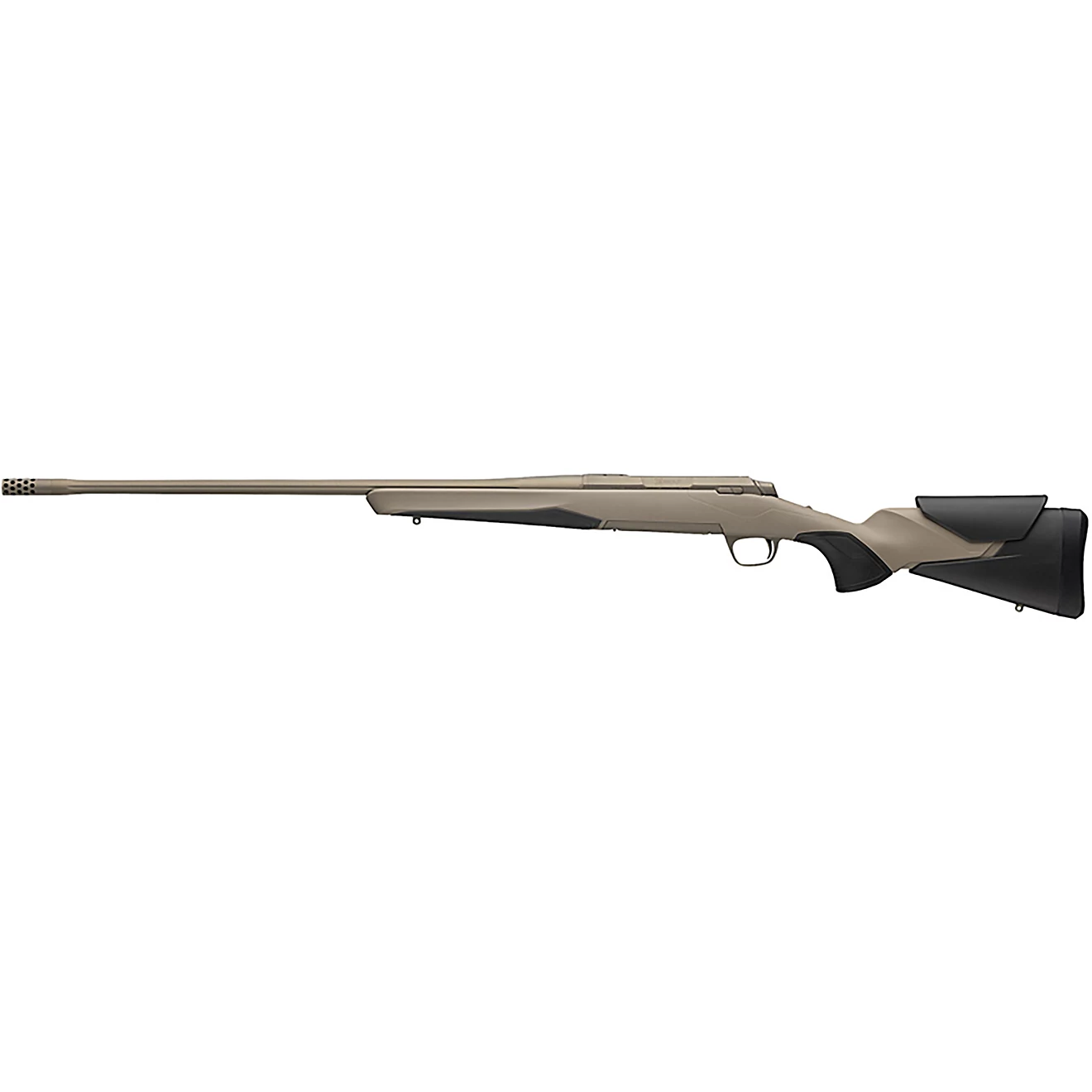
The Browning X-Bolt 2 Speed in 7mm PRC brings together a modern magnum cartridge with Browning’s fastest bolt action – a 60-degree throw that’s noticeably quicker than traditional 90-degree designs. With a 24″ heavy sporter barrel, adjustable Feather Trigger, and factory threading for suppressors, it’s clearly aimed at western hunters who need magnum energy at extended ranges without the recoil penalty of older cartridges. At $1,150-$1,250 street price, it occupies the mid-tier hunting rifle space where refinement meets practicality, though the 7mm PRC chambering demands commitment to either handloading or expensive factory ammunition.
Quick Verdict
✓ Best for: Western elk and moose hunters shooting 400-600+ yards who want modern magnum performance with manageable recoil
✓ Price: $1,150-$1,250 street (MSRP $1,299)
✓ Key strength: 60-degree bolt throw delivers fastest cycling in hunting rifle category, paired with excellent 7mm PRC ballistics
✗ Not ideal for: Budget hunters or those relying on factory ammunition – 7mm PRC costs $3-4/shot with limited availability
Real-World Performance
The 24″ barrel with 1:8 twist stabilizes heavy-for-caliber bullets perfectly, pushing 175gr ELD-X at 2,950 fps and 180gr ELD-M at 2,900 fps with factory Hornady ammunition. This translates to 2,400 ft-lbs of energy at 500 yards – more than adequate for elk-sized game – with roughly 20% less wind drift than 7mm Rem Mag at 600 yards due to higher BC bullets. Accuracy runs 0.6-1.0 MOA with premium factory loads like Hornady Precision Hunter, tightening to 0.4-0.7 MOA with developed handloads. The heavy sporter profile maintains sub-MOA accuracy through 10-round strings without significant heat-induced stringing, and cold bore consistency is excellent thanks to the free-floated barrel and quality chamber work. At 450 yards on Colorado elk, the 7mm PRC delivers decisive terminal performance, and the 60-degree bolt throw genuinely speeds follow-up shots compared to traditional actions – particularly noticeable from prone positions where clearance matters. Recoil sits around 20-22 ft-lbs with the Inflex recoil pad doing meaningful work to soften felt kick, making it noticeably more manageable than 300 Win Mag while delivering similar downrange energy with modern high-BC projectiles.
Applications & Use Cases
Western Elk and Moose Hunting: This is the X-Bolt 2 Speed’s sweet spot. The 7mm PRC provides 700+ yard effective range on large game with excellent energy retention, the 60-degree bolt enables fast cycling if follow-ups are needed, and the Inflex pad manages recoil during extended shooting sessions. At 6.8 lbs bare, it’s light enough for moderate spot-and-stalk but stable enough for precision shots across canyons. Verdict: Excellent choice for mountain and high-country hunting where shots extend beyond 300 yards.
Long-Range Hunting (400-700 yards): The combination of 7mm PRC ballistics, sub-MOA accuracy, and factory threading for suppressors makes this rifle capable at distances where most hunting rifles struggle. The heavier barrel profile aids in wind reading and maintains point of impact consistency, while the adjustable Feather Trigger (factory set around 3.5 lbs) is clean enough for precision work without being dangerously light for field conditions. Verdict: Highly capable for long-range hunting applications where energy and wind performance matter.
Suppressed Hunting: Factory 5/8×24 threading and included thread protector plus muzzle brake make this suppressor-ready out of the box. Paired with a .30 caliber can, the X-Bolt becomes a backcountry-friendly setup that protects hearing while maintaining the 7mm PRC’s ballistic advantages. The 24″ barrel keeps velocity high even with suppressor back-pressure. Verdict: Excellent suppressor host for western hunting.
Whitetail and General Deer Hunting: Here the 7mm PRC becomes overkill unless shots regularly extend past 400 yards. The $3-4/shot ammunition cost is hard to justify on deer-sized game inside 300 yards where cheaper cartridges perform identically, and the rifle’s weight and length feel excessive in timber or thick cover. Verdict: Better options exist for typical deer hunting scenarios.
Ergonomics & Handling
The composite stock with textured grip panels provides secure handling in wet conditions, though the 13.75″ length of pull runs slightly long for smaller-statured shooters. The Inflex recoil pad genuinely reduces felt recoil by directing energy away from the face, making the 20+ ft-lbs of 7mm PRC recoil more manageable during extended shooting sessions. The 60-degree bolt throw is the standout ergonomic feature – noticeably faster than 90-degree actions and requiring less hand movement, particularly beneficial when shooting from prone or in confined spaces. Bolt operation is smooth but not quite as silky as Tikka’s 60-degree design, with distinct but manageable primary extraction effort. The three-lug design distributes bolt lift effort evenly, and the bolt unlock button prevents accidental dry-firing during unloading. At 6.8 lbs bare (8.6-9.6 lbs scoped with suppressor), the rifle balances well for offhand shooting but becomes noticeable after five-plus miles at elevation. The detachable rotary magazine sits flush and doesn’t snag, though the 3-round capacity feels limiting compared to competitors offering 4-5 rounds.
Aftermarket & Upgrade Path
The X-Bolt platform has adequate but not extensive aftermarket support compared to Remington 700 footprints. Timney offers an excellent drop-in trigger ($225) that brings pull weight down to 1.5-2.5 lbs for those wanting more precision than the factory Feather Trigger provides. Stock options exist through Boyd’s and Stockys with proper X-Bolt inlets, though choices are more limited than mainstream actions. Chassis options are nearly nonexistent – the X-Bolt isn’t common in tactical/precision chassis applications. The proprietary rotary magazine design means you’re locked into Browning OEM magazines with no AICS compatibility, and the 3-round capacity can’t be expanded. Scope mounting is handled beautifully by the integrated X-Lock system, which provides repeatable zero when removing and reinstalling optics. Custom barrel work is possible through gunsmiths familiar with X-Bolt actions, but there’s no robust prefit barrel market like Savage or Remington platforms enjoy. For hunters wanting a solid rifle that doesn’t require extensive modification, the limited aftermarket is manageable – but those planning significant upgrades should consider more supported platforms.
Pros & Cons
Strengths:
✓ 60-degree bolt throw delivers genuinely faster cycling than 90-degree actions – noticeable in field use
✓ 7mm PRC ballistics provide 2,400+ ft-lbs at 500 yards with 20% better wind performance than 7mm Rem Mag
✓ Sub-MOA accuracy (0.6-1.0 MOA factory, 0.4-0.7 MOA handloads) with quality ammunition
✓ Feather Trigger adjustable 3-5 lbs, factory set ~3.5 lbs – excellent for hunting applications
✓ Factory threaded 5/8×24 with included muzzle brake and thread protector
✓ Inflex recoil pad genuinely reduces felt recoil by 20-30% through directional dampening
✓ Cerakote finish (Burnt Bronze/Smoked Bronze) provides superior corrosion resistance vs bluing
✓ X-Lock scope mounting system integrated into receiver for repeatable zero
Limitations:
✗ 3-round magazine capacity low compared to competitors offering 4-5 rounds
✗ Proprietary rotary magazine – no AICS compatibility limits options and capacity
✗ 7mm PRC ammunition scarce and expensive ($3-4/shot, $60-80/box)
✗ 6.8 lbs bare weight heavier than ultralight mountain rifles (5.5-6.2 lbs)
✗ Limited aftermarket compared to Remington 700 footprint – fewer triggers, stocks, chassis
✗ 7mm PRC barrel life shorter than 6.5 Creedmoor (2,000-2,500 rounds vs 3,000+)
✗ $1,200+ investment significant compared to budget options like Weatherby 307 ($999)
✗ Not Remington 700 footprint means limited prefit barrel and chassis options
Competitors & Alternatives
| Feature | X-Bolt 2 Speed | Weatherby 307 Range | Bergara B-14 Ridge | Christensen Ridgeline FFT |
|---|---|---|---|---|
| Price | $1,200 | $999 | $1,050 | $2,400 |
| Weight | 6.8 lbs | 6.5 lbs | 7.8 lbs | 5.5 lbs |
| Bolt Throw | 60° | 90° | 90° | 90° |
| Magazine | 3rd rotary | 3rd | 4rd AICS | 3rd |
| Accuracy | 0.7 MOA | 1.0 MOA | 0.5 MOA | 0.6 MOA |
The Weatherby 307 Range costs $200 less and weighs 0.3 lbs lighter, making it attractive for budget-conscious hunters, but the X-Bolt offers superior ergonomics, smoother action, and better recoil management – worth the premium for refinement. The Bergara B-14 Ridge at similar pricing delivers tighter accuracy (0.5 MOA guarantee) and AICS magazine compatibility, but weighs a full pound more and has slower 90-degree bolt throw – choose Bergara for range/precision work, X-Bolt for hunting. The Christensen Ridgeline FFT shaves 1.3 lbs with carbon barrel construction and offers similar accuracy, but costs double at $2,400 – the X-Bolt delivers 85% of the performance at 50% of the cost, making it better value unless every ounce matters for backcountry hunting.
Who Should Buy This
This rifle is ideal for western big game hunters regularly engaging elk and moose at 400-600+ yards who want modern magnum performance without the recoil penalty of 300 Win Mag or outdated design of 7mm Rem Mag. It’s perfect for suppressor users wanting a factory-threaded premium hunting rifle and handloaders who can exploit the 7mm PRC’s efficiency with heavy-for-caliber bullets. Browning loyalists wanting the latest technology in a proven platform will appreciate the 60-degree bolt speed combined with traditional X-Bolt reliability. Look elsewhere if you’re budget-constrained (Weatherby 307 saves $200), prioritizing weight for backcountry miles (Christensen or Seekins lighter), shooting high volume (7mm PRC ammunition costs prohibitive), or hunting typical whitetails inside 300 yards where the cartridge is overkill and cheaper options perform identically.
Frequently Asked Questions
Q: Is the 60-degree bolt throw actually noticeable in practical use?
A: Yes – particularly from prone positions or in confined spaces where hand clearance matters. It’s genuinely faster for follow-ups, though not revolutionary. Most beneficial for hunters prioritizing quick cycling.
Q: How bad is 7mm PRC ammunition availability and cost?
A: Factory ammunition runs $60-80/box ($3-4/shot) with inconsistent availability. Handloading is nearly mandatory for cost-effective shooting, dropping costs to ~$2-2.50/shot with brass reuse.
Q: Can I upgrade to higher magazine capacity?
A: No – the proprietary rotary magazine design is limited to 3 rounds with no AICS compatibility. This is a fixed limitation of the X-Bolt platform.
Q: How does the Feather Trigger compare to aftermarket options?
A: Factory trigger at ~3.5 lbs is excellent for hunting – clean break with minimal creep. Timney upgrade ($225) drops to 1.5-2.5 lbs for precision work but isn’t necessary for most hunting applications.
Q: Is 7mm PRC worth it over 7mm Rem Mag?
A: If handloading and wanting modern performance with heavy bullets (180gr+), yes – better efficiency and optimized throat design. If relying on factory ammo, 7mm Rem Mag’s ubiquitous availability makes more practical sense.
Q: What barrel life should I expect?
A: 2,000-2,500 rounds typical for 7mm PRC due to high chamber pressure and powder volume. Adequate for hunters shooting 50-100 rounds annually, limiting for high-volume shooters.
Final Verdict
Hunting: 4.5/5 – Excellent for western big game at extended ranges with modern ballistics and fast cycling
Long-Range: 4/5 – Capable to 700+ yards with quality ammunition, though heavier options better for pure precision
Competition: 2/5 – Too light for PRS, limited magazine capacity, expensive ammunition
Value: 3.5/5 – Fair pricing for features, but 7mm PRC ammunition costs add up quickly
The X-Bolt 2 Speed in 7mm PRC delivers genuine performance advantages for western hunters shooting magnum distances, with the 60-degree bolt and modern cartridge providing measurable benefits over traditional designs. The $1,200 investment is justified if you’re committed to handloading and regularly hunting at ranges where 7mm PRC’s ballistic advantages matter – otherwise, cheaper options deliver similar results for typical hunting scenarios.