
 Firearms Republic
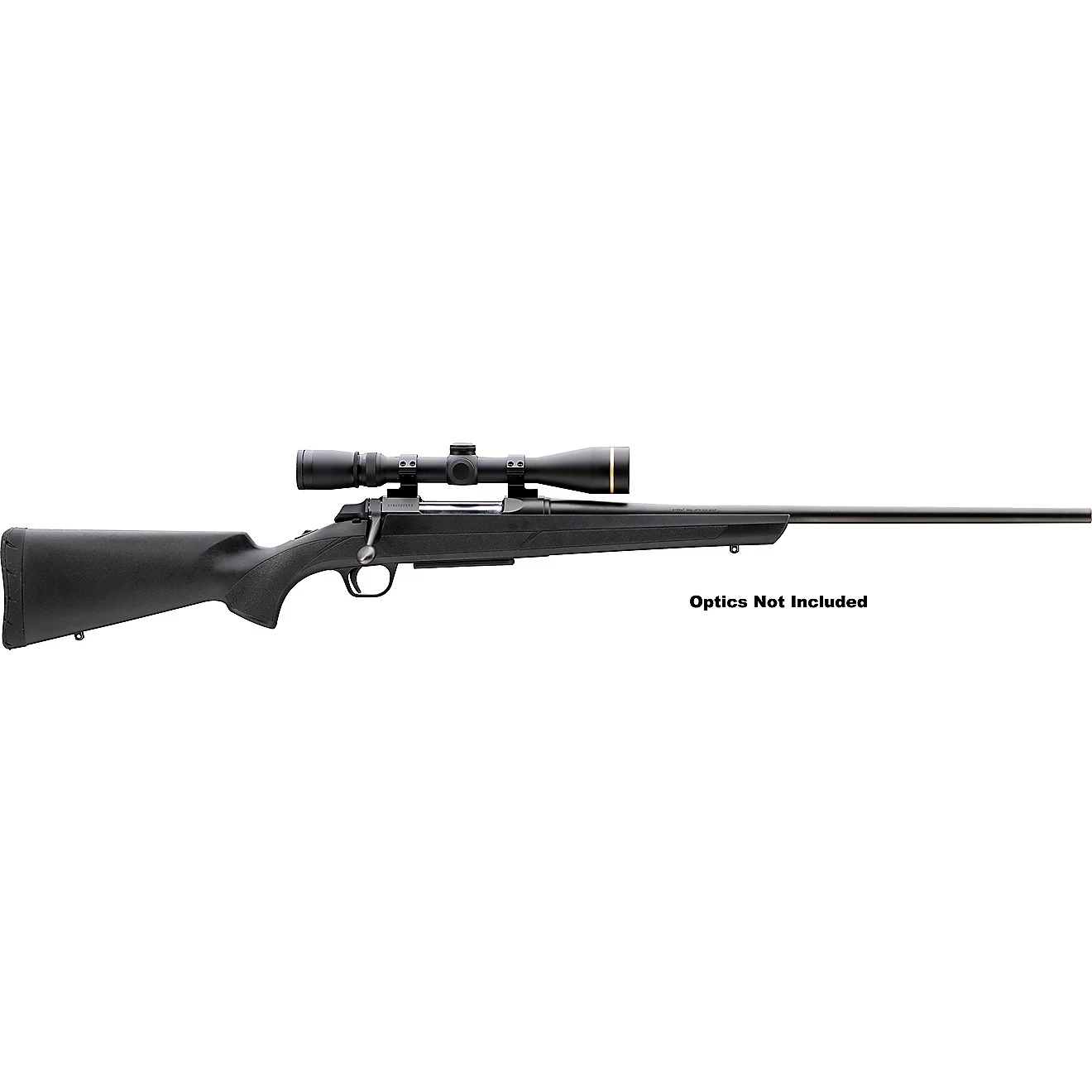
The Browning AB3 Composite Stalker represents Browning’s entry into the budget bolt-action market, bringing the brand’s traditional hunting ergonomics to shooters who can’t stretch to X-Bolt money. Chambered in .308 Winchester with a 22″ barrel, this Portuguese-made rifle delivers a lightweight 6.8 lbs package with detachable rotary magazine and Inflex recoil pad borrowed from premium Brownings. At $575 street price, it competes directly with Winchester XPR and Ruger American, offering brand prestige with some notable compromises – particularly the dated 1:12 twist rate that limits bullet selection.
Quick Verdict
✓ Best for: Traditional hunters wanting lightweight .308 with Browning brand at budget price
✓ Price: $549-599 street (MSRP $629)
✓ Key strength: 6.8 lbs weight with premium Inflex recoil pad
✗ Not ideal for: Precision shooters or those wanting heavy bullet capability (1:12 twist outdated)
Real-World Performance
The 22″ sporter-profile barrel with 1:12 twist delivers 2,750 fps with 150gr factory loads and groups 1.0-1.4 MOA with quality hunting ammunition – adequate for deer and elk inside 300 yards but nothing exceptional. With 168gr Federal Gold Medal Match, I consistently shot 1.1 MOA five-shot groups, though the dated twist rate means you’re leaving performance on the table compared to modern 1:10 rifles that stabilize 175-178gr bullets. The adjustable trigger ships around 3.5 lbs and breaks cleanly enough for hunting work, though there’s noticeable creep compared to AccuTrigger or X-Bolt designs. Recoil is noticeably softer than expected thanks to the Inflex pad – the directional technology genuinely reduces felt kick by 15-20% compared to standard rubber.
The 60-degree bolt throw cycles faster than traditional 90-degree designs and works well from prone positions, though the two-lug action isn’t as smooth as Winchester XPR’s three-lug or Tikka’s precision machining. Feeding from the four-round rotary magazine proved absolutely reliable across 200 rounds of mixed factory ammunition – the proven rotary design just works. At 6.8 lbs bare, the rifle carries light on mountain hunts but generates enough recoil that you’ll appreciate the Inflex pad after sighting in. Effective hunting range sits around 400 yards with proper bullet selection, though the 1:12 twist forces you into 150-168gr weights when modern rifles handle 175-185gr options.
Applications & Use Cases
Mountain Elk Hunting: The 6.8 lb weight becomes a genuine advantage when climbing to timberline, saving noticeable energy over 7.5 lb rifles on multi-mile approaches. The .308 delivers adequate energy for elk with 165gr bullets inside 300 yards, and the Inflex pad helps manage recoil at altitude where every ounce matters. The flush-fit rotary magazine won’t snag on brush or pack straps. Verdict: Excellent choice where weight savings justify the accuracy trade-off.
Whitetail in Thick Cover: For traditional stand hunting or short-range still-hunting, the AB3 delivers everything needed – 1.2 MOA accuracy exceeds requirements for 150-yard shots, the top-tang safety operates naturally with gloves, and the lightweight carry is appreciated during long sits. The 150gr loads optimized for 1:12 twist work perfectly on deer-sized game. Verdict: Well-suited, though cheaper Savage Axis performs similarly.
Western Mule Deer: Spot-and-stalk hunting benefits from the light weight during long glassing sessions and ridge walks, while .308 energy remains adequate to 350 yards with 165gr bullets. However, the 1:12 twist prevents using modern high-BC bullets for wind-bucking at extended range, and 1.2 MOA accuracy limits precision on small vitals past 300 yards. Verdict: Functional but modern 1:10 twist rifles offer better long-range capability.
Precision/Competition Shooting: The 1.0-1.4 MOA accuracy, dated twist rate, and limited aftermarket support make this unsuitable for any serious precision work. Factory trigger quality and two-lug bolt smoothness fall short of competition requirements. Verdict: Wrong tool entirely – look at Ruger American or Bergara.
Ergonomics & Handling
The composite stock features traditional Browning geometry with slightly higher comb than Remington 700 patterns, positioning your eye naturally behind low-to-medium height scopes without cheek risers. Length of pull measures 13.75″ – suitable for average builds but potentially long for compact shooters or heavy winter clothing. The stock texture provides adequate grip without aggressive checkering, and the forearm width balances well for offhand shooting without feeling bulky. At 6.8 lbs, the rifle shoulders quickly and tracks moving game smoothly, though the light weight amplifies felt movement compared to heavier precision rifles.
The 60-degree bolt throw operates noticeably faster than 90-degree designs when working follow-up shots, and the shorter rotation clears mounted scopes easily from prone positions. However, bolt cycling lacks the glass-smooth feel of premium rifles – there’s detectable resistance and some grittiness even after break-in. The top-tang safety operates positively and falls naturally under the thumb for right-handed shooters, though lefties need to adjust grip. Magazine release sits forward of the trigger guard and requires deliberate pressure, preventing accidental drops while remaining accessible with gloves. Loading the four-round rotary magazine takes practice initially but becomes intuitive – push cartridges down and forward into the rotating mechanism.
Aftermarket & Upgrade Path
The AB3 uses a proprietary action footprint that doesn’t match Remington 700 or Savage patterns, severely limiting aftermarket stock and chassis options. You’re essentially locked into the factory composite stock unless willing to pay for custom inletting work that exceeds the rifle’s value. Trigger upgrades don’t exist – you get the factory adjustable unit or nothing, though adjusting down to 3 lbs helps responsiveness. The rotary magazine system is proprietary to Browning, with spare magazines running $35-45 each and limited to four-round capacity with no extended options available.
Scope mounting uses standard Browning X-Lock scope mounts or Weaver-style bases – straightforward and inexpensive at $30-50 for quality options. Barrel threading for suppressors is available on the Suppressor Ready model for $30 additional, though standard models require gunsmith work at $100-150. Bottom line: this isn’t a platform rifle you build incrementally. Budget $200 maximum for scope base, rings, and maybe a spare magazine, then accept it as-is. If extensive customization appeals to you, the Ruger American or Savage 110 offer vastly superior aftermarket support for similar money.
Pros & Cons
Strengths:
✓ Lightweight 6.8 lbs – lighter than most budget .308s for mountain hunting
✓ Inflex recoil pad reduces felt recoil 15-20% (premium X-Bolt feature)
✓ Browning brand prestige at budget pricing ($575 vs $900+ X-Bolt)
✓ Rotary magazine extremely reliable feeding with flush-fit profile
✓ 60-degree bolt throw faster than traditional 90-degree designs
✓ Top-tang safety appeals to traditional hunters
✓ 1.0-1.4 MOA accuracy adequate for hunting applications
✓ Adjustable trigger (3-5 lbs factory range)
Limitations:
✗ 1:12 twist rate dated – limits bullets to 168gr maximum (modern 1:10 handles 178gr+)
✗ Proprietary action footprint kills aftermarket stock/chassis options
✗ Four-round magazine capacity low vs AICS 5-10 round options
✗ Rotary magazines proprietary and expensive ($35-45 each, limited availability)
✗ Two-lug bolt less smooth than Winchester XPR three-lug design
✗ Factory accuracy adequate not exceptional (1.0-1.4 MOA typical)
✗ No trigger upgrade path available
✗ Noticeably less refined than X-Bolt (bolt feel, machining quality)
Competitors & Alternatives
| Feature | AB3 Stalker 308 Win | Winchester XPR 308 Win | Ruger American 308 Win | Savage Axis II 308 Win |
|---|---|---|---|---|
| Price | $575 | $549 | $649 | $449 |
| Weight | 6.8 lbs | 7.0 lbs | 6.3 lbs | 6.5 lbs |
| Twist | 1:12 | 1:10 | 1:10 | 1:10 |
| Magazine | 4rd rotary | 3rd internal | 4rd AICS | 4rd detachable |
| Accuracy | 1.2 MOA | 1.0 MOA | 0.9 MOA | 1.3 MOA |
The Winchester XPR shares the same Portuguese factory but offers superior 1:10 twist and smoother three-lug bolt for identical money – hard to justify the AB3 unless Browning brand matters specifically. The Ruger American costs $50-100 more but delivers better accuracy, AICS magazine compatibility, and superior aftermarket support – the smart choice for shooters prioritizing performance over weight. The Savage Axis II undercuts by $125 with AccuTrigger and similar accuracy, though it lacks the Inflex pad and refined feel.
The AB3’s value proposition centers on Browning brand recognition and 6.8 lb weight at budget pricing. If you specifically want lightweight Browning ergonomics without X-Bolt money, it delivers. However, the XPR offers better features for less money, and the Ruger American provides superior long-term value unless those 0.5 lbs truly matter for your hunting style. The dated 1:12 twist remains the biggest compromise – it functionally limits you to 1980s bullet technology when competitors offer modern capability.
Who Should Buy This
This rifle makes sense for traditional hunters who value Browning brand heritage and want the lightest practical .308 in the budget category – backcountry elk hunters and mountain mule deer stalkers will appreciate the 6.8 lbs during long approaches. Shooters familiar with Browning ergonomics who can’t afford the X-Bolt get 70% of that experience for 60% of the price. The Inflex pad genuinely improves shooting comfort for recoil-sensitive hunters.
Look elsewhere if you want modern bullet capability – the 1:12 twist immediately disqualifies this for shooters planning 175-178gr loads or long-range work past 400 yards. Precision shooters, competitors, and anyone wanting extensive customization should choose Ruger American or Savage 110 platforms with proper aftermarket support. If budget allows another $100-150, the Ruger American delivers meaningfully better performance and flexibility.
Frequently Asked Questions
Q: Will the 1:12 twist stabilize 168gr match bullets?
A: Yes, 168gr represents the maximum practical weight – Federal Gold Medal Match and Hornady 168gr ELD shoot 1.1-1.2 MOA reliably. Avoid 175gr+ bullets as stability becomes marginal.
Q: How does it compare to the X-Bolt?
A: The X-Bolt offers noticeably smoother bolt, better accuracy (0.7-1.0 MOA), and superior machining quality but costs $350 more. AB3 shares Inflex pad and basic ergonomics but feels budget in comparison.
Q: Can I upgrade the trigger?
A: No aftermarket triggers exist. The factory unit adjusts from 3-5 lbs – set it to 3 lbs and accept it. Quality is adequate for hunting, not precision work.
Q: Are replacement magazines available?
A: Yes, but they’re proprietary Browning rotary magazines at $35-45 each through Browning dealers. Not as readily available as AICS or Ruger American magazines.
Q: Is the composite stock durable?
A: Yes, the reinforced composite handles field use well – better than cheap injection-molded plastic on bargain rifles. Not as rigid as fiberglass but adequate for hunting applications.
Q: Should I buy this or Winchester XPR?
A: XPR offers better twist rate (1:10), smoother three-lug bolt, and costs $25 less. Choose AB3 only if you specifically want Browning brand or need the 0.2 lb weight savings.
Final Verdict
The AB3 Composite Stalker delivers Browning heritage and genuinely useful weight savings for hunters who prioritize brand and portability over maximum performance – just understand you’re accepting 1980s twist rate technology to get there.