 Maksym Kovaliov

AR-15, PCC, Shotgun – The Honest Comparison
The rifle you choose for home defense is the most consequential firearm purchase you can make. Unlike hunting or competition rifles – where a suboptimal choice costs you a trophy or a stage time – a home defense rifle that’s wrong for your household, your layout, or your skill level has consequences that can’t be undone.
This guide cuts through the marketing noise and gives you the honest assessment: what platforms actually work in residential settings, why the common assumptions about shotguns and “stopping power” are frequently wrong, what caliber and ammunition choices matter more than most buyers realize, and how to build or buy a home defense rifle setup that works for the specific people who will use it.
The Home Defense Equation: What Actually Matters
Before getting into platforms and calibers, the factors that determine the right home defense rifle are worth defining clearly:
Maneuverability: A residential hallway is typically 36″–42″ wide. A bedroom doorway is 28″–32″. The rifle needs to be handled in these spaces without the muzzle sweeping walls and doorways before the threat is identified. Overall length matters significantly.
Reliability: A home defense rifle must function under stress, in the dark, without a warm-up period. It cannot be finicky about ammunition, require precise technique to cycle, or have a history of malfunctions under adverse conditions. Reliability is the highest priority, above accuracy, above ergonomics, above cost.
Recoil management: A rifle that produces flinch during training produces flinch during use. Every member of the household who might need to access and use the rifle needs to be able to shoot it accurately under stress. Recoil that one person handles comfortably may be too much for another.
Sound signature: Indoors, unsuppressed centerfire rifle fire produces 165–175 dB – significantly above the threshold for immediate permanent hearing damage. This is not an abstract concern. Firing an unsuppressed .308 or 12-gauge inside a bedroom without hearing protection causes real, immediate damage to everyone in the room. Suppressors, subsonic loads, and lower-pressure calibers all reduce this risk.
Overpenetration: Bullets that miss or pass through a threat travel through residential drywall with little resistance. Standard drywall is no barrier to any common firearm projectile. The question is how far a bullet travels after passing through, and what’s on the other side – family members, neighbors, bystanders.
Platform Comparison: The Honest Assessment
AR-15 in 5.56 NATO – The Standard Recommendation
The AR-15 in 5.56 NATO is the most widely recommended home defense rifle among defensive shooting trainers and law enforcement professionals – and for reasons that frequently surprise new buyers.
The overpenetration counterargument: 5.56 NATO is commonly assumed to be a dangerous overpenetrator in residential settings. Testing by the FBI and independent ballistics researchers consistently shows the opposite. Standard 5.56 defensive loads – particularly frangible or bonded hollow points – penetrate fewer interior walls than 9mm pistol rounds or 12-gauge buckshot. The reason: 5.56 projectiles are lightweight and fast, and they destabilize rapidly in soft obstacles like drywall. Heavy pistol bullets maintain their trajectory through multiple walls because their weight resists deflection.
This is counterintuitive but supported by documented testing. A 55gr 5.56 hollow point fired into drywall panels typically penetrates 3–4 panels before stopping. A 147gr 9mm FMJ penetrates 6–8 panels. A 00 buckshot pellet penetrates 4–6 panels per pellet – with 9 pellets per shell.
The practical advantages of AR-15 for home defense:
- Low recoil – fast, accurate follow-up shots; manageable for most household members
- High capacity – 30 rounds standard
- Accurate at all relevant home defense distances (5–50 yards)
- Flat-top rail accepts any optic, light, or accessory
- Standardized platform – training, maintenance, and accessories are ubiquitous
- Better terminal performance than pistol calibers with appropriate loads
The limitations:
- Length – a 16″ barrel AR-15 is approximately 35″ overall with stock collapsed; long for tight spaces
- Sound – unsuppressed 5.56 indoors causes immediate hearing damage; suppressor or subsonic caliber strongly recommended
- Mechanical complexity – more parts to understand and maintain than a pistol or pump shotgun
- Legal restrictions – AWB states require featureless or fixed-magazine configurations
AR-15 in .300 Blackout Subsonic – The Suppressed Specialist
For households specifically planning a suppressed home defense setup, .300 Blackout with 220gr subsonic loads is the purpose-built answer. The same AR-15 platform, same magazine, same controls – but running at 1,000 fps for a hearing-safe suppressed report and a heavier .30-caliber projectile.
A 9″ .300 BLK SBR or pistol with a 7″ suppressor results in approximately 16″–17″ overall length – more compact than a 16″ AR-15 and hearing-safe with subsonic loads. This is the configuration used by many special operations units for exactly the same reasons it makes sense in home defense: quiet, compact, effective at close range.
Limitations: subsonic terminal performance drops past 75 yards, and the configuration requires NFA paperwork for the suppressor and (if using a stock) for the SBR. See the .300 Blackout Caliber Guide and Suppressor Buyer’s Guide for full setup details.
9mm PCC – The Accessible Alternative
A 9mm pistol caliber carbine (PCC) on the AR platform is the home defense recommendation for households where recoil management is a genuine concern, suppressed operation is desired without the NFA complexity of centerfire setups, or where ammunition cost makes high-volume practice difficult on a centerfire budget.
Advantages over AR-15 for home defense:
- Lower recoil – more accessible for smaller-framed shooters, youth household members, or anyone who struggles with rifle recoil
- Suppressed subsonic 9mm is quieter than suppressed .300 BLK subsonic – the quietest common centerfire suppressed experience
- Lower ammunition cost – 9mm at $0.20–$0.35/round vs. 5.56 at $0.35–$0.55/round enables more training volume
- Less overpenetration concern than rifle calibers (though still penetrates multiple walls)
Limitations:
- Less terminal performance than 5.56 or .300 BLK supersonic at distances past 50 yards
- 9mm is adequate for home defense inside 50 yards with quality hollow points – not a significant practical limitation given typical engagement distances
See the full AR-9 / PCC Platform Guide for model recommendations and setup guidance.
12-Gauge Shotgun – The Traditional Choice, Reassessed
The pump-action 12-gauge shotgun is the most iconic home defense firearm in American culture. The sound of a pump-action being racked is universally recognized. The reality of shotguns in home defense is more complicated than the legend.
Where shotguns genuinely excel:
- Terminal performance with 00 buckshot is exceptional – nine .33-caliber projectiles per shell is devastating terminal effect inside 15 yards
- Mechanical simplicity of a pump-action is unmatched – the operating mechanism is as simple as firearms get
- Low cost – a Mossberg 500 or Remington 870 is $300–$400, the most affordable quality home defense long gun available
- Psychological deterrence – the sound and visual profile are unambiguous
Where shotguns are frequently overrated:
- Recoil – a standard 12-gauge 00 buckshot load produces 25–30 ft-lbs of recoil energy; more than a .308 Winchester rifle. Many household members cannot shoot a 12-gauge accurately without extensive training
- Capacity – typically 4–8 shells depending on configuration; lower than AR-15 or PCC
- Overpenetration – 00 buckshot pellets penetrate approximately as many walls as 9mm pistol rounds; not a safe barrier for residential use without careful shot placement
- Manual of arms – pump-action shotguns are subject to “short-stroking” malfunctions under stress when the shooter doesn’t fully cycle the action; requires deliberate training to avoid
- Reduced load options – reduced recoil 00 buckshot ($1.00–$1.50/round) is the right home defense load; inexpensive training on full-power loads doesn’t translate perfectly
The honest verdict on shotguns for home defense: The shotgun is a capable home defense tool in the hands of a shooter who has trained extensively with it and who can handle the recoil confidently under stress. For most households, the AR-15 or PCC is more practical: lower recoil, higher capacity, faster follow-up shots, and better malfunction recovery under stress. The shotgun’s advantages are real but require significant training to realize.
Bolt-Action – Not Recommended for Home Defense
The bolt-action rifle is the least appropriate home defense platform in common use. The manual cycling between shots takes 2–3 seconds under stress – time that doesn’t exist in a close-range defensive encounter. For a household that owns only a bolt-action rifle and cannot purchase another firearm, it’s better than no firearm. As a deliberate choice for home defense, it’s the wrong tool.
Platform Comparison Table
| Platform | Recoil | Capacity | Sound (unsuppressed) | Overpenetration | Maneuverability | Best For |
|---|---|---|---|---|---|---|
| AR-15 5.56 NATO | Low | 30 rounds | Very loud | Lower than expected | Moderate | Most households |
| AR-15 .300 BLK subsonic (suppressed) | Very low | 30 rounds | Hearing-safe | Moderate | Best (SBR config) | Suppressed HD setup |
| 9mm PCC | Very low | 17–33 rounds | Loud (less than rifle) | Moderate | Good | Recoil-sensitive households |
| 12-ga Shotgun (00 buck) | High | 4–8 shells | Extremely loud | Moderate | Good (18″ barrel) | Trained shotgun users |
| Bolt-action .308 | Moderate | 3–5 rounds | Very loud | High | Poor | Not recommended |
Ammunition: The Most Important Variable
Platform selection matters. Ammunition selection within that platform matters just as much – possibly more.
5.56 NATO Home Defense Loads
For AR-15 home defense use, avoid FMJ (full metal jacket) training ammunition. FMJ rounds do not expand and penetrate significantly more material than expanding defensive loads.
Recommended 5.56 home defense loads:
| Load | Bullet | Velocity | Notes |
|---|---|---|---|
| Hornady TAP 75gr OTM | 75gr OTM | 2,630 fps | Law enforcement standard, expands reliably |
| Federal Premium 55gr Trophy Bonded | 55gr TBBC | 3,110 fps | Bonded, controlled expansion |
| Hornady Black 75gr | 75gr BTHP | 2,630 fps | Consistent performance, widely available |
| Speer Gold Dot 55gr | 55gr GDSP | 3,100 fps | Excellent terminal performance, LE contract load |
| Federal LE Tactical TRU 55gr | 55gr OTM | 3,165 fps | FBI-contract load standard |
What to avoid: Varmint-style bullets (V-Max, BlitzKing, AccuTip) fragment explosively but may not penetrate adequately through clothing and into vital tissue. Designed for prairie dogs, not defensive use.
.300 BLK Home Defense Loads
Supersonic: Barnes VOR-TX 110gr TTSX, Hornady Black 125gr HAP – bonded or solid copper for controlled expansion.
Subsonic: Hornady Sub-X 220gr, Federal Suppressor 220gr OTM, SIG Sauer 220gr OTM – use subsonic with suppressor for hearing-safe operation.
9mm PCC Home Defense Loads
The same loads that perform well in 9mm pistols perform even better from a 16″ PCC barrel due to 150–250 fps additional velocity. Federal HST 147gr, Speer Gold Dot 124gr, Hornady Critical Defense 115gr – standard FBI-protocol tested defensive loads.
12-Gauge Home Defense Loads
00 Buckshot: Federal Flite Control 00 Buck ($1.50/shell) – the wad holds the pellets together longer for tighter patterns and more reliable penetration. Reduces spread that puts pellets outside the intended target area.
Reduced Recoil 00 Buckshot: Hornady TAP Reduced Recoil, Federal LE132 – reduces recoil approximately 30% while maintaining adequate terminal performance inside 20 yards. Strongly recommended for household members who struggle with full-power loads.
Avoid birdshot for home defense: #7.5, #8, and #9 birdshot does not penetrate adequately through clothing and tissue to reach vital organs at typical distances. The surface wounds it creates are painful but not reliably incapacitating. Numerous documented defensive shootings have involved birdshot-hit assailants continuing to threaten – do not use it for defense.
Configuration: Length and Maneuverability
The Length Problem
The single biggest practical challenge with rifles in home defense is overall length in confined spaces. A 16″ AR-15 with stock extended is approximately 35″–36″ overall. In a 36″-wide hallway, clearing a corner with a 16″ rifle requires the muzzle to enter the space before the shooter can see the threat – a significant tactical disadvantage.
Solutions:
Shorter barrels: A 10.5″ AR-15 pistol or SBR is approximately 26″–27″ overall with stock collapsed. This handles residential spaces dramatically better than a 16″ rifle. NFA SBR registration required for a stock; pistol brace configuration is an alternative – verify current ATF rules before building.
Folding stocks: Some AR-15 platforms accept folding stock adapters (Law Tactical Gen 3, Gear Head Works Tailhook) that allow the rifle to fold to approximately 19″–20″ for storage and deployment from a safe. The rifle must be unfolded before firing.
PCC platform: Many AR-9 PCCs are offered in pistol configuration with 8″–10.5″ barrels that handle tighter than full-length rifles while remaining legal without NFA paperwork in pistol brace configuration.
The 18″ shotgun rule: 18″ is the legal minimum barrel length for a shotgun without NFA paperwork. An 18″ barrel pump-action (Mossberg 590, Remington 870 Tactical) is approximately 38″–39″ overall – actually longer than a 16″ AR-15. The “shotgun is more compact” assumption is frequently wrong.
Storage and Deployment
A home defense rifle is only useful if it’s accessible. Balancing accessibility with safe storage – particularly in households with children – is the central practical challenge.
Quick-access long gun safes: Stack-On Long Gun Safe ($150–$250), Fort Knox Defender ($400–$600), GunVault SpeedVault ($200). Biometric or RFID access for fast deployment. Required in households with children – a loaded, unsecured rifle is a liability far greater than any threat it defends against.
Chamber loaded vs. empty chamber: A home defense rifle with a loaded magazine but empty chamber requires a deliberate charging action before firing. This takes approximately 1–2 seconds with a practiced shooter. Most defensive shooting trainers recommend a loaded chamber for a rifle stored in a quick-access safe – the entire purpose of the safe is preventing unauthorized access, which removes the primary objection to a loaded chamber.
Accessories: What You Actually Need
1. White Light – Non-Negotiable
You cannot engage a threat you cannot positively identify. Firing at an unidentified target in the dark is both legally indefensible and morally untenable. A weapon-mounted light on a home defense rifle is not optional.
Quality threshold: 300 lumens minimum for indoor use; 600+ lumens preferred for positive ID and temporary incapacitation of an aggressor’s night vision.
Recommended weapon lights:
- SureFire Scout Pro ($240) – the professional standard; 1,000 lumens, tail-switch and remote pressure pad compatible
- Streamlight ProTac Rail Mount 1 ($120) – excellent value, 625 lumens, reliable
- Cloud Defensive OWL ($290) – 1,250 lumens, integrated rail mount, excellent beam pattern
Activation: A pressure pad mounted on the handguard (forward position) allows activating the light with the support hand while maintaining trigger finger discipline. Learn to activate the light without taking your trigger finger inside the guard.
2. Red Dot or LPVO Optic
Iron sights are functional for home defense. A red dot or low-power optic is meaningfully better under stress and in reduced light – the illuminated dot is faster to acquire than aligning front and rear sights, particularly for anyone without perfect vision.
Recommended home defense optics:
- Aimpoint Micro T-2 ($900) – the most battle-proven red dot; 50,000-hour battery life (leave it on permanently), exceptional durability
- Trijicon MRO ($500) – Trijicon’s compact red dot; excellent battery life, slightly larger window than Micro T-2
- Holosun 510C ($280) – solar-assisted battery; the best value home defense red dot; circle-dot reticle aids fast acquisition
Mount height: A Unity Tactical FAST mount ($130) or similar absolute co-witness height mount positions the optic higher – allowing a more natural head position under stress without craning the neck to get behind a standard-height mount. Preferred by most defensive trainers for home defense configurations.
3. Sling
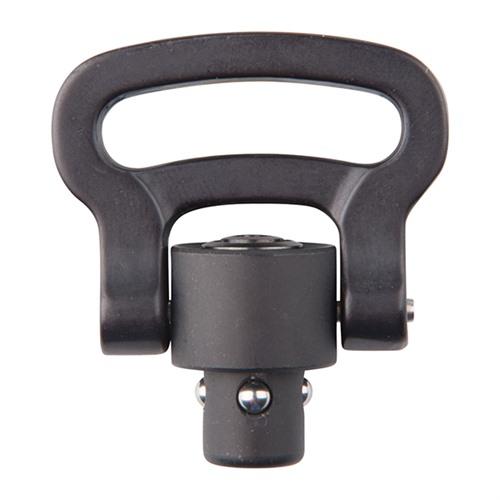
A sling keeps the rifle accessible and hands-free when not actively shooting – relevant when calling 911, opening doors, or managing non-threatening household members. A two-point sling (Magpul MS1, $40; Blue Force Gear Vickers, $70) is the standard for home defense.
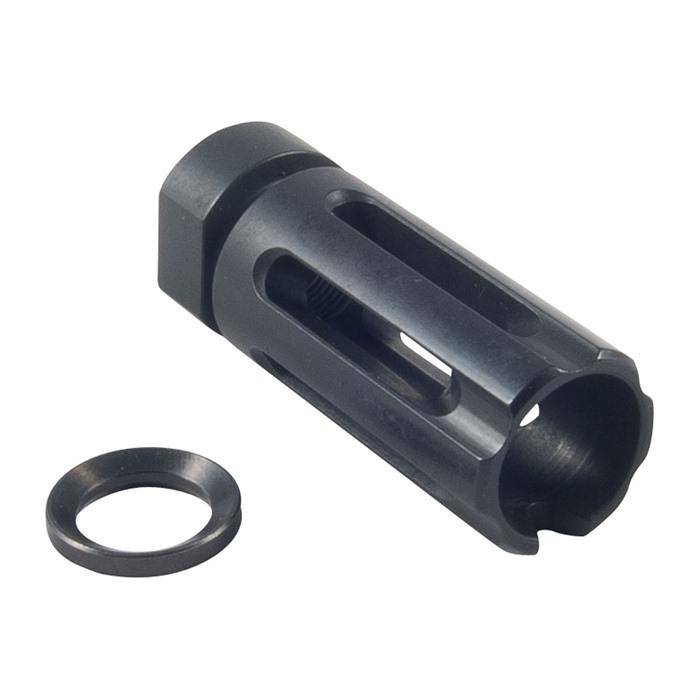
4. Suppressor (Strongly Recommended)
Unsuppressed rifle fire indoors causes immediate, permanent hearing damage to everyone in the room. The priority argument for suppressors is strongest in the home defense context precisely because you cannot put hearing protection on before responding to an unexpected threat in the night.
The $0 NFA tax stamp (as of January 1, 2026) removes the $200 financial barrier. The ATF Form 4 process and wait period remain. For anyone planning a home defense rifle build, starting the suppressor purchase process before it’s needed – and waiting – is far better than experiencing an unsuppressed defensive event.
See the full Suppressor Buyer’s Guide for current process and model recommendations.
Best Home Defense Rifles by Category
AR-15 Platform
Daniel Defense DDM4 V7 5.56 ($1,900–$2,000) The most recommended premium AR-15 for home defense among defensive shooting trainers. Cold hammer forged barrel, tight upper/lower fit, and Daniel Defense’s quality control produce a rifle that will run 50,000 rounds without significant component failure. The 16″ mid-length gas system cycles quality defensive ammunition reliably. At $2,000 it’s a serious investment – justified by the context of a firearm whose sole purpose is protecting your household.
BCM RECCE-16 MCMR 5.56 ($1,500–$1,700) BCM is the other standard premium recommendation. Cold hammer forged chrome-lined barrel, properly staked BCG, and BCM’s mil-spec quality control. The RECCE-16 with M-LOK handguard is the right configuration for weapon light and pressure pad mounting. Slightly less expensive than Daniel Defense at comparable quality. The choice often comes down to dealer availability.
Springfield Armory SAINT Edge 5.56 ($900–$1,000) Springfield’s SAINT Edge improves on the basic AR-15 formula with nickel boron BCG (easier cleaning), 1:8 twist barrel, and M-LOK free-float handguard standard. At $950 it’s the best-equipped mid-tier AR-15 for home defense and a significant step in quality above budget alternatives.
S&W M&P15 Sport II 5.56 ($700–$800) The most recommended entry-level AR-15 for home defense buyers on a budget. Melonite barrel, reliable operation, and S&W’s quality control in a mil-spec-compatible package. Not the rifle for the buyer who plans to run it hard at high round counts – but for a home defense rifle that fires 200 rounds per year in training and lives in a quick-access safe, it is entirely adequate.
9mm PCC Platform
JP Enterprises GMR-15 ($2,000–$2,200) The competition-proven PCC that doubles as the premium suppressed home defense option. JP’s Silent Captured Spring reduces bolt bounce and felt recoil; the rifle cycles subsonic loads reliably with an adjustable gas block. Glock magazine compatible. The right choice for the buyer who wants a suppressed 9mm home defense PCC and wants the best.
CMMG Banshee 300 Mk4 9mm ($1,400–$1,600) CMMG’s Radial Delayed Blowback system reduces gas blowback into the shooter’s face during suppressed operation – a practical advantage in home defense use where the suppressor will almost certainly be attached. Glock magazine compatible. Available in 8″ and 16″ barrel configurations. The 8″ pistol configuration with a suppressor produces a compact, hearing-safe package with genuine home defense capability.
PSA PX-9 Gen 3 ($650–$750) The best budget PCC for home defense. Radial delayed blowback, Glock magazine compatible, LRBHO standard. Reliable with quality 9mm hollow point ammunition. A $650 rifle plus a $450 SilencerCo Sparrow is a functional suppressed 9mm home defense system for $1,100 – competitive value compared to premium alternatives.
Shotgun Platform
Mossberg 590A1 12-Gauge ($550–$650) The Mossberg 590A1 is the most mil-spec consumer shotgun available – aluminum trigger guard and safety, heavy-walled barrel, and the dual extractors that make Mossberg’s action more reliable than the Remington 870 under adverse conditions. 9-round capacity (8+1) in the standard configuration. The metal trigger group and safety are more durable than the plastic components on the standard 500. At $600 it’s the right shotgun for the buyer who wants the most reliable pump-action available.

Mossberg 590 Shockwave ($400–$450) The Shockwave configuration (14″ barrel, Shockwave Technologies Raptor grip) is classified as a “firearm” rather than a shotgun or SBR under ATF rules – no NFA paperwork required. Compact, maneuverable, capable at close range. The trade-off: the pistol grip configuration without a stock is harder to shoot accurately under stress than a traditional stocked shotgun. Requires training to use effectively.
Remington 870 Express Tactical ($400–$500) The 870 remains a capable, widely supported pump-action shotgun. The Express Tactical version includes extended magazine (6+1), 18.5″ barrel, and Magpul MOE furniture as standard. Less durable than the 590A1 at this price point due to the stamped steel trigger components – adequate for home defense use that doesn’t involve frequent high-volume shooting.
Complete Home Defense Rifle Comparison
| Rifle | Caliber | Price | Action | Capacity | Weight | Best Scenario |
|---|---|---|---|---|---|---|
| Daniel Defense DDM4 V7 | 5.56 NATO | $2,000 | Semi-auto | 30 | 6.8 lbs | Premium AR-15 HD |
| BCM RECCE-16 MCMR | 5.56 NATO | $1,600 | Semi-auto | 30 | 6.9 lbs | Premium AR-15 HD |
| Springfield SAINT Edge | 5.56 NATO | $950 | Semi-auto | 30 | 6.9 lbs | Mid-tier AR-15 HD |
| S&W M&P15 Sport II | 5.56 NATO | $750 | Semi-auto | 30 | 6.5 lbs | Budget AR-15 HD |
| JP GMR-15 | 9mm | $2,100 | Semi-auto | 17–33 | 5.9 lbs | Premium suppressed PCC |
| CMMG Banshee Mk4 9mm | 9mm | $1,500 | Semi-auto | 17–33 | 5.8 lbs | Suppressed PCC |
| PSA PX-9 Gen 3 | 9mm | $700 | Semi-auto | 17–33 | 6.0 lbs | Budget PCC |
| Mossberg 590A1 | 12-ga | $600 | Pump | 9 | 7.5 lbs | Most reliable shotgun |
| Remington 870 Tactical | 12-ga | $450 | Pump | 7 | 7.3 lbs | Budget shotgun |
Legal Considerations
Use of Force
Laws governing defensive use of firearms vary significantly by state. Most states require that deadly force be used only in response to an imminent threat of death or serious bodily injury. “Castle doctrine” states generally remove the duty to retreat within your home. “Stand your ground” states extend this to public spaces. Know your state’s specific laws before making any defensive planning decisions – this is not optional and cannot be summarized adequately here. Consult a firearms attorney in your state if you have specific questions.
AWB State Restrictions
California, New York, New Jersey, Massachusetts, Connecticut, Maryland, and several other states restrict features on semi-automatic rifles. In these states, AR-15s must be configured in featureless or fixed-magazine configurations. Specific requirements vary by state. A PCC in 9mm with a fixed magazine and featureless stock may be the most practical semi-automatic home defense option in heavily restricted states. Verify compliance with your state’s current law before purchasing.
Safe Storage Requirements
Numerous states mandate safe storage of firearms, particularly in households with children. California, Massachusetts, Connecticut, and others require that firearms be stored in a locked container or rendered inoperable when not in immediate use. Quick-access biometric safes satisfy these requirements in most states. Know your state’s requirements.
Training: The Most Important Investment
The best rifle in the world is less effective than a mediocre rifle in trained hands. For home defense specifically:
Minimum training investment:

- A basic rifle safety and operation course (NRA First Steps, USCCA Fundamentals) – covers safe handling, loading, unloading, and malfunction clearance
- 500 rounds of deliberate practice developing trigger control, sight picture, and consistent hits from standing position at 7–15 yards
- Practice with the specific defensive ammunition your rifle will use – not just training FMJ
Scenario-specific training:
- Moving through residential spaces with your rifle (low-light, confined hallways)
- Shooting with your weapon-mounted light as the only light source
- Malfunction clearance drills under simulated stress
The family discussion: Everyone in the household who might access the rifle needs to know: where it is, how the safe opens, how to load and cycle the action, and the four fundamental rules of firearm safety. This conversation – uncomfortable as it may be – is the most important home defense planning step you can take.
Pros and Cons
✓ Advantages of Rifles for Home Defense
- Superior terminal performance – 5.56 NATO defensive loads outperform pistol rounds on soft tissue and intermediate barriers
- Lower recoil than shotguns – faster accurate follow-up shots for most shooters
- Higher capacity – 30 rounds vs. 4–8 for shotguns
- Accurate at all relevant distances – a rifle can engage a threat at 5 yards or 50 yards with equal confidence
- Suppressor-compatible – reduced hearing damage risk compared to any other defensive platform at comparable power levels
- Accessory ecosystem – lights, optics, slings designed specifically for the AR platform
✗ Limitations
- Length – standard 16″ configuration is awkward in tight residential spaces; short-barreled configurations require NFA paperwork
- Sound – unsuppressed centerfire rifle fire causes immediate hearing damage; suppressors mitigate this but add cost and NFA complexity
- Legal restrictions – AWB states require modified configurations that reduce ergonomic effectiveness
- Mechanical complexity – more parts to maintain and more failure modes than a pistol or pump shotgun; requires more training to use correctly under stress
- Perception – the AR-15’s appearance creates legal and social complexity after a defensive incident; document your reasoning for the platform choice
Frequently Asked Questions
Q: Is an AR-15 or a shotgun better for home defense?
A: For most households, the AR-15 in 5.56 NATO is the more practical choice. The common assumption that shotguns are better for home defense because they “don’t require aiming” or “won’t overpenetrate” is not supported by testing. A 12-gauge 00 buckshot load penetrates approximately the same number of residential walls as a 9mm pistol round. An AR-15 with appropriate 5.56 defensive loads (Hornady TAP, Federal Trophy Bonded) penetrates fewer walls than either. Combined with lower recoil, higher capacity, and faster follow-up shots, the AR-15 is genuinely better suited for home defense than a shotgun for most shooters. The shotgun remains the right choice for the buyer who has trained extensively with it and is fully confident in operating it under stress – including proper stance, full cycling of the pump action, and target identification.
Q: Will a rifle bullet go through my walls and hurt my family?
A: All common defensive calibers – rifle and pistol – will penetrate multiple layers of standard residential drywall. There is no commonly available defensive caliber that stops in drywall. The more useful question is how far a bullet travels after passing through walls. Testing by FBI and independent ballistics researchers consistently shows that appropriate 5.56 defensive loads (expanding hollow points) penetrate fewer total walls than 9mm FMJ, .45 ACP, or 12-gauge buckshot. Frangible 5.56 ammunition (MagTech CBC Frangible, Federal Premium Frangible) penetrates even less. Minimize overpenetration risk by choosing expanding or frangible loads, understanding your home’s layout and what’s behind likely threat locations, and training for accurate shot placement.
Q: What is the best home defense rifle for a small-framed person or someone with limited strength?
A: A 9mm PCC is the most accessible home defense rifle for shooters who struggle with centerfire rifle recoil or weight. The PSA PX-9 or Ruger PC Carbine in 9mm weighs 6.0–6.1 lbs, produces minimal recoil, and is reliably accurate at all relevant home defense distances. Suppressed 9mm subsonic is hearing-safe without hearing protection and among the quietest defensive firearms available. If a rifle platform is truly too heavy or too difficult to cycle reliably, a full-size 9mm pistol with a mounted weapon light is a better choice than a rifle that can’t be operated confidently.
Q: Do I need a suppressor for home defense?
A: You don’t need one – but the argument for it is stronger in home defense than any other application. An unsuppressed rifle fired indoors produces 165–175 dB without hearing protection. This causes immediate, permanent hearing damage. You cannot put hearing protection on before responding to an unexpected threat. A suppressor eliminates this risk – particularly relevant with subsonic .300 BLK or 9mm PCC where hearing-safe operation is achievable. The $0 NFA tax stamp (effective January 1, 2026) and the practical hearing protection argument make this the highest-value suppressor use case. The Form 4 wait time is the real barrier – start the process before you need the suppressor, not after.
Q: Should I use the same rifle for home defense and hunting or competition?
A: Functionally, yes – a quality 5.56 AR-15 handles home defense, competition, and hunting applications. The practical concern is caliber and configuration: a rifle set up for PRS competition (heavy barrel, high-magnification scope, 6.5 CM) is not ideal for home defense (where a red dot, weapon light, and short stock length matter). The most practical approach is a dedicated home defense configuration that lives in a quick-access safe – separate from hunting or competition rifles. This doesn’t require separate rifles necessarily: a second upper in 5.56 with a red dot and weapon light, mounted on your existing lower, covers home defense without compromising your hunting or competition setup. The lower receiver is the registered firearm component – you can own multiple uppers on one lower.
Q: What ammunition should I NOT use for home defense?
A: Several common ammunition types are inappropriate for defensive use: FMJ (full metal jacket) training ammunition does not expand and penetrates excessively; varmint-style bullets (V-Max, BlitzKing, AccuTip) fragment explosively but may not penetrate adequately through clothing and tissue; birdshot (any size, for shotgun users) does not penetrate reliably to vital organs and should never be used for defense. Use expanding hollow point or bonded ammunition from a major manufacturer (Federal, Hornady, Speer, Winchester) that has been tested against FBI protocol standards. Specifically: Hornady TAP or Critical Defense, Federal Trophy Bonded or LE Tactical TRU, Speer Gold Dot – all documented to perform reliably through clothing and into ballistic gelatin.
Related Guides
- AR-15 Platform Guide – Complete AR-15 platform breakdown
- AR-9 / PCC Platform Guide – 9mm PCC for home defense and competition
- .300 Blackout Caliber Guide – The suppressed home defense specialist
- Suppressor Buyer’s Guide – NFA process, best cans for home defense
- Best Rifles for New Shooters – Starting point for first-time buyers
Related Application Guides
- Hog Hunting Rifle Guide – Suppressed semi-auto for field use
- AR-15 Platform Caliber Guide – Full caliber selection breakdown