
 Maksym Kovaliov
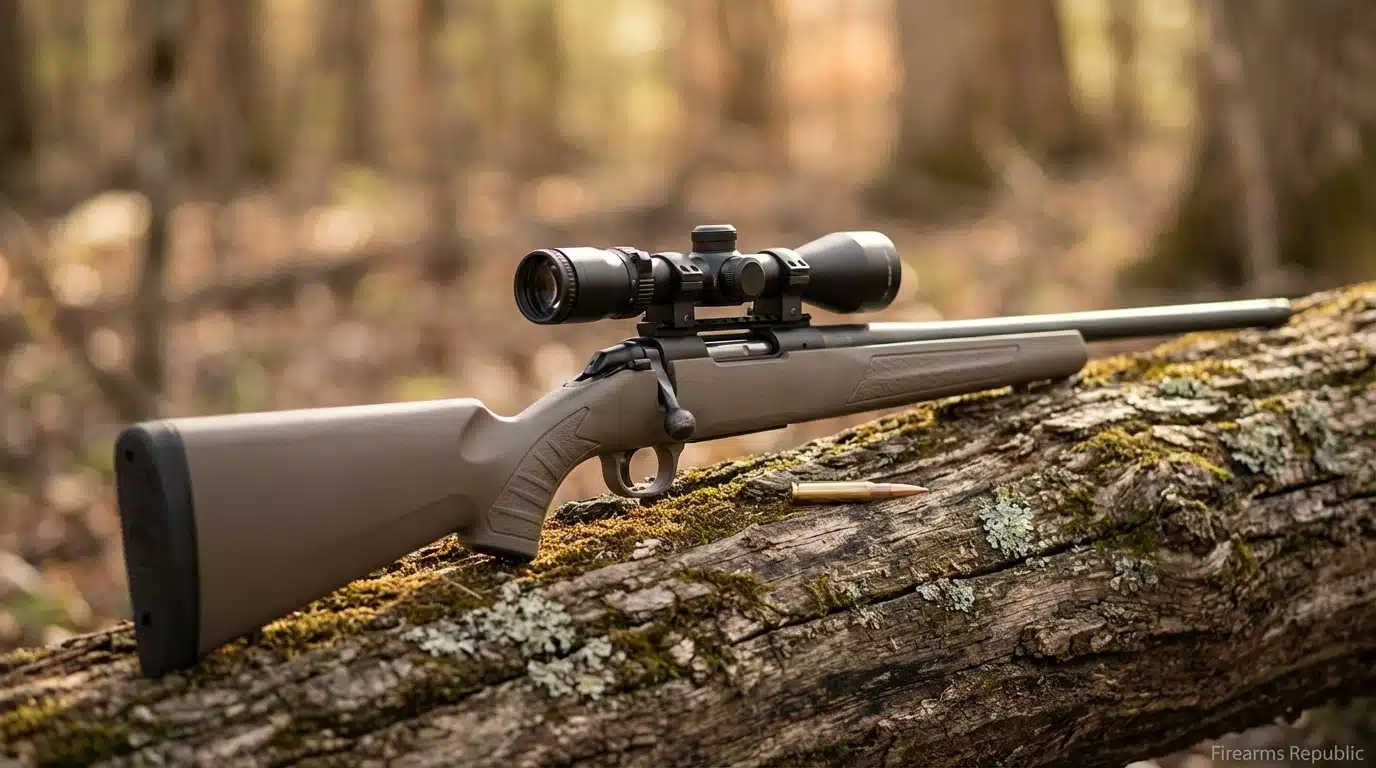
The Ruger American arrived in 2011 with a specific mission: deliver genuine hunting accuracy at a price that had previously been impossible in an American-made bolt-action rifle. At $449 retail, it was immediately competitive with imports and domestic budget rifles that consistently compromised on trigger quality, accuracy, or both. Thirteen years later, the Ruger American family has expanded to include ranch configurations, predator variants, a Gen II redesign with dramatically upgraded features, and chamberings that span from .22 LR rimfire to .338 Win Mag magnum. Today the Ruger American Gen II stands as one of the most feature-rich hunting rifles available under $700 anywhere in the world – offering AICS-compatible detachable magazines, a factory-threaded barrel, and 0.7–0.9 MOA accuracy in calibers from .243 Win to .450 Bushmaster. This guide covers every Ruger American variant, which configurations work best for which applications, and whether the American belongs in your safe.
The Ruger American Family: Every Model Explained
The Ruger American platform has grown considerably since its 2011 introduction. Understanding the differences between variants prevents buying the wrong model for your application.
Ruger American Gen II – The Standard
The Gen II redesign, introduced in 2023, is the most significant improvement to the platform since its launch. Three upgrades define it:
AICS-compatible detachable box magazine: The Gen II replaces the original American’s proprietary flush-fit magazine with a system that accepts any AICS-pattern magazine. This opens the platform to the same 5-round, 10-round, and extended magazines used by precision rifle competitors, making the American Gen II the only rifle under $700 in the American market with this feature standard.
Factory-threaded barrel: The 5/8×24 (centerfire) threaded barrel is standard across calibers, allowing suppressor installation without gunsmithing or barrel replacement.
Upgraded Marksman Adjustable trigger: The Gen II trigger adjusts from 3 to 5 lbs within the safety mechanism – not as wide a range as the Savage AccuTrigger but clean and consistent at its operating range.
Available calibers: 6.5 CM, .308 Win, .30-06, .243 Win, 7mm-08, .350 Legend, .450 Bushmaster, 7mm Rem Mag, .300 Win Mag (varies by configuration and barrel length)
Street price: $599–$649
Ruger American Standard (Pre-Gen II)
The original American remains in production in some configurations. It uses a proprietary flush-fit magazine that does not accept AICS pattern, and the barrel is not factory threaded. The standard trigger adjusts similarly to the Gen II. Accuracy is comparable to the Gen II. For hunters who do not need AICS compatibility or a threaded barrel, the original American at $450–$550 remains a valid option where available.
Ruger American Ranch
The Ranch configuration features a compact 16.1-inch barrel and a folding or fixed stock depending on configuration, bringing the overall length down to 36–38 inches. This is Ruger’s AR-15 competitor in the bolt-action format – a compact, maneuverable rifle for close-range use in brush and timber, as a truck gun, or for hunting from blinds and tree stands where a full-length rifle is awkward.
Available calibers: .223 Rem / 5.56 NATO, 7.62×39, 6.5 Grendel, .350 Legend, .300 BLK, .450 Bushmaster
The Ranch’s 16.1-inch barrel produces lower velocities than full-length alternatives – a trade-off that matters more in open-country hunting than in the Ranch’s intended close-range applications. For hunters in straight-wall states who want a compact .350 Legend bolt-action, the Ranch is the most recommended factory rifle.
Street price: $500–$600
Ruger American Predator
The Predator adds a heavy-contour barrel and moss-green laminate stock to the American platform, targeting varmint hunters and predator callers who want more consistent accuracy across extended shooting sessions than the standard sporter barrel provides.
Available calibers: .223 Rem, .22-250 Rem, 6.5 CM, .308 Win, 6mm Creedmoor (varies)
The 22-inch heavy barrel in .22-250 Rem or .223 Rem is the Predator’s natural configuration – the added mass reduces heat-related point-of-impact shift during prairie dog sessions and provides the rigidity that supports consistent accuracy across many shots. Accuracy runs 0.6–0.8 MOA with quality ammo – slightly better than the sporter-barrel American due to the heavier profile.
Street price: $600–$700
Ruger American Compact
The Compact uses an 18-inch barrel and a 12.5-inch length of pull – the latter specifically designed for youth hunters and smaller-framed adults. The 38-inch overall length in .308 Win is competitive with lever-actions for timber maneuverability.
Available calibers: .308 Win, .30-06, .243 Win
Street price: $450–$550
For youth hunters graduating to a centerfire deer rifle, the Compact in .243 Win or .308 Win is the primary competition to the Mossberg Patriot Bantam and Savage Axis II Youth. Its advantage is the Ruger American’s better trigger consistency and the Gen II features available in the Compact platform.
Ruger American Rimfire
The Rimfire American in .22 LR, .17 HMR, and .22 WMR brings the same platform ergonomics to rimfire applications. It accepts 10-round BX magazines and provides a consistent trigger and bolt design across the rimfire and centerfire family. For hunters and training shooters who want to practice with rimfire on the same platform as their centerfire American, the Rimfire maintains similar ergonomics.
Accuracy: What to Expect and How to Get More
Factory Accuracy Expectations
The Ruger American Gen II consistently delivers 0.7–0.9 MOA with quality factory ammo across its caliber range. In 6.5 CM, the 140gr ELD-X and Federal 140gr Terminal Ascent typically group in the 0.65–0.85 MOA range from a solid bench rest. The .308 Win with 168gr Federal Gold Medal SMK produces similar results. Some American rifles produce consistent 0.5 MOA groups with matched handloads – a result that exceeds expectation but is not reliable enough across production to promise.
The horizontal consistency of Ruger American groups is typically better than vertical – a characteristic of the trigger rather than the barrel. Vertical stringing (groups taller than they are wide) indicates velocity variation in the ammo; horizontal stringing indicates trigger pull inconsistency. The American’s trigger, while good, shows more shot-to-shot variation than the Tikka T3x’s at higher pull weights.
Improving Accuracy Without Modification
Ammo testing: The American shows meaningful ammo sensitivity. Testing four or five quality factory loads before selecting a hunting load regularly produces a preferred load that groups 0.2–0.3 MOA tighter than others. Federal Premium, Hornady Precision Hunter, and Nosler Trophy Grade consistently perform well in American rifles.
Mounting and torque consistency: The American’s Picatinny rail is standard on the Gen II, which eliminates one common accuracy variable. Torquing the ring and base screws to the manufacturer’s specification (typically 15–25 inch-lbs for ring screws, 25–35 inch-lbs for base screws) with a torque wrench produces more consistent accuracy than “snug and a quarter turn.”
Bedding the action: The American’s injection-molded stock has some flex that can cause minor inconsistencies between shooting sessions. Pillar-bedding and action-bedding with Acraglas gel ($25–$35 kit) improve stock-to-action fit measurably. This is a DIY-accessible project that typically produces a 0.1–0.2 MOA improvement in groups.
Aftermarket Upgrades for the American
Trigger: The Gen II trigger is adequate for hunting use. For precision or competition applications, the Timney 521 ($110–$135) is the primary drop-in replacement offering a lighter, crisper break at 1.5–2.5 lbs.
Stock/Chassis: The American Gen II’s AICS-compatible magazine well means any AICS-pattern chassis fits the action’s bedding dimensions. MDT ESS chassis ($370–$420) and KRG Bravo ($380–$430) transform the American into a precision-stock platform while maintaining the AICS magazine advantage.
Magazines: The Gen II accepts any AICS-pattern magazine. Accurate Mag 10-round polymer ($35–$40), MDT AICS polymer ($25–$30), and Magpul PMAG AC ($25–$30) are the primary options. All function reliably with the American’s magazine well.
Best Caliber Choices for the Ruger American
For Deer Hunting (General)
6.5 Creedmoor is the defining choice for hunters who want the most capable all-around deer rifle the American platform offers. At 140gr ELD-X factory loads, it handles deer to 400 yards with confidence, fits in the short-action platform, and has the deepest factory ammo selection of any modern precision cartridge. See our 6.5 Creedmoor Caliber Guide.
.308 Winchester is the choice for hunters who prioritize universal ammo availability over long-range performance. The .308’s terminal performance inside 300 yards equals the 6.5 CM with bonded loads, and a box of 180gr Federal Trophy Bonded can be found at almost any rural sporting goods store. See our .308 Winchester Caliber Guide.
.30-06 Springfield in the long-action American provides the heavy-bullet options (200–220gr) for elk and moose hunters who want one rifle for deer and larger game. The .30-06’s versatility is its primary argument. See our .30-06 Springfield Caliber Guide.
For Youth and Recoil-Sensitive Hunters
.243 Winchester in the Compact or standard American is the recommended first hunting rifle cartridge. 9–11 ft-lbs recoil, adequate deer performance to 300 yards, and the security of a Ruger American’s consistent function for a new hunter’s first season. See our .243 Winchester Caliber Guide.
7mm-08 Remington is the step up for youth hunters who have outgrown the .243 Win or who hunt in terrain where 300-yard shots are realistic. Slightly more recoil, meaningfully more terminal authority. See our 7mm-08 Remington Caliber Guide.
For Elk Hunting
6.5 PRC in the Gen II is the recommended elk chambering. At 15–17 ft-lbs recoil it is manageable with regular practice, and the 143gr ELD-X at 2,960 fps carries elk-capable energy past 500 yards. See our 6.5 PRC Caliber Guide.
.300 Win Mag is the maximum elk capability chambering in the American platform. The Gen II’s AICS magazine in a .300 Win Mag chambering provides the most feature-rich budget elk rifle available. Recoil at 25–28 ft-lbs requires regular practice and benefits from a muzzle brake in a 6.3 lb rifle. See our .300 Win Mag Caliber Guide.
For Varmint Hunting
.22-250 Remington in the Predator configuration is the recommended varmint setup. The heavy barrel resists heat-induced accuracy shift during prairie dog sessions, and the .22-250’s velocity produces the flat trajectory and explosive fragmentation that varmint hunting demands. See our .22-250 Remington Caliber Guide.
.223 Remington in the Predator or standard Ranch is the volume-practice option. Lower ammo cost enables the high round counts that prairie dog and ground squirrel hunting produces. See our .223 Remington Caliber Guide.
For Straight-Wall States
.350 Legend in the Ranch configuration is the most compact and maneuverable factory straight-wall deer hunting setup available. The 16.1-inch barrel and compact OAL handle well in agricultural blinds and timber stands where straight-wall rules apply. See our Straight-Wall AR Calibers Guide for full context on straight-wall hunting regulations.
Ruger American vs. Primary Competitors
Ruger American Gen II vs. Savage Axis II
Axis II advantage: AccuTrigger’s wider adjustment range (2.5–6 lbs) and slightly lower price ($380–$450 vs. $599–$649). Trigger consistency at the light end is better than the American’s.
American Gen II advantage: AICS-compatible detachable magazine, factory-threaded barrel, Picatinny rail, and slightly smoother action cycling. The feature premium of the Gen II vs. Axis II is approximately $150–$200 for capabilities that cost $300–$500 to add aftermarket to the Axis II.
Verdict: The Axis II is the accuracy-per-dollar leader. The American Gen II is the features-per-dollar leader. Choose based on whether AICS magazines and a threaded barrel matter for your application.
Ruger American Gen II vs. Tikka T3x Lite
T3x advantage: Trigger that breaks at ~2 lbs with minimal creep (vs. American’s 3–5 lbs), smoother action cycling, and more refined overall fit and finish. The T3x’s trigger is the single best factory trigger available under $1,000 and justifies much of its price premium.
American Gen II advantage: AICS-compatible magazines, factory-threaded barrel, and $200–$250 lower price. For hunters who want platform features at budget pricing, the American Gen II is the better value.
Verdict: The T3x is a better shooting experience and a better precision rifle. The American Gen II offers modern platform features at accessible pricing. Budget-limited hunters who can reach $800–$875 should choose the T3x. Those at $600–$650 get more features from the American Gen II than from any competitor.
Ruger American Gen II vs. Bergara B-14 Hunter
B-14 advantage: Sub-MOA guarantee honored across production, Remington 700-compatible bolt face for aftermarket access, and slightly more accurate production consistency.
American Gen II advantage: AICS-compatible magazines and factory-threaded barrel at $150–$200 lower price.
Verdict: The Bergara B-14 Hunter is the better rifle for hunters focused purely on accuracy and aftermarket expandability. The American Gen II is the better choice for hunters who value platform features (AICS mag, threaded barrel) over marginal accuracy improvements.
Common Questions and Problems
The American’s Trigger is Creepy – Is This Normal?
The Ruger American’s trigger can exhibit some tactile creep before the break, particularly at heavier settings. This is within normal production variation for the platform. Adjusting the trigger to the lighter end of its 3–5 lb range reduces perceived creep significantly. If creep remains unacceptable after adjustment, a Timney 521 drop-in replacement is the recommended solution at $110–$135.
Point of Impact Shifts with Sling Tension
Some Ruger American rifles show minor point-of-impact shift when a tight sling is applied, caused by the injection-molded stock’s flex affecting barrel harmonics. The solution is bedding the action – a $25–$35 DIY project with Acraglas gel that stiffens the stock-to-action interface and eliminates the stock flex that causes the shift.
AICS Magazines That Don’t Feed Reliably
Not all AICS-pattern magazines function identically in the American Gen II. Accurate Mag, MDT, and Magpul PMAG AC are confirmed reliable. Some no-name AICS pattern magazines have slightly different dimensions that cause feeding issues. Test any magazine at the range before relying on it for hunting.
Barrel Thread Damage Prevention
The Gen II’s factory-threaded barrel comes with a thread protector. Before installing a suppressor or muzzle device, ensure the thread protector is fully removed and the threads are clean. Cross-threading a suppressor onto the barrel damages threads that require barrel replacement to fix – an expensive consequence of rushed installation.
Ruger American Specifications Summary
| Configuration | Barrel Length | Weight (bare) | OAL | Magazine | Thread |
|---|---|---|---|---|---|
| Gen II Standard | 22″ or 24″ | 6.1–6.4 lbs | 42–44″ | AICS detachable | 5/8×24 |
| Ranch (16.1″) | 16.1″ | 6.0 lbs | 36–38″ | AICS detachable | 5/8×24 |
| Compact | 18″ | 5.9 lbs | 38″ | AICS detachable | 5/8×24 |
| Predator | 22″ (heavy) | 6.6 lbs | 42″ | AICS detachable | 5/8×24 |
| Rimfire | 18″ or 22″ | 5.1–5.5 lbs | 36–40″ | BX series | — |
Frequently Asked Questions
Q: Is the Ruger American a good first hunting rifle?
A: Yes – it is one of the best first hunting rifles available. The combination of consistent 0.7–0.9 MOA accuracy, reliable function, modern features (AICS magazines, threaded barrel in Gen II), and manageable recoil in calibers from .243 Win upward makes it an excellent platform for hunters who want a capable rifle without overpaying. The Gen II specifically offers features that cost significantly more in competing brands. See our Best Rifles for New Shooters guide.
Q: What is the difference between the Ruger American Gen I and Gen II?
A: Three primary differences: the Gen II uses an AICS-compatible detachable magazine (vs. Gen I’s proprietary flush-fit magazine), has a factory-threaded barrel (vs. Gen I’s unthreaded), and includes a Picatinny optics rail as standard (vs. Gen I’s scope base holes). These upgrades represent a complete modernization of the platform that addresses the original American’s primary criticisms.
Q: Does the Ruger American accept suppressors?
A: The Gen II’s factory-threaded barrel (5/8×24 on centerfire) accepts any suppressor with the matching thread specification. No gunsmithing or barrel replacement required. For hunters considering NFA suppressor ownership, the American Gen II’s factory threading eliminates one barrier. The Ranch configuration in .300 BLK is the most popular suppressor-compatible American variant for close-range timber and hog hunting.
Q: How accurate is the Ruger American compared to a Tikka T3x?
A: Both platforms deliver 0.7–0.9 MOA with quality factory ammo. The T3x typically produces slightly tighter groups from quality handloads due to its tighter action tolerances and superior trigger, but the practical difference in hunting outcomes is minimal. The T3x’s primary advantages are trigger quality (2 lbs vs. 3–5 lbs) and action smoothness – both of which improve the shooting experience without producing dramatically different accuracy results in hunting conditions.
Q: Can I use any AICS magazine in the Ruger American Gen II?
A: Most AICS-pattern magazines function reliably, but not universally. Confirmed reliable options include Accurate Mag polymer, MDT AICS polymer, and Magpul PMAG AC. Some budget AICS-pattern magazines have dimensional tolerances that cause feeding issues. Test any new magazine with your specific rifle at the range before hunting season to confirm reliable function.