 Maksym Kovaliov
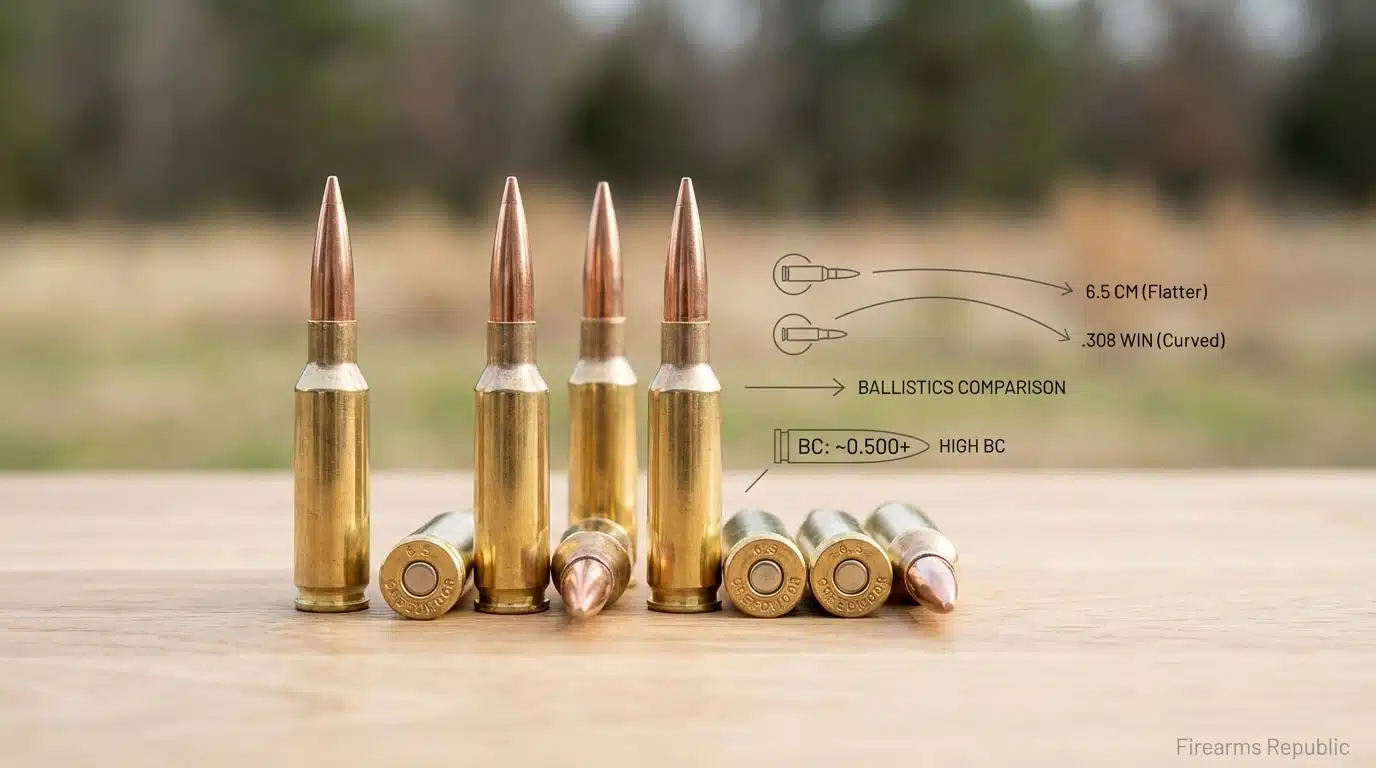
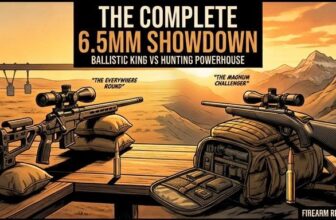
The 6.5 Creedmoor has earned its place as the dominant precision cartridge in America – not through marketing hype, but by delivering genuinely exceptional long-range performance in a package that fits standard short-action rifles. Introduced by Hornady in 2007 and designed specifically for competitive shooting, it took about a decade for the broader hunting and shooting community to fully embrace it. Today it’s the benchmark against which every other precision hunting and competition cartridge gets measured. Whether you’re threading a target at 800 yards on a calm morning or packing into elk country in Wyoming, the 6.5 CM handles both with a confidence that few cartridges can match at $1–$1.50 per round for quality factory ammo. This guide covers everything you need to know: ballistics, performance, ideal applications, reloading potential, and which rifles it shines in most.

What Is the 6.5 Creedmoor?
The 6.5 Creedmoor was designed by Dave Emary at Hornady and Dennis DeMille, head of the Creedmoor Sports shooting facility, with a specific goal in mind: create a cartridge purpose-built for competitive long-range shooting that worked flawlessly in standard AR-10 and bolt-action platforms without modification. The name comes from Creedmoor, New York – historically significant as the site of some of America’s earliest long-range shooting competitions in the 1870s.
The case is based on a modified .30 TC cartridge, necked down to accept 6.5mm (.264 caliber) bullets. At 1.920″ case length and 2.825″ overall length, it fits perfectly in standard short-action magazines. The design intentionally prioritizes bullet choice – the 6.5mm bore diameter gives access to some of the highest ballistic coefficient (BC) projectiles available in any bore size, particularly the 140gr class bullets that have become the cartridge’s signature loading. The result is a cartridge that shoots flat, bucks wind better than nearly anything in its class, and does it all with recoil that most shooters can manage without a muzzle brake.
Ballistics: The Numbers That Matter
The 6.5 Creedmoor’s ballistic performance is what converted so many skeptics. With 140gr bullets – the sweet spot for this cartridge – you’re looking at muzzle velocities of 2,710–2,750 fps from a 24″ barrel, dropping to roughly 2,600–2,650 fps from a 22″ barrel and 2,520–2,570 fps from a 20″ tube. The difference in terminal performance between barrel lengths is real but manageable; most hunters and competitors find 22″ to be the practical sweet spot between velocity and rifle length.

What separates the 6.5 CM from the .308 Winchester – its most common comparison point – is ballistic coefficient. A 140gr Hornady ELD-M runs a G1 BC of .646 and a G7 BC of .315. A comparable 175gr Sierra MatchKing in .308 runs a G7 BC of .264. That gap means the 6.5 CM sheds velocity slower, drifts less in wind, and impacts harder at distance. At 1,000 yards, a 10 mph crosswind moves a 140gr ELD-M approximately 7.1 inches, compared to 10.8 inches for a quality .308 load – nearly a full MOA difference. For precision shooting and hunting past 500 yards, that’s not a minor detail.
| Load | MV (fps) | 500 yd Velocity | 500 yd Energy | 1,000 yd Drop (zero @ 100) | 10 mph Wind @ 500 yd |
|---|---|---|---|---|---|
| 140gr ELD-M (24″) | 2,710 | 2,150 | 1,440 ft-lbs | -78″ | 6.8″ |
| 143gr ELD-X (24″) | 2,700 | 2,135 | 1,450 ft-lbs | -80″ | 7.0″ |
| 120gr GMX (24″) | 3,050 | 2,295 | 1,403 ft-lbs | -64″ | 8.5″ |
| 129gr SST (22″) | 2,820 | 2,178 | 1,358 ft-lbs | -72″ | 7.4″ |
| 147gr ELD-M (24″) | 2,695 | 2,180 | 1,550 ft-lbs | -82″ | 6.5″ |
Energy retention is another strong suit. The 140gr ELD-M carries roughly 1,440 ft-lbs at 500 yards and just under 1,000 ft-lbs at 800 yards. For deer-class game, most hunters consider 1,000 ft-lbs the practical minimum for clean kills – the 6.5 CM achieves this out to about 750–800 yards with 140gr loads, which is beyond the ethical shooting distance for most hunters anyway.
6.5 Creedmoor vs. The Competition
The cartridge comparisons get asked constantly. Here’s the honest breakdown against the four cartridges most shooters consider alongside the 6.5 CM.
6.5 Creedmoor vs. .308 Winchester
The .308 vs. 6.5 CM debate is settled for precision shooting – the Creedmoor wins on paper. At 600 yards and beyond, the 6.5’s higher BC bullets drift less, drop more predictably, and retain more energy. Where the .308 still holds ground is terminal performance on larger game at shorter ranges (the bigger, heavier .30-caliber bullet punches a wider wound channel), reloading data depth (the .308 has 70+ years of development), and factory ammo availability at rural hardware stores across the country. If you’re shooting deer inside 400 yards and might need to grab a box of ammo at a feed store in rural Montana, the .308 remains a practical choice. For anything past 400 yards – or if you plan to do serious long-range work – the 6.5 CM has a genuine performance edge.
6.5 Creedmoor vs. 6.5 PRC
The 6.5 PRC is the 6.5 CM’s big brother – same bullet diameter, similar design philosophy, but with a larger case that pushes 140gr bullets to 2,950–3,000 fps from a 24″ barrel vs. 2,710–2,750 fps for the Creedmoor. That roughly 250 fps velocity advantage extends the PRC’s practical range and improves wind resistance further. The trade-offs are real though: the PRC requires a magnum-length action, generates noticeably more recoil, burns through barrel life faster (approximately 1,500–2,000 rounds vs. 2,500–3,000 for the CM), and factory ammo costs $3–$5 more per box. For hunters chasing elk in steep western country where shots stretch past 600 yards routinely, the PRC’s advantages matter. For most hunters and recreational precision shooters, the 6.5 CM does everything needed at lower cost and with softer recoil.
6.5 Creedmoor vs. .260 Remington
The .260 Remington predates the 6.5 CM by about 15 years and achieves essentially identical ballistics from the same case capacity. The difference is entirely market-driven: Hornady aggressively developed and promoted the 6.5 CM with quality factory loads, while Remington underinvested in the .260. Today, the 6.5 CM has 10x the factory ammo selection, wider rifle availability, and better component bullet support for reloaders. If you already own a .260 Remington, there’s no compelling reason to switch. If you’re buying new, the 6.5 CM wins by default.
6.5 Creedmoor vs. 7mm-08 Remington
The 7mm-08 is a legitimate alternative for hunters who prioritize terminal performance on deer-sized game at moderate ranges. The 7mm (.284) bore diameter gives access to heavier, wider bullets that create larger wound channels – relevant for whitetail and mule deer inside 400 yards. The 6.5 CM surpasses it in wind performance and long-range precision. For a one-rifle deer hunting setup with no precision shooting interest, the 7mm-08 is a solid choice. For anyone who might stretch shots or wants to shoot organized competitions, the 6.5 CM is the better platform.
Factory Ammunition: What to Buy
The 6.5 Creedmoor has the deepest factory ammunition selection of any precision cartridge introduced in the last 20 years. Budget, hunting, and match loads are all available from every major manufacturer.
For precision/competition shooting:

Hornady’s 140gr ELD-M ($28–$32/20 rounds) is the benchmark. It’s what most rifles are zeroed with, what most competitions are won with, and what most people mean when they say “the good 6.5 CM ammo.” Federal Premium Gold Medal 140gr Sierra MatchKing is a close second at similar pricing and is what many PRS competitors prefer. Hornady’s 147gr ELD-M shoots with excellent BC but requires a faster twist rate (1:8 preferred over 1:8.5) and tends to be more barrel-sensitive – worth testing in your rifle before committing.
For hunting:
Hornady’s 143gr ELD-X is the top choice for a reason – it’s designed to expand across a wide velocity range (relevant as velocity drops at longer distances) and consistently penetrates well on deer and elk-sized game. Federal’s 130gr Trophy Bonded Tip is a bonded option for hunters wanting deeper penetration on larger animals or who take angled shots. Nosler’s 140gr AccuBond is another premium bonded option with an excellent terminal performance record on elk.
Budget practice:
Hornady Steel Match 140gr ELD-M runs $20–$22/50 rounds in steel case and is reasonable for practice. Federal American Eagle 140gr BTHP at $18–$22/20 rounds is the go-to range ammo for most shooters who don’t reload. Expect 1–1.5 MOA performance from budget loads vs. sub-MOA from premium.
| Load | Best For | Typical Price | Typical Accuracy |
|---|---|---|---|
| Hornady 140gr ELD-M | Precision/Competition | $30/20 | 0.5–0.7 MOA |
| Federal 140gr SMK Gold Medal | Precision/Competition | $32/20 | 0.5–0.7 MOA |
| Hornady 143gr ELD-X | Hunting (deer + elk) | $35/20 | 0.7–0.9 MOA |
| Federal 130gr TBT | Hunting (larger game) | $38/20 | 0.8–1.0 MOA |
| Federal AE 140gr BTHP | Range/Practice | $22/20 | 0.9–1.2 MOA |
| Hornady Steel Match 140gr | Budget Practice | $21/50 | 1.0–1.5 MOA |
Reloading the 6.5 Creedmoor
The 6.5 Creedmoor is one of the most reloader-friendly cartridges on the market – efficient case design, outstanding component bullet selection, and excellent published load data make it genuinely enjoyable to reload. Most serious precision shooters find they can cut per-round cost from $1.50 to $0.60–$0.80 while also improving accuracy over factory loads.
Brass: Hornady factory brass performs well and is consistent enough for serious competition use. Lapua 6.5 CM brass ($75–$85/100) is the premium choice if you’re running a precision rig and want maximum case life – Lapua brass typically lasts 8–12 firings vs. 4–6 for factory Hornady. Peterson brass ($65–$75/100) is an excellent domestic alternative.

Powder: The 6.5 CM’s efficient design works well with a range of powders. Hodgdon H4350 is the community standard – it meters well, gives excellent velocity-to-pressure ratios with 140gr bullets, and is temperature-stable. Expect 2,700–2,750 fps with 41–42gr H4350 in most 24″ barrels. IMR 4451 and Reloder 16 are excellent alternatives with similar performance. Reloder 16 shows particular consistency across temperature swings – relevant for hunting in cold conditions.
Bullets: The 140gr class is where the 6.5 CM excels. Hornady 140gr ELD-M and 147gr ELD-M are the competition staples. Berger 140gr Hybrid and 140gr AR Hybrid are favored by many PRS competitors. For hunting, the Hornady 143gr ELD-X and Nosler 140gr AccuBond Long Range work extremely well. The 130–156gr range is all fair game; go lighter (120–130gr) only if you’re specifically chasing velocity for varmints or shorter-range applications.
COAL and twist considerations: Most 6.5 CM rifles come with 1:8 or 1:8.5″ twist, which stabilizes the full 140–147gr bullet range. A 1:10 twist (found in some older or economy rifles) will stabilize 140gr bullets but may struggle with the longer 147gr ELD-M. Seat 140gr bullets to 2.820–2.830″ COAL for most magazines, or jump-test to your rifle’s lands for maximum accuracy. Lapua and Hornady brass have tight primer pockets that benefit from primer pocket uniforming when reloading for precision.
Best Applications for the 6.5 Creedmoor
Whitetail and Mule Deer Hunting
The 6.5 CM is an outstanding deer cartridge across the full range of realistic hunting distances. Inside 200 yards, it produces clean kills with any expanding bullet – the 143gr ELD-X and 129gr SST are both excellent. From 200–500 yards, it’s significantly more capable than the .308 Winchester due to retained velocity and better wind performance. Hunters who regularly see shots stretch past 300 yards in open terrain – western mule deer country, Texas fields, Midwestern farmland – will notice the difference in wind drift when a 15 mph gust hits mid-shot. The recoil at 9–11 ft-lbs is mild enough that most hunters shoot it comfortably without a brake, improving shot placement under field conditions.
Elk Hunting
The 6.5 CM’s suitability for elk is a legitimate discussion. It’s fully capable on elk with proper bullet selection and shot placement – a 143gr ELD-X through the boiler room at 300 yards will kill elk cleanly. The honest caveat is that elk are large, tough animals, and the 6.5 CM offers less margin for error on quartering-away shots or hits through heavy bone compared to a .300 Win Mag or 7mm Rem Mag. For hunters who are disciplined about shot selection, stay inside 400 yards, and use quality bonded bullets, it’s a workable elk cartridge. For those who might face longer shots or less-than-ideal angles, stepping up to a larger cartridge is the prudent choice. See our Elk Hunting Rifles Guide for a full breakdown by cartridge.
PRS and Long-Range Competition
The 6.5 CM is the default PRS/NRL cartridge at the entry and intermediate levels. Its combination of sub-MOA accuracy from factory rifles, predictable wind drift, and manageable recoil (critical for calling shots) makes it ideal for competitive shooting. Stage designers build around the 6.5 CM’s wind drift characteristics, and the cartridge’s consistency – shot to shot variation of less than 10 fps with quality handloads – is achievable by most careful reloaders. Competitors will see the 6.5 CM dominate PRS and NRL production class divisions for the foreseeable future. For a deeper look at getting started, read our PRS Competition Guide.
Long-Range Recreation Shooting (500–1,000 yards)
For shooters who shoot steel at 600, 800, and 1,000 yards on weekends, the 6.5 CM is close to the ideal balance. The combination of affordability (factory match ammo at $1.50/round vs. $2.50 for 6.5 PRC), manageable recoil, and genuine 1,000-yard capability makes it more enjoyable to shoot high volumes than larger magnums. At 1,000 yards you’re working with roughly 0.5 mil of wind per mph in typical conditions – real and not trivial, but predictable and learnable. Most 6.5 CM rifles with quality barrels will print under 2 MOA at 1,000 yards from factory ammo, and under 1 MOA with quality handloads. Our Long-Range Shooting Guide covers the full equipment and technique picture.
Backcountry and Mountain Hunting
The 6.5 CM works well in the backcountry context, particularly in lightweight chassis built around the Tikka T3x or Remington 700 footprint. A carbon-stocked 6.5 CM rifle can come in under 6 lbs, and the light recoil allows lighter stocks and brakes to be used effectively. The cartridge’s performance in thin air at elevation is notably good – the high BC bullets drift less even as wind speed increases in exposed mountain terrain. For hunters carrying rifles miles before any shooting, the weight and recoil advantages matter as much as the terminal performance. See our Mountain / Backcountry Hunting Rifles guide for recommended setups.

Rifles Chambered in 6.5 Creedmoor
The 6.5 CM is chambered in more production rifles than any other precision cartridge, from sub-$500 budget bolt-actions to $3,000+ semi-custom offerings. Here’s a tiered breakdown.
Budget ($400–$700):
The Ruger American Gen II ($599–$649) is the default recommendation in this tier. It ships with an AICS-compatible magazine, a threaded barrel, and a genuinely adjustable trigger – features that used to cost $200 more. Accuracy runs 0.7–0.9 MOA from quality ammo, which is exceptional for the price. The Savage Axis II ($350–$450) shoots better than its price suggests but has a heavier trigger and less aftermarket support. The Mossberg Patriot ($350–$400) is serviceable for hunting but lacks the precision shooter features that make the Ruger American so versatile.
Mid-range ($700–$1,200):
The Tikka T3x Lite ($800–$875) and Tikka T3x CTR ($1,050–$1,150) represent the best factory triggers available in this price tier – the T3x bolt is genuinely smooth in a way that budget rifles never quite replicate. The CTR adds tactical features (adjustable cheek piece, 10-round mag, rail) relevant for competition. The Bergara B-14 HMR ($950–$1,050) is the accuracy leader in mid-range bolt-actions, with sub-MOA guarantees that are consistently honored and a chassis-compatible action. The Howa 1500 ($600–$700) punches above its price in accuracy and is the most Remington 700-footprint-compatible rifle in this tier if you’re planning an aftermarket build.
Precision/Semi-Custom ($1,200–$2,500):
The Christensen Arms Mesa ($1,300–$1,450) and Ridgeline ($1,700–$1,900) bring carbon fiber barrels and stocks to factory-rifle pricing. The Springfield Waypoint ($1,700–$1,900) is one of the most complete factory offerings at its price – a carbon-wrapped barrel, adjustable carbon stock, and threaded muzzle. The Bergara HMR Pro ($1,300–$1,450) is the competition-focused evolution of the B-14 HMR with a chassis-style aluminum stock and improved trigger. For reference, our published Ruger American Guide, Savage 110 Series Guide, Tikka T3x Guide, and Bergara B-14 Guide cover each platform in full detail.
Semi-Auto Options:
The 6.5 CM’s design around the AR-10 platform means it feeds and cycles reliably in semi-auto rifles. The AR-10 in 6.5 CM runs $1,499–$1,599 and has become a popular PRS gas gun platform. LWRCI, Aero Precision, and DPMS all chamber AR-10-pattern rifles in 6.5 CM. If semi-auto is your interest, see our AR-10 Platform Guide and PRS Gas Gun Competition Guide for the full breakdown.
Barrel Life and Long-Term Ownership
The 6.5 Creedmoor’s relatively modest case capacity and moderate chamber pressure (62,000 PSI max) translate to good barrel life by precision cartridge standards. Most shooters report 2,500–3,500 rounds before accuracy begins degrading – substantially better than the 6.5 PRC (1,500–2,000 rounds) or .300 Win Mag (1,200–1,800 rounds), and comparable to the .308 Winchester (4,000–5,000 rounds). For context, a competition shooter putting 500 rounds per year through a rifle can expect a barrel to last 5–7 years. A hunter shooting 50 rounds annually might never need to replace the barrel.
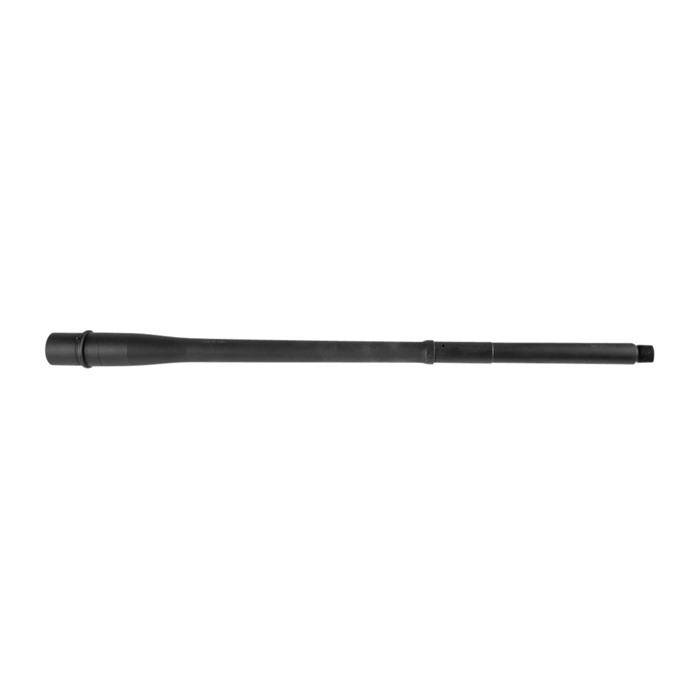
Barrel replacement cost runs $400–$900 for a quality aftermarket barrel on a Remington 700-footprint action, or $300–$600 for a Savage prefit. The 6.5 CM’s wide chambering adoption means barrel supply is strong and prices remain competitive. If you’re building a precision platform around a 6.5 CM, the long-term maintenance costs are reasonable and predictable.
Suppressors and the 6.5 Creedmoor
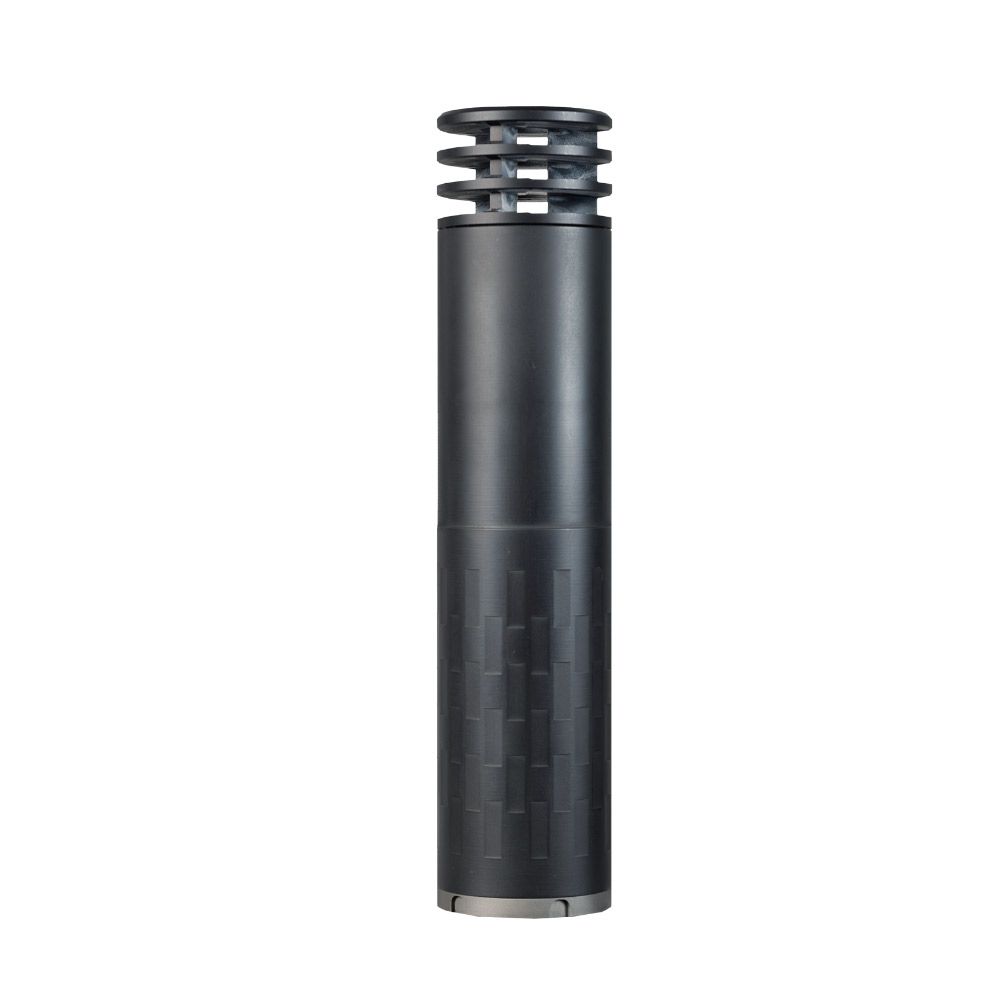
The 6.5 Creedmoor works well with suppressors, and many rifles come threaded at 5/8×24 (the standard for .264 and larger bore diameters). Suppressor options in .30 caliber (which are rated for .264 bore) like the SilencerCo Omega 300, Dead Air Sandman, and Rugged Razor are popular choices – they add 1–1.5 lbs but genuinely reduce report to comfortable levels and improve gas behavior. First-round pop can be slightly more pronounced with the 6.5 CM than with subsonic rounds, but the supersonic loads are well within safe db levels suppressed. If you’re building a suppressed hunting setup, see our Suppressor Buyer’s Guide and Best Suppressed Hunting Setups for full guidance.
Who Should Choose the 6.5 Creedmoor?
The 6.5 CM is your cartridge if:
You’re a hunter who takes shots out to 500 yards on deer or elk-sized game and wants a rifle that will handle those distances confidently without magnum recoil. You’re interested in precision shooting or competition alongside hunting and want one cartridge to serve both. You’re a new shooter looking for a recoil-manageable, widely supported, and affordable-to-feed precision cartridge. You reload and want excellent component bullet availability and well-developed load data.
Look elsewhere if:
You’re exclusively a close-range whitetail hunter in dense timber who never shoots past 150 yards – the .30-06, .308, or 7mm-08 are equally effective at closer ranges and offer wider rural ammo availability. You regularly pursue dangerous game like brown bear at close range, where stopping power matters more than ballistic coefficient. You want maximum long-range performance past 1,000 yards and recoil is not a concern – the 6.5 PRC, .300 PRC, or .300 Win Mag offer velocity advantages that matter at extreme distances.
Frequently Asked Questions
Is the 6.5 Creedmoor good for elk hunting?
Yes, with the right bullet and responsible shot selection. Use a quality bonded or controlled-expansion bullet – the 143gr ELD-X, Federal 130gr Trophy Bonded Tip, or Nosler 140gr AccuBond. Keep shots inside 400 yards and prioritize broadside or slight quartering-to angles. It’s a capable elk cartridge but offers less margin for error on heavy bone and poor angles than a .300 Win Mag or 7mm PRC. See our Elk Hunting Rifles Guide for a full analysis.
What is the effective range of the 6.5 Creedmoor on deer?
With 140–143gr factory hunting loads, the 6.5 CM maintains 1,000 ft-lbs of energy – commonly used as the minimum for deer – out to approximately 750–800 yards. Practically speaking, most hunters set their ethical limit at 400–600 yards based on their wind-reading ability and field shooting skill, not the cartridge’s capability. The cartridge itself is capable well beyond what most hunters can execute cleanly.
What twist rate do I need for 140gr bullets?
A 1:8 twist rate is ideal for 140–147gr 6.5mm bullets. A 1:8.5 twist stabilizes most 140gr bullets adequately but can struggle with the longer 147gr ELD-M. A 1:10 twist handles 130–140gr bullets but should not be used with 147gr loads. Most modern 6.5 CM rifles ship with 1:8 or 1:8.5 – check your manufacturer specs before loading heavy bullets.
How does the 6.5 Creedmoor compare to .308 Winchester for recoil?
The 6.5 CM generates approximately 9–11 ft-lbs of free recoil in a 7.5 lb rifle, compared to 14–16 ft-lbs for .308 Winchester in a comparable platform. That’s a meaningful 30–40% difference – noticeable when shooting extended strings. For competition shooters calling shots and running multiple-shot stages, the 6.5 CM’s softer recoil translates to faster target reacquisition and less shooter fatigue.
Is 6.5 Creedmoor ammo widely available?
Yes – it’s now the second most-available centerfire rifle caliber in the US behind .308/.30 cal. You’ll find it at major retailers (Bass Pro, Cabela’s, Sportsman’s Warehouse), online in volume, and at most gun stores. Rural hardware stores still lag behind, so if you’re hunting remote areas, bring your ammo from home rather than counting on local availability.
What’s the best factory 6.5 Creedmoor ammo for deer hunting?
Hornady’s 143gr ELD-X is the first recommendation for most deer hunters – excellent expansion across velocity ranges, good penetration on broadside shots, widely available, and runs $32–$38 per 20 rounds. The Federal 130gr Trophy Bonded Tip is the better choice for hunters who routinely take quartering shots or hunt larger mule deer where penetration matters more.
Related Caliber Guides
- .308 Winchester Caliber Guide
- 6.5 PRC Caliber Guide
- 7mm PRC Caliber Guide
- .300 Win Mag Caliber Guide
- 7mm-08 Remington Caliber Guide
- AR-15 Caliber Selection Guide
Related Application Guides
- Elk Hunting Rifles Guide
- Whitetail Deer Hunting Rifles
- Long-Range Shooting Guide
- PRS Competition Guide
- Mountain / Backcountry Hunting Rifles
- Best Suppressed Hunting Setups
Related Platform Guides
- AR-10 Platform Guide
- Tikka T3x Complete Guide
- Bergara B-14 Series Guide
- Ruger American Complete Guide
- Savage 110 Series Guide