 Maksym Kovaliov
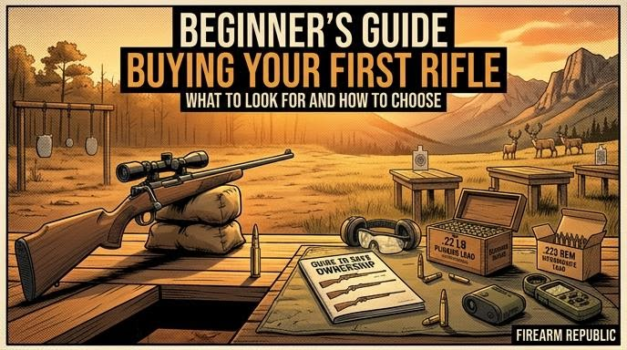
Buying your first rifle is one of the more consequential gear decisions you’ll make – not because it’s irreversible, but because the right choice gets you shooting accurately and confidently within a season, while the wrong choice creates problems that take years to correct. Most beginners get steered toward the wrong rifle by well-meaning friends who recommend what they shoot, by gun store employees who recommend what’s in stock, or by online forums where everyone has a strong opinion and nobody agrees. This guide cuts through that noise. It covers what you actually need to know before you buy – purpose, fit, caliber, budget, and the five specific rifle recommendations that cover 95% of first-time buyers – without assuming you already know the terminology or have a mentor walking you through it.
Step 1: Define Your Purpose Before Anything Else
The single most common first-rifle mistake is buying a rifle without a clear primary purpose. A rifle optimized for deer hunting in eastern hardwoods is a different tool than one optimized for predator hunting in open country, long-range target shooting, or home defense. The good news: one rifle often serves multiple purposes well. The bad news: trying to optimize for everything usually produces something mediocre at each individual task.
Answer these questions honestly before reading further:
What is the primary use case?
- Deer hunting (specify: eastern timber or open western country)
- Elk or large game hunting
- Predator hunting (coyotes, foxes)
- Small game or varmints (squirrels, prairie dogs)
- Home and property defense
- Target shooting and range use
- A combination – be specific about which combination
What distances will you realistically shoot? Eastern whitetail hunters average 80–100 yards. Western mule deer hunters average 200–300 yards. Long-range target shooters work from 300 to 1,000 yards. Be honest about what you’ll actually do, not what sounds impressive.
Who will be shooting it? Adult of average build, youth hunter, recoil-sensitive shooter, person with shoulder issues? The same rifle that works perfectly for a 200-lb adult is miserable for an 80-lb youth. Physical fit matters as much as caliber.
What’s the budget – total, including optics? This is the question most buyers answer incorrectly. The rifle is only half the system. A $600 rifle with a $150 scope is a worse hunting system than a $500 rifle with a $400 scope. Budget for the complete system: rifle, scope, rings/base, ammunition for practice, and a sling. Figure total system cost, not rifle cost alone.
Step 2: Understand What Rifle Types Exist
Before caliber and brand, understand the basic rifle types and their trade-offs.
Bolt-Action Rifles
The bolt-action is the dominant hunting and precision target rifle design. The shooter manually operates a bolt handle to chamber each round – push forward, rotate down to lock, fire, rotate up, pull back to eject. This manual cycling is slower than a semi-auto but produces the most inherent mechanical accuracy, the simplest design with the fewest failure points, and the widest caliber selection.
Best for: Deer hunting, elk hunting, long-range target shooting, any application where one accurate shot matters more than follow-up speed.
Not ideal for: Home defense (manual cycling under stress), high-volume varmint shooting, applications requiring rapid follow-up shots.
Most of the rifle recommendations in this guide are bolt-actions because they’re the right first rifle for most beginners in most hunting and target shooting contexts.
Semi-Automatic Rifles (AR-15, AR-10)
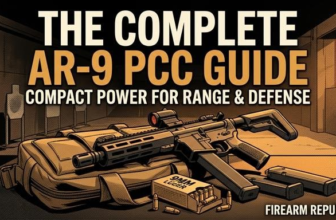
Semi-automatic rifles fire once per trigger pull and automatically chamber the next round. The AR-15 (chambered in .223/5.56 and related cartridges) and AR-10 (chambered in .308 and related cartridges) are the dominant platforms in the US. They’re excellent for home defense, hog hunting, varmint hunting, and 3-Gun competition. They’re available in hunting calibers adequate for deer and elk.
Best for: Home defense, hog hunting, high-volume varmint shooting, competition shooting, any application where fast follow-up shots matter.
Not ideal for: Beginners who primarily want to learn precision marksmanship (the bolt-action teaches technique better), hunters in states that restrict semi-auto hunting, or buyers on a tight budget who want maximum accuracy per dollar spent.
See our AR-15 Platform Guide and AR-10 Platform Guide for semi-auto specifics, and our AR-15 vs AR-10 guide for the platform comparison.
Lever-Action Rifles
Lever-action rifles cycle by operating a lever below the receiver. They’re classic American hunting rifles chambered in cartridges like .30-30 Winchester, .45-70 Government, and .44 Magnum. Their compact length makes them handy in dense timber, and their straight-wall cartridges are legal for hunting in states that restrict bottlenecked centerfire cartridges.
Best for: Eastern and midwestern deer hunting inside 200 yards, hunting in straight-wall cartridge states (Ohio, Indiana, Michigan), hunters who want a traditional aesthetic.
Not ideal for: Long-range shooting, elk at extended distances, or beginners who want one rifle that covers the widest range of applications.
See our Lever-Action Rifles Guide for platform details and our Best Lever-Action Rifles for Deer Hunting for specific recommendations.
Step 3: Caliber Selection – What You Actually Need to Know
Caliber is the dimension of the bullet the rifle fires. It determines recoil, effective range, terminal performance on game, and ammunition cost. First-time buyers spend too much time on caliber selection and not enough on fit and budget – but caliber still matters, so here’s the practical framework.
For Deer Hunting
.243 Winchester – Mild recoil, flat trajectory, adequate for deer to 300 yards. The right starting caliber for youth hunters and recoil-sensitive shooters. Limited on elk and larger game.
7mm-08 Remington – The best all-around deer caliber for beginners. Mild recoil (about 11 ft-lbs in a 7-lb rifle), adequate for elk inside 250 yards with bonded bullets, flat trajectory, excellent ammunition selection. If you’re a new hunter who might eventually draw an elk tag, start here.
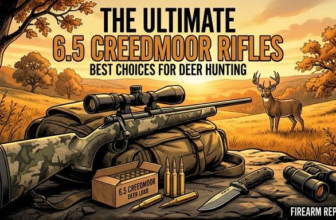
6.5 Creedmoor – The modern standard. Slightly more recoil than 7mm-08 (12–13 ft-lbs), outstanding at distance (genuine 400-yard deer capability), adequate for elk with proper bullet selection. The best starting caliber for hunters who expect to shoot past 250 yards. See our 6.5 Creedmoor Caliber Guide for details.
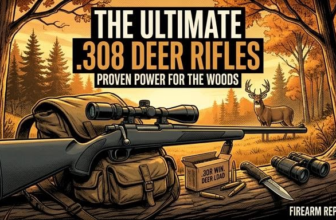
.308 Winchester – The proven standard for 60 years. More recoil than 6.5 CM (16–17 ft-lbs), more energy on large game at moderate distances, the deepest ammunition selection of any hunting caliber. The right choice for hunters who prioritize elk margins, dense timber use, or widest possible rural ammo availability. See our .308 Winchester Caliber Guide for details, and our 6.5 Creedmoor vs .308 Winchester guide for a head-to-head comparison.
The practical recommendation: Start with 7mm-08 or 6.5 Creedmoor. Both cover deer competently, both handle elk with appropriate bullets, and both have less recoil than .308 – which means you’ll practice more and shoot better. Skip .30-06 and magnums for a first rifle; their recoil generates flinch habits in new shooters that take years to correct.
For Home Defense
5.56 NATO/.223 Remington (AR-15) – The right home defense rifle caliber for most buyers. Lower recoil allows faster accurate follow-up shots, standard 30-round magazines provide adequate capacity, and modern defensive loads balance effectiveness with reduced over-penetration risk compared to common myths. See our Home Defense Rifle Guide for the full breakdown.
For Target Shooting
6.5 Creedmoor for bolt-action precision shooting – the dominant long-range target cartridge with a wide selection of accurate factory match ammunition. .223 Remington for AR-15 target shooting and competition where recoil management and ammunition economy matter most.
Calibers to Avoid for First-Time Buyers
.300 Win Mag, .338 Lapua, 7mm PRC, 6.5 PRC – All excellent cartridges, all wrong for first-time buyers. Their recoil (20–35 ft-lbs) generates anticipatory flinch in shooters who haven’t built foundational technique. A beginner who develops a flinch on a magnum takes years to correct it; a beginner who starts on 6.5 CM or 7mm-08 transitions to magnums smoothly when the use case actually demands it.
Step 4: Understand Stock Fit
A rifle that doesn’t fit your body produces inconsistent results regardless of its mechanical accuracy. Three fit measurements matter:
Length of Pull (LOP) is the distance from the trigger to the center of the butt pad. Standard adult LOP is 13.5″–14.25″. Your trigger finger should reach the trigger naturally with the first pad of the finger (not the first joint) when the rifle is in shooting position. If you’re stretching forward to reach the trigger, the LOP is too long. Most adults fit standard LOP; most children need 11.5″–12.5″ LOP.
Cheek weld is how your cheek contacts the stock when aiming through the scope. Your eye should align naturally with the scope’s center without lifting your head or craning your neck. Too-low comb height is the most common stock fit problem in scoped rifles – your chin ends up on the stock rather than your cheek, creating an inconsistent eye relief and amplifying felt recoil. An inexpensive cheek riser ($20–$40) fixes this without gunsmithing.
Grip reach – your trigger hand should grip the stock naturally with the trigger finger resting comfortably. A grip that’s too large or too far forward causes muscle tension that disrupts trigger technique.
For youth hunters, this is especially critical – see our Youth Hunting Rifles Guide for specific fit guidance.
Step 5: Set a Realistic Budget
First-time buyers consistently underbudget for the complete system. Here’s what realistic total system costs look like:
Budget system ($700–$900 total):
- Rifle: $400–$550 (Savage Axis II, Mossberg Patriot, Ruger American Gen II)
- Scope: $150–$250 (Vortex Crossfire II 3-9×40, Primary Arms SLx 4-14x)
- Rings/base: $40–$80
- Ammunition (100 rounds for zeroing and practice): $80–$150
- Sling: $25–$50
Mid-range system ($1,200–$1,600 total):
- Rifle: $650–$950 (Ruger American Gen II, Tikka T3x Lite, Bergara B-14 Hunter)
- Scope: $350–$500 (Vortex Viper HD 3-9×40, Leupold VX-Freedom 3-9×40)
- Rings/base: $60–$100
- Ammunition: $100–$200
- Sling: $30–$60
The optic budget rule: Spend at least as much on the optic as on the rifle. The scope is the interface between you and the target – glass quality, light transmission, and reliable zero retention affect every shot you take. A budget scope on a quality rifle produces budget-scope results. This isn’t a sales pitch; it’s physics.
The Five Best First Rifles
These five rifles cover the five most common first-buyer situations. Each is genuinely good – not a compromise recommendation, not “it’s fine for a first rifle.” Each would satisfy experienced shooters who returned to the category.
1. Ruger American Gen II – Best All-Around First Rifle
Price: $599–$679 street Calibers: 6.5 CM, 7mm-08, .308, .243, .30-06 and others Weight: 6.3 lbs Barrel: 22″ threaded Trigger: Marksman Adjustable, 3–5 lbs
The Ruger American Gen II is the right first rifle for most buyers. The AICS-compatible magazine accepts 10-round aftermarket boxes and shares a feeding standard with premium rifles costing three times as much. The factory-threaded 22″ barrel is suppressor-ready from day one. The sub-MOA accuracy guarantee is met consistently. At $650 in 6.5 Creedmoor or 7mm-08, it’s the best combination of value, capability, and future upgrade flexibility in the budget category.
The Marksman trigger adjusts from 3 to 5 lbs and is workable but not exceptional – it’s the Gen II’s main limitation. Set to 3 lbs with some dry-fire practice, it becomes serviceable. The synthetic stock is purely functional. Neither limitation matters in the deer woods.
See our Ruger American Complete Guide for the full platform picture.
2. Savage Axis II – Best Budget Trigger Under $500
Price: $400–$460 street Calibers: 6.5 CM, 7mm-08, .308, .243 and others Weight: 6.5 lbs Barrel: 22″ Trigger: AccuTrigger, 2.5–6 lbs adjustable
For buyers whose budget tops out below $500 for the rifle, the Savage Axis II delivers the AccuTrigger – the best factory adjustable trigger in the sub-$650 market – in a reliable, accurate package. Adjusted to 3 lbs, the AccuTrigger breaks cleanly with no perceptible creep. Sub-MOA accuracy with quality ammunition. The limitation is the non-threaded barrel and basic stock with no adjustability.
The Axis II XP package ($420–$480) includes a Weaver 3-9×40 scope – functional if basic – making it the lowest all-in cost for a complete ready-to-hunt system. For first-time hunters operating on a strict budget, the Axis II XP in 6.5 Creedmoor is an honest, capable starting point. See our Savage 110 Series Guide for the broader Savage platform context.
3. Tikka T3x Lite – Best If Budget Reaches $875+
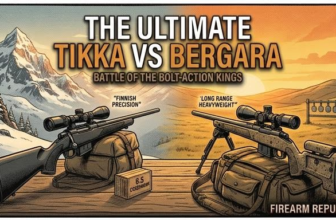
Price: $875–$950 street Calibers: 6.5 CM, 7mm-08, .308, .243, 7mm PRC and 15+ others Weight: 6.1 lbs Barrel: 22.4″ Trigger: Single-stage adjustable, ~2.5 lbs factory
If the budget reaches $875 for the rifle, the Tikka T3x Lite is the right answer – not a compromise, not “wait and save for something better.” The factory trigger at 2.5 lbs is genuinely excellent. The bolt is the smoothest in production at this price. Accuracy is consistently 0.5–0.7 MOA with quality ammunition. At 6.1 lbs, it carries comfortably all day.
For a first-time buyer who wants a rifle they’ll never feel the need to replace, the T3x Lite in 6.5 Creedmoor or 7mm-08 is the answer. It fits adults, it’s accurate enough for any hunting application, and the trigger and bolt quality make every range session more enjoyable – which means more practice and ultimately better shooting.
See our Tikka T3x Complete Guide for full details.
4. Ruger AR-556 – Best First Rifle for Home Defense and Hog Hunting
Price: $650–$750 street Caliber: 5.56 NATO/.223 Remington Weight: 6.5 lbs Barrel: 16.1″ M4 profile Trigger: Standard mil-spec, ~7 lbs
For buyers whose primary purpose is home defense, hog hunting, or a combined defensive/hunting platform, the Ruger AR-556 is the right starting point. It’s a mil-spec AR-15 with reliable direct-impingement operation, a standard 30-round magazine, and a Picatinny rail for optics. Ruger’s quality control is consistent; the AR-556 is among the most reliable production AR-15s at its price point.
The mil-spec trigger is heavy (7 lbs) – an aftermarket drop-in trigger group ($60–$150) is the first upgrade most buyers make and dramatically improves the shooting experience. The 16.1″ barrel is the standard hunting/defensive length. For buyers who eventually want to add a red dot or LPVO, the Picatinny rail accepts any standard mount.
See our AR-15 Platform Guide and Home Defense Rifle Guide for detailed setup guidance.
5. Mossberg Patriot – Best Value Under $450
Price: $380–$450 street Calibers: 6.5 CM, 7mm-08, .308, .243 and others Weight: 6.5 lbs Barrel: 22″ Trigger: LBA adjustable, 2–7 lbs
When budget is the primary constraint, the Mossberg Patriot is the honest lowest-price recommendation with no asterisks. The LBA trigger adjusts from 2 to 7 lbs and breaks cleanly at 3.5 lbs. The spiral-fluted bolt reduces drag in wet conditions – an unusual feature at this price. Sub-MOA accuracy with quality loads. Detachable box magazine.
The Patriot’s limitation is thin aftermarket support – if you eventually want to upgrade the stock or trigger, the Ruger and Savage platforms offer more options. For a hunter who wants a functional deer rifle at the lowest responsible price with no plans to modify it, the Patriot delivers honest value at $380–$450.
Comparison: Best First Rifles by Priority
| Rifle | Price | Calibers | Trigger | Best For |
|---|---|---|---|---|
| Mossberg Patriot | $420 | 6.5 CM, .308, 7mm-08 | LBA adj. | Tightest budget |
| Savage Axis II | $440 | 6.5 CM, .308, 7mm-08 | AccuTrigger | Best trigger under $500 |
| Ruger American Gen II | $650 | 6.5 CM, .308, 7mm-08 | Marksman adj. | Best all-around value |
| Ruger AR-556 | $700 | 5.56/.223 | Mil-spec 7 lbs | Home defense / hogs |
| Tikka T3x Lite | $900 | 6.5 CM, .308, 7mm-08+ | Excellent 2.5 lbs | Best overall if budget allows |
Scopes: What to Put on Your First Rifle
A first hunting or target rifle should be scoped. Iron sights have their place – see our section on lever-actions – but for most hunting applications beyond 100 yards and for learning precision technique, a scope is necessary.
For deer hunting (shots inside 250 yards): A 3-9×40 is everything you need. The Vortex Crossfire II 3-9×40 ($180) is the benchmark budget hunting scope – durable, clear enough for hunting, holds zero reliably. The Leupold VX-Freedom 3-9×40 ($280) is a meaningful step up in glass quality for dawn and dusk hunting. At 3x, it acquires targets quickly in timber; at 9x, 250-yard shots are comfortable. Don’t overthink this category at the beginner stage – a $200 scope on a $500 rifle kills deer as cleanly as a $600 scope.
For hunting that includes shots to 400 yards: Step up to a Vortex Viper HD 3-9×40 ($380) or Leupold VX-3HD 3-9×40 ($520). Better glass quality in low light, more reliable zero return after field conditions, and sufficient magnification for 400-yard work. This is the right optic investment if you’re buying the Tikka T3x Lite – it matches the rifle’s capability.
For home defense (AR-15): A red dot sight or LPVO. The Vortex Crossfire Red Dot ($150) or Primary Arms SLx MD-25 ($200) are appropriate entry points. For hunters who also compete in 3-Gun or want a versatile defensive optic, an LPVO (1-6x or 1-8x) like the Primary Arms SLx 1-6x ($300) covers both close-range and 200-yard use.
For deeper optic guidance, see our Best Hunting Scopes Under $500 and Best Red Dot Sights for AR-15 guides.
The Legal Process: Buying a Rifle in the US
Every rifle purchase through a licensed dealer (FFL) in the United States involves a federal background check through the NICS (National Instant Criminal Background Check System). The process:
- Select a rifle at the dealer or order online (online purchases ship to a local FFL dealer)
- Complete ATF Form 4473 (Firearms Transaction Record) with your personal information
- The dealer runs a NICS background check – most complete within minutes; some are delayed up to 3 business days
- If approved, you take possession of the rifle immediately
You must be 18+ to purchase a rifle from a licensed dealer (21+ in some states). State laws vary on additional requirements, waiting periods, and restricted features. Know your state’s specific regulations before purchasing.
For hunting specifically: a hunting license is required to hunt in all US states and is separate from the rifle purchase process. State wildlife agency websites provide current licensing requirements and regulations.
The First Range Session: What to Do
Buying the rifle is the beginning, not the end. A few specific practices that make the first range session productive:
Bring the right targets. A 1-inch orange dot at 25 yards and a 3-inch circle at 100 yards are the standard zeroing targets. Avoid large bullseye targets that don’t give precise aiming points. Most sporting goods stores carry appropriate targets for $5–$10.
Start at 25 yards. Zero the scope at 25 yards first – at most magnification settings and with typical hunting loads, a 25-yard zero puts you approximately 1.5–2″ high at 100 yards and close to point of aim at 200 yards. This gets you on paper at 100 yards without extensive adjustment.
Use a stable rest. Most public ranges have concrete benches. Bring a front bag (or a folded jacket) and a rear bag. Shoot from the bench for zeroing – this removes position variables and tells you what the rifle itself is capable of. Do not try to zero from a standing or unsupported position.
Dry fire before live fire. Before shooting a single live round, dry fire 20–30 times with snap caps. The trigger break should be a surprise; the rifle should not move when it fires. If you’re anticipating the shot and pushing the rifle forward before it fires, that’s a flinch – and it’s better to identify and address it in dry fire than to reinforce it with live rounds.
Take your time. New shooters rush shots. At the bench, settle your position, take a breath, let half out, and break the shot deliberately. Five deliberate shots tell you more about your rifle’s zero than twenty rushed ones.
Common First-Time Buyer Mistakes
Buying too much rifle for a first gun. A .300 Win Mag because “it can do everything” generates a flinch that takes years to correct. Start with manageable recoil; you can always step up when the use case demands it.
Skipping the optic budget. A $600 rifle with a $100 scope is a $100 shooting system. The scope determines what the rifle can do in the field. Budget for it.
Buying what someone else shoots. Your mentor’s rifle in their chosen caliber may be perfect for them and wrong for you. Fit, recoil tolerance, and primary use case are personal variables.
Not handling the rifle before buying. A rifle that feels right in your hands is a rifle you’ll shoot more and maintain better. If you can handle it at a counter before purchasing, do so. Check trigger reach, LOP, and cheek weld with a scope mounted if possible.
Treating the first rifle as a permanent decision. It isn’t. Your first rifle is the one that teaches you what you want in your second rifle. Buy something good and appropriate for your primary use case, shoot it a lot, and let your evolving knowledge guide future decisions.
Frequently Asked Questions
Q: How much should I spend on my first rifle?
A: Budget the complete system, not the rifle alone. A functional hunting system – rifle, scope, rings, and ammunition – can be assembled for $700–$900 with a Mossberg Patriot or Savage Axis II. A genuinely excellent system runs $1,200–$1,600 with a Ruger American Gen II or Tikka T3x Lite and a quality Vortex or Leupold scope. More than $1,600 is the right investment once you know exactly what you want from a second rifle; it’s money ahead of your knowledge curve on a first one.
Q: What caliber should I start with?
A: For deer hunting: 6.5 Creedmoor or 7mm-08 Remington. Both are mild enough to practice with frequently, accurate enough for any deer hunting distance, and adequate for elk with appropriate bullets. For home defense: 5.56 NATO in an AR-15. For a first all-purpose rifle that might see deer and occasional elk: 6.5 Creedmoor. Avoid magnums (.300 Win Mag, 7mm Rem Mag) as a starting point – their recoil generates technique problems that take years to correct.
Q: Do I need a bolt-action or semi-automatic?
A: For most beginners, a bolt-action. It teaches fundamentals better (each shot is deliberate), is more accurate per dollar at most price points, is legal for hunting everywhere, and is simpler to understand and maintain. A semi-auto (AR-15) is the right starting point if home defense, hog hunting, or competition shooting is the primary use case. See our AR-15 vs AR-10 guide for the platform comparison if you’re deciding between them.
Q: Can one rifle do everything?
A: Mostly yes, within realistic limits. A bolt-action in 6.5 Creedmoor or .308 Winchester handles whitetail deer, mule deer, elk, black bear, pronghorn, and most North American game cleanly inside 400 yards. It doesn’t work for home defense as well as an AR-15, doesn’t shoot prairie dogs as efficiently as a dedicated varmint rifle, and isn’t optimized for 1,000-yard precision competition. But for a hunter who wants one rifle that handles their primary use cases, a quality bolt gun in 6.5 CM covers the vast majority of North American hunting. See our Best One-Rifle Solution for Hunting for the full analysis.
Q: Should I buy new or used?
A: New for a first rifle is the cleaner experience – warranty coverage, known condition, and no history of abuse or neglect to worry about. Used rifles can represent excellent value (a used Tikka T3x Lite in 80% condition for $550 is a better rifle than a new Mossberg Patriot) but require more knowledge to evaluate. If you’re buying used, stick to established brands (Ruger, Savage, Tikka, Bergara, Browning) from dealers who allow inspection before purchase. Inspect the bore with a light, check the crown (the muzzle end of the barrel) for damage, function-test the trigger and bolt, and verify the action locks up solidly.
Q: How do I store a rifle safely?
A: Safely stored means inaccessible to unauthorized users – particularly children – and secure against theft. A quality gun safe ($200–$800 for entry-level options) is the gold standard. A locking gun cabinet ($100–$200) is acceptable for theft deterrence but not child-proof if children are in the home. Trigger locks ($15–$30) are a minimum for households with children when a safe isn’t available. Store firearms unloaded; store ammunition separately when practical. This is a safety and legal obligation, not optional.