 Maksym Kovaliov
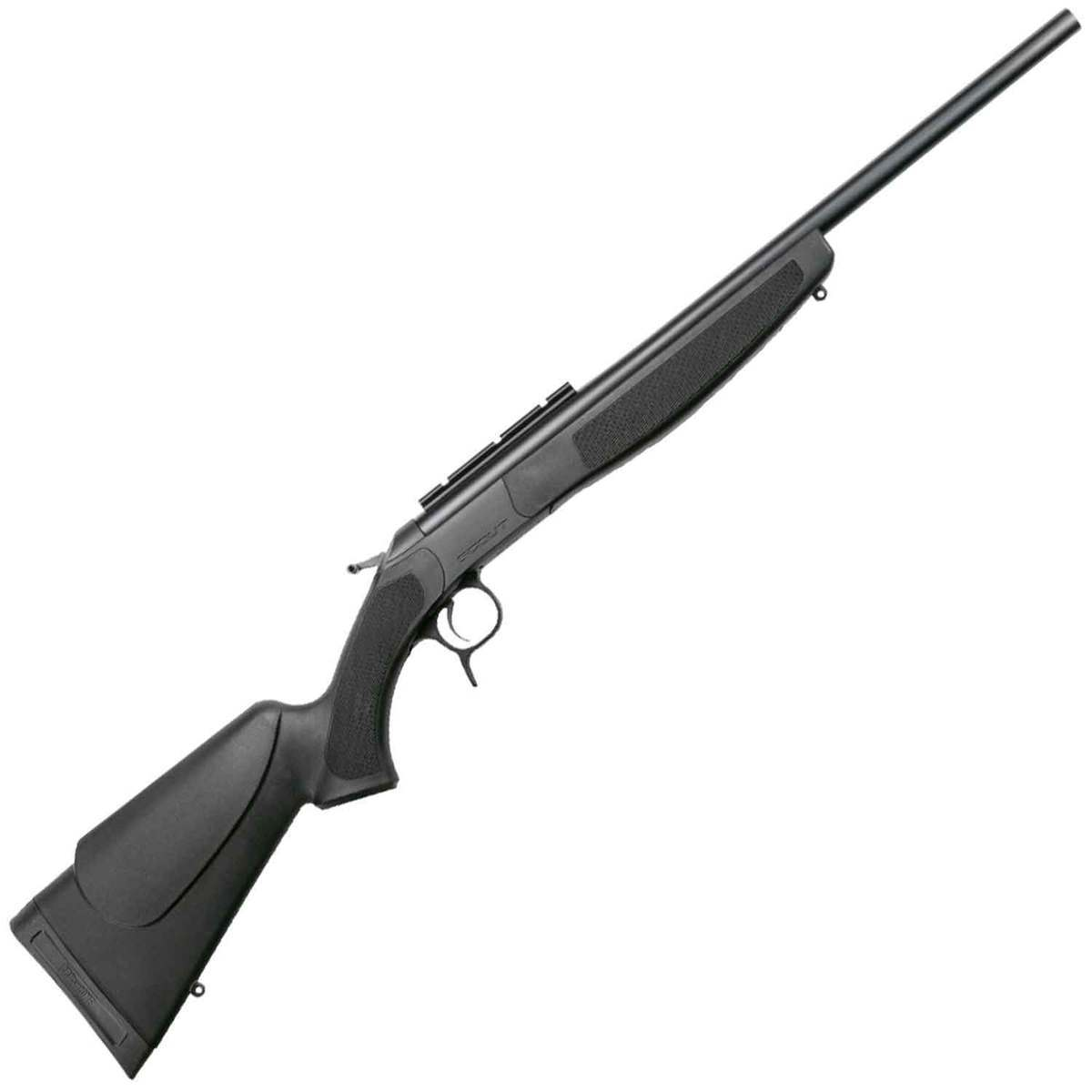
The CVA Scout doesn’t get the attention it deserves. Walk into any gun store and the bolt-action rifles eat up most of the wall space – Ruger Americans, Savage 110s, Tikka T3xs lined up like they own the place. The single-shot break-action sits in the corner, usually priced somewhere between $350 and $500, and most buyers walk right past it.
That’s a mistake. The CVA Scout is one of the most practical, accurate, and versatile hunting rifles you can buy at its price point – and it’s built on a better foundation than most people realize. The barrels are manufactured by Bergara in Spain, the same company whose B-14 series regularly outperforms rifles costing twice as much. When you buy a CVA Scout, you’re getting a Bergara barrel in a sub-$500 package.
This guide covers everything: the difference between Scout models, which calibers actually make sense for which applications, barrel lengths, how the Scout stacks up against the Thompson/Center Encore and other single-shot competitors, and how to set one up for hunting season. Whether you’re buying your first rifle, looking for a dedicated hog gun, or trying to figure out which straight-wall cartridge your state allows – this is the complete reference.
What Is the CVA Scout?
The CVA Scout is a break-action single-shot centerfire rifle. You hinge it open at the breech, insert one round, close it, cock the external hammer, and fire. After the shot, you hinge it open again and either the round extracts (on standard models) or falls free (on some configurations). Then you load again.
That’s the entire mechanical sequence. There is no magazine to worry about, no bolt to cycle, no gas system to maintain. The action is as simple as it gets in centerfire rifles.
CVA – Connecticut Valley Arms – started in 1971 making black powder muzzleloaders. They built a reputation for reliable, affordable firearms and eventually expanded into modern inline muzzleloaders. The move into centerfire break-action rifles was a natural extension of that same design philosophy: a proven, simple action chambered for the cartridges hunters actually use.
What most buyers don’t realize is that CVA is owned by BPI Outdoors, and the actual manufacturing happens at the Dikar / Bergara facility in Eibar, Spain. Bergara has been making precision barrels for decades – their reputation in the bolt-action world is well established. The Scout’s 416 stainless steel fluted barrels come from that same facility. That’s a significant quality advantage over competing single-shots at this price.
CVA Scout Models: Scout vs Scout V2 vs Takedown
The naming can be confusing because CVA has sold several iterations under similar names. Here’s how they break down as of 2025:
CVA Scout V2
The V2 is the previous generation that remains widely available at dealers and online. You’ll recognize it by:
- DuraSight Dead-On one-piece scope rail – a proprietary rail that mounts directly to the receiver
- Fluted 416 stainless steel barrel
- CrushZone recoil pad
- Reversible hammer spur
- Ambidextrous synthetic stock with fixed length of pull (~14″)
- Extracts but does not eject – you open the action and pull the case out by hand
The V2 comes with or without a KDF muzzle brake depending on the caliber. The heavier calibers (.45-70, .444 Marlin, .450 Bushmaster) typically include the brake; lighter calibers may come with a threaded muzzle instead.
Street price on V2 models runs $375–$475 depending on caliber and retailer.
CVA Scout (2025 Generation)
The current Scout is an update with meaningful improvements:
- Picatinny rail replaces the proprietary DuraSight system – accepts any standard rings
- Adjustable length of pull via stock spacers
- Adjustable comb height – significant for proper scope alignment with varied optic heights
- Steel sling swivel studs (replacing molded-in plastic)
- Suppressor-ready compatibility on most configurations
- Barrel lengths from 16.25″ to 22″ depending on caliber
The adjustable stock is a genuine upgrade, especially for youth hunters and shooters with shorter or longer than average arms. The Picatinny rail simplifies optic mounting considerably over the V2’s proprietary system.
MSRP runs $395–$495 for standard configurations.
CVA Scout Takedown
The Takedown adds a tool-free quick-detach barrel system – you can separate the barrel from the stock without any tools in seconds. This makes it genuinely packable: barrel and action fit in a standard pack, and the whole rifle can be stored in much tighter spaces than a conventional rifle.
The Takedown features a ported barrel (not threaded on most configurations), 20″–22″ barrel lengths, and the same CrushZone recoil pad. It’s aimed at truck gun, boat gun, and survival applications where compact storage matters more than having a threaded muzzle. MSRP is around $495.
For a full breakdown of the Takedown specifically, see our CVA Scout Takedown Review.
The Bergara Barrel Advantage
This is the most important thing to understand about the CVA Scout’s value proposition.
Bergara barrels are cold hammer forged from 416 stainless steel and hand-lapped at the factory. Independent testing consistently shows CVA Scout barrels delivering sub-MOA accuracy with quality ammunition – performance that would cost $800–$1,200 in a bolt-action platform. The reason is straightforward: the barrel is genuinely good, and a break-action single-shot action has almost no mechanical complexity to introduce inconsistency.
A single-shot has no bolt face alignment variation, no magazine feeding variation, no gas system timing issues. You seat the round directly into the chamber by hand, and the barrel is the only variable. When that barrel is a Bergara, the results tend to be impressive.
Owners regularly report 0.7–1.0 MOA groups from CVA Scouts with factory ammunition. With hand loads, sub-0.75 MOA is consistently achievable. For a $400–$500 rifle, that accuracy competes with bolt-actions selling for twice the price.
Complete Caliber Lineup
The Scout platform is available in more calibers than most shooters realize. Here’s the full current lineup with barrel lengths and primary applications:
Standard Hunting Calibers
| Caliber | Barrel Length | Primary Use | Notes |
|---|---|---|---|
| 223 Remington | 22″ | Varmint, coyote | Light recoil, compact option |
| 243 Winchester | 20″ | Deer, youth rifle | Excellent all-around light recoil option |
| 7mm-08 Remington | 20″ | Deer, elk | Mild recoil, excellent deer cartridge |
| 308 Winchester | 20″ | Deer, elk | Universal hunting cartridge |
| 6.5 Creedmoor | 22″ | Deer, elk, long range | High BC, flat trajectory |
Heavy Game & Hard-Hitting Calibers
| Caliber | Barrel Length | Primary Use | Notes |
|---|---|---|---|
| 35 Whelen | 22″ | Elk, bear | Underappreciated big-game cartridge |
| 444 Marlin | 22″ | Timber hunting, hog | Old-school heavy hitter |
| 45-70 Government | 22″ or 25″ | Bear, hog, elk | Classic American heavy, muzzle brake included |
| 450 Bushmaster | 22″ | Deer, hog (straight-wall) | Michigan/Ohio straight-wall legal |
Straight-Wall Cartridges (State-Restricted Seasons)
| Caliber | Barrel Length | Primary Use | Notes |
|---|---|---|---|
| 350 Legend | 20″ | Deer (straight-wall states) | Low recoil, mild, popular choice |
| 360 Buckhammer | 20″ | Deer (straight-wall states) | New for 2025; better terminal performance than .350 |
| 400 Legend | 20″ | Deer (straight-wall states) | New for 2025; heavier bullet option |
| 450 Bushmaster | 22″ | Deer (straight-wall states) | Legal in most straight-wall states |
Pistol Calibers & Specialty
| Caliber | Barrel Length | Primary Use | Notes |
|---|---|---|---|
| 44 Remington Magnum | 22″ | Deer, short range | Traditional brush gun cartridge |
The straight-wall caliber lineup is one of the Scout’s biggest practical advantages. Many Midwest states restrict certain deer seasons to straight-wall cartridges – Ohio, Michigan, Indiana, and Iowa are the primary examples. The Scout covers nearly every legal option in a single platform. For more detail, see our CVA Scout for Straight-Wall Deer Hunting guide.
Barrel Length: What Actually Changes
The Scout’s barrel lengths vary by caliber group, and the differences are worth understanding before you buy.
16.25″ barrels (available on some .350 Legend configurations) – designed for suppressor use where the overall length with a can stays manageable. Velocity loss vs 20″ is roughly 80–120 fps. For deer inside 200 yards, irrelevant.
20″ barrels (most standard hunting calibers) – the practical sweet spot for most hunters. Manageable overall length, acceptable velocity. A .308 Winchester from a 20″ barrel runs approximately 2,580 fps with 168gr Federal Gold Medal Match – about 70 fps less than a standard 22″ bolt gun. In hunting terms, this is not meaningful at ranges under 300 yards.
22″ barrels (6.5 Creedmoor, .223, heavy calibers) – standard hunting rifle length. Full velocity from the cartridge, good balance for field carry.
25″ barrels (some .45-70 and .444 Marlin configurations) – the longer barrel on heavy cartridges serves a specific purpose: more time in the barrel means more velocity, and with slow-burning heavy loads like .45-70 Garrett or Buffalo Bore, the 25″ tube makes a real difference. The downside is overall length – a 25″ barrel on a break-action with a stock creates a rifle over 45″ long.
For most hunters, the 20″ and 22″ configurations are the practical choices. The 25″ heavy-caliber barrel is worth it if you’re specifically loading hot .45-70 ammo and hunting bear or hog where every fps of the big slug matters.
Trigger: The Scout’s Honest Strength
The CVA Scout trigger is consistently better than its price suggests. Owners and independent reviewers report break weights in the 2.5–3.5 lb range with minimal creep – comparable to entry-level adjustable triggers on bolt-action rifles selling at twice the price.
This is partly a function of the action design. A break-action single-shot has a simpler trigger mechanism than a bolt gun – fewer parts, less interference, and no magazine or cycling sequence to affect the trigger group. The result is a clean, predictable break that hunters find perfectly adequate for field use.
The trigger is not adjustable in the traditional sense, but the factory setup is generally good enough that most buyers never feel the need to change it. For comparison, the Thompson/Center Encore Pro Hunter – the Scout’s main competitor – ships with a factory trigger around 6–6.5 lbs. The Scout is meaningfully better in this department.
CVA Scout vs The Competition
CVA Scout vs Thompson/Center Encore Pro Hunter
The T/C Encore is the most direct competitor and the most commonly compared alternative. The key difference is the interchangeable barrel system – the Encore lets you swap barrels across calibers using the same stock and receiver. Remove two screws and a pin, fit a new barrel, and you’ve changed calibers. The barrel library extends from .22 Hornet to .416 Rigby.
That versatility comes at a cost: $700–$900 for the base rifle, plus $300–$500 for additional barrels. The trigger on the Encore runs heavy – 6–6.5 lbs factory – which is a real limitation for precision shooting. The Encore is also heavier and less refined out of the box.
The CVA Scout wins on price, trigger quality, and simplicity. The T/C Encore wins on caliber flexibility if you intend to use multiple barrels over time. If you’re buying one Scout in one caliber for one purpose, the Scout is the better buy. If you hunt with five different cartridges across different seasons and states, the Encore’s system makes economic sense.
For a full head-to-head, see CVA Scout vs T/C Encore Pro Hunter.
CVA Scout vs Henry Single Shot
The Henry Single Shot is a genuinely excellent rifle – American-made, walnut stock, polished fit and finish that feels more expensive than the price. Henry single-shots typically run $450–$550 and have earned strong reviews for quality and accuracy.
The practical differences: Henry’s single-shot doesn’t include a Picatinny or scope rail as standard – you need to add rings or a base. The stock is fixed with no LOP adjustment. Henry makes their single-shot in fewer calibers than CVA, and availability of heavy-caliber options (.45-70, .444 Marlin) varies.
If aesthetics matter and you want a rifle that looks and feels traditional, Henry. If you want more caliber options, an adjustable stock, and a factory-equipped mounting system, CVA.
CVA Scout vs H&R / NEF Handi-Rifle
The Handi-Rifle was produced by Harrington & Richardson and New England Firearms until the line was discontinued. Used examples sell for $200–$350 and remain popular with hunters who’ve owned them for decades.
The Handi-Rifle was a legitimate hunting tool – accurate, reliable, simple. It lacked the finish quality of the Scout and had a heavier trigger, but at $250 used, it’s hard to argue with. If you find a clean used Handi-Rifle in a caliber you need for under $275, that’s still a reasonable buy. For a new purchase, the Scout’s quality advantage is clear.
CVA Scout vs Rossi Single Shot
Rossi makes break-action single-shots at very low price points – often $250–$350 new. The quality shows at that price. Forum reports of stiff, sticky actions and inconsistent extraction are common. For a backup rifle or a youth starter gun where budget is the primary constraint, Rossi is usable. For a primary hunting rifle, spend the extra $100–$150 and buy the Scout.
Optics Setup for the CVA Scout
The Scout’s action doesn’t allow for a traditional scope mount – there’s no receiver ring or action rail in the bolt-gun sense. The mounting system is specific to the platform.
Scout V2: Ships with the DuraSight Dead-On one-piece rail. This proprietary system works, but accepts only Weaver-style rings. Many owners replace it with a DNZ CVA-specific direct mount for a lower, more rigid setup.
2025 Scout: Ships with a standard Picatinny rail that accepts any 1″ or 30mm rings. This is significantly more flexible and a genuine improvement over the V2 system.
Ring height: Because the barrel sits lower relative to the receiver in a break-action vs a bolt gun, scope height matters. Medium rings work for most setups with standard objective lenses (40–44mm). High rings may be needed if you run a large objective (50mm+) on a Scout V2 with the proprietary rail system.
Practical optic choices: For most Scout applications – deer hunting inside 200 yards – a 3–9×40 is plenty. Vortex Crossfire II 3–9×40 ($180), Leupold VX-Freedom 3–9×40 ($280), or Nikon Prostaff 3–9×40 ($200) are all reasonable pairings. For the .45-70 or .450 Bushmaster in dense timber, a 1–4× or a simple red dot keeps things fast at close range.
Suppressor Compatibility
The 2025 Scout and most Scout V2 configurations in standard calibers ship with threaded barrels at 5/8×24 (for .30 caliber and larger) or 1/2×28 (for .223/5.56 calibers). Thread protectors are included.
The Scout Takedown’s ported barrel is the exception – it typically does not thread for a suppressor. If suppressor hunting is the goal, buy the standard Scout, not the Takedown.
The Scout works exceptionally well as a suppressor host because a single-shot action has no gas cycling to time. There’s no bolt carrier cycling, no timing-related pressure issues – the suppressor simply attaches and functions. The combination of a threaded Scout in .300 Blackout or .350 Legend with a compact suppressor makes for an extremely quiet, packable hunting setup.
For a full guide on suppressed hunting configurations, see our Suppressor Buyer’s Guide.
Who Should Buy the CVA Scout
Buy the CVA Scout if:
You want a dedicated single-purpose hunting rifle at minimum cost. A Scout in .308 Winchester with a $200 scope is a complete deer hunting setup for $650 total – a number that’s genuinely hard to beat for what you get.
You’re hunting in a straight-wall state and want the most caliber options in one platform. No other single-shot rifle matches the Scout’s coverage of .350 Legend, .360 Buckhammer, .400 Legend, and .450 Bushmaster.
You want a youth or beginner’s rifle that won’t be outgrown. The 2025 Scout’s adjustable LOP and low-recoil caliber options (.243, .350 Legend) make it the most practical first hunting rifle at any price.
You hunt in wet conditions. The 416 stainless steel barrel handles moisture without the maintenance anxiety of blued steel.
You want a reliable hog or bear gun without paying bolt-gun prices. A Scout in .45-70 with the factory brake is a serious close-range thumper that costs $450.
Look elsewhere if:
You need more than one shot. If your hunting style involves follow-up shots at moving game, a bolt-action is the practical choice.
You want an extensive upgrade path. The Scout doesn’t have the aftermarket ecosystem of a Remington 700 or Savage 110. What you buy is largely what you get.
You’re primarily a precision shooter. While the Scout is accurate, it’s not a precision platform – no adjustable trigger, no chassis system, no repeating capability for load development.
CVA Scout Series: All 8 Articles
This guide is part of a complete CVA Scout series covering every major application and caliber:
- CVA Scout .45-70 Government Review – the most popular caliber in the lineup
- CVA Scout for Straight-Wall Deer Hunting States – .350 Legend, .360 Buckhammer, .400 Legend, .450 Bushmaster
- CVA Scout for Deer Hunting: Best Calibers & Setup – .243, .308, 6.5 CM, 7mm-08
- CVA Scout for Elk, Hog & Heavy Game – .444 Marlin, .35 Whelen, .45-70, .308
- CVA Scout Takedown Review – survival, truck gun, suppressor setup
- CVA Scout vs T/C Encore Pro Hunter – full platform comparison
- CVA Scout as a Youth & First Hunting Rifle – .243, .223, adjustable stock
FAQ
Q: Does the CVA Scout eject or just extract spent cases?
A: On most configurations, the Scout extracts – the action opens and the case is partially lifted out of the chamber so you can pull it free by hand. It does not fully eject like a shotgun or some T/C configurations. This is a minor inconvenience you’ll forget about after the first hunt. In cold weather with gloves, some hunters prefer the controlled extraction anyway.
Q: Are CVA Scout barrels interchangeable between calibers?
A: Technically, barrels can be swapped on the Scout platform, but CVA does not officially support or market this as a feature the way Thompson/Center does with the Encore. Some owners have successfully swapped barrels between compatible configurations, but headspace must be verified and it requires basic gunsmithing knowledge. Don’t buy a Scout expecting the swap versatility of an Encore system.
Q: How accurate is the CVA Scout really?
A: Consistently 1 MOA or better with quality factory ammunition. With hand loads tailored to the barrel’s preferences, 0.5–0.75 MOA is achievable. The Bergara barrel is the reason – it’s significantly better than what you’d expect at this price point. Multiple independent reviews have confirmed sub-MOA performance across calibers.
Q: What is the difference between the Scout V2 and the 2025 Scout?
A: The main differences are the mounting system (V2 uses proprietary DuraSight rail; 2025 Scout uses standard Picatinny), the stock adjustability (2025 Scout has adjustable LOP and comb height; V2 does not), and sling swivel quality (steel studs on 2025 vs molded plastic on V2). The barrels and action are substantially the same. If you find a V2 at a meaningful discount, it’s still an excellent rifle.
Q: Is the CVA Scout legal for deer in my state?
A: The Scout is legal for deer hunting wherever centerfire rifles are legal. For states with straight-wall cartridge restrictions during specific seasons (Ohio, Michigan, Indiana, Iowa, and others), calibers like .350 Legend, .360 Buckhammer, .400 Legend, and .450 Bushmaster are all compliant. Always verify your specific state’s regulations before the season – the rules vary by county in some states.
Q: Can I use the CVA Scout for home defense?
A: Technically yes, but practically it’s not a first choice. A single-shot rifle means one round before a manual reload. For home defense, see our Home Defense Rifle Guide for more appropriate options. The Scout is a hunting tool.