
 Maksym Kovaliov
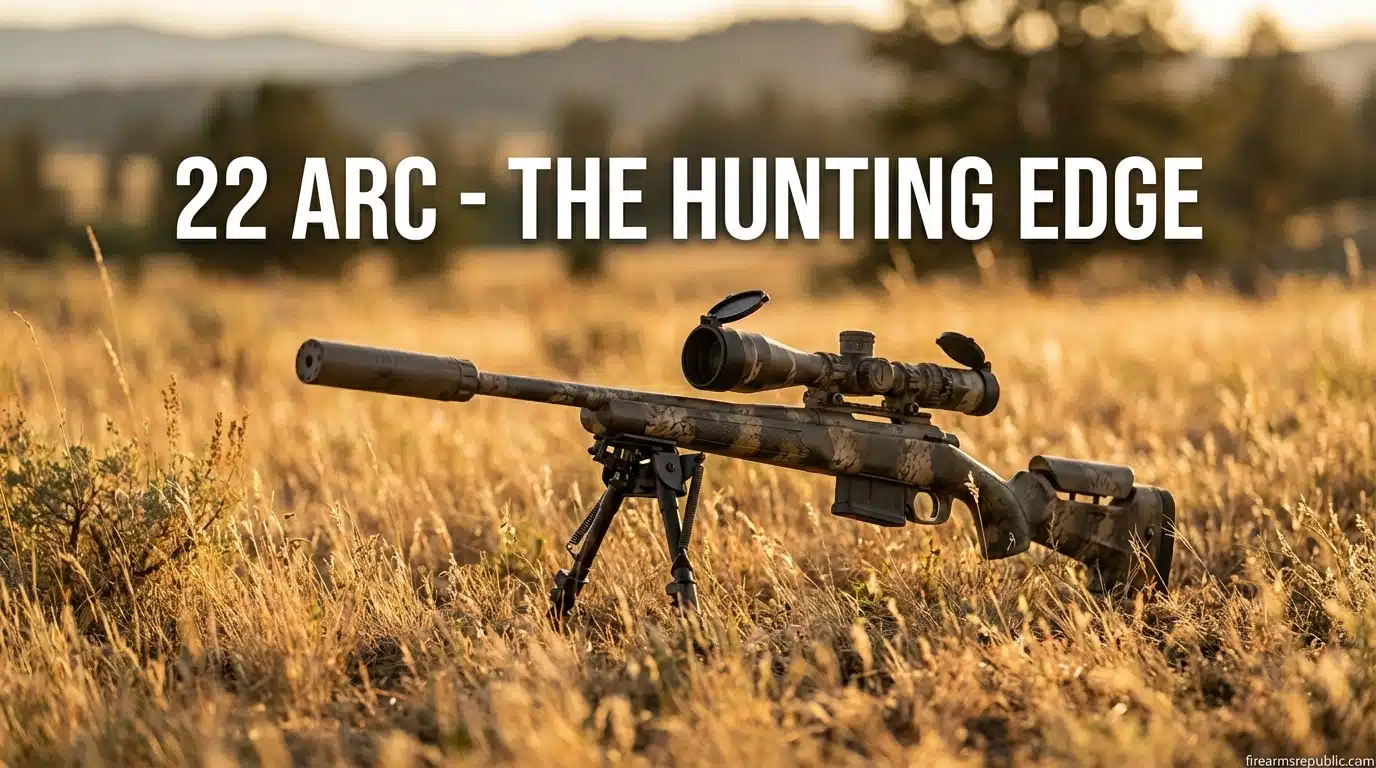
The .22 ARC gets most of its press as a precision shooting and competition cartridge. The high-BC 88gr ELD-M, the 1,000-yard potential, the PRS gas-gun discussions – that’s the conversation that dominates online. But a growing number of hunters are asking a simpler question: can this thing kill deer? What about hogs? Elk? What distances are actually ethical, and which bullet do I run?
The answers are more nuanced than a yes or no. The .22 ARC’s terminal performance depends heavily on platform (AR-15 factory load vs bolt-action handload), bullet selection (match bullets don’t work on game), and distance (the 2,000 fps expansion threshold is a real constraint, not a suggestion). Get those three variables right and the .22 ARC is a capable hunting cartridge for a defined range of game. Get them wrong and you’re wounding animals.
This guide maps the .22 ARC’s hunting capability honestly – what it can do, what it can’t, and exactly how to set it up for the game you’re hunting.
The Fundamental Constraint: The 2,000 fps Rule
Every hunting discussion about .22 ARC starts here. Modern expanding hunting bullets – bonded cores, polymer-tipped designs, monolithic copper – require a minimum impact velocity of approximately 2,000 fps to initiate reliable expansion. Below that threshold, the bullet may not open properly, which means it passes through without creating an adequate wound channel and the animal runs. That’s not a wounding scenario you can predict or control in the field.
The .22 ARC’s 2,000 fps limit varies by platform:
- AR-15 with factory 80gr ELD-X: approximately 2,750 fps muzzle velocity from a 16″ barrel. Drops below 2,000 fps at approximately 400–450 yards.
- AR-15 with factory 88gr ELD-M: this is a match bullet, not a hunting bullet. It does not reliably expand at any impact velocity. Do not use it on game.
- Bolt-action with handloaded 80gr ELD-X at 3,050 fps: drops below 2,000 fps at approximately 580–600 yards.
- Bolt-action with handloaded 71gr Copper Rose at 3,200 fps: monolithic copper expands reliably down to approximately 1,800 fps due to its construction. Effective range extends to approximately 650 yards in a bolt-action.
These are your real-world hunting distance ceilings. Everything else in this guide flows from them. If you’re hunting from an AR-15 with factory ammo, 400 yards is your maximum ethical range on deer-sized game with an 80gr expanding bullet. If you’re running a bolt-action handload, you have 580–600 yards. Know which platform you’re on before you decide whether a shot is ethical.
Bullet Selection: The Most Important Decision
The .22 ARC’s bullet selection for hunting is narrower than for precision shooting, and getting it right matters more than any other variable. The wrong bullet at the right distance is worse than the right bullet at a distance beyond the rifle’s capability – at least in the latter case the animal runs off uninjured.
What works:
80gr Hornady ELD-X – The flagship hunting load for .22 ARC. The ELD-X (Extremely Low Drag – eXpanding) is designed specifically for long-range hunting with controlled expansion and high weight retention. The Heat Shield polymer tip initiates expansion reliably at 2,000 fps impact velocity. In factory AR-15 loads, this is the only hunting bullet Hornady currently offers in .22 ARC. For handloaders, it’s the standard starting point for deer and medium game. Expect mushroomed diameter of approximately 0.38–0.42″ and 85–90% weight retention on deer-sized game.
71gr Copper Rose – A monolithic copper hunting bullet with a petaled nose design. On impact, the nose petals separate and create multiple secondary wound channels while the base continues straight and deep. Monolithic construction means no core-jacket separation and consistent performance across a wide impact velocity range – reliable expansion down to approximately 1,800 fps, which extends effective range by 50–75 yards compared to a lead-core expanding bullet. The 71gr Copper Rose requires a 1:7 twist barrel for stable flight – it will not stabilize reliably in a 1:8 barrel due to its length-to-diameter ratio. This is a handloading component; it’s not currently offered in factory .22 ARC loads.
80gr Barnes TSX or TTSX – Barnes Triple-Shock X bullets are the gold standard for deep penetration on heavy-boned game. The all-copper construction with a polymer tip delivers reliable expansion at 1,800 fps and essentially 100% weight retention. The TSX punches through shoulder bone, quartering shots, and heavy muscle without fragmenting. For hogs, black bear, and larger deer where angled shots through heavy bone are realistic, the Barnes TSX is the most reliable choice in .22 ARC. Requires handloading.
What does not work:
88gr ELD-M – This is a match bullet optimized for aerodynamic consistency and minimal drag. It has a very thin jacket designed to hold together under the centrifugal force of high-velocity flight, not to expand on impact. On game, it may tumble and fragment unpredictably, or it may pass through without significant expansion. Do not use this bullet on any game animal. The “M” stands for Match, not hunting.
50–55gr varmint bullets (V-Max, BlitzKing, Nosler Ballistic Tip) – These are designed for explosive fragmentation on small game and varmints. On deer, they fragment too quickly and lack the penetration to reach vital organs through heavy muscle and bone. Not appropriate for deer or larger game.
Any FMJ load – Full metal jacket projectiles do not expand. They create narrow wound channels and are both ineffective and, in many states, illegal for deer hunting. Never use FMJ on game.
Whitetail Deer
Whitetail is the most realistic hunting application for .22 ARC across most of the United States – high deer density, accessible hunting seasons, and shot distances that typically fall well within the cartridge’s capability.
For whitetail inside 300 yards from an AR-15 with factory 80gr ELD-X, the .22 ARC is a capable and ethical cartridge. At 300 yards, impact velocity from a 16″ barrel is approximately 2,250 fps – well above the expansion threshold, with approximately 900 ft-lbs of energy on impact. That’s enough for clean kills on broadside and quartering-away shots on mature whitetail. The flat trajectory and mild recoil make follow-through and shot placement easier than with heavier-recoiling cartridges, which translates to more accurate shots in field conditions.
For shots from 300–450 yards from an AR-15, the calculation gets tighter. At 400 yards, impact velocity with the 80gr ELD-X drops to approximately 2,050 fps – marginally above the expansion threshold. This range requires high confidence in your distance estimate (a rangefinder, not a guess), calm wind conditions, and a broadside or quartering-away presentation. Angled shots through heavy shoulder bone at 400 yards push the limits of what the 80gr ELD-X can deliver reliably.
For a bolt-action build with handloads, the range extends to 500–550 yards on whitetail with genuine confidence. At 500 yards, a bolt-action .22 ARC with an 80gr ELD-X at 3,050 fps delivers approximately 2,150 fps impact velocity and approximately 820 ft-lbs – adequate for clean kills with accurate shot placement.
First-time hunters using .22 ARC for deer should read the whitetail deer hunting rifles guide for context on how .22 ARC compares to more traditional deer cartridges in real hunting scenarios. Many experienced deer hunters still prefer a minimum of .243 caliber for the additional energy margin on angled shots – a legitimate position.
Legal note: many states prohibit .22 caliber for deer hunting. Verify your state’s regulations before hunting deer with .22 ARC. The .22 ARC deer hunting legality guide covers this state by state.
Mule Deer and Pronghorn
Mule deer and pronghorn are where the .22 ARC bolt-action build earns its reputation as a western hunting cartridge. Both animals are typically hunted in open terrain with longer average shot distances than whitetail – 300–500 yards is common in Montana, Wyoming, and Colorado basins where these animals live.
The .22 ARC bolt-action with an 80gr ELD-X at 3,050 fps handles mule deer and pronghorn effectively inside 500 yards. Both are lightly built animals compared to whitetail – thinner skin, less heavy bone structure, smaller body mass. The .22 ARC’s .224″ bullet with adequate impact velocity creates sufficient wound channel for clean kills on broadside and quartering-away shots within the expansion threshold.
The flat trajectory is a specific advantage for pronghorn hunting, where shot distances can vary dramatically and a flat-shooting cartridge reduces the consequences of distance estimation errors. The wind resistance of the 88gr ELD-M… wait – for hunting, you’re running the 80gr ELD-X, which has a G7 BC of approximately .230. At 400 yards in a 10 mph full-value crosswind, drift is approximately 8 inches – manageable with a wind call, but requiring attention on the open plains where pronghorn live.
For mule deer specifically, shots through heavy shoulder on large mature bucks push the limits of .22 ARC’s terminal performance. A Barnes 80gr TSX or the 71gr Copper Rose provides better penetration insurance on large-bodied mule deer than the ELD-X, particularly on quartering or angled shots. The mule deer hunting rifles guide covers how cartridge selection translates to field results in western open-country hunting.
Wild Hogs
Hog hunting is arguably the best application for the .22 ARC on a semi-automatic platform – and one of the few hunting scenarios where the AR-15 configuration’s semi-auto capability is a genuine advantage rather than irrelevant.
Hogs are tough animals. A mature boar’s shoulder shield – a layer of hardened cartilaginous material that forms over years of fighting – can deflect or significantly impede bullets that lack penetration. A broadside shot through the shield on a 300-lb boar is a different proposition than a broadside shot on a 150-lb whitetail. The bullet selection matters more with hogs than with deer.
For hogs, the 80gr Barnes TSX is the most reliable choice in .22 ARC. The all-copper construction with 100% weight retention punches through the shoulder shield and reaches vital organs regardless of entry angle. The ELD-X is workable on hogs inside 200 yards with a precise lung shot avoiding heavy bone, but any quartering or shoulder-entry shot requires the deeper penetration that a bonded or monolithic bullet provides.
Distance constraints for hog hunting with .22 ARC are more conservative than deer due to the tougher anatomy. From an AR-15, consider 250–300 yards the practical maximum for ethical shots on mature boars with any load. From a bolt-action with a Barnes TSX handload, 400 yards is reasonable. Inside those distances, the .22 ARC is effective on hogs; beyond them, consider stepping up to 6.5 Grendel or a heavier cartridge for the additional energy and bullet diameter. The hog hunting rifle guide covers caliber selection for hogs specifically, including why .264 caliber has a terminal performance advantage over .224 on tough-bodied animals.
The semi-auto advantage is real for hogs because hogs rarely travel alone and rarely stop moving. A fast follow-up shot from an AR-15 .22 ARC on a group of hogs is a practical advantage that a bolt-action can’t replicate. For this specific application – night hunting hogs at 100–250 yards with NV or thermal optics – the .22 ARC AR-15 is an excellent choice.
Varmints: Prairie Dogs, Coyotes, Foxes
This is the broadest and most forgiving application for .22 ARC hunting. Varmints are small, lightly constructed animals where bullet expansion and penetration requirements are minimal. Almost any .22 ARC load works on varmints, and the cartridge’s high-BC bullets provide genuine advantages at extended varmint ranges.
For prairie dogs and ground squirrels inside 400 yards, any .22 ARC load works – including the 88gr ELD-M, which will produce decisive results on small targets through sheer velocity and fragmentation even without designed expansion. The flat trajectory and wind resistance of the high-BC 88gr bullet make extended-range varmint shooting significantly easier than with .223 or .22-250, where lighter bullets drift more in crosswinds.
For coyotes at any range the .22 ARC is reliably effective, an 80gr ELD-X or 88gr ELD-M both work on an animal that typically weighs 25–45 lbs. At 600 yards – well beyond the deer hunting expansion threshold – a coyote is a small enough target that the ELD-M’s velocity (still approximately 1,800 fps at 600 yards from a 16″ AR-15) creates sufficient energy transfer for clean kills. For predator hunting where pelt preservation matters, a faster-fragmenting varmint bullet in 50–60gr (V-Max, BlitzKing) through the .22 ARC’s 1:7 barrel will fragment reliably and minimize exit hole damage to the pelt.
The varmint hunting rifles guide and coyote hunting rifles guide cover the broader cartridge landscape for these applications, including how .22 ARC compares to .22-250 and .224 Valkyrie at extended varmint ranges.
What .22 ARC Cannot Ethically Handle
Clarity on the cartridge’s limits is as important as explaining what it can do.
Elk: The .22 ARC is at the margins of ethical performance on elk-sized game regardless of platform. A mature bull elk weighs 700–900 lbs with heavy muscle, large bone structure, and substantial body mass. Even a bolt-action .22 ARC at 3,050 fps with an 80gr ELD-X delivers approximately 1,640 ft-lbs at the muzzle – below the generally recommended 1,500–2,000 ft-lbs minimum for elk at the distances where the bullet still expands reliably. Most experienced elk hunters and state regulations recommend a minimum of 6.5 Creedmoor or .308 Winchester for elk, and with good reason. The elk hunting rifles guide covers the minimum caliber standards and energy requirements for ethical elk hunting in detail. Unless you’re in a state with no minimum caliber restriction and you’re highly confident in precise shot placement at close range with a quality bonded bullet, leave the .22 ARC at home for elk.
Black bear: Similar reasoning applies. A mature black bear in fall with heavy fat layers presents a very different terminal ballistics challenge than a whitetail. A bolt-action .22 ARC with a Barnes TSX can make ethical shots on small to medium bears (under 200 lbs) inside 300 yards with precise placement on the vitals from a broadside angle. Larger bears, angled shots, and the unpredictable behavior of a wounded bear make a heavier cartridge the responsible choice. The bear hunting rifles guide covers minimum caliber recommendations for black bear specifically.
Anything larger than black bear: Moose, grizzly, brown bear, large African plains game – the .22 ARC is not appropriate for any of these animals regardless of bullet selection or platform configuration.
Setting Up a .22 ARC for Hunting: Platform Checklist
Before heading to the field with a .22 ARC, verify these basics:
For AR-15 hunting builds:
- Barrel: 16″ minimum, 1:7 twist, .22 ARC chamber
- Ammunition: 80gr ELD-X factory load or quality handload with expanding bullet – not the 88gr ELD-M
- Maximum ethical range: 400 yards on deer, 300 yards on hogs, unlimited on varmints
- Optic: minimum 4x magnification for shots past 200 yards; a 3–9x or 4–12x hunting scope is appropriate for most AR-15 hunting use
For bolt-action hunting builds:
- Barrel: 18–20″ preferred, mandatory 1:7 twist, .22 ARC chamber
- Ammunition: handloaded 80gr ELD-X, 71gr Copper Rose, or 80gr Barnes TSX at 3,000+ fps
- Maximum ethical range: 550 yards on deer, 400 yards on hogs
- Optic: 4–16x or 5–20x with a ranging reticle for shots past 300 yards
The bolt-action build process is covered in the .22 ARC bolt-action build guide, and the AR-15 parts list is in the .22 ARC AR-15 build guide.
Summary: .22 ARC Hunting Capability at a Glance
| Game | Platform | Max Ethical Range | Best Bullet |
|---|---|---|---|
| Whitetail deer | AR-15 factory | 400 yards | 80gr ELD-X |
| Whitetail deer | Bolt-action handload | 550 yards | 80gr ELD-X |
| Mule deer | Bolt-action handload | 500 yards | 80gr ELD-X / 71gr Copper Rose |
| Pronghorn | AR-15 factory | 400 yards | 80gr ELD-X |
| Pronghorn | Bolt-action handload | 550 yards | 80gr ELD-X |
| Wild hogs | AR-15 factory | 300 yards | 80gr Barnes TSX |
| Wild hogs | Bolt-action handload | 400 yards | 80gr Barnes TSX |
| Coyotes | AR-15 factory | 600 yards | 88gr ELD-M / 80gr ELD-X |
| Prairie dogs | AR-15 factory | 500+ yards | 88gr ELD-M / 50gr V-Max |
| Elk | Not recommended | – | – |
| Black bear (small) | Bolt-action only | 300 yards | 80gr Barnes TSX |
FAQ
Q: Can I use the 88gr ELD-M for deer hunting?
A: No. The 88gr ELD-M is a match bullet with a thin jacket designed for aerodynamic consistency, not controlled expansion. On deer-sized game it may fragment, tumble, or pass through without adequate expansion – all of which result in poor terminal performance and potential wounding. For deer and any medium to large game, use the 80gr ELD-X, 71gr Copper Rose, or 80gr Barnes TSX. Factory .22 ARC loads specifically labeled as hunting loads use the ELD-X, not the ELD-M.
Q: Is factory .22 ARC ammunition adequate for deer hunting, or do I need to handload?
A: Factory 80gr ELD-X .22 ARC loads are adequate for deer inside 400 yards from a 16″ AR-15. Hornady’s factory hunting load is a legitimate hunting round, not a compromise. Handloading allows you to extend effective range to 550+ yards and optimize bullet selection for specific game, but it’s not required for ethical deer hunting within the factory load’s range envelope.
Q: Why is the 71gr Copper Rose better than the 80gr ELD-X for some applications?
A: The Copper Rose’s monolithic copper construction expands reliably down to approximately 1,800 fps rather than the ELD-X’s 2,000 fps threshold – extending effective range by 50–75 yards. It also delivers deeper penetration on heavy-boned game due to 100% weight retention versus the ELD-X’s core-jacket construction. The trade-off is that it requires a 1:7 twist barrel for stable flight (its length-to-diameter ratio demands faster twist than a lead-core bullet of similar weight) and it’s currently available only as a handloading component, not in factory loads.
Q: At what range does .22 ARC become unethical for deer?
A: From an AR-15 with factory 80gr ELD-X, the practical ethical limit is 400 yards in calm conditions with a confident distance estimate and a clear broadside or quartering-away shot. In wind or with any uncertainty about shot angle, 300 yards is the more responsible ceiling. From a bolt-action with handloads at 3,050+ fps, the limit extends to approximately 550 yards under ideal conditions. These are maximum ranges – closer is always better, and a 200-yard shot is more ethical than a 400-yard shot in all but the most controlled circumstances.
Q: Is .22 ARC good for hog hunting at night with thermal optics?
A: Yes, within appropriate distance limits. Night hog hunting with thermal optics typically involves shots inside 200 yards where target identification is reliable, and the .22 ARC’s semi-auto AR-15 platform is well-suited to this application. Use the 80gr Barnes TSX for body shots on mature boars to ensure penetration through the shoulder shield. Thermal optic selection and setup for night hunting is covered in the night hunting rifles and optics guide.
Q: Does .22 ARC make sense as a one-rifle hunting solution?
A: For a hunter who primarily pursues deer, pronghorn, mule deer, and varmints in open-country western states with no caliber restrictions, a bolt-action .22 ARC comes close to a one-rifle solution inside its effective range. It handles everything from prairie dogs at 500 yards to whitetail at 500 yards with the right bullet selection. It falls short as a true one-rifle solution because it can’t ethically handle elk or bear, and it’s prohibited for deer in many states. For a genuine one-rifle setup that includes elk and is legal everywhere, 6.5 Creedmoor or .308 Winchester remain the more versatile choices. The one-rifle hunting solution guide covers that trade-off in detail.