 Maksym Kovaliov
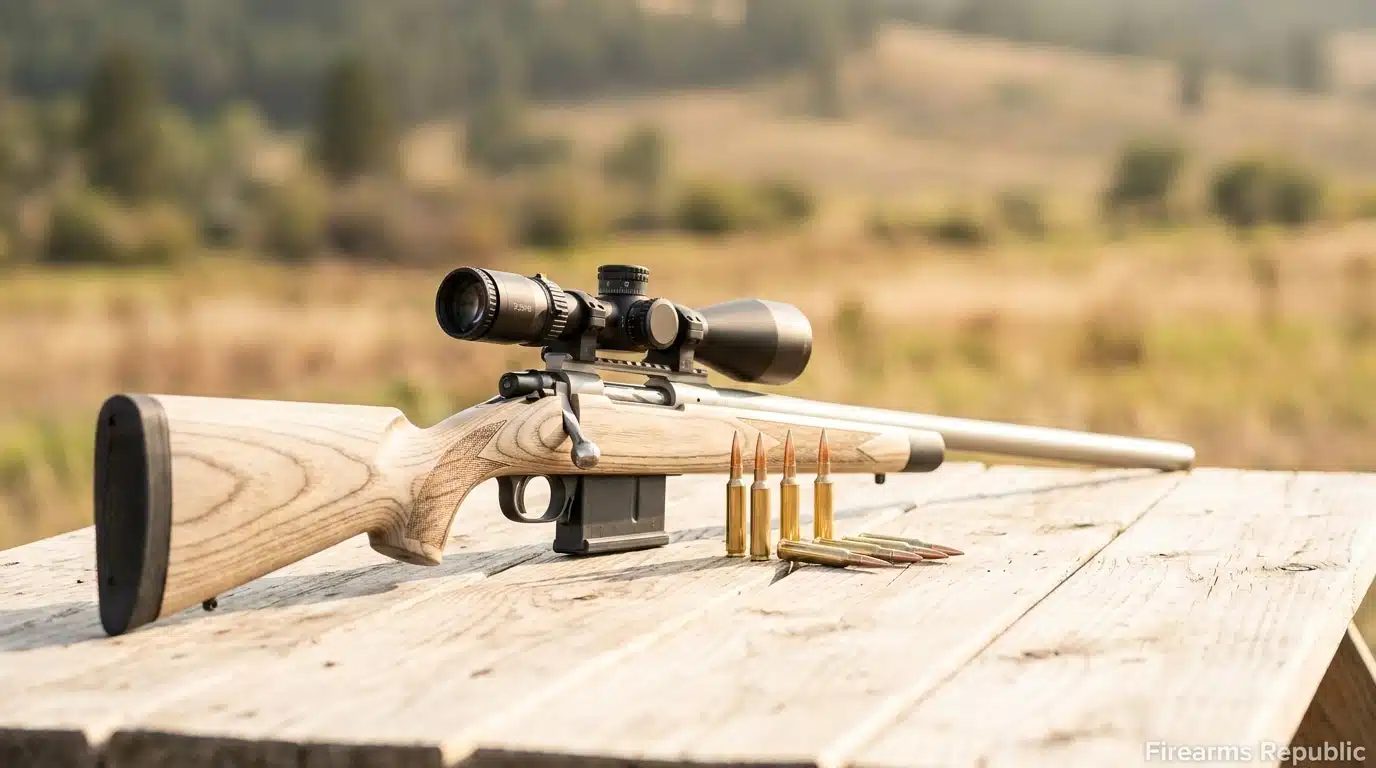
The 7mm PRC arrived in 2022 and moved faster than almost any new cartridge in recent memory – within 18 months of introduction, it had been adopted by nearly every major rifle manufacturer and was sitting on shelves at major retailers nationwide. That kind of market traction doesn’t happen by accident. Hornady designed the 7mm PRC to fill a specific and real gap: a modern 7mm cartridge optimized for the highest-BC bullets the 7mm bore produces, capable of genuine 1,000-yard performance, and built to work in standard magnum-length bolt-action rifles without the bulk and recoil of the .300 Win Mag. What they produced is a cartridge that pushes 175gr class bullets at 2,975 fps – roughly 275 fps faster than the 6.5 PRC with comparable BC bullets, delivering more energy at distance with recoil that most hunters and precision shooters can manage without a muzzle brake. At $2.50–$3.50 per round for quality factory loads, it sits at a price point that reflects its premium positioning, but the performance at distance justifies the cost for the shooters it was designed for. This guide covers the complete picture: ballistics, real-world applications, honest comparisons, reloading potential, and which rifles chamber it best.
What Is the 7mm PRC?
PRC stands for Precision Rifle Cartridge – the same designation Hornady applied to the 6.5 PRC in 2018. The naming convention signals the design intent: these are cartridges engineered around high-BC bullets for long-range precision and hunting, not legacy designs adapted for modern use. The 7mm PRC is based on a new case derived from the .375 Ruger family, with a 2.280″ case length and 3.340″ overall length. It fits in a standard magnum-length bolt-action action – the same length as the 7mm Rem Mag and .300 Win Mag – but with a rebated rim design and freebore dimensions specifically optimized for seating long, high-BC 7mm projectiles at their ideal depth.
The critical design decision was the freebore. The 7mm PRC’s chamber is cut with sufficient freebore to seat modern high-BC 175–180gr 7mm bullets – projectiles that are too long for the 7mm Rem Mag to accommodate without deeply compressing powder charges or dangerously reducing case capacity. The 7mm Rem Mag was designed in 1962 around shorter, lower-BC bullet designs; adapting it to modern 175gr ELD-X or 180gr hybrid match bullets requires seating so deep that performance suffers. The 7mm PRC was designed from the start to make those bullets work at their ballistic best, which is the entire reason it exists.
Ballistics: The Numbers That Matter
The 7mm PRC’s ballistic identity is built around the 175gr ELD-X for hunting and the 180gr ELD-M for precision shooting – both of which carry G7 BCs of .391 and .386 respectively, making them among the highest-BC bullets available in any common hunting and precision caliber. From a 24″ barrel, the 175gr ELD-X exits at 2,975 fps and the 180gr ELD-M at 2,900 fps. These are meaningful velocity figures for bullets with this level of BC.
| Load | MV (24″, fps) | 500 yd Velocity | 500 yd Energy | 500 yd Drop (100 yd zero) | 10 mph Wind @ 500 yd |
|---|---|---|---|---|---|
| 175gr ELD-X (24″) | 2,975 | 2,524 | 2,474 ft-lbs | -36″ | 5.2″ |
| 180gr ELD-M (24″) | 2,900 | 2,468 | 2,436 ft-lbs | -38″ | 5.0″ |
| 160gr CX (24″) | 3,050 | 2,488 | 2,197 ft-lbs | -33″ | 6.1″ |
| 195gr EOL (24″) | 2,700 | 2,321 | 2,331 ft-lbs | -44″ | 4.6″ |
| 175gr ELD-X (22″) | 2,850 | 2,418 | 2,272 ft-lbs | -40″ | 5.6″ |
The numbers at 500 yards deserve attention. The 175gr ELD-X carries 2,474 ft-lbs at 500 yards – more than the 6.5 PRC’s 140gr at approximately 1,680 ft-lbs and substantially more than the 6.5 CM’s 140gr at 1,440 ft-lbs. For elk and large game hunters, that retained energy matters. At 1,000 yards, the 175gr ELD-X still carries approximately 1,450 ft-lbs – more than the 6.5 CM produces at 500 yards.
Wind performance is where the 7mm PRC’s BC advantage becomes most visible. At 500 yards in a 10 mph crosswind, the 180gr ELD-M drifts 5.0 inches – less than the 6.5 CM’s 140gr at 6.8 inches, and meaningfully less than the .300 Win Mag’s 180gr at approximately 6.5 inches. At 1,000 yards, that wind advantage compounds to approximately 4–5 inches of reduced drift compared to the 6.5 CM. For competitive precision shooters and hunters who regularly face wind, that difference is felt.
The recoil figure is relevant for comparison: the 7mm PRC generates approximately 22–24 ft-lbs of free recoil in a 9 lb rifle – more than the 6.5 CM (9–11 ft-lbs) and 6.5 PRC (15–17 ft-lbs), but noticeably less than the .300 Win Mag (25–28 ft-lbs) and .338 Lapua (40+ ft-lbs). For most adult hunters and shooters, the 7mm PRC is manageable without a brake – though a quality muzzle brake reduces recoil to 6.5 PRC levels and makes high-volume shooting much more comfortable.
7mm PRC vs. The Competition
7mm PRC vs. 7mm Remington Magnum
This is the comparison that defines the 7mm PRC’s existence. The 7mm Rem Mag has been America’s most popular 7mm cartridge since 1962 and remains one of the most-sold hunting rounds in the country. With comparable 160–175gr bullets, it achieves similar velocities to the 7mm PRC. The difference is bullet selection: the 7mm PRC’s freebore allows it to seat modern high-BC 175–180gr bullets optimally, while the 7mm Rem Mag’s tighter throat forces those same bullets to be seated so deep that case capacity is compromised. With 160gr traditional hunting bullets, the performance gap is modest. With modern 175gr ELD-X or 180gr ELD-M bullets – where the BCs climb to .390+ G7 – the 7mm PRC pulls meaningfully ahead. For hunters using traditional 160gr cup-and-core loads inside 400 yards, the 7mm Rem Mag and its universal ammo availability are hard to argue against. For those who want to run the best modern bullets at extended range, the 7mm PRC is the better platform. See our 7mm Rem Mag Caliber Guide for the full breakdown.
7mm PRC vs. 6.5 PRC
The 6.5 PRC is the 7mm PRC’s immediate smaller sibling in the PRC family. The 6.5 PRC pushes 143gr ELD-X bullets at 2,960 fps – similar velocity to the 7mm PRC with 175gr bullets. The 7mm PRC wins clearly on energy retention and terminal performance on larger game: at 500 yards, the 7mm carries roughly 800 ft-lbs more energy than the 6.5. The 6.5 PRC wins slightly on recoil (15–17 ft-lbs vs. 22–24 ft-lbs) and is chambered in more production rifles. For deer hunters and precision competition shooters, the 6.5 PRC is a better all-around choice – the added recoil of the 7mm PRC is not justified by the performance gain for those applications. For elk, moose, and serious long-range hunting where energy margin matters, the 7mm PRC’s advantage is real. Full comparison in our 6.5 PRC Caliber Guide.
7mm PRC vs. .300 Winchester Magnum
The .300 Win Mag pushes 180gr bullets at 2,950–3,000 fps – similar velocity to the 7mm PRC’s 175gr loads – but with larger diameter .30-caliber bullets that create wider wound channels and carry more frontal area. The .300 Win Mag generates approximately 25–28 ft-lbs of recoil vs. 22–24 ft-lbs for the 7mm PRC, and burns more powder per shot (accelerating barrel wear). For hunting, the practical difference in terminal performance on elk at 400 yards is minimal – both cartridges hit hard enough to matter. The 7mm PRC’s BC advantage means slightly better wind performance at extreme range. The .300 Win Mag’s advantage is legacy: universal ammo availability, the deepest reloading data library of any magnum cartridge, and acceptance by outfitters worldwide. Our .300 Win Mag Caliber Guide covers that cartridge in full.
7mm PRC vs. 6.5 Creedmoor
These cartridges target different audiences and the comparison is more about use-case alignment than direct substitution. The 6.5 CM operates in standard short-action rifles at lower cost and with less recoil; the 7mm PRC operates in magnum-length actions with significantly more power and cost. For deer hunters who shoot inside 500 yards, the 6.5 CM handles everything cleanly and is $1–$2 per round cheaper. For elk hunters, precision competitors who shoot past 800 yards, or hunters who want maximum energy margin at distance, the 7mm PRC’s performance advantage is genuine and meaningful. They serve different tiers of the same demand. See our 6.5 Creedmoor Caliber Guide for the full 6.5 CM picture.
Factory Ammunition: What to Buy
The 7mm PRC launched with strong factory support from Hornady and has been joined by Federal, Nosler, Browning, and Winchester within its first two years – unusually fast adoption for a new cartridge. Availability at major retailers is solid; rural availability is improving but still developing relative to established magnums.
For precision and competition:
Hornady 180gr ELD-M ($55–$65/20 rounds) is the reference match load and the bullet the cartridge was designed around. It carries a G7 BC of .386 and produces consistent sub-MOA accuracy from quality rifles. For competition shooters who reload, the 180gr ELD-M bullet is readily available as a component and is the community standard for 7mm PRC precision work. Federal Premium 175gr Terminal Ascent ($65–$75/20 rounds) is a bonded hunting bullet that performs at match accuracy levels – an excellent choice for hunters who want one load that works for both competition and the field.
For hunting:
Hornady 175gr ELD-X ($55–$65/20 rounds) is the primary hunting load and the cartridge’s signature offering. The ELD-X at 2,975 fps is one of the most complete long-range hunting bullets on the market – controlled expansion across a wide velocity range, good penetration on angled shots, and BC that holds velocity well at extended ranges. It’s the right choice for most deer and elk hunters using the 7mm PRC. Hornady 160gr CX ($58–$68/20 rounds) is the monolithic alternative for hunters in lead-free zones or who prefer solid copper construction. Nosler 168gr AccuBond Long Range ($65–$75/20 rounds) is an excellent premium option for hunters who have had success with AccuBond bullets in other calibers.
Budget and practice:
The honest reality of the 7mm PRC is that budget practice ammo options are limited at this stage of the cartridge’s development. Federal American Eagle and similar value brands have not yet entered the 7mm PRC space at scale. Shooting practice at full match pricing is expensive; most 7mm PRC owners supplement with targeted range sessions rather than high-volume plinking. Reloading is the practical solution for volume shooters – cost per round drops to $0.80–$1.20 with quality components, making regular practice realistic.
| Load | Best For | Typical Price | Typical Accuracy |
|---|---|---|---|
| Hornady 180gr ELD-M | Precision/Competition | $60/20 | 0.5–0.7 MOA |
| Federal 175gr Terminal Ascent | Hunt + Competition | $70/20 | 0.5–0.7 MOA |
| Hornady 175gr ELD-X | Elk/Deer Hunting | $60/20 | 0.6–0.8 MOA |
| Hornady 160gr CX | Lead-Free Hunting | $64/20 | 0.7–0.9 MOA |
| Nosler 168gr AccuBond LR | Premium Hunting | $70/20 | 0.6–0.8 MOA |
| Browning 155gr BXR | Deer Hunting (lighter) | $48/20 | 0.8–1.1 MOA |
Reloading the 7mm PRC
The 7mm PRC rewards reloading generously. The combination of a well-designed case, exceptional bullet selection, and relatively simple powder pairing produces handloads that consistently outperform factory ammo in both velocity and ES figures. For volume shooters who burn through $60-per-box match ammo, reloading is essential to managing costs.
Brass: Hornady factory brass is the primary option and performs well – consistent case weights and reliable primer pockets make it adequate for match use. Lapua does not yet offer 7mm PRC brass (as of early 2026), which is the significant gap in the premium brass market for this cartridge. Peterson brass ($75–$90/100) is the premium domestic alternative with tighter tolerances and excellent case consistency. Alpha Munitions (ADG) brass is another quality option that many precision reloaders prefer. Once Lapua enters the market, it will become the standard; until then, Peterson is the top choice for serious precision work.
Powder: The 7mm PRC’s case capacity pairs best with slow-to-medium-slow burning powders. Hodgdon Retumbo and H1000 are the community standards for 175–180gr bullets – both produce excellent velocity-to-pressure ratios and the temperature stability needed for hunting applications where rifles move between warm vehicles and cold fields. Expect 2,960–2,990 fps with 175gr ELD-X and approximately 68–70gr Retumbo from a 24″ barrel. Reloder 26 and Reloder 33 are excellent alternatives for shooters who want to experiment beyond Hodgdon powders. IMR 7977 is a newer option gaining traction among precision reloaders for its metering consistency and ES performance.
Bullets: The 175gr ELD-X and 180gr ELD-M are the defining bullets for this cartridge. For hunting, the 175gr ELD-X, 168gr AccuBond LR, and 160gr CX monolithic are all field-proven. For pure precision work, the 180gr ELD-M and 195gr EOL Elite Hunter – a very high-BC option for shooters willing to push past 3,500+ yards theoretical – are the top choices. The 7mm bore’s bullet selection is genuinely outstanding: more quality high-BC offerings exist in 7mm than in virtually any other caliber. Berger makes several excellent 7mm match and hunting bullets in the 168–195gr range worth testing in your specific rifle.
Twist rate: The 7mm PRC requires a 1:8 twist to stabilize the 175–180gr match bullets reliably. A 1:9 twist, found in some older 7mm Rem Mag rifles, will not stabilize these long, heavy bullets adequately. Verify your rifle’s twist before loading 175gr+ projectiles and do not assume that a 7mm Rem Mag twist rate carries over to 7mm PRC performance with modern bullets.
Case preparation: The 7mm PRC’s rebated rim design means standard .30-06 shell holders do not fit – you need a 7mm PRC-specific shell holder. Trim to 2.276″ after the first firing, and anneal brass every 3–4 firings to maintain primer pocket life. The large case benefits from weighing and sorting brass lots to keep ES below 10 fps consistently.
Best Applications for the 7mm PRC
Elk Hunting
The 7mm PRC’s primary constituency is elk hunters, and it serves that application better than any cartridge at comparable recoil levels. The 175gr ELD-X at 2,975 fps carries 2,474 ft-lbs at 500 yards and 1,800+ ft-lbs at 700 yards – well above the energy levels needed for clean elk kills at any realistic hunting distance. The bullet itself is designed for controlled expansion on large, heavy-boned game: the ELD-X’s InterLock ring prevents core-jacket separation even on shoulder hits, and the aerodynamic tip ensures expansion down to low impact velocities reached at extended range. For elk hunters who operate in open western terrain where shots stretch to 400–600 yards routinely, the 7mm PRC provides genuine confidence that the .308 and 6.5 CM cannot match. See our Elk Hunting Rifles Guide and Elk Hunting Caliber Comparison for full application context.
Western Big Game – Mule Deer, Pronghorn, Black Bear
The 7mm PRC’s combination of flat trajectory and wind-bucking BC makes it excellent for open-country western hunting where animals are spotted at distance and shots may come at 300–500+ yards without opportunity to close. Pronghorn antelope, notorious for occupying flat terrain with no cover, are regularly taken at 400–500 yards by western hunters; the 7mm PRC’s 175gr ELD-X at those distances hits with authority and the trajectory is flat enough that modest range estimation errors do not cause misses. For mule deer in canyon country where the first shot opportunity may be across a drainage at 350 yards, the wind performance advantage over .308 or 6.5 CM is real and appreciated. Our Western Big Game Rifles guide and Mule Deer Hunting Rifles guide cover full setup recommendations.
PRS and Long-Range Precision Competition
The 7mm PRC entered PRS and NRL competition almost immediately after introduction – precision shooters recognized the BC advantage and the cartridge’s natural fit for the heavy-gun and open-class divisions where action length is not a limitation. With 180gr ELD-M handloads, the 7mm PRC produces 1,000-yard ballistics that are competitive with the best 6mm and 6.5mm precision cartridges while delivering more wind forgiveness – a meaningful advantage on stages where range is unknown and wind reads are imperfect. At 1,000 yards in a 10 mph crosswind, the 180gr ELD-M drifts approximately 20 inches vs. 24 inches for the 6mm ARC and 29 inches for the 6.5 CM. That 4–9 inch difference can be the margin between a hit and a miss on an 18-inch steel target. See our PRS Competition Guide for full division and setup guidance.
Long-Range Hunting Past 600 Yards
The 7mm PRC may be the best factory-supported long-range hunting cartridge available today for hunters who are committed to ethical shots past 600 yards. At 700 yards, the 175gr ELD-X carries approximately 1,750 ft-lbs of energy and is still moving at 2,200+ fps – well within its expansion velocity range. At 800 yards, it retains 1,500+ ft-lbs and is still supersonic with room to spare. The trajectory is manageable: the 175gr ELD-X zeroed at 200 yards drops approximately 80 inches at 700 yards, requiring a known distance and a dialed or held solution, but in the hands of a trained long-range shooter this is entirely achievable. No commonly available hunting cartridge at comparable recoil combines this level of energy retention, BC, and factory bullet quality. Our Long-Range Shooting Guide covers the technique side of extended-range hunting and target work.
Backcountry and Mountain Hunting
The 7mm PRC in a lightweight mountain rifle – a carbon-stocked, carbon-barreled build in the 7–7.5 lb range – is one of the most capable single-rifle solutions for serious western hunters. Christensen Arms, Proof Research, and Fierce Firearms all build rifles in this configuration under 7.5 lbs. The cartridge’s performance at altitude, where wind speeds increase and density altitude affects both bullet performance and animal behavior, is genuinely better than short-action cartridges that run out of energy past 500 yards. The trade-off is recoil – 22–24 ft-lbs in a 7 lb rifle is sharp, and a quality muzzle brake is a practical necessity on lightweight builds. Suppressors paired with the 7mm PRC are effective but add weight to the system. Our Mountain / Backcountry Hunting Rifles guide covers lightweight build philosophy and weight trade-offs in detail.
Rifles Chambered in 7mm PRC
The 7mm PRC achieved remarkably broad rifle adoption for a cartridge introduced in 2022 – within two years, virtually every major manufacturer offered at least one chambering.
Production bolt-actions:
The Browning X-Bolt Speed ($900–$1,000) was one of the first production rifles chambered in 7mm PRC and remains a popular hunting choice – lightweight, accurate, and reasonably priced. The Weatherby 307 ($1,100–$1,300) chambers the 7mm PRC in a platform built around the same action family as the classic Mark V. The Bergara B-14 Wilderness ($850–$950) and B-14 Ridgeback ($1,100–$1,300) offer proven Bergara accuracy in hunting-focused configurations. Savage 110 Apex Hunter ($700–$800) is the budget entry point, delivering solid accuracy at accessible pricing. The Tikka T3x in 7mm PRC ($875–$950) brings the legendary Tikka bolt smoothness to the cartridge.
Precision rifles:
The Christensen Arms Mesa Long Range ($1,400–$1,600) and Ridgeline FFT ($2,000–$2,200) represent the lightweight precision hunting segment – carbon barrels, carbon stocks, and sub-MOA guarantees. The Bergara HMR Pro ($1,400–$1,600) in 7mm PRC is the competition-precision option with an adjustable chassis stock. The Proof Research Elevation ($3,500–$4,000) is the premium backcountry precision option for shooters with budget to match ambition.
Semi-automatic:
The 7mm PRC’s magnum-length case means it does not fit AR-15 platforms. AR-10 and DPMS-pattern semi-auto builds are technically possible but uncommon – most 7mm PRC shooters use bolt-action platforms. If semi-auto is a requirement for your application, the 6mm ARC or 6.5 Grendel in an AR-15 or the 6.5 CM in an AR-10 are more practical options.
Barrel Life and Long-Term Ownership
The 7mm PRC’s relatively large case drives a meaningful amount of powder through the barrel per shot, and barrel life reflects this. Most shooters report 1,500–2,500 rounds before accuracy begins to degrade, with the wide range reflecting differences in barrel steel quality, powder charge consistency, and cleaning discipline. Quality stainless steel barrels (Proof Research, Krieger, Bartlein) trend toward the higher end; chrome-moly factory barrels tend toward the lower end.
For hunters putting 50–100 rounds per year through their rifle, barrel life is a non-issue – a barrel lasts 15–30 years at that round count. For competition shooters running 1,000+ rounds per year, budget for barrel replacement every 18–24 months. Carbon fiber-wrapped barrels (Christensen, Proof Research) run notably hotter than steel barrels during rapid strings and may show throat erosion faster than their round count suggests – let them cool between strings and monitor accuracy carefully.
Replacement barrels on standard Remington 700-footprint actions run $500–$900 installed. Factory-threaded rifles with standard thread specs simplify barrel replacement. The 7mm PRC’s growing popularity means barrel availability is improving rapidly.
Who Should Choose the 7mm PRC?
The 7mm PRC is your cartridge if:
You hunt elk, moose, or large mule deer in open western terrain where shots regularly reach 400–600 yards and you want a cartridge with genuine energy margin at those distances. You’re a precision shooter or PRS competitor who wants the wind performance of the best 7mm bullets in a magnum-length action and are comfortable with the recoil trade-off. You want the most ballistically capable factory hunting cartridge available today in a manageable recoil package – the 7mm PRC delivers more performance per unit of recoil than any magnum currently in production. You reload and want access to exceptional bullet selection – the 7mm bore’s high-BC offerings are among the best in any caliber.
Look elsewhere if:
You primarily hunt deer inside 400 yards and don’t require magnum-level energy – the 6.5 CM, .308 Win, or even 6.5 PRC deliver everything you need at lower per-round cost and with softer recoil. You want factory ammo available at every rural sporting goods store – the 7mm PRC has solid major retailer distribution but lacks the universal rural availability of the 7mm Rem Mag and .308 Win. You’re on a tight reloading budget – the slow powders the 7mm PRC burns are not the cheapest per pound, and brass costs are higher than established calibers. You specifically need a semi-auto platform – the cartridge’s magnum case length limits it to bolt-action use in practical configurations.
Frequently Asked Questions
Q: Is the 7mm PRC good for elk hunting?
A: It’s among the best elk hunting cartridges available. The 175gr ELD-X at 2,975 fps combines deep penetration, controlled expansion, and energy retention that exceeds what any short-action cartridge delivers past 400 yards. With proper shot placement – broadside or slight quartering-to angles – it performs cleanly on elk at distances that challenge other hunting cartridges. For hunters who regularly face 400–600 yard shots in open western country, it is a significant step up from the 6.5 CM and a genuine alternative to the .300 Win Mag with less recoil.
Q: How does 7mm PRC recoil compare to other magnums?
A: In a 9 lb rifle, the 7mm PRC generates approximately 22–24 ft-lbs of free recoil – noticeably more than the 6.5 PRC (15–17 ft-lbs) but meaningfully less than the .300 Win Mag (25–28 ft-lbs) and substantially less than the .338 Lapua (40+ ft-lbs). In a lightweight 7.5 lb hunting rifle, recoil is sharper and most hunters will want a quality muzzle brake for comfortable extended shooting. A quality brake reduces felt recoil to approximately 6.5 PRC levels, making the 7mm PRC very manageable for high-volume range work.
Q: What action length does the 7mm PRC require?
A: The 7mm PRC requires a magnum-length (long) action – the same action size as the 7mm Rem Mag and .300 Win Mag. Standard short-action rifles chambered in 6.5 CM or .308 Win cannot be rechambered for 7mm PRC. If you’re buying a new rifle specifically for 7mm PRC, any magnum-length bolt-action from a major manufacturer will accommodate it. If you’re considering converting an existing rifle, only magnum-length actions apply.
Q: Is the 7mm PRC better than the 7mm Rem Mag?
A: For hunters using traditional 160gr or lighter bullets inside 400 yards, the practical performance difference is minimal and the 7mm Rem Mag’s universal ammo availability is a real advantage. For hunters wanting to run modern high-BC 175–180gr bullets at extended range, the 7mm PRC’s freebore design allows those bullets to be seated optimally – producing genuinely better long-range performance than the same bullets seated deep in a 7mm Rem Mag case. The 7mm PRC is the better modern design; the 7mm Rem Mag is the more universally available cartridge. The choice depends on your specific use case and how much you value ammo availability vs. optimal bullet performance.
Q: What is the barrel life of the 7mm PRC?
A: Expect 1,500–2,500 rounds before accuracy begins to degrade, depending on barrel quality, powder charge levels, and cleaning practices. This is shorter than the 6.5 CM (2,500–3,000 rounds) or .308 Win (4,000–6,000 rounds), but comparable to the 6.5 PRC (1,500–2,000 rounds) and better than the .300 Win Mag (1,200–1,800 rounds). Hunters shooting 50–100 rounds per year will likely never need to replace a barrel; competition shooters at 1,000+ rounds per year should budget for replacement every 18–24 months.
Q: What scope magnification does the 7mm PRC need for long-range hunting?
A: For hunting inside 500 yards, a 3–15x or 4–16x scope is adequate. For stretching shots to 600–800 yards, a 5–25x or 6–24x scope with a zero-stop and exposed turrets allows precise elevation dialing. Most long-range hunters pair the 7mm PRC with first focal plane scopes in the 4–20x or 5–25x range that allow accurate ranging and holdover at any magnification setting. The Kahles K525i, Vortex Razor HD Gen III, and Nightforce ATACR 5–25x are popular choices at various price points. Our Best Scopes for Long-Range Shooting guide covers optic selection in full detail.