 Maksym Kovaliov
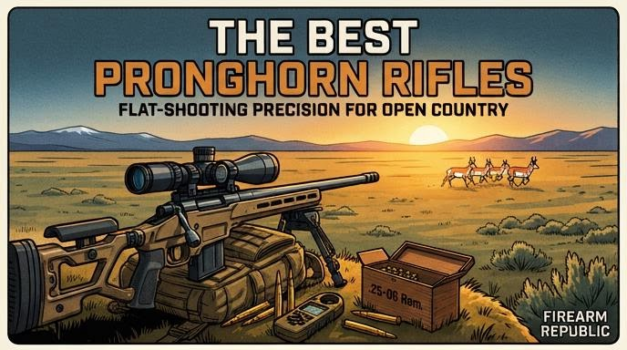


Pronghorn antelope hunting is a test of equipment and shooter capability that catches underprepared hunters off guard every September. The American pronghorn occupies the most open terrain on the continent – the sage flats of Wyoming and Nevada, the prairie basins of Montana and Colorado, the semi-desert plateaus of New Mexico and Arizona – and these animals have the keenest eyesight of any North American game animal, which means getting within 200 yards of a mature buck requires either terrain that is unusually broken or a stalk that takes hours across flat sage where the smallest skyline error sends the herd at 55 mph to the next county. The result is that pronghorn hunting produces a higher percentage of long shots than almost any other North American hunting application. A 350-yard shot at a pronghorn in a Wyoming basin is not a heroic feat – it is a routine occurrence for hunters who have prepared properly. A 500-yard shot is achievable for hunters who have specifically trained for it. This guide covers what pronghorn hunting demands from a rifle, which cartridges handle it best, and how to build a setup that is ready for the distances, wind, and field conditions that define the experience.

What Pronghorn Hunting Demands from a Rifle
Pronghorn hunting creates a specific and demanding performance envelope that shapes equipment selection in ways that differ from deer and elk hunting.
Long shots are the norm, not the exception: Across Wyoming, Nevada, and the northern Great Basin, shots at 300–450 yards are standard in open terrain where the only available cover is a 3-inch sagebrush. A hunter who prepares only for 200-yard shots will miss opportunities, wound animals, or avoid shots and go home empty. The right pronghorn setup handles 400+ yards competently from field positions.
Wind is relentless: The Great Basin and Wyoming high desert generate sustained afternoon winds of 20–35 mph that are not gusts to time shots around – they are the baseline condition from midday until sunset. A 10 mph crosswind at 400 yards moves a standard .308 150gr load approximately 15 inches. The same wind moves a 140gr 6.5 CM load approximately 11 inches. The difference between cartridges at pronghorn distances in real western wind is meaningful.
Targets are small but shots are deliberate: A pronghorn buck presents approximately an 8–9 inch vital zone – smaller than elk, comparable to deer. Unlike elk where shot opportunities come quickly and unpredictably, most pronghorn shot opportunities are stalked to known positions with time to set up properly. This means the shooter has no excuse for using unsupported positions or rushing the shot – shooting sticks, pack rest, or bipod should be part of every pronghorn hunter’s setup.
Terrain is generally flat and light: Unlike elk and mule deer hunting where rifle weight matters for steep approaches, pronghorn hunting often involves vehicle access to within a mile of the hunt area, spot-and-stalk on flat to gently rolling terrain, and rifle carries of 2–4 miles rather than 10-mile mountain climbs. This reduces the weight premium compared to backcountry elk hunting. A 9 lb scoped rifle is manageable for pronghorn hunting in most terrain.
Animals are light-framed: A mature pronghorn buck weighs 110–140 lbs – lighter than most deer species. They do not require the penetration depth or energy margins that elk demand. A 140gr 6.5 CM through the lungs at 350 yards kills a pronghorn cleanly. The cartridge floor for pronghorn is lower than for elk, which opens a wide range of capable options.
Best Cartridges for Pronghorn Hunting
The First-Choice Tier
6.5 Creedmoor is the ideal pronghorn cartridge by a substantial margin. The combination of a flat trajectory, best-in-class BC among standard hunting cartridges, 9–11 ft-lbs recoil enabling comfortable high-volume practice, and widely available factory hunting ammo makes it purpose-built for open-country antelope hunting. At 400 yards the 140gr ELD-X carries approximately 1,500 ft-lbs and drifts approximately 11 inches in a 10 mph wind – more than adequate for pronghorn with good shot placement. A hunter who practices field positions with 6.5 CM and quality glass owns the most capable pronghorn setup available at any recoil level. See our 6.5 Creedmoor Caliber Guide.
6.5 PRC is the step up for hunters who want more margin at 500 yards or hunt in the windiest terrain. At 500 yards the 143gr ELD-X carries approximately 1,700 ft-lbs with wind drift that is meaningfully better than the 6.5 CM at the same distance. For pronghorn hunters in Wyoming’s Red Desert or Nevada’s high desert where 500-yard shots are realistic opportunities, the 6.5 PRC’s performance at distance justifies the recoil and cost increase. See our 6.5 PRC Caliber Guide.
.243 Winchester is the best low-recoil pronghorn choice. At 300 yards the 95–100gr ELD-X carries 1,350 ft-lbs and the flat trajectory requires minimal holdover. Pronghorn’s light frame and soft-bodied nature means the .243 Win’s lighter bullets perform well with quality expanding loads. For youth hunters, recoil-sensitive adults, or hunters who want to stretch the .243’s range capabilities on a pronghorn hunt, it handles the application inside 350 yards without concern. See our .243 Winchester Caliber Guide.
Strong Alternatives
7mm-08 Remington works well on pronghorn inside 350 yards. The 140gr ELD-X at 2,820 fps carries adequate energy for antelope at all practical hunting distances and the 7mm bore’s wider wound channel is slightly more decisive on the light-framed animals than the .243 Win. See our 7mm-08 Remington Caliber Guide.
.308 Winchester handles pronghorn at every realistic hunting distance with the right load. The limitation compared to the 6.5 CM is wind performance – at 400 yards in a 20 mph wind, the .308 drifts more than the 6.5 CM by a meaningful amount. For hunters who own quality .308 rifles, it is entirely capable; it is simply not the ideal choice for pronghorn given what the 6.5 CM offers at the same recoil level. See our .308 Winchester Caliber Guide.
7mm PRC provides maximum performance for pronghorn hunters who draw Nevada desert bighorn zones where shots exceed 500 yards, or who hunt in extreme wind conditions where BC becomes the overriding concern. At 22–24 ft-lbs recoil it is more rifle than pronghorn hunting typically demands, but the 175gr ELD-X’s wind performance in the relentless Wyoming and Nevada wind is genuinely useful. See our 7mm PRC Caliber Guide.
.25-06 Remington is a classic pronghorn cartridge with a devoted following among hunters who appreciate its specific combination of flat trajectory and adequate energy on light game. The 100–115gr loads at 3,100–3,200 fps produce extremely flat trajectories that simplify range estimation at pronghorn distances. Its current limitation is narrower factory ammo selection than modern alternatives – Hornady, Federal, and Remington still load it, but in fewer configurations than the 6.5 CM.
Cartridge Comparison at Pronghorn Distances
| Cartridge | Load | 400 yd Energy | 400 yd Drop (200 yd zero) | 10 mph Wind @ 400 yd | Recoil |
|---|---|---|---|---|---|
| .243 Win | 95gr SST | ~1,000 ft-lbs | -17″ | 8.5″ | 9–11 ft-lbs |
| 7mm-08 | 140gr ELD-X | ~1,350 ft-lbs | -19″ | 10.5″ | 11–13 ft-lbs |
| 6.5 CM | 140gr ELD-X | ~1,500 ft-lbs | -16″ | 10.8″ | 9–11 ft-lbs |
| 6.5 PRC | 143gr ELD-X | ~2,100 ft-lbs | -13″ | 9.0″ | 15–17 ft-lbs |
| .308 Win | 150gr SST | ~1,400 ft-lbs | -20″ | 12.2″ | 14–16 ft-lbs |
| 7mm PRC | 175gr ELD-X | ~2,474 ft-lbs | -11″ | 8.0″ | 22–24 ft-lbs |
Best Rifles for Pronghorn Hunting
Best All-Around: Tikka T3x Lite in 6.5 CM ($800–$875)
The Tikka T3x Lite’s combination of lightweight construction at 6.1 lbs, the best factory trigger available under $1,000, and consistent sub-MOA accuracy in 6.5 CM makes it the most complete pronghorn hunting rifle at mid-range pricing. In open pronghorn terrain, the rifle’s light weight is a comfort advantage for a day of stalking, and the T3x’s smooth 60-degree bolt lift cycles quickly for the deliberate follow-up shots that a pronghorn that runs after the first hit occasionally requires. The detachable magazine is a practical convenience in a hunting situation where the rifle is handled constantly through a stalk.
At 6.5 CM with Federal 140gr Terminal Ascent or Hornady 140gr ELD-X, the T3x Lite handles 400-yard pronghorn shots with genuine confidence. At $800–$875, it leaves significant budget for quality glass. See our Tikka T3x Complete Guide.
Best Value: Ruger American Gen II in 6.5 CM ($599–$649)
The Ruger American Gen II delivers the features pronghorn hunting needs at the most accessible price in the market. AICS-compatible magazines allow carrying pre-loaded magazines for quick reloads after a first shot. The threaded barrel is suppressor-ready for hunters who want to minimize noise impact on the open desert. The Marksman Adjustable trigger at 3–5 lbs is better than most production rifles at this price. Accuracy runs 0.7–0.9 MOA with quality factory ammo.
For hunters who want to invest their equipment budget in glass rather than the rifle – a legitimate priority for the 400-yard shooting that pronghorn hunting demands – the Ruger American Gen II provides the rifle performance needed at a price that enables a $600–$700 scope. See our Ruger American Complete Guide.
Best Precision: Bergara B-14 HMR in 6.5 PRC ($950–$1,050)
For pronghorn hunters who want precision rifle performance at hunting rifle pricing, the Bergara B-14 HMR delivers. The heavy contour 24″ barrel in 6.5 PRC produces consistent velocity across temperature changes – relevant for pronghorn hunting that begins in the heat of September mornings and continues into the cooling afternoon when conditions are best. The chassis-compatible design and AICS magazine compatibility make this a complete platform for the hunter who also shoots precision rifle competition. Sub-MOA guarantee from Bergara is consistently honored.
At 7.9 lbs bare, it is heavier than the T3x Lite but more stable from field rests for the deliberate 400–500 yard shots that serious pronghorn hunters train for. See our Bergara B-14 Series Guide.
Best Lightweight for Difficult Terrain: Christensen Arms Mesa in 6.5 CM ($1,300–$1,450)
For pronghorn hunters in the northern Rockies and the Nevada high desert where terrain requires genuine approaches over rough ground, the Christensen Mesa‘s carbon barrel and 6.5 lb bare weight is a meaningful advantage. In 6.5 CM it is pronghorn-capable to 400 yards with factory ammo and well beyond with handloads. The sub-MOA guarantee and carbon construction combine the weight savings of a mountain rifle with the accuracy of a precision hunting platform.
The Classic Choice: Remington 700 SPS in .25-06 or 6.5 CM ($650–$800)
For hunters who want a traditional bolt-action in a classic pronghorn cartridge, the Remington 700 SPS in .25-06 Rem delivers the flat trajectory that made .25-06 the antelope cartridge of the 1970s and 1980s. Modern alternatives like the 6.5 CM offer better factory ammo support, but the .25-06 in a Remington 700 is a setup that has been producing filled pronghorn tags since before most hunters were born. See our Remington 700 Platform Guide.
Optics for Pronghorn Hunting
Pronghorn hunting at 350–500 yards requires quality optics more than almost any other North American hunting application. At 400 yards, the 8–9 inch vital zone of a pronghorn buck subtends approximately 2 MOA in a scope’s field of view. At 12–16x magnification, the crosshair can be placed precisely on the center of the vital zone. At 6–8x, the placement precision is reduced enough that marginal shots become more likely.
Minimum acceptable: A quality 4–12x or 3–12x variable with a second focal plane BDC or duplex reticle. The Leupold VX-3HD 3.5–10×40 ($450–$550) and Vortex Crossfire II 4–12×44 ($200–$250) represent the practical floor for confident 400-yard pronghorn shooting. Below this quality and magnification range, the optic becomes the limiting factor.
Recommended: A 4–16x or 5–20x variable with a first focal plane reticle and exposed elevation turret. The Vortex Viper HD 4–16×44 ($450–$500), Leupold VX-5HD 3–15×44 ($600–$700), and Nightforce SHV 4–14×56 ($650–$750) cover the mid-tier to premium range that serious pronghorn hunters should target. First focal plane reticles allow accurate holdover at any magnification – relevant when a stalk ends unexpectedly at 120 yards after planning for a 400-yard shot, and the scope is set at 16x.
Rangefinder: Essential. Open terrain makes distance estimation by eye unreliable – what looks like 300 yards is commonly 380 yards and what looks like 200 yards is often 240. Sig Sauer Kilo 3000BDX ($400–$500) or Vortex Fury HD 5000 ($500–$550) provide the precision ranging that 400-yard pronghorn shots require.
See our Best Hunting Scopes guide and Best Scopes for Long-Range Shooting for full optic comparisons.
Shooting Skills for Pronghorn Hunting
A pronghorn hunt rewards preparation more directly than almost any other hunting experience because the shot is almost always deliberate – the animal is spotted, the stalk is made, a stable position is found, and the shot is taken from a prepared rest. There is rarely an excuse for a rushed or unsupported shot.
Field positions to practice:
Sitting with shooting sticks: The most common pronghorn shooting position. Shooting sticks (Trigger Sticks, Primos Gen 3) provide a stable bipod-equivalent from a sitting position that is lower to the ground than standing and faster to establish than prone. Practice this specific position at 300, 400, and 500 yards before pronghorn season. Your bench accuracy is irrelevant; your sitting-with-sticks accuracy defines your effective range.
Prone with pack front rest: When terrain allows a prone position, a loaded daypack as a front rest and a rolled jacket as a rear bag produces the most stable field position possible. Many experienced pronghorn hunters make a habit of dropping to prone whenever terrain allows a shot opportunity, using this position to extend their effective range compared to sticks.
Kneeling with pack: When sage is too high for prone and time is short for sticks setup, kneeling with the pack bracing the forward arm provides moderate stability at shots inside 300 yards.
Wind reading specific to pronghorn country:
Afternoon thermals in the Great Basin generate wind that shifts direction and velocity across a 400-yard shot corridor in ways that bench shooting at a managed range does not prepare hunters for. Key skills:
Wind at the muzzle versus wind at the target may differ by 5–10 mph due to terrain channeling. A canyon drainage that runs perpendicular to the prevailing wind creates a sheltered zone at 100 yards but full crosswind exposure at 300 yards. Read the wind at distance using mirage, vegetation movement, and dust as indicators rather than relying solely on the reading at your position.
Timing shots to wind lulls in variable conditions is often more practical than calculating drift in a 25 mph crosswind. Watch for the consistent 5–8 second lull that follows most wind gusts and be prepared to complete the shot quickly when it arrives.
Pronghorn Hunting Logistics and the Rifle’s Role
A few practical considerations specific to the pronghorn hunt context:
Vehicle-assisted spot-and-stalk: Most Wyoming, Montana, and Nevada pronghorn hunting involves glassing from vehicles, identifying a stalkable buck, and making a 0.5–3 mile stalk across open terrain. The rifle spends most of its time in a vehicle gun rack or scabbard, then slung across a daypack for 1–2 hours of stalk. Weight matters less than in elk hunting; what matters more is that the rifle handles well on a sling and can be brought into a shooting position quickly.

Tag over-the-counter availability: Wyoming, Nevada, and Montana offer over-the-counter pronghorn tags in many units, making this one of the most accessible trophy hunting experiences in the West. Draw tags in premium units produce larger bucks but the rifle’s requirements do not change significantly across unit quality. The same 6.5 CM setup that works on a Wyoming general unit works equally well on a premium Nevada permit.
Two-rifle consideration: Some pronghorn hunters who also hunt elk on the same western trip carry two rifles – a lightweight bolt gun in 7mm PRC or .300 Win Mag for elk and the 6.5 CM for pronghorn. This is a weight and logistics trade-off that each hunter must evaluate. A single 6.5 PRC handles both pronghorn and deer competently, though it is marginal for elk. A single 7mm PRC covers pronghorn, mule deer, and elk without compromise.
Recommended Pronghorn Setups by Profile
The First-Time Pronghorn Hunter: Rifle: Ruger American Gen II in 6.5 CM ($599–$649) Scope: Vortex Viper HD 4–16×44 ($450–$500) Ammo: Hornady 140gr ELD-X Rangefinder: Sig Sauer Kilo 3000BDX ($400–$500) Total: ~$1,500–$1,650 Why: The scope and rangefinder investments are equally important as the rifle for pronghorn. This setup handles 400-yard shots in moderate wind and leaves nothing to blame the equipment for on a missed shot.

The Experienced Western Hunter: Rifle: Tikka T3x Lite in 6.5 CM ($800–$875) Scope: Leupold VX-5HD 3–15×44 ($600–$700) Ammo: Federal 140gr Terminal Ascent Rangefinder: Leica Rangemaster CRF 2700-B ($500–$600) Total: ~$1,900–$2,175 Why: Best factory trigger under $1,000, premium low-light glass for early morning glassing, and accurate ranging for the 400+ yard opportunities that define experienced pronghorn hunting.
The Precision-Focused Hunter: Rifle: Bergara B-14 HMR in 6.5 PRC ($950–$1,050) Scope: Nightforce SHV 4–14×56 ($700–$800) Ammo: Hornady 143gr ELD-X (6.5 PRC) Rangefinder: Vortex Fury HD 5000 ($500–$550) Total: ~$2,150–$2,400 Why: Sub-MOA guaranteed accuracy, 500-yard capable cartridge, and competition-grade glass for the hunter who wants maximum confidence at the longest distances that open Great Basin and Wyoming pronghorn country produces.
Frequently Asked Questions
What is the effective range for pronghorn hunting?
The practical ceiling for most hunters who train for western shooting is 400–450 yards from a stable field position with a quality cartridge like the 6.5 CM or 6.5 PRC. In calm conditions with a rangefinder-confirmed distance and shooting sticks or pack rest, 450 yards is achievable for hunters who practice field positions at known distances. In the afternoon wind that defines Great Basin pronghorn hunting, the practical ceiling may compress to 300–350 yards where drift in a 20 mph crosswind remains manageable. Past 500 yards, wind variables compound to the point where a 10% error in wind speed estimation produces a near-miss at the vital zone.
Do I need a magnum cartridge for pronghorn?
No. Pronghorn weigh 110–140 lbs and are soft-bodied animals that do not require magnum energy margins for clean kills. The 6.5 CM at 400 yards delivers 1,500 ft-lbs – more than twice the energy needed for a pronghorn kill at that distance. The case for a magnum like the 6.5 PRC or 7mm PRC is not energy on the animal – it is wind performance at extreme distances and in extreme wind conditions. For most pronghorn hunting in standard tag units, the 6.5 CM is the correct choice and magnums are unnecessary.
Why is pronghorn hunting so much harder than it looks?
Pronghorn have the best eyesight of any North American game animal – their eyes are sized proportionally like 8x binoculars. They evolved on the same Great Plains that produced the American cheetah, which drove speed and visual acuity as survival mechanisms. A hunter skylined for one second at 400 yards against a ridge is detected immediately. A stalk that works in the morning when thermal air currents are stable often fails in the afternoon when shifting thermals carry scent unpredictably across flat terrain. The combination of exceptional vision, open terrain, and afternoon wind that characterizes the environment makes approaching within 300 yards a genuine achievement in most conditions. The equipment solution – a capable long-range setup – is an honest acknowledgment of these conditions.
Q: Is .243 Winchester good enough for pronghorn at 400 yards?
It is capable but approaching its practical ceiling at 400 yards. At that distance the 95–100gr ELD-X carries approximately 1,000 ft-lbs – adequate for pronghorn with a well-placed heart-lung shot. The .243’s BC at this distance produces wind drift that is manageable in moderate wind but begins to require precise compensation in the 20+ mph afternoon conditions common in pronghorn country. For youth hunters and recoil-sensitive adults who want a pronghorn rifle, the .243 Win is the right choice with the understanding that shots should be kept inside 350 yards for comfortable ethical margin. For adult hunters with no recoil sensitivity, the 6.5 CM delivers meaningfully better wind performance and energy retention at the same recoil level.
What zero is best for a 6.5 Creedmoor pronghorn rifle?
A 200-yard zero is practical for most pronghorn hunting. With a 200-yard zero, the 140gr ELD-X is approximately 2 inches high at 150 yards, on at 200 yards, 8 inches low at 300 yards, and 23 inches low at 400 yards. For hunters who want to minimize holdover math at pronghorn distances, a 250-yard zero keeps the bullet within ±3 inches from 0–280 yards and requires only 12–13 inches of holdover at 400 yards – a single MRAD or 4 MOA on a dialed scope. The most precise approach is dialing to a confirmed distance using a rangefinder and known drop data, which any quality turret scope enables.
Q: How many rounds should I practice before a pronghorn hunt?
Enough to confirm a stable 300, 400, and 450-yard zero from field positions (sitting with sticks, prone with pack) in conditions that approximate the wind and heat mirage of pronghorn country. For most hunters, this means two to three range sessions of 40–60 rounds each in the two months before the hunt, specifically emphasizing field positions and wind holds rather than bench accuracy. A hunter who shoots 200 rounds of bench groups but has never shot from sitting sticks at 350 yards in a 15 mph crosswind is not prepared for the shot pronghorn hunting will present.