 Maksym Kovaliov
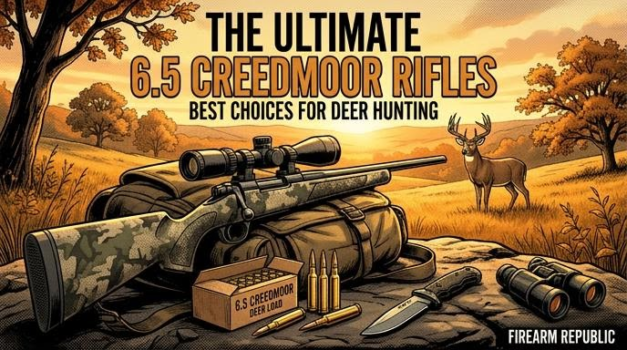
If you’re buying a deer rifle in 2025, 6.5 Creedmoor is the default recommendation for good reason. A 143gr Hornady ELD-X at 2,700 fps generates 2,315 ft-lbs at the muzzle and retains 1,820 ft-lbs at 200 yards – more than adequate for whitetail at any ethical hunting distance. Recoil runs 12–14 ft-lbs in a 7.5-lb rifle, roughly 25% less than .308 Winchester. The high-BC projectiles (.625 for the 143gr ELD-X) drift less in wind and drop less at distance than .30-caliber options, making it more forgiving on marginal shots past 200 yards. And the rifle selection in 6.5 CM now spans every price point from $400 to $3,000+, with more purpose-built hunting loads available than any comparable cartridge introduced in the last 20 years. This guide covers the best 6.5 Creedmoor rifles for deer hunting – from genuine budget performers to mid-range sweet spots to premium platforms worth the investment.
Why 6.5 Creedmoor for Deer Hunting?
The case for 6.5 CM is straightforward, but it’s worth being specific about where it genuinely excels and where it has real limitations – because the hype has led some hunters to expect more than any cartridge delivers.
Where 6.5 CM wins:
Wind performance is the 6.5 CM’s clearest advantage over traditional deer cartridges. A 10 mph crosswind moves a 143gr ELD-X about 6.2″ at 400 yards versus 8.5″ for a comparable 165gr .308 load – that 2.3-inch difference matters when your ethical kill zone is 8–10 inches on a broadside deer. The flatter trajectory also helps: zeroed at 200 yards, the 143gr ELD-X drops about 7″ at 300 yards versus 10″ for a typical 165gr .308 load. These differences are marginal inside 200 yards but compound meaningfully past 300.
Recoil is a practical advantage that directly affects accuracy. At 12–14 ft-lbs in a typical hunting rifle, 6.5 CM is comfortable enough that most hunters flinch less, practice more, and shoot better under field conditions. Youth hunters, recoil-sensitive shooters, and anyone who wants to shoot 50+ rounds of practice without fatigue will notice the difference compared to .308 or .30-06. Better practice habits translate directly to cleaner kills.
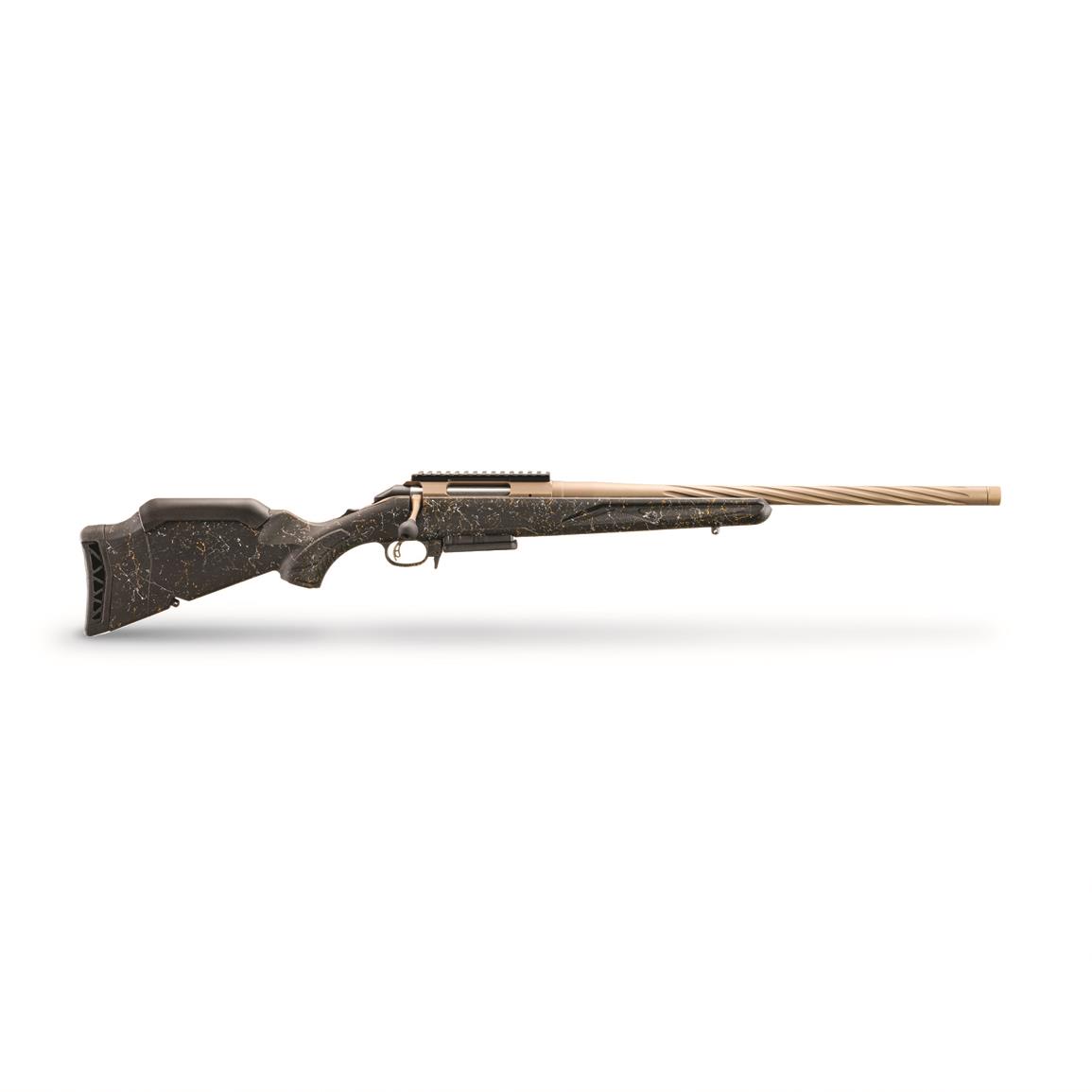
Ruger American Gen II Prairie, Bolt Action, 6.5 Creedmoor, 20" Bull Barrel, Smoked Bronze Cerakote, 3 Rounds
The ammunition ecosystem has matured remarkably. Hornady Precision Hunter 143gr ELD-X, Federal Terminal Ascent 130gr, Nosler AccuBond 129gr, and Barnes LRX 127gr all provide excellent terminal performance on deer across a wide velocity range – meaning they expand reliably whether the shot is 50 yards or 400 yards. That velocity-range flexibility matters because hunting bullets hitting at 3,000 fps (close range) and 2,200 fps (long range) need to perform differently, and modern 6.5 CM hunting loads are engineered for exactly this challenge. See our 6.5 Creedmoor Caliber Guide for a full ballistic breakdown.
Where 6.5 CM has real limitations:
On elk and large game, 6.5 CM is adequate but not ideal. It works – hunters take elk cleanly with it every season – but the margin is thinner than with .308, .30-06, or 7mm PRC. Angled shots on large bull elk through heavy bone require deep-penetrating bullets (Federal Terminal Ascent or Barnes LRX) rather than standard hunting designs. If your season regularly involves elk at extended ranges or difficult shot angles, a heavier cartridge provides more confidence. For deer specifically, this limitation is irrelevant.
The 6.5 CM’s other real limitation is brush performance. The lighter, faster bullet is marginally more susceptible to deflection through light brush than a heavier .30-caliber. In dense eastern timber where shots occasionally happen through small gaps in cover, the .308’s heavier bullet holds its line better. For most deer hunting scenarios with clear shot paths, this distinction rarely matters in practice.
Budget Tier: Best 6.5 CM Deer Rifles Under $700
Ruger American Gen II – Best Budget 6.5 CM Deer Rifle
Price: $600–$680 street Weight: 6.3 lbs (bare rifle) Barrel: 22″ threaded, 1:8 twist Trigger: Marksman Adjustable, 3–5 lbs user-adjustable Magazine: AICS-compatible detachable box, 4 rounds (10-round available) Accuracy: Sub-MOA guarantee
The Ruger American Gen II is the straightforward answer when budget is the primary consideration. The AICS-compatible magazine is a genuine differentiator at this price – it accepts aftermarket 10-round boxes and shares a feeding standard with rifles costing three times as much. The factory-threaded 22″ barrel with 5/8×24 threads is suppressor-ready without additional machining, which matters for the growing number of hunters running cans. The 1:8 twist stabilizes the full range of 6.5 CM projectiles from 120gr to 147gr.

Ruger American Rifle Gen II Ranch, Bolt Action, 6.5 Creedmoor, 16.1" Barrel, 3+1 Rounds
Accuracy is consistently sub-MOA with quality hunting ammunition. Most Gen II rifles in 6.5 CM produce 0.6–0.9 MOA with Hornady Precision Hunter 143gr ELD-X or Federal Terminal Ascent 130gr – that’s comfortably within 1″ at 100 yards and around 3″ at 400 yards with proper technique. The Marksman trigger adjusts from 3 to 5 lbs and improves with user adjustment; set to 3 lbs, it’s workable for field use. The stock is basic synthetic, and the fit and finish won’t win aesthetic awards – neither matters when you’re hunting. For the full platform picture, see our Ruger American Complete Guide.
Savage 110 Hunter – Excellent Budget Value
Price: $550–$630 street Weight: 7.5 lbs Barrel: 22″, 1:8 twist Trigger: AccuTrigger, 2.5–6 lbs adjustable Magazine: Detachable box, 4 rounds Accuracy: Sub-MOA guarantee
The Savage 110 Hunter is the overlooked budget option in 6.5 CM. The AccuTrigger is the story – adjustable from 2.5 to 6 lbs, it’s the best factory trigger available under $650 by a meaningful margin. Set at 2.5–3 lbs, it breaks cleanly with no perceptible creep or overtravel. Savage’s button-rifled barrel is accurate; most 110 Hunters in 6.5 CM produce 0.7–1.0 MOA with quality ammunition.

Savage Axis Xp 6.5 Creedmoor 20 4+1
At 7.5 lbs, the 110 Hunter is heavier than competitors at this price – noticeable over a long day of still hunting or spot-and-stalk. For stand hunters and drives, the weight is irrelevant. The Savage 110 platform has an extensive aftermarket ecosystem (Savage prefit barrels, stocks, triggers) for hunters who eventually want to upgrade. See our Savage 110 Series Guide for the full platform breakdown.
Mossberg Patriot – Best Value Under $450
Price: $380–$450 street Weight: 6.5 lbs Barrel: 22″, 1:8 twist Trigger: LBA adjustable, 2–7 lbs Magazine: Detachable box, 5 rounds Accuracy: Sub-MOA guarantee
At under $450, the Mossberg Patriot delivers a detachable box magazine, an adjustable LBA trigger (2–7 lbs), a spiral-fluted bolt, and legitimate sub-MOA accuracy in a 6.5-lb package. The fluted bolt reduces drag in dirty and wet conditions – an unusual feature at this price. Most Patriot rifles in 6.5 CM produce 0.8–1.2 MOA with quality ammunition; not precision-rifle territory, but fully adequate for ethical deer shots inside 300 yards.

Mossberg 6.5 Creedmoor 22" 5+1 (Bolt)
The Patriot’s limitation is thin aftermarket support compared to Ruger and Savage platforms. For a hunter who wants a functional deer rifle at the lowest responsible price with no plans to modify it, the Patriot delivers honest value. It won’t be as satisfying to shoot as the Ruger or Tikka, but it will kill deer cleanly.
Mid-Range Tier: Best 6.5 CM Deer Rifles $700–$1,100
Tikka T3x Lite – Best Mid-Range 6.5 CM Deer Rifle
Price: $875–$950 street Weight: 6.1 lbs (bare rifle) Barrel: 22.4″, 1:8 twist Trigger: Single-stage adjustable, 2–4 lbs, factory ~2.5 lbs Magazine: Proprietary detachable box, 3 rounds (6-round available) Accuracy: Sub-MOA guarantee (typically 0.5–0.7 MOA)
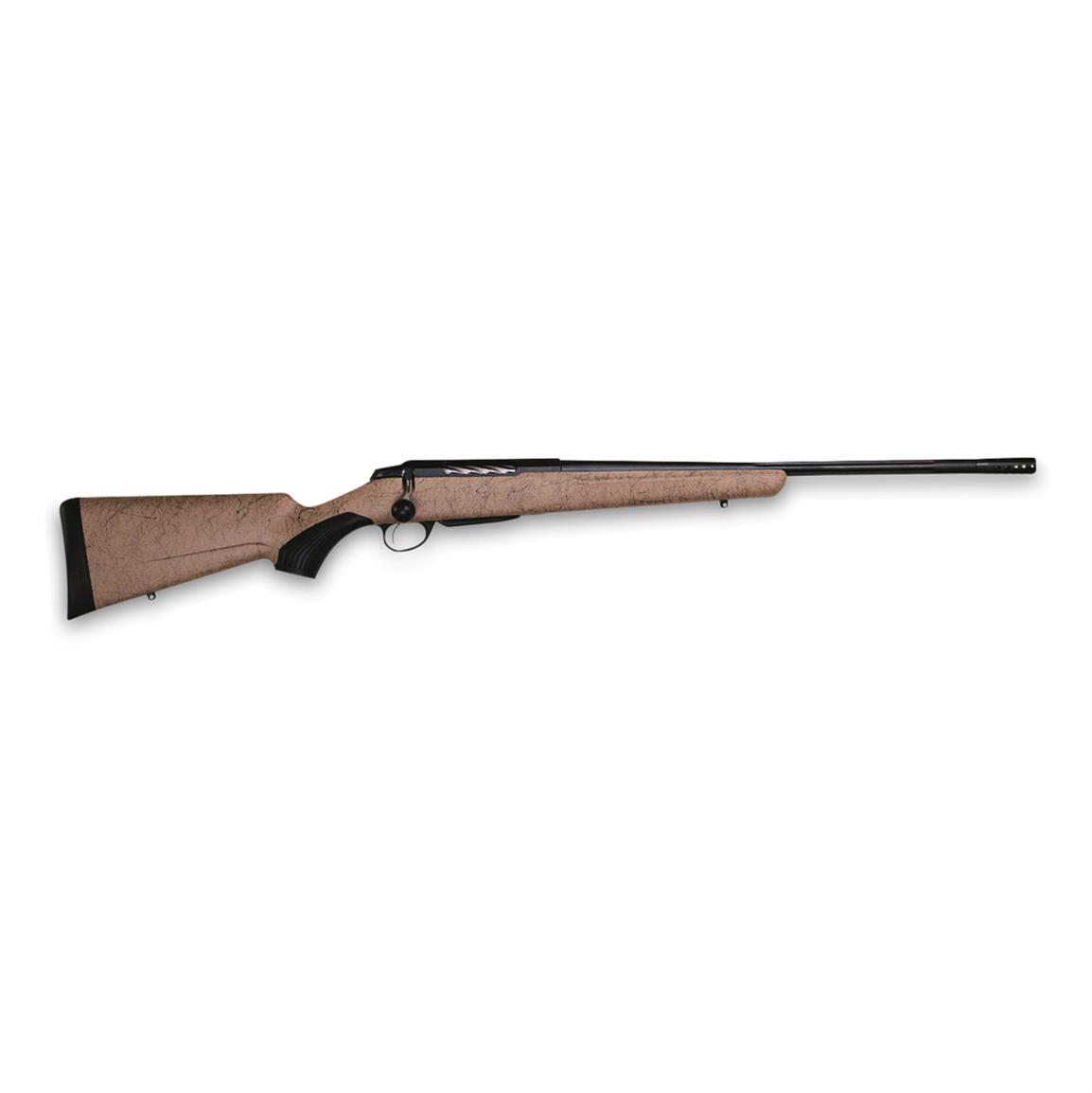
Tikka T3x Lite Roughtech, Bolt Action, 6.5 Creedmoor, 24.3" Barrel, 3+1 Rounds
The Tikka T3x Lite in 6.5 Creedmoor is as close to a universal correct answer as exists in the mid-range hunting rifle market. At 6.1 lbs bare and typically 7.4–7.7 lbs scoped, it’s the lightest option at this price without crossing into custom ultralight territory where recoil management suffers. The factory trigger is genuinely excellent – breaking cleanly at 2.5 lbs with minimal overtravel, it matches or exceeds aftermarket triggers costing $150+ on competing platforms. The three-lug 70-degree bolt cycles faster and more smoothly than any competitor at this price; the T3x’s reputation for buttery-smooth bolt operation is earned through consistent manufacturing quality.
Accuracy in 6.5 CM is consistently 0.5–0.7 MOA. Hornady Precision Hunter 143gr ELD-X and Federal Premium Terminal Ascent 130gr both perform well in T3x barrels – the rifle seems to like the heavier, higher-BC projectiles that define the 6.5 CM hunting ammunition ecosystem. At 7.7 lbs scoped with a compact 3-9×40, it carries well all day without fatigue. The synthetic stock handles weather without zero shift.
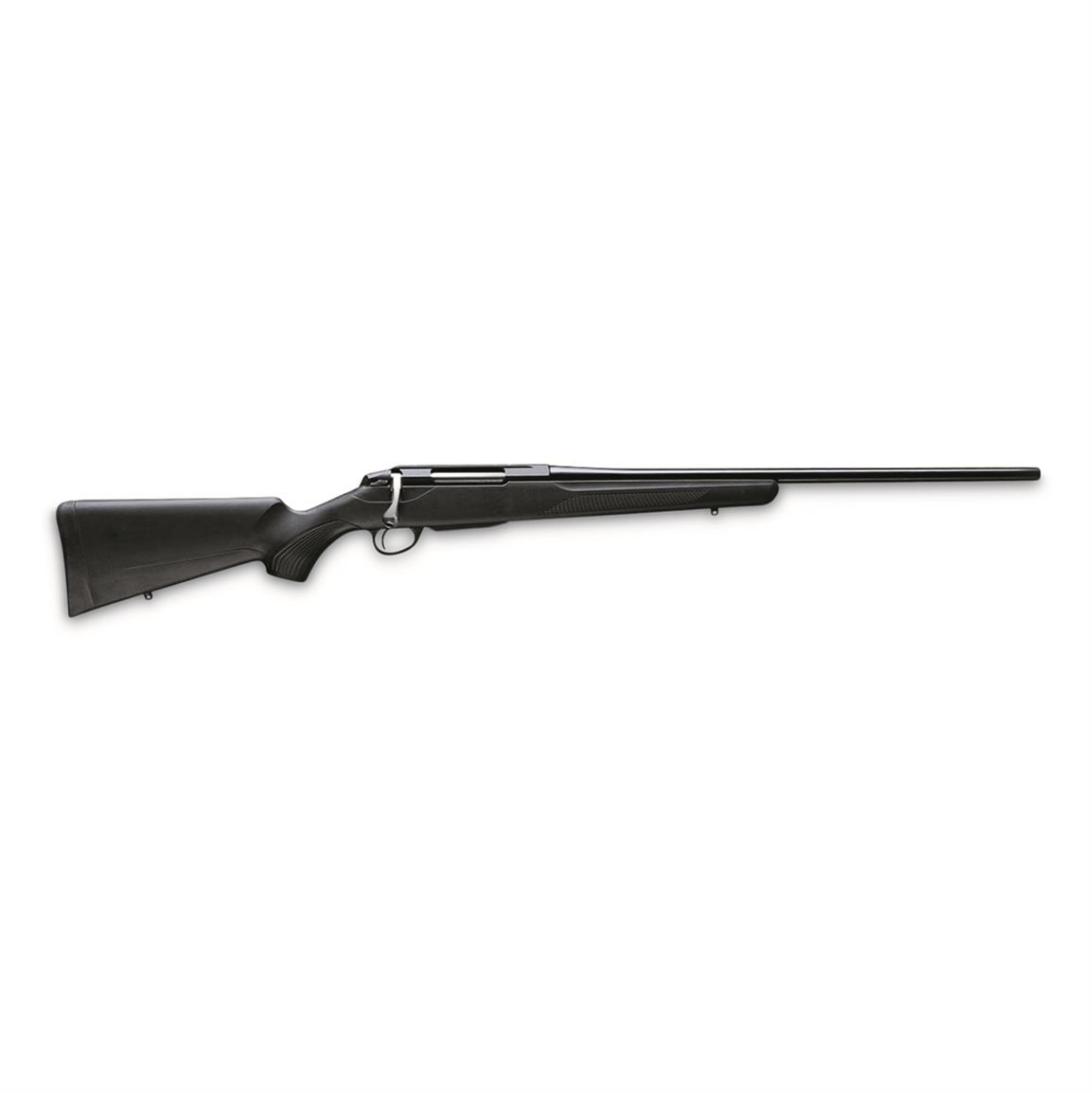
Tikka T3x Lite Compact, Bolt Action, 6.5mm Creedmoor, 22" Barrel, 3+1 Rounds
The T3x Lite’s one relevant limitation for hunters who want to evolve the platform: its proprietary magazine and non-Remington 700-footprint action make aftermarket stock and chassis options limited compared to the Bergara or Savage platforms. As a dedicated hunting rifle used as delivered, that’s not a concern. See our Tikka T3x Complete Guide for the full picture.
Howa 1500 Carbon – Lightweight Mid-Range Value
Price: $800–$950 street Weight: 6.4 lbs (carbon fiber barrel) Barrel: 22″ carbon fiber wrapped, 1:8 twist Trigger: HACT two-stage, ~3.5 lbs Magazine: Detachable box, 4 rounds Accuracy: Sub-MOA guarantee
The Howa 1500 Carbon is underappreciated in the mid-range 6.5 CM market. The carbon fiber-wrapped barrel brings weight to 6.4 lbs – comparable to the Tikka T3x Lite – while maintaining a 22″ barrel length. The Howa 1500 action is built on a Remington 700-compatible footprint, meaning the full ecosystem of aftermarket stocks, triggers, and chassis fits it. That’s a significant advantage over the Tikka if you ever want to upgrade the platform.

Howa M1500 6.5 Creedmoor Bolt 16.25 5+1
The HACT two-stage trigger is functional but not exceptional – it breaks at around 3.5 lbs with a discernible second stage that takes some adjustment for shooters accustomed to single-stage designs. Accuracy is sub-MOA consistently with quality loads. The Howa 1500’s combination of lightweight carbon barrel, Rem 700 compatibility, and sub-$950 price point makes it one of the better values in the mid-range category.
Browning X-Bolt Speed – Best Mid-Range for Western Hunting
Price: $1,050–$1,150 street Weight: 6.2 lbs Barrel: 22″ fluted sporter, 1:8 twist Trigger: Feather Trigger, 3 lbs factory Magazine: Detachable rotary box, 4 rounds Accuracy: Sub-MOA guarantee
The Browning X-Bolt Speed is the X-Bolt family’s lightweight hunting configuration – a fluted sporter barrel and composite stock trim weight to 6.2 lbs, making it competitive with the Tikka T3x Lite for all-day carry. The Inflex recoil pad is the best factory recoil pad in the category; in a 6.2-lb rifle shooting 6.5 CM, perceived recoil is genuinely mild. The four-lug rotary bolt provides positive lockup and reliable feeding.

Browning AB3 Micro Stalker, Bolt Action, 6.5mm Creedmoor, 20" Barrel, 5+1 Rounds
The X-Bolt Speed’s Feather Trigger breaks at 3 lbs – better than the standard X-Bolt Hunter’s 3.5-lb pull, but still behind the Tikka’s factory 2.5 lbs. At $1,050–$1,150, it’s priced slightly above the Tikka T3x Lite while offering comparable performance and weight. The Browning’s advantage is broader caliber availability in the same action family (everything from .223 to .300 Win Mag) and better recoil management. If you’re specifically buying for 6.5 CM deer hunting and weight is the priority, the Tikka is the sharper value. If you might eventually want a second X-Bolt in a magnum caliber, buying into the X-Bolt platform makes more sense.
Premium Tier: Best 6.5 CM Deer Rifles $1,100–$2,000
Bergara B-14 Hunter – Best Premium Value
Price: $950–$1,100 street Weight: 7.0 lbs Barrel: 22″, 1:8 twist Trigger: Bergara Performance Trigger, ~3 lbs Magazine: Detachable box (AICS-compatible), 5 rounds Accuracy: Sub-MOA guarantee (0.5 MOA typical)
The Bergara B-14 Hunter is the platform to buy if you want the best combination of accuracy, aftermarket flexibility, and price in the 6.5 CM hunting rifle market. Built on a Remington 700 footprint, TriggerTech triggers, McMillan and Manners stocks, and MDT and KRG chassis systems all fit directly – no adapters, no gunsmithing. If you start with a hunting rifle and want to build it into a long-range precision platform later, the B-14 Hunter is the right foundation.
The Spanish-manufactured Bergara barrel is the real differentiator. Most B-14 Hunters in 6.5 CM produce 0.5 MOA groups with Hornady Precision Hunter 143gr ELD-X or Federal Gold Medal Match 140gr – that’s precision-rifle accuracy in a hunting-weight package. The Bergara Performance Trigger breaks cleanly at 3 lbs. The AICS-compatible magazine accepts the same aftermarket boxes as the Ruger American Gen II and most dedicated precision rifles. At 7.0 lbs bare and 8.5+ lbs scoped, it’s the heaviest option on this list – for stand hunters, that’s irrelevant; for hunters covering serious mountain miles, consider the Christensen or Savage Ultralite instead. See our Bergara B-14 Series Guide for a full breakdown.
Savage 110 Ultralite – Best Backcountry 6.5 CM Rifle
Price: $1,100–$1,250 street Weight: 5.8 lbs (carbon fiber barrel) Barrel: 22″ carbon fiber wrapped, 1:8 twist Trigger: AccuTrigger, 2.5–6 lbs adjustable Magazine: Detachable box, 4 rounds Accuracy: Sub-MOA guarantee
If the rifle is going on a serious backcountry hunt – sheep, high-country elk, western mule deer where the rifle is one component of a 50+ lb pack for a week above treeline – the Savage 110 Ultralite changes the calculus. At 5.8 lbs with a carbon fiber-wrapped 22″ barrel, it’s 300–500g lighter than any comparable hunting rifle at the price point. The AccuTrigger adjusted to 2.5 lbs is the best factory adjustable trigger in the production rifle market. The carbon-wrapped barrel stiffens under heat faster than steel, which maintains consistent point of impact across strings of shots – useful when a follow-up is needed.
The trade-off is felt recoil. At 5.8 lbs shooting 6.5 CM, recoil is noticeably sharper than in a 7.5-lb platform – figure 15–17 ft-lbs of felt recoil versus 12–13 ft-lbs in the Tikka T3x Lite. That’s still manageable, and the Ultralite’s stock geometry does a reasonable job absorbing it. But if you shoot 50 rounds of practice at the bench, you’ll feel it by the end. The investment of $1,100–$1,250 is justified for hunters where rifle weight directly affects hunt success. For eastern stand hunters, it’s not where the money is best spent. See our Mountain / Backcountry Hunting Rifles guide for context on where ultralight rifles earn their cost.
Christensen Arms Mesa – Best Lightweight Premium
Price: $1,400–$1,600 street Weight: 6.5 lbs (carbon fiber barrel) Barrel: 22″ carbon fiber wrapped, 1:8 twist Trigger: TriggerTech Primary, 1.5–4 lbs Magazine: Detachable box (AICS-compatible), 4 rounds Accuracy: Sub-MOA guarantee (0.5 MOA typical)
The Christensen Arms Mesa is the premium choice for hunters who want a lightweight rifle without compromising accuracy or trigger quality. The TriggerTech Primary is one of the cleanest factory triggers available at any price – adjustable from 1.5 to 4 lbs, it’s used on purpose-built competition rifles and feels significantly better than anything below $1,200. The carbon fiber-wrapped barrel brings weight to 6.5 lbs while maintaining a 22″ barrel. AICS-compatible magazine. Rem 700 footprint for aftermarket flexibility.
At $1,400–$1,600, the Mesa is $300–$500 more than the Bergara B-14 Hunter for broadly similar accuracy and platform compatibility. The difference is weight (6.5 lbs vs. 7.0 lbs) and trigger quality (TriggerTech Primary vs. Bergara Performance). For backcountry hunters covering serious miles, both differences are meaningful. For stand hunters, neither justifies the price premium. The Mesa is the right rifle for hunters who want the best of everything and can justify the cost – it’s not the best value, but it’s the best overall package in its weight class.
Comparison: Best 6.5 CM Deer Rifles by Price
| Rifle | Price | Weight | Trigger | Accuracy | Magazine | Best For |
|---|---|---|---|---|---|---|
| Mossberg Patriot | $420 | 6.5 lbs | LBA adj. | Sub-MOA | Detach. 5rd | Lowest budget |
| Savage 110 Hunter | $590 | 7.5 lbs | AccuTrigger | Sub-MOA | Detach. 4rd | Best trigger under $650 |
| Ruger American Gen II | $650 | 6.3 lbs | Marksman adj. | Sub-MOA | AICS 4rd | Best budget overall |
| Howa 1500 Carbon | $875 | 6.4 lbs | HACT 3.5 lbs | Sub-MOA | Detach. 4rd | Lightweight + Rem 700 footprint |
| Tikka T3x Lite | $900 | 6.1 lbs | Excellent 2.5 lbs | 0.5–0.7 MOA | Prop. 3rd | Best mid-range overall |
| Browning X-Bolt Speed | $1,100 | 6.2 lbs | Feather 3 lbs | Sub-MOA | Rotary 4rd | Recoil management, caliber variety |
| Bergara B-14 Hunter | $1,050 | 7.0 lbs | Bergara ~3 lbs | 0.5 MOA | AICS 5rd | Best premium value, Rem 700 platform |
| Savage 110 Ultralite | $1,175 | 5.8 lbs | AccuTrigger | Sub-MOA | Detach. 4rd | Backcountry and miles |
| Christensen Mesa | $1,500 | 6.5 lbs | TriggerTech | 0.5 MOA | AICS 4rd | Best lightweight premium |
Optics for 6.5 CM Deer Rifles
The 6.5 CM’s capabilities extend past 400 yards in capable hands, which opens up more optic configurations than traditional deer cartridges. That said, most deer hunting happens inside 300 yards, and the optic should match the likely use case rather than the theoretical maximum.
For eastern timber and close-range hunting (shots inside 200 yards): A 3-9×40 is all you need. The Vortex Crossfire II 3-9×40 ($180) is the best budget hunting scope available – durable, clear enough for hunting, and reliable zero retention. The Leupold VX-Freedom 3-9×40 ($300) steps up meaningfully in low-light glass quality. A standard duplex reticle zeroed at 200 yards keeps you within 2″ of aim point from 50 to 250 yards with 143gr ELD-X – no holdover or BDC required for most eastern hunting scenarios.
For mixed terrain and shots to 350 yards: The Vortex Viper HD 3-9×40 ($400) or Leupold VX-3HD 3-9×40 ($550) provide better glass quality for low-light dawn and dusk hunting and sufficient magnification for 350-yard shots. A BDC reticle calibrated for 6.5 CM simplifies holdover, though a practised duplex shooter can do the same work with less reticle clutter.

SIG SAUER CROSS Rifle, Bolt Action, 6.5mm Creedmoor, 18" Stainless Barrel, 5+1 Rounds
For open country and shots to 500 yards: Step to a 4-14x or 4-16x configuration. The Vortex Razor HD LH 3-15×42 ($1,100) and Leupold VX-5HD 3-15×44 ($900) are both excellent choices that match the accuracy potential of a premium 6.5 CM hunting rifle. At this range, a first focal plane reticle with an MRAD or MOA turret system earns its complexity – dialing for a 450-yard deer shot in variable wind is more reliable than holding off a duplex with mental math.
The consistent guidance regardless of budget: spend at least as much on the optic as on the rifle. A $650 Ruger American Gen II with a $500 Vortex Viper HD is a better system than the same rifle with a $150 scope. The optic determines what the rifle can accomplish in the field.
Best 6.5 CM Ammunition for Deer Hunting
The all-around choice: Hornady Precision Hunter 143gr ELD-X is the benchmark. The ELD-X expands reliably from 1,600 fps to 3,200 fps impact velocity – meaning it performs whether the deer is 50 yards away (3,100 fps impact) or 450 yards away (2,000 fps impact). Most 6.5 CM rifles shoot it under 0.75 MOA. It’s the load to start with and the load most hunters don’t need to move away from.
For maximum long-range performance: Federal Terminal Ascent 130gr is the best bonded option for hunters who occasionally stretch shots past 400 yards or hunt elk alongside deer. The Terminal Ascent’s bonded core retains 95%+ of bullet weight at long-range impact velocities, driving deep even on raking shots. It shoots flat – 130gr at 2,875 fps – and accuracy in most rifles matches Hornady’s Precision Hunter.
For budget-conscious hunters who practice frequently: Hornady American Gunner 140gr HP is consistent and accurate for 30–40% less per box than premium loads. It’s not a hunting bullet design (the hollow point doesn’t expand as reliably as the ELD-X at velocity extremes), but for practice and patterning it’s the right choice. Hunt with Precision Hunter, practice with American Gunner.

Cva Scout 6.5 Creedmoor Single Shot 20 1rd
For elk alongside deer: Barnes LRX 127gr or Federal Terminal Ascent 130gr are the right choices when the same rifle might see an elk tag. Both are bonded/all-copper designs that retain maximum weight through heavy bone – the margin that matters when a 700-lb bull is quartering away at 250 yards.
Setup Recommendations by Hunting Context
Eastern whitetail hunter, shots inside 150 yards, budget-first: Ruger American Gen II in 6.5 CM, Vortex Crossfire II 3-9×40 ($180), Hornady American Whitetail 129gr or Hornady Precision Hunter 143gr. Total system under $850. Accurate to 300 yards in practice, reliable in weather, light enough to carry comfortably. Zero at 200 yards.
Midwestern hunter pursuing whitetail and occasional elk: Tikka T3x Lite in 6.5 CM, Leupold VX-Freedom 3-9×40 ($300), Federal Terminal Ascent 130gr. Total system around $1,250. The Tikka’s smooth bolt and excellent trigger perform under pressure, and the Terminal Ascent’s bonded construction handles elk inside 300 yards with confidence.
Western hunter covering open country to 400 yards: Bergara B-14 Hunter in 6.5 CM, Vortex Viper HD 3-9×40 ($400), Hornady Precision Hunter 143gr ELD-X. Total system around $1,500. The B-14’s 0.5 MOA accuracy and Rem 700 platform compatibility make it the right foundation for a complete precision hunting system.

Weatherby 6.5 Creedmoor 22 4+1 (Bolt) VTX65CMR2T
Backcountry hunter, every ounce matters: Savage 110 Ultralite or Christensen Mesa in 6.5 CM, Leupold VX-3HD 3-9×40 ($550), Federal Terminal Ascent 130gr. Total system 7.5–8.0 lbs. The weight savings compound across long days at elevation.
Pros and Cons of 6.5 Creedmoor for Deer
Strengths: ✓ Low recoil (12–14 ft-lbs) – better practice habits, less flinch under pressure ✓ High-BC bullets drift less and drop less past 300 yards than .30-caliber options ✓ Excellent ammunition selection – more purpose-built hunting loads than any comparable modern cartridge ✓ Adequate for elk inside 300 yards with bonded bullets – genuine versatility ✓ Short-action cartridge fits lightweight rifle configurations ✓ Factory accuracy is consistently sub-MOA across the entire price range ✓ Affordable practice ammunition (Hornady American Gunner available under $1.50/round)
Limitations: ✗ Marginal for elk at distance or on difficult shot angles – .308 or larger provides more margin ✗ Lighter bullet slightly more susceptible to deflection in heavy brush than .30-caliber ✗ Proprietary magazine on Tikka limits aftermarket flexibility on that platform ✗ Not appreciably better than .308 inside 200 yards where most deer are shot
Frequently Asked Questions
Is 6.5 Creedmoor enough for deer hunting?
Yes, without question. A 143gr ELD-X at 2,700 fps generates 2,315 ft-lbs at the muzzle and expands reliably from point-blank to 500+ yards. At 200 yards it retains 1,820 ft-lbs – well above the 1,000 ft-lbs considered adequate for whitetail. The cartridge has been used successfully on deer, elk, and black bear across North America. For whitetail specifically, it’s one of the best purpose-matched cartridges available.
What’s the best 6.5 CM rifle for the money?
At under $700, the Ruger American Gen II – AICS magazine, threaded barrel, and sub-MOA accuracy at $650 is difficult to beat. In the mid-range, the Tikka T3x Lite at $900 is the strongest overall value, with a factory trigger and bolt smoothness that typically require $150–$250 in upgrades on competing platforms. If you’re willing to spend $1,000–$1,100, the Bergara B-14 Hunter adds precision-rifle accuracy and full Remington 700 aftermarket compatibility.
How far can I shoot deer with 6.5 Creedmoor?
The ballistic maximum is well past 600 yards with the right setup – the 143gr ELD-X retains over 1,500 ft-lbs to 500 yards and has a BC high enough to stay supersonic past 1,000 yards. The practical hunting maximum for most shooters is 400 yards, assuming a quality rifle, quality optic, and regular practice from field positions. At 400 yards the 6.5 CM drops about 28″ from a 200-yard zero – manageable with a BDC reticle or practiced holdover, but not something to attempt without knowing your exact zero and drop data. Most ethical hunters cap themselves at 300 yards until they’ve established that they can hit a 10″ target consistently from hunting positions at that distance.
Should I choose 6.5 Creedmoor or .308 Winchester for deer?
For pure deer hunting inside 300 yards, both are excellent and the choice is largely personal preference. The 6.5 CM has less recoil, flatter trajectory, and less wind drift – advantages that compound at distance. The .308 hits harder at close range, is more versatile on larger game, and has a larger selection of widely available ammunition. If you hunt elk alongside deer, the .308 provides more margin. If you hunt primarily whitetail and occasionally shoot past 250 yards, the 6.5 CM is the stronger choice. See our 6.5 Creedmoor vs .308 Winchester guide for a full breakdown.
What 6.5 Creedmoor rifle is best for a new hunter?
The Ruger American Gen II for budget-first buyers, or the Tikka T3x Lite for buyers who can spend $900. The Gen II’s AICS magazine, threaded barrel, and sub-MOA accuracy at $650 represent genuine value. The Tikka’s factory trigger and bolt smoothness make it more satisfying to shoot and develop technique on. Either will kill deer cleanly at any reasonable hunting distance. See our Best Rifles for New Shooters guide for a broader entry-level comparison.
Does 6.5 Creedmoor work for elk hunting as well as deer?
Yes, with the right ammunition and shot placement. Use bonded bullets – Federal Terminal Ascent 130gr or Barnes LRX 127gr – rather than standard hunting designs like the ELD-X for elk. Keep shots inside 300 yards until you’ve established field accuracy at that distance. Avoid raking shots through heavy shoulder bone at extended ranges where impact velocity is reduced. The 6.5 CM is a legitimate elk cartridge used successfully every season; it’s not the best elk cartridge, but it handles deer and elk on the same tag. See our Elk Hunting Rifles Guide for more detail on what the elk use case requires.