
 Firearms Republic
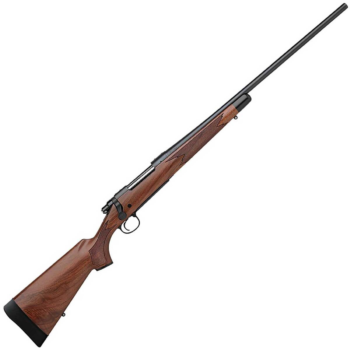
The Remington Model 7 CDL has occupied a specific niche in the bolt-action hunting market for decades – a genuinely compact rifle built for hunters who work tight timber, cramped ground blinds, or need a shorter overall package without sacrificing chambering power. In 308 Winchester, the Model 7 CDL hits the market at a street price around $899, pairing an 18.5″ barrel with Grade I American walnut in a package that measures just 37.5″ overall. That OAL is the headline feature, and it matters more in the field than most spec sheets suggest.
| Specification | Details |
|---|---|
| Barrel Length | 18.5″ |
| Barrel Twist | 1:10 |
| Barrel Contour | Sporter (lightweight) |
| Weight | 6.5 lbs |
| Trigger | X-Mark Pro, adjustable 2.5–5 lbs, factory ~3.5 lbs |
| Magazine | Hinged floorplate internal box, 4 rounds |
| MSRP | $1,049 |
| Street Price | $849–$999 |
| Stock | Grade I American walnut, satin finish, black forend tip |
| Threaded Barrel | No |
| Action | Remington 700 short-action pattern, 2-lug push-feed, 90° bolt lift |
| Finish | Satin blued barrel |
| Scope Base | Drilled and tapped for Remington 700-pattern bases |
Quick Verdict – Remington Model 7 CDL .308
✓ Best for: Timber and ground blind whitetail hunters needing a compact 308 Winchester
✓ Price: $849–$999 street
✓ Key strength: 37.5″ OAL – shortest production 308 Winchester hunting rifle available
✗ Not ideal for: Long-range hunters, suppressor users, or wet-weather hunters who prefer synthetic
Real-World Performance – Accuracy & Ballistics
The Remington Model 7 CDL 308 Winchester delivers honest hunting accuracy – expect 0.8–1.2 MOA with Federal 168gr Gold Medal Match from the 18.5″ barrel, and similar 0.8–1.1 MOA groups with Federal 150gr Fusion. The shorter barrel does cost velocity – Federal 168gr loads clock around 2,480 fps versus roughly 2,630 fps from a 22″ tube, a loss of 150–200 fps that translates to meaningful energy drop beyond 300 yards. Lighter 150gr loads fare better here, losing proportionally less velocity and remaining effective hunting rounds to 300 yards with authority. The 1:10 twist stabilizes standard 308 Winchester hunting bullets well through the 150–168gr range, though heavier 175–185gr match projectiles are better suited to longer barrels. Recoil runs approximately 15 ft-lbs – noticeable at 6.5 lbs, sharper than heavier alternatives, but manageable for hunting sessions. The walnut stock absorbs some of that impulse, and the sporter contour keeps the rifle lively in hand without becoming punishing. For shots inside 250 yards – which covers the vast majority of timber hunting scenarios – the ballistic trade-offs are largely academic.
Applications – Timber, Blinds & Field Use
Ground blind hunting is where the Remington Model 7 CDL 308 Winchester earns its keep most convincingly – at 37.5″ overall, it swings and shoulders inside enclosed blinds where a standard 43″+ rifle becomes genuinely awkward, catching walls and ceiling panels at the worst moments. Dense timber still-hunting is the second natural home for this rifle; the compact OAL threads through brush, allows quick repositioning between trees, and never snags on branches during a careful stalk in the way a longer rifle inevitably does. ATV and vehicle carry is a practical bonus – the Model 7 CDL fits behind cab seats and in storage compartments that simply won’t accept a standard-length rifle, which matters on large properties where hunters cover ground by vehicle before going on foot. The one application where the rifle shows its limits is open-country or long-range hunting; beyond 300 yards, the velocity loss from the 18.5″ barrel in 308 Winchester starts compressing the effective hunting envelope, and hunters regularly shooting past 350 yards would be better served by a 22″–24″ barrel. For whitetail in the woods at realistic timber distances, though, this rifle fits the job precisely.
Ergonomics & Handling – Compact Done Right
The Remington Model 7 CDL 308 Winchester handles like a rifle designed by someone who actually hunts in tight spaces – the 37.5″ OAL and 6.5 lb weight combine to produce a package that shoulders quickly, balances naturally between the hands, and never feels front-heavy despite the sporter-contour barrel. The Grade I American walnut stock has a traditional feel with a length of pull suited to average-framed adult hunters, though smaller-framed shooters and youth hunters transitioning to a centerfire rifle will find it particularly well-proportioned. The X-Mark Pro trigger breaks at roughly 3.5 lbs from the factory – adjustable down to 2.5 lbs, which is a meaningful improvement for precise shot placement – and the 90-degree bolt lift cycles smoothly without requiring excessive hand repositioning under a low-mounted optic. The hinged floorplate feeds reliably and unloads cleanly in the field, which matters when you’re managing a loaded rifle in a blind or on a stand. One honest note: the walnut stock requires attention in wet conditions, and hunters who regularly hunt rain-soaked environments may find the finish demands more maintenance than a synthetic alternative.
Aftermarket & Upgrade Path – Rem 700 Footprint
The Remington Model 7 CDL 308 Winchester carries the full Remington 700 short-action footprint, which is the broadest aftermarket ecosystem in American bolt-action rifles – and that compatibility extends completely to the compact Model 7 platform. The factory X-Mark Pro trigger is the first logical upgrade; adjusting it to 2.5 lbs costs nothing, but a TriggerTech Rem 700 at $130 or a Timney 510 at $195 delivers a noticeably cleaner break that improves practical accuracy without gunsmithing complexity. Optic mounting uses the full Rem 700 ring and base ecosystem – Talley or Leupold Rem 700-pattern rings in the $65–90 range are the practical choice, and a compact optic like the Leupold VX-Freedom 2–7×33 at around $280 is appropriately sized for a rifle this compact without adding excessive forward weight. A Sims LimbSaver slip-on recoil pad at roughly $25 takes the edge off range sessions with the lighter rifle. The CDL walnut stock is typically kept by owners who bought the rifle for its traditional aesthetics, but any Remington 700 short-action aftermarket stock fits if a synthetic option becomes desirable later.
Pros & Cons – Honest Trade-Offs Laid Out
Strengths:
✓ 37.5″ OAL – shortest production 308 Winchester hunting rifle; genuine field advantage in timber and blinds
✓ 6.5 lbs unscoped – among the lightest walnut-stocked 308 Winchester production rifles available
✓ Full Remington 700 footprint – complete aftermarket compatibility despite compact configuration
✓ Grade I American walnut CDL finish – better aesthetics and fit than standard Model 7 variants
✓ X-Mark Pro trigger adjustable to 2.5 lbs – usable factory trigger with upgrade headroom
✓ 0.8–1.2 MOA accuracy – adequate for all practical hunting applications inside 300 yards
✓ Hinged floorplate – reliable feeding and clean field unloading
Limitations:
✗ 18.5″ barrel loses 150–200 fps vs 22″ alternatives – meaningful beyond 300 yards in 308 Winchester
✗ Internal 4-round magazine – no detachable box option on standard CDL model
✗ Not threaded – suppressor users need aftermarket barrel work or a different rifle
✗ Walnut stock requires maintenance in wet conditions – synthetic alternatives are lower-maintenance
✗ X-Mark Pro at 3.5 lbs factory – functional but not exceptional without adjustment
✗ Post-bankruptcy Remington production – verify quality control on individual rifles before purchase
✗ Recoil at 15 ft-lbs is sharper than heavier alternatives at 6.5 lbs
Competitors & Alternatives – How It Stacks Up
| Feature | Model 7 CDL | Model 70 Featherweight | Tikka T3x Lite | Ruger Hawkeye African |
|---|---|---|---|---|
| Price | $899 | $999 | $875 | $1,049 |
| Weight | 6.5 lbs | 6.75 lbs | 6.0 lbs | 7.0 lbs |
| Barrel | 18.5″ | 22″ | 22.4″ | 23″ |
| Trigger | ~3.5 lbs | ~3.5 lbs | ~2.0 lbs | ~3.5 lbs |
| Magazine | Internal 4-rd | Internal 5-rd | Detachable 3-rd | Internal 4-rd |
| OAL | 37.5″ | 41.75″ | 42.5″ | 43.25″ |
The Winchester Model 70 Featherweight 308 Winchester is the closest traditional-walnut alternative, but its 22″ barrel and 41.75″ OAL give up the compact advantage that defines the Model 7 CDL – it also adds controlled-round feed, which some hunters prefer. The Tikka T3x Lite 308 Winchester undercuts the Model 7 on trigger quality and offers a detachable magazine, but its 42.5″ OAL eliminates the compact field advantage entirely, and it lacks the walnut aesthetics. The Ruger Hawkeye African 308 Winchester brings controlled-round feed and a 23″ barrel for better long-range velocity, but at 43.25″ OAL and 7.0 lbs it is a fundamentally different tool – better for open country, worse for the tight-quarters scenarios where the Model 7 CDL excels.
Who Should Buy This – And Who Should Not
The Remington Model 7 CDL 308 Winchester is ideal for timber and ground blind whitetail hunters who genuinely need a rifle shorter than any standard production alternative – if your shots are consistently inside 200 yards in dense cover, the 37.5″ OAL is a real advantage that no competitor currently matches in a walnut-stocked 308 Winchester. It also fits hunters with smaller frames or shorter arms who find standard-length rifles awkward, and youth hunters transitioning to a compact adult centerfire rifle with traditional aesthetics. Look elsewhere if you regularly shoot past 350 yards – the Tikka T3x Lite 308 Winchester or Winchester Model 70 Featherweight 308 Winchester with a 22″ barrel will serve open-country hunting better – or if you need suppressor capability without additional gunsmithing expense.
Frequently Asked Questions – Model 7 CDL .308
Q: How much velocity does the 18.5″ barrel lose compared to a 22″ barrel in 308 Winchester?
A: Approximately 150–200 fps – Federal 168gr Gold Medal Match runs around 2,480 fps from 18.5″ versus roughly 2,630–2,650 fps from 22″.
Q: Is the Remington Model 7 CDL compatible with Remington 700 stocks and triggers?
A: Yes – the Model 7 uses the full Remington 700 short-action footprint, making all 700-pattern aftermarket stocks, triggers, and bases compatible.
Q: What is the effective hunting range of the Model 7 CDL in 308 Winchester?
A: 300 yards is the practical hunting limit; beyond 350–400 yards, the velocity loss from the shorter barrel compresses the effective envelope meaningfully.
Q: Can the standard CDL model be threaded for a suppressor?
A: No – the standard CDL barrel is not threaded. Suppressor use requires aftermarket barrel work or a different rifle.
Q: What optic size suits the Model 7 CDL best?
A: A compact 2–7×33 or 3–9×40 is proportionally appropriate – a Leupold VX-Freedom 2–7×33 at $280 is a well-matched choice.
Q: Is the X-Mark Pro trigger adjustable from the factory?
A: Yes – it adjusts between 2.5 and 5 lbs without gunsmithing; factory setting is approximately 3.5 lbs.
Final Verdict – Remington Model 7 CDL .308
The Remington Model 7 CDL 308 Winchester does one thing better than any other production hunting rifle in this chambering – it puts a capable 308 Winchester into a 37.5″ package that fits where standard rifles simply do not. Timber hunters, ground blind hunters, and compact-frame shooters who keep shots inside 300 yards will find this rifle genuinely useful rather than merely interesting. If your hunting is done in tight cover and traditional walnut matters to you, the Model 7 CDL earns its place in the rack.
The Model 7 CDL in 308 Winchester is not a rifle for every hunter – the short barrel costs real velocity, the walnut demands care, and the internal magazine is a limitation some shooters won’t accept. But for the hunter who works dense timber or enclosed blinds where OAL is a genuine field problem, no current production rifle in this chambering offers the same compact package with walnut aesthetics and the full Remington 700 aftermarket behind it. Buy it for the right reasons, and it will not disappoint.