 Maksym Kovaliov
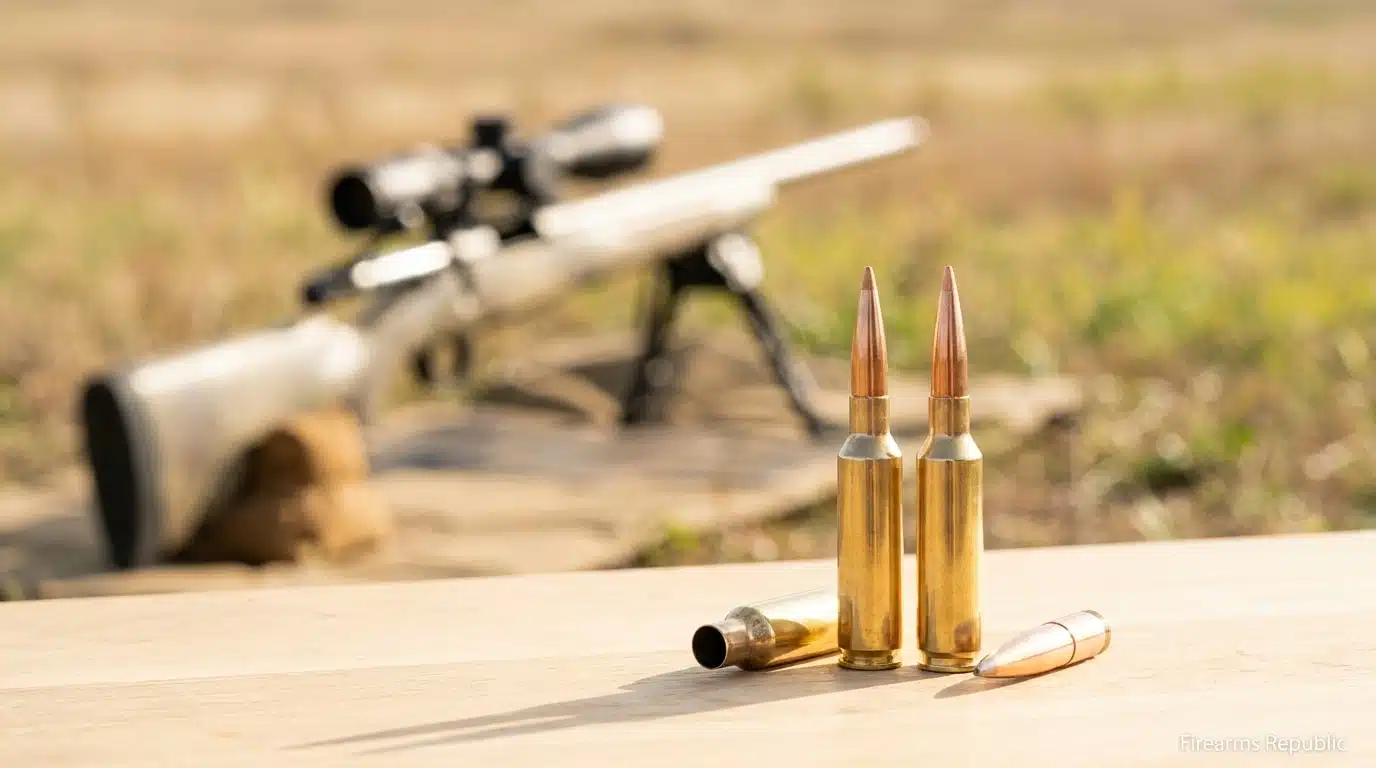
The 6.5 PRC sits in one of the most contested spaces in modern rifle cartridge design – between the efficient, affordable 6.5 Creedmoor and the more powerful 7mm PRC and .300 Win Mag. Introduced by Hornady in 2018, it was built for a specific shooter: someone who shoots the 6.5 CM and wants more. More velocity. More energy at distance. More performance on larger game. More margin at 1,000 yards. The 6.5 PRC delivers all of that, pushing the same class of high-BC 143–147gr bullets roughly 250 fps faster than the 6.5 CM from a magnum-length action – enough to extend effective hunting range by 100–150 yards and reduce wind drift by a measurable margin at competition distances. At $2.20–$3.20 per round for quality factory loads, it carries a meaningful premium over the 6.5 CM. Whether that premium is justified depends entirely on what you’re asking the cartridge to do. This guide provides the complete picture: ballistics, real-world applications, honest comparisons to both the 6.5 CM below it and the 7mm PRC above it, reloading potential, and which rifles chamber it best.
What Is the 6.5 PRC?
PRC stands for Precision Rifle Cartridge – Hornady’s designation for cartridges designed around optimal seating of high-BC bullets for precision hunting and shooting applications. The 6.5 PRC is based on the .300 Ruger Compact Magnum (RCM) case, necked down to accept 6.5mm (.264 caliber) projectiles. The result is a short magnum design with a 2.030″ case length and 2.955″ overall length – fitting in a standard magnum-length bolt-action action but shorter than the 7mm Rem Mag or .300 Win Mag.
The design philosophy mirrors the 6.5 CM’s approach but scales it up. Where the 6.5 CM was built around short-action efficiency with moderate velocity, the 6.5 PRC uses increased case capacity to push the same high-BC 6.5mm bullets – particularly the 143gr ELD-X and 147gr ELD-M – to velocities that begin to close the gap with larger magnums. At 2,960 fps for the 143gr ELD-X, the 6.5 PRC is roughly 250 fps faster than the 6.5 CM with the same bullet, producing meaningfully more energy and a flatter trajectory at distance.
The freebore design is purpose-built for modern long 6.5mm projectiles. Unlike the 7mm Rem Mag and older magnum cartridges that were designed around shorter, lower-BC bullets, the 6.5 PRC’s chamber geometry allows the 143–147gr class bullets to be seated optimally without sacrificing case volume. This is the same design advantage the 7mm PRC holds over the 7mm Rem Mag – applied to the 6.5mm bore.
Ballistics: The Numbers That Matter
The 6.5 PRC’s performance profile is defined by its velocity advantage over the 6.5 CM. From a 24″ barrel, the 143gr ELD-X exits at 2,960 fps – 260 fps faster than the same bullet from a 6.5 CM. The 147gr ELD-M reaches 2,910 fps vs. approximately 2,695 fps from the 6.5 CM. That velocity gap produces real differences in trajectory, wind drift, and retained energy at distance that compound as range increases.
| Load | MV (24″, fps) | 500 yd Velocity | 500 yd Energy | 500 yd Drop (100 yd zero) | 10 mph Wind @ 500 yd |
|---|---|---|---|---|---|
| 143gr ELD-X (24″) | 2,960 | 2,437 | 1,884 ft-lbs | -38″ | 5.8″ |
| 147gr ELD-M (24″) | 2,910 | 2,421 | 1,912 ft-lbs | -40″ | 5.5″ |
| 130gr ELD-M (24″) | 3,200 | 2,547 | 1,872 ft-lbs | -31″ | 6.2″ |
| 140gr Berger Hybrid (24″) | 3,000 | 2,440 | 1,852 ft-lbs | -37″ | 5.7″ |
| 143gr ELD-X (22″) | 2,810 | 2,314 | 1,700 ft-lbs | -43″ | 6.3″ |
The energy picture is where the 6.5 PRC separates itself from the 6.5 CM most clearly. At 500 yards, the 143gr ELD-X carries 1,884 ft-lbs – versus 1,440 ft-lbs for the 6.5 CM with the same bullet class. That 444 ft-lb difference at 500 yards represents roughly 30% more retained energy, which is meaningful for hunters pushing shots on elk or large mule deer. At 700 yards, the 6.5 PRC still carries approximately 1,400 ft-lbs – roughly what the 6.5 CM produces at 500 yards.
Wind performance improves modestly over the 6.5 CM but not dramatically – the same bullet flying faster drifts less, but the BC is identical. At 500 yards in a 10 mph crosswind, the 143gr ELD-X drifts 5.8 inches from a 6.5 PRC vs. 6.8 inches from a 6.5 CM. At 1,000 yards, that gap opens to approximately 4 inches. Not a transformative difference, but real and measurable in competition.
Recoil runs approximately 15–17 ft-lbs in a 9 lb rifle – noticeably more than the 6.5 CM (9–11 ft-lbs) but significantly less than the 7mm PRC (22–24 ft-lbs) and .300 Win Mag (25–28 ft-lbs). Most adult shooters find the 6.5 PRC comfortable without a muzzle brake, particularly in heavier hunting and precision rifles. In a lightweight sub-7 lb mountain rifle, a brake is recommended for comfortable range sessions.
6.5 PRC vs. The Competition
6.5 PRC vs. 6.5 Creedmoor
This is the comparison that defines the 6.5 PRC’s market position. The 6.5 CM is cheaper to shoot ($1.00–$1.50 vs. $2.20–$3.20 per round), available in lighter short-action rifles, generates less recoil, and has barrel life roughly 500–1,000 rounds longer. The 6.5 PRC is faster, hits harder at distance, and extends ethical hunting range by a meaningful margin on large game. For deer hunters who shoot inside 500 yards, the 6.5 CM does everything cleanly and costs less. For elk hunters, mountain hunters who face 500–700 yard shots, and precision competitors who want every fps of velocity advantage, the 6.5 PRC justifies the step up. The choice is not about which cartridge is better – it is about whether the 6.5 PRC’s specific advantages matter enough for your use case to justify the cost and recoil increase. See our full breakdown in the 6.5 Creedmoor Caliber Guide and the 6.5 Creedmoor vs. 6.5 PRC comparison.
6.5 PRC vs. 7mm PRC
The 7mm PRC pushes 175gr bullets with a G7 BC of .391 to 2,975 fps, producing substantially more downrange energy than the 6.5 PRC with 143gr bullets at comparable velocities. At 500 yards, the 7mm PRC carries approximately 590 ft-lbs more energy than the 6.5 PRC. For elk and large game hunters, that energy margin is the 7mm PRC’s primary argument. The 6.5 PRC offers slightly less recoil (15–17 vs. 22–24 ft-lbs), wider production rifle availability, and lower per-round cost. For a deer and precision competition rifle, the 6.5 PRC’s balance is arguably better. For a dedicated elk and western big game rifle where energy margin matters, the 7mm PRC holds the advantage. Full picture in our 7mm PRC Caliber Guide.
6.5 PRC vs. .300 Winchester Magnum
The .300 Win Mag is a larger, more powerful cartridge with universal availability and 60 years of proven performance. It generates more recoil (25–28 ft-lbs vs. 15–17 ft-lbs), burns more powder, and has shorter barrel life. In terms of practical hunting performance on elk inside 600 yards, both cartridges are fully capable – the .300 Win Mag with its larger bullet diameter creates wider wound channels, while the 6.5 PRC’s higher-BC bullets drift less in wind. The .300 Win Mag’s decisive advantage is that you can find it at a sporting goods store in rural Montana at 6pm the night before a hunt. The 6.5 PRC is improving in distribution but cannot yet match that ubiquity. See our .300 Win Mag Caliber Guide for the full comparison.
6.5 PRC vs. 6.5×47 Lapua
The 6.5×47 Lapua is a precision competition cartridge that predates the 6.5 PRC and occupies similar ballistic territory with lower velocity. With 123–130gr match bullets at 2,700–2,850 fps, it produces excellent accuracy and very long barrel life (4,000+ rounds), making it popular in F-Class and bench rest competition. The 6.5 PRC shoots faster with the 143–147gr hunting and match bullet class, making it more versatile across hunting and competition. For pure bench rest and precision target work where hunting use is irrelevant, the 6.5×47 Lapua remains a legitimate choice. For hunters who also compete, the 6.5 PRC is the more practical option.
Factory Ammunition: What to Buy
The 6.5 PRC has solid factory support from Hornady, Federal, Nosler, and several boutique manufacturers. Selection is narrower than the 6.5 CM but broader than newly introduced cartridges like the 7mm PRC. Major retailer availability is reliable; rural and hardware store availability is improving but still inconsistent.
For precision and competition:
Hornady 147gr ELD-M ($50–$60/20 rounds) is the benchmark match load – the same bullet used by PRS competitors in 6.5 CM chamberings, now running 200+ fps faster. Consistent ES figures and the ELD-M’s reliable BC make it the standard for competition use. Federal Premium Gold Medal 140gr Berger Hybrid ($58–$68/20 rounds) is the premium alternative for competitors who have strong preferences for Berger projectiles. Hornady’s 130gr ELD-M pushes the cartridge’s velocity ceiling and is worth testing in rifles with 1:8 twist that can stabilize it well.
For hunting:
Hornady 143gr ELD-X ($50–$60/20 rounds) is the primary hunting load and the cartridge’s most complete offering – a controlled-expansion bullet designed for wide velocity range performance, which matters as velocity drops at extended hunting distances. The 143gr ELD-X at 6.5 PRC velocity is one of the most capable factory long-range hunting loads available today. Federal Premium 140gr Terminal Ascent ($58–$68/20 rounds) is a bonded option for hunters who want maximum penetration on angled shots or large animals. Nosler 140gr AccuBond ($55–$65/20 rounds) is a proven field alternative with strong terminal performance records on elk and mule deer.
Budget and practice:
Like the 7mm PRC, the 6.5 PRC currently lacks affordable steel-case or budget brass-case practice options at major scale. Hornady American Gunner 140gr BTHP ($35–$42/20 rounds) is the most accessible lower-cost option, though it is not a match-grade load. Reloading is the practical solution for volume shooters who want to train without spending $2.50 per trigger pull.
| Load | Best For | Typical Price | Typical Accuracy |
|---|---|---|---|
| Hornady 147gr ELD-M | Precision/Competition | $55/20 | 0.5–0.7 MOA |
| Federal 140gr Berger Hybrid | Precision/Competition | $63/20 | 0.5–0.6 MOA |
| Hornady 143gr ELD-X | Elk/Deer Hunting | $55/20 | 0.6–0.8 MOA |
| Federal 140gr Terminal Ascent | Hunting (bonded) | $63/20 | 0.6–0.8 MOA |
| Nosler 140gr AccuBond | Premium Hunting | $60/20 | 0.7–0.9 MOA |
| Hornady 140gr A-Gunner BTHP | Budget Practice | $38/20 | 1.0–1.5 MOA |
Reloading the 6.5 PRC
The 6.5 PRC is a genuinely rewarding reloading cartridge – its well-proportioned case produces consistent velocities with moderate effort, and the depth of 6.5mm component bullet selection makes load development straightforward. Reloaders can push the 147gr ELD-M to 2,940–2,960 fps from a 24″ barrel with quality handloads, marginally exceeding factory specifications.
Brass: Lapua 6.5 PRC brass ($95–$110/100) is available and is the premium standard – excellent case weight consistency, long primer pocket life, and the dimensional control that precision reloaders expect from Lapua. This is a meaningful advantage over the 7mm PRC where Lapua brass is not yet available. Hornady factory brass performs well as a starting point and is adequate for hunting and intermediate competition. Peterson brass ($75–$85/100) is a quality domestic alternative with tight tolerances.
Powder: The 6.5 PRC’s case capacity sits between the 6.5 CM and the larger magnums, working best with medium-slow burning powders. Hodgdon H4350 is the community standard and produces outstanding results with 140–147gr bullets – expect 2,940–2,970 fps with 47–48gr H4350 behind a 143gr ELD-X in a 24″ barrel. Reloder 26 provides slightly higher velocity ceilings and excellent temperature stability. H4831SC works well with heavier 147gr bullets and provides consistent metering. Retumbo and H1000 are viable with 147gr+ bullets but tend toward slower velocity with marginal consistency improvement – H4350 is simply the better choice for most loads in this case capacity.
Bullets: The 6.5mm bore has the deepest match and hunting bullet selection of any precision caliber. The 143gr ELD-X and 147gr ELD-M are the defining loads. Berger 140gr Hybrid, 140gr AR Hybrid, and 153.5gr EOL are popular competition alternatives. Hornady’s 130gr ELD-M produces impressive velocity and BC figures. For hunting, the 143gr ELD-X, Nosler 140gr AccuBond LR, and Sierra 140gr GameKing are all field-proven on deer and elk. The 156gr Berger EOL and 156gr Norma Diamond Line represent the BC ceiling of standard 6.5mm projectiles and require a 1:7.5–1:8 twist to stabilize reliably.
Twist rate: Most 6.5 PRC rifles ship with 1:8 twist, which handles the full 120–147gr range without issue. The longer, heavier 153–156gr bullets benefit from a 1:7.5 twist for optimal stabilization at altitude and in cold weather. Verify twist rate before loading bullets heavier than 147gr and test stability carefully.
Case preparation: Trim to 2.025″ after the first firing. The 6.5 PRC’s short magnum dimensions mean case growth per firing is modest – most shooters find trimming necessary every 3–4 firings rather than every firing. Uniform primer pockets and sort by weight for best ES figures. Lapua brass typically requires primer pocket uniforming only on the first firing and thereafter holds tight.
Best Applications for the 6.5 PRC
Elk Hunting
The 6.5 PRC is the cartridge that genuinely changes the elk hunting calculus for shots past 400 yards. Where the 6.5 CM carries approximately 1,200 ft-lbs at 600 yards – approaching the practical minimum for clean elk kills – the 6.5 PRC carries approximately 1,600 ft-lbs at the same distance. That 400 ft-lb margin is the difference between a cartridge that works if everything goes right and one that works even when the shot is slightly off. With the 143gr ELD-X’s controlled expansion and the velocity advantage the PRC provides, elk hunters can push ethical range to 600–650 yards in calm conditions with confidence that a well-placed shot will perform as expected. For hunters who draw coveted western elk tags and may only get one shot opportunity at an unknown distance, that margin matters. See our Elk Hunting Rifles Guide and Elk Hunting Caliber Comparison for full context.
Mule Deer and Western Big Game
The open terrain of mule deer country – canyon rims, sagebrush flats, rocky ridge lines – regularly produces shooting opportunities at 300–500 yards where wind and precise range estimation become critical. The 6.5 PRC’s velocity advantage over the 6.5 CM produces a flatter trajectory that reduces the impact of range estimation errors, and the BC-driven wind performance is meaningful on the exposed ridgelines where mule deer live. A well-placed 143gr ELD-X at 450 yards from a 6.5 PRC strikes with 1,700+ ft-lbs of energy and approximately 2,400 fps impact velocity – well within the ELD-X’s expansion range and genuinely effective on deer-sized game. Our Mule Deer Hunting Rifles guide and Western Big Game Rifles guide cover the full western hunting cartridge comparison.
PRS and NRL Competition
The 6.5 PRC entered PRS competition as a natural step-up from the 6.5 CM – the same bullet class, same BC characteristics, same wind-reading mental model, but with increased velocity that extends effective range and reduces time of flight to targets. For competitors who have developed a thorough understanding of 6.5 CM ballistics and want to push performance without relearning an entirely different reticle system, the 6.5 PRC is a natural upgrade path. The cartridge’s COAL with 147gr ELD-M handloads runs at the upper edge of AICS magazine dimensions – verify magazine compatibility with your specific lower chassis before building match loads. PRS rules and division specifics are covered in our PRS Competition Guide.
Long-Range Precision Shooting (600–1,000 yards)
At 1,000 yards, the 6.5 PRC with 147gr ELD-M handloads produces approximately 25–26 inches of wind drift in a 10 mph crosswind – slightly less than the 6.5 CM’s 29 inches with the same bullet at lower velocity. The trajectory advantage is more significant: the 6.5 PRC drops roughly 15–18 inches less at 1,000 yards compared to the 6.5 CM, which compresses the scope adjustment range needed and provides more margin for errors in ranging. For recreational long-range shooters who push regularly to 800–1,000 yards, the flatter trajectory and reduced drop make consistent hits on steel more achievable, particularly when shooting field-style without a precise range card. Our Long-Range Shooting Guide covers technique and setup in full.
Mountain and Backcountry Hunting
A lightweight 6.5 PRC build – carbon barrel, carbon stock, in the 6.5–7.5 lb range – is one of the more capable backcountry hunting configurations available. The cartridge’s performance at altitude is genuinely better than short-action alternatives on large game: the velocity advantage over the 6.5 CM means that the energy penalties imposed by high-altitude density altitude reductions are absorbed with more margin intact. Christensen Arms, Proof Research, and Fierce Firearms all build purpose-made lightweight 6.5 PRC rifles under 7 lbs. In these configurations, a muzzle brake is strongly recommended – recoil in a 6.5 lb rifle with a magnum cartridge is substantial enough to impact shot calling and follow-up shot speed. Our Mountain / Backcountry Hunting Rifles guide covers the full weight-vs-performance analysis.
Rifles Chambered in 6.5 PRC
The 6.5 PRC has broader production rifle support than the 7mm PRC, reflecting its earlier introduction and the deeper shooter base that has developed around it since 2018.
Hunting bolt-actions:
The Browning X-Bolt Hell’s Canyon Speed ($1,100–$1,300) was one of the early 6.5 PRC adopters and remains a popular lightweight hunting choice. The Tikka T3x in 6.5 PRC ($875–$950) is excellent – the smooth action and quality trigger pair naturally with the cartridge’s precision orientation. Bergara B-14 Wilderness ($850–$950) and B-14 Ridgeback ($1,100–$1,300) deliver consistent sub-MOA accuracy in hunting-ready configurations. The Savage 110 High Country ($1,000–$1,100) is a well-regarded mid-range option with AccuTrigger adjustability and a lightweight profile. Weatherby Mark V chamberings in 6.5 PRC bring the nine-lug Weatherby action to the cartridge at $1,500–$2,000.
Precision rifles:
The Bergara HMR Pro ($1,400–$1,600) is the most popular precision competition rifle chambered in 6.5 PRC – the adjustable aluminum chassis stock, threaded barrel, and proven Bergara accuracy make it a natural fit. Christensen Arms Mesa Long Range ($1,400–$1,600) and Ridgeline ($1,800–$2,000) bring carbon fiber construction to production pricing. The Ruger Precision Rifle in 6.5 PRC ($1,499–$1,599) remains a favorite for PRS competitors who want AICS compatibility and an adjustable chassis at accessible pricing.
Custom and semi-custom:
The 6.5 PRC’s Remington 700-pattern bolt face compatibility means any custom builder working with a Rem 700-footprint magnum action can chamber it. Defiance, Curtis, and Zermatt actions are all available with the appropriate bolt face. Given the depth of the Rem 700 aftermarket, a custom 6.5 PRC build accessing quality stocks, chassis, and triggers is straightforward. Our Remington 700 Platform Guide covers the full custom build landscape.
Barrel Life and Long-Term Ownership
The 6.5 PRC’s faster burn rate relative to the 6.5 CM results in measurably shorter barrel life. Most shooters report 1,500–2,500 rounds before accuracy begins to degrade noticeably – roughly 500–1,000 rounds less than the 6.5 CM and shorter than the .308 Win’s 4,000–6,000 rounds. Competition shooters who run 1,500–2,000 rounds per year should budget for barrel replacement approximately every 12–18 months. Hunters at 50–150 rounds annually will realistically never replace a barrel.
The cost of replacement matters more with a magnum-length action than a short-action: contour and length requirements for 6.5 PRC barrels trend toward 24–26″ heavy profiles that run $500–$900 installed from quality makers. Proof Research carbon wraps run $900–$1,400 installed but cool faster between shots and resist heat-induced throat erosion better than steel in high-volume shooting scenarios.
Cleaning discipline extends barrel life meaningfully. The 6.5 PRC’s faster-burning powder leaves more carbon fouling per shot than the 6.5 CM. Clean every 100–150 rounds with quality bore solvents, use a bore scope periodically to monitor throat erosion, and anneal brass every 3–4 firings to maintain primer pocket life and consistent neck tension.
Who Should Choose the 6.5 PRC?
The 6.5 PRC is your cartridge if:
You hunt elk or large mule deer in open western country where shots regularly reach 400–600 yards and want the energy margin that the 6.5 CM cannot reliably provide at those distances. You shoot precision competition and have exhausted what the 6.5 CM offers – the PRC’s velocity advantage produces real performance improvements at 800–1,000 yards. You want a step up in power from the 6.5 CM without the full weight, cost, and recoil commitment of the 7mm PRC or .300 Win Mag. You reload and want access to Lapua brass – a meaningful advantage over the 7mm PRC at this stage of its development.
Look elsewhere if:
You primarily hunt deer inside 500 yards and don’t need the energy margin or extended range the 6.5 PRC provides – the 6.5 CM does this job at half the ammo cost and with softer recoil. You want the deepest possible factory ammo selection and universal rural availability – the 6.5 CM and .308 Win still lead here by a wide margin. You’re building a lightweight sub-6.5 lb mountain rifle and want to avoid a muzzle brake – the 6.5 PRC’s recoil in truly lightweight configurations is sharp enough that shooting without a brake becomes uncomfortable for extended range sessions. You need maximum energy on very large or dangerous game – the 7mm PRC or .300 Win Mag provide more margin where it counts.
Frequently Asked Questions
Q: Is the 6.5 PRC worth the upgrade from 6.5 Creedmoor?
A: It depends entirely on what you’re asking it to do. For deer hunters shooting inside 500 yards, the 6.5 CM is fully capable and the upgrade is not worth the cost and recoil increase. For elk hunters who regularly face 400–600 yard shots, the 6.5 PRC’s energy advantage – roughly 400–500 ft-lbs more at 500 yards – provides meaningful margin that the 6.5 CM cannot match. For precision competitors shooting 800–1,000 yard stages regularly, the velocity advantage translates to real ballistic improvement. The upgrade is worth it if your specific use case demands what the PRC uniquely offers.
Q: What action length does the 6.5 PRC require?
A: The 6.5 PRC requires a magnum-length bolt-action action – the same length as the 7mm Rem Mag and .300 Win Mag. It will not fit in a standard short-action rifle chambered for .308 or 6.5 CM without a complete action replacement. This is the primary platform cost of stepping up from the 6.5 CM – the rifle itself is heavier and longer.
Q: How does 6.5 PRC barrel life compare to 6.5 Creedmoor?
A: Expect roughly 500–1,000 rounds less barrel life from a 6.5 PRC compared to a 6.5 CM. The 6.5 CM typically sees 2,500–3,000 rounds before accuracy degrades; the 6.5 PRC runs 1,500–2,500 rounds. The faster powder burn and higher velocity produce more throat erosion per shot. For hunters at low round counts this is irrelevant. For competition shooters at 1,500–2,000 rounds per year, budget for barrel replacement roughly 6–12 months sooner than a comparable 6.5 CM rifle.
Q: Can I use 6.5 Creedmoor dies to reload 6.5 PRC?
A: No. The 6.5 PRC’s case dimensions are substantially different from the 6.5 CM – the case is longer, has a different shoulder angle, and requires 6.5 PRC-specific reloading dies. Using 6.5 CM dies on 6.5 PRC brass will produce dangerous or non-functional ammunition. Purchase dedicated 6.5 PRC dies from Redding, RCBS, Hornady, or Forster before reloading. Dies are widely available and cost $40–$120 depending on die set type.
Q: Is the 6.5 PRC good for suppressed shooting?
A: Yes – it is a capable suppressor host. The standard thread pitch on most 6.5 PRC rifles is 5/8×24, the same as 6.5 CM and most .30-caliber rifles, meaning most quality .30-caliber suppressors (rated for .264 bore and above) are compatible. Suppressed 6.5 PRC with supersonic loads remains loud relative to subsonic rifle rounds but achieves meaningful report reduction outdoors. Adding a suppressor to a lightweight mountain rifle adds weight but the hearing protection benefit is real and increasingly relevant for hunters who shoot without ear protection in the field. See our Suppressor Buyer’s Guide for suppressor selection guidance.
Q: How much does 6.5 PRC ammo cost compared to 6.5 Creedmoor?
A: Expect to pay $2.20–$3.20 per round for quality 6.5 PRC factory loads, compared to $1.00–$1.50 per round for comparable 6.5 CM factory loads. For a hunter shooting two 20-round boxes per year, the cost difference is negligible – roughly $60–$80 annually. For a precision competitor shooting 1,500 rounds per year, the difference is $1,800–$2,500 annually – significant enough to make reloading essentially mandatory for volume shooters.