 Maksym Kovaliov
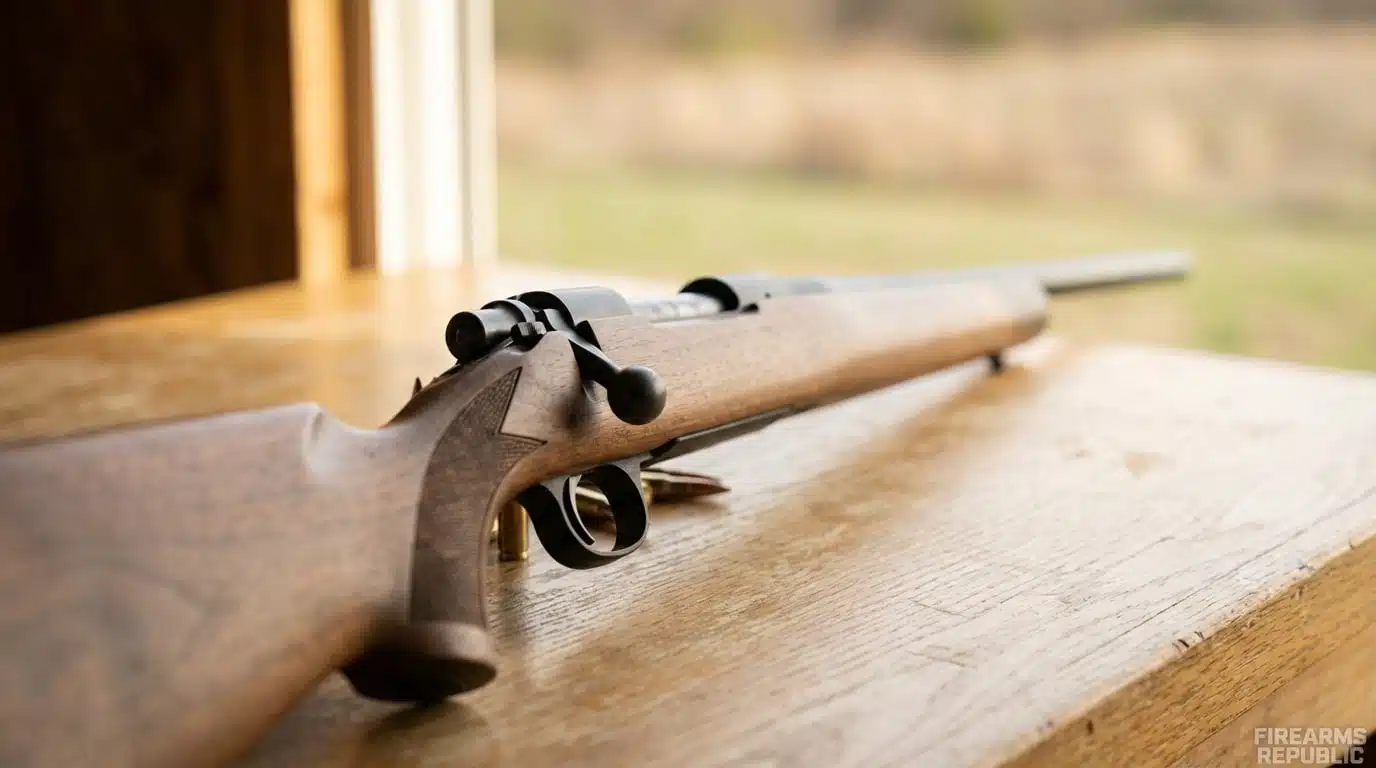
The Savage 110 is one of the most unconventional success stories in American firearms manufacturing. Introduced in 1958 with a rotating head locking bolt and a barrel-nut action design that allowed chamber headspacing without hand-fitting, it was initially considered an industrial compromise rather than a precision instrument. The engineering community that dismisses cosmetics and rewards results vindicated it completely: the 110’s barrel-nut system allows barrel replacement with basic tools, enabling a culture of aftermarket modification and rebarreling that no other production bolt-action has ever matched. Today the Savage 110 family spans from the entry-level Axis II at $380 to the precision-ready 110 Tactical at $900+, chambered in cartridges from .17 Hornet to .338 Lapua Magnum, and forms the foundation of more custom precision rifle builds than any other action family in the American market. This guide covers every 110-series variant, which configurations work for which applications, and why the Savage 110 platform represents one of the deepest and most practical aftermarket ecosystems in bolt-action rifles.
The Savage 110 Family: Every Significant Variant
Savage Axis II – The Entry Tier
Price: $380–$450 | Calibers: .223 Rem, .243 Win, 6.5 CM, .308 Win, .30-06, 7mm Rem Mag, .300 Win Mag
The Axis II is technically a separate model from the 110 series proper, but shares the Savage rotating head bolt, barrel-nut system, and AccuTrigger – the features that define the Savage platform. It is the most affordable Savage bolt-action and represents the brand’s entry-level offering.
The Axis II’s defining advantage at its price is the AccuTrigger. Adjustable from 2.5 to 6 lbs with no tools required (using the included T15 Torx key), it produces a trigger break quality that costs $150–$200 aftermarket on competing platforms. At $380–$450 street price with a trigger this good, the Axis II consistently wins value comparisons against every domestic and import competitor in its class.
What separates it from the 110: The Axis II uses a blind magazine (no detachable box magazine) in most configurations, has a simpler stock, and does not share all the aftermarket stock compatibility of the full 110 series. The 110 family adds detachable box magazine options, more stock variants, and more chassis compatibility.
Savage 110 Hunter – The Core Model
Price: $550–$700 | Calibers: 6.5 CM, .308 Win, .30-06, 7mm Rem Mag, .300 Win Mag, 6.5 PRC, 7mm PRC, and others
The 110 Hunter is the standard production Savage that provides the full 110-series feature set: detachable box magazine, AccuTrigger, hinged floorplate option depending on configuration, and the Savage barrel-nut system that enables rebarreling. The synthetic stock is more refined than the Axis II’s and the action cycles with the slightly improved consistency of the full 110 production process.
Accuracy with quality factory ammo runs 0.6–0.9 MOA across the caliber range. In 6.5 CM and .308 Win the 110 Hunter produces results competitive with Tikka T3x and Bergara B-14 at its price point.
Savage 110 Tactical – The Precision Platform
Price: $850–$950 | Calibers: .308 Win, 6.5 CM, 6mm Creedmoor, .260 Rem, .338 Lapua
The 110 Tactical is where the Savage 110 series transitions from hunting rifle to precision rifle platform. Key additions over the Hunter: an MDT aluminum chassis stock as standard (the Savage AccuFit system with multiple comb and LOP adjustments), a 10-round detachable box magazine, a threaded heavy-contour barrel, and the Savage barrel-nut system in a configuration optimized for precision competition.
The 110 Tactical in .308 Win at $850–$950 competes directly with Ruger Precision Rifle at $1,499 and represents a significant value proposition for precision shooters who want chassis-stock ergonomics, heavy barrel stability, and competition-ready trigger at under $1,000.
Accuracy: 0.5–0.75 MOA with quality ammo is consistently achievable. In 6.5 CM with Hornady Precision Hunter 143gr ELD-X or handloads with 140gr Berger Hybrid, sub-0.5 MOA is achievable with barrel break-in and load development.
Savage 110 Long Range Hunter – Extended Range Hunting
Price: $850–$1,000 | Calibers: 6.5 CM, .308 Win, 6.5 PRC, 7mm PRC, .300 Win Mag, .338 Lapua, 28 Nosler
The Long Range Hunter takes the 110 platform toward its maximum hunting capability. The heavy 26-inch barrel provides maximum velocity and accuracy at extended range, the AccuFit stock offers adjustable length of pull and comb height, and the matte finish handles field conditions. In 6.5 PRC or 7mm PRC with a 26-inch barrel, this is a serious long-range hunting platform capable of 600-yard elk work in the hands of a prepared shooter.
Best application: Hunters who want maximum cartridge performance at hunting distances and are willing to accept the 8.5 lb weight that comes with the heavy 26-inch profile. The Long Range Hunter is not a backcountry rifle – it is an open-country precision hunting rifle.
Savage 110 Apex Hunter – Value Premium Configuration
Price: $700–$850 | Calibers: 6.5 CM, .308 Win, 7mm Rem Mag, .300 Win Mag, 7mm PRC, 6.5 PRC
The Apex Hunter bridges the Hunter and Long Range Hunter with improved metalwork, a slightly heavier barrel profile, and the AccuFit adjustable stock at a price below the full Long Range Hunter. For hunters who want adjustable stock dimensions without the Long Range Hunter’s full heavy-barrel commitment, the Apex Hunter hits a practical sweet spot.
Savage 110 Ultralight – The Backpack Rifle
Price: $900–$1,050 | Calibers: 6.5 CM, .308 Win, .30-06, 7mm PRC, 6.5 PRC, .280 Ackley Improved
At 5.6–6 lbs bare depending on configuration, the Savage 110 Ultralight is Savage’s answer to the backcountry hunting market. The spiral-fluted bolt, skeletonized stock, and carbon fiber-wrapped barrel produce a meaningfully lighter platform than the standard 110 Hunter while maintaining sub-MOA accuracy.
For backcountry deer and elk hunters who want a sub-7 lb scoped setup at accessible pricing, the Ultralight competes with Christensen Arms Mesa and Ridgeline configurations at $400–$500 lower price. The trade-off is that Savage’s carbon wrapping is not as mature a construction as Christensen’s, and the Ultralight shows slightly more sensitivity to temperature changes in point of impact than dedicated carbon platforms. See our Mountain / Backcountry Hunting Rifles guide for full weight comparison context.
Savage 110 High Country – Cerakote Mountain Hunting
Price: $1,000–$1,100 | Calibers: 6.5 CM, .308 Win, 6.5 PRC, 7mm PRC, .300 Win Mag, .280 AI
The High Country adds full Cerakote finish in a mountain-appropriate brown-and-tan pattern, True Timber Strata camouflage stock, and fluted barrel to the 110 platform. The aesthetics are purpose-designed for western hunting; the function is identical to the standard 110 Hunter with added weather protection from the Cerakote. For western hunters who want a properly finished mountain rifle rather than a plain black synthetic, the High Country delivers the look without premium construction markup.
Savage 110 Scout – The Compact Tactical Variant
Price: $750–$900 | Calibers: .308 Win, .223 Rem, .450 Bushmaster
The 110 Scout applies the scout rifle concept – short barrel, forward-mounted intermediate eye relief scope, detachable magazine – to the 110 platform. At 16.5 inches of barrel and 41 inches overall, it is among the most compact bolt-action rifles made for centerfire cartridges. For hunters who want a maneuverable timber or truck rifle with bolt-action simplicity and centerfire capability, the Scout is a specialized choice that serves the application precisely. See our Dense Timber Hunting Rifles guide for full timber context.
The Savage AccuTrigger: Why It Matters
The AccuTrigger is not simply a good factory trigger – it is a trigger system that changed the industry standard for what hunters should expect from production rifles. Prior to the AccuTrigger’s introduction in 2002, most factory bolt-action triggers were set heavy (5–8 lbs) as a liability management decision. Savage’s answer was a trigger with an internal safety blade (the AccuTrigger element) that allows safe adjustment down to 2.5 lbs without requiring gunsmithing or compromising drop and impact safety.
How to adjust the AccuTrigger:
The AccuTrigger uses a T15 Torx wrench (included with the rifle) to adjust pull weight by turning the adjustment screw accessible through the trigger guard. Turning clockwise increases pull weight; counter-clockwise decreases it. The adjustment range is 2.5–6 lbs. The internal AccuTrigger blade prevents the trigger from firing unless deliberately engaged, maintaining safety at lighter pull weights that would be unsafe with a standard single-stage design.
The practical result: A Savage Axis II or 110 adjusted to 2.5–3 lbs breaks with a quality comparable to many aftermarket triggers costing $150–$250. The AccuTrigger at 2.5 lbs is why Savage rifles shoot better than their price suggests, and why the trigger category of budget rifle evaluation consistently favors Savage over comparably priced alternatives.
The Barrel-Nut System: The Savage Platform’s Defining Advantage
The Savage 110’s barrel-nut system is the feature that transforms the platform from a production hunting rifle to a modular precision platform. Understanding it opens the full scope of what the Savage ecosystem offers.
How it works: The Savage barrel is threaded into the receiver and locked in place with a barrel nut – a large hex nut that tightens against the receiver face. Headspace is set by the depth the barrel is threaded in before the barrel nut is tightened. Changing the barrel requires only a barrel vise, an action wrench, and a headspace gauge – tools available for $100–$200 total. No gunsmith is required for a barrel swap on the Savage 110.
What this enables:
DIY rebarreling: A hunter who shoots out a barrel after 3,000 rounds can replace it at home rather than paying a gunsmith $200–$400 in labor. Aftermarket match barrels from Criterion, Shilen, Pac-Nor, and others are available in Savage prefit configuration (pre-threaded and tenoned to fit Savage actions) at $200–$450.
Caliber changes: Swapping a .308 Win barrel for a 6.5 CM barrel – or a 6.5 CM for a 6.5 PRC – requires a new barrel and potentially new barrel nut and magazine in the appropriate caliber. The action, trigger, and stock remain unchanged.
Custom barrel options: The Savage prefit barrel market is the deepest aftermarket barrel ecosystem for any production rifle. Every quality barrel manufacturer produces Savage prefits, making the 110 action the foundation of more custom precision builds than any other platform except possibly the Remington 700.
Savage 110 vs. Primary Competitors
Savage 110 vs. Ruger American Gen II
American Gen II advantage: AICS-compatible detachable magazines, factory-threaded barrel in standard configuration (vs. Savage which varies by model), and slightly more refined fit and finish.
Savage 110 advantage: AccuTrigger’s wider and better adjustment range (2.5–6 lbs vs. American’s 3–5 lbs), deeper aftermarket barrel ecosystem, and the specific Savage prefit market that makes rebarreling more accessible than any competing platform.
Verdict: Both platforms deliver comparable accuracy. The American Gen II wins on feature packaging in the standard configuration; the Savage 110 wins on aftermarket depth and trigger quality. Hunters who intend to handload, rebarrel, or develop a precision platform over time consistently choose the Savage. See our Ruger American Complete Guide.
Savage 110 vs. Tikka T3x
T3x advantage: Superior factory trigger (~2 lbs vs. Savage’s 2.5 lbs minimum), smoother action cycling, and more refined overall experience.
Savage 110 advantage: Wider caliber selection, deeper aftermarket including prefit barrels, and lower price in comparable configurations.
Verdict: The T3x shoots with a better trigger and smoother action. The Savage 110 is the better platform for shooters who plan to customize, change calibers, or replace barrels. For hunters who want a factory rifle and never modify it, the T3x is worth the extra $150–$250. For builders, the Savage’s platform depth justifies choosing it. See our Tikka T3x Complete Guide.
Savage 110 vs. Bergara B-14
B-14 advantage: Remington 700 bolt face compatibility for the deepest stock and chassis aftermarket, sub-MOA guarantee across production, and slightly more precise production consistency.
Savage 110 advantage: Better trigger (AccuTrigger vs. B-14’s non-adjustable factory trigger), prefit barrel market specific to Savage, and lower price in entry configurations.
Verdict: The Bergara B-14 Hunter accesses the Remington 700 aftermarket in stocks and chassis; the Savage 110 accesses the Savage-specific prefit barrel market. Choose Bergara for stock and chassis customization; choose Savage for barrel customization and trigger quality. See our Bergara B-14 Series Guide.
Best Caliber Choices for the Savage 110
For Deer Hunting
6.5 Creedmoor in the 110 Hunter or Axis II is the most recommended deer hunting configuration. The AccuTrigger’s quality matched with 6.5 CM’s accuracy potential produces consistent sub-MOA results accessible to any hunter with quality ammo. See our 6.5 Creedmoor Caliber Guide.
.308 Winchester for hunters who prioritize ammo availability. The 110 Hunter in .308 with Federal 165gr Trophy Bonded handles every deer scenario confidently. See our .308 Winchester Caliber Guide.
For Elk Hunting
6.5 PRC in the Long Range Hunter or Apex Hunter with 26-inch barrel provides maximum 6.5 PRC velocity for elk at 500 yards. See our 6.5 PRC Caliber Guide.
7mm PRC in the Long Range Hunter pushes 175gr ELD-X to near-maximum factory velocity from the 26-inch barrel, providing the wind resistance and energy that western elk hunting demands. See our 7mm PRC Caliber Guide.
.300 Win Mag in the 110 Hunter or Long Range Hunter for hunters who want the most universally respected elk cartridge. See our .300 Win Mag Caliber Guide.
For Precision Competition
.308 Winchester in the 110 Tactical is the PRS/NRL production class and F-TR standard. The AccuTrigger adjusted to 2.5 lbs and the MDT chassis stock produce a competitive precision platform under $1,000.
6.5 CM in the 110 Tactical is the modern PRS production-class default. With a Timney 510 or Calvin Elite ($180–$250) trigger upgrade, the 110 Tactical in 6.5 CM produces results that compete with rifles at twice the price.
For Varmint Hunting
.22-250 Remington in the Predator configuration provides the heavy barrel and velocity needed for prairie dog and coyote work. See our .22-250 Remington Caliber Guide.
.223 Remington for volume varmint shooting where ammo cost is the dominant variable. See our .223 Remington Caliber Guide.
Recommended Optics for Savage 110 Configurations
For Axis II hunting use: Vortex Crossfire II 3–9×40 ($160–$180). Complete setup under $650.
For 110 Hunter deer hunting: Vortex Viper HD 4–16×44 ($450–$500) or Leupold VX-5HD 3–15×44 ($600–$700). Complete mid-tier hunting setup at $1,100–$1,400.
For 110 Tactical precision use: Vortex Razor HD 4.5–27×56 ($1,700–$2,000) or Nightforce ATACR 5–25×56 ($2,000–$2,500). The 110 Tactical’s precision capability justifies premium optics investment.
For 110 Long Range Hunter: Nightforce SHV 4–14×56 ($700–$800) or Leupold Mark 5HD 5–25×56 ($2,200–$2,500) depending on hunting range requirements.
See our Best Hunting Scopes guide and Best Scopes for Long-Range Shooting for full optic coverage.
Frequently Asked Questions
Q: Is the Savage 110 or Axis II better for a first hunting rifle?
A: For most first-time hunters who want an affordable, accurate deer rifle, the Axis II is the correct choice. The AccuTrigger, 0.75–1.0 MOA accuracy, and $380–$450 price point make it the best value proposition in the entry-tier market. The 110 Hunter is worth the additional $150–$200 for hunters who want a detachable box magazine and are considering a longer-term relationship with the platform. See our Best Rifles for New Shooters guide and Best Budget Hunting Rifles guide.
Q: Can I swap barrels on a Savage 110 at home?
A: Yes, with the right tools. You need a barrel vise ($50–$80), an action wrench specific to the Savage 110 ($40–$60), and a headspace gauge for the new caliber ($30–$50). Savage prefit barrels are pre-threaded and tenoned to fit the 110 action, and come with headspace already set to the barrel tenon. The process is described in detail in the Savage barrel replacement community resources and takes 1–2 hours for a first-time swap. The total tool investment of $120–$190 is a one-time cost that enables future barrel swaps at the cost of the barrel alone.
Q: What is the difference between the Savage 110 and the Savage Axis II?
A: Both share the AccuTrigger and barrel-nut system. Primary differences: the 110 family includes a detachable box magazine option; the Axis II uses a blind magazine or hinged floorplate depending on configuration. The 110 series has more variant configurations (Scout, Tactical, Long Range Hunter, Ultralight) while the Axis II is a single-configuration platform. The 110 series has slightly more refined stock and metalwork. For most hunters, the Axis II’s accuracy and trigger quality at lower price is the practical choice; the 110 platform provides additional features and configurations for shooters who need them.
Q: How accurate is the Savage 110 Tactical for PRS competition?
A: The 110 Tactical in 6.5 CM with a trigger upgrade (Timney 510 or Calvin Elite, $180–$250) and a quality scope competes in PRS and NRL production class at sub-0.5 MOA capability with developed handloads. At $850–$950 for the rifle, it represents one of the best value entries into precision rifle competition. The primary limitation compared to purpose-built precision rifles at $2,000+ is stock adjustability – the AccuFit system provides meaningful adjustment but does not match the full adjustment range of Manners, McMillan, or MDT chassis stocks.
Q: Does the Savage AccuTrigger need gunsmithing to adjust?
A: No. The AccuTrigger includes a T15 Torx wrench and adjusts via a set screw accessible through the trigger guard without disassembly. The adjustment is tool-accessible at home in 2–3 minutes. The AccuTrigger’s internal safety blade prevents the trigger from firing unless deliberately pressed forward, maintaining safety at lighter pull weights without requiring gunsmith verification. Adjust to the lightest comfortable setting (typically 2.5–3 lbs for hunting, 2–2.5 lbs for competition) and confirm function with dry-fire tests before shooting.