 Maksym Kovaliov
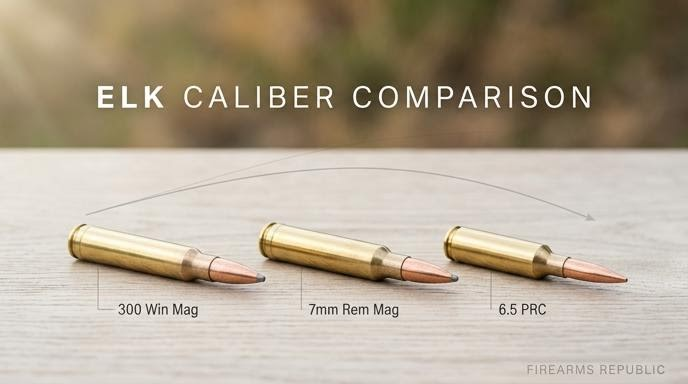
Elk hunting sits at the intersection of two competing demands: you want enough cartridge to put a 700-lb bull on the ground cleanly, and you want to carry it up 3,000 feet of elevation in September heat. Those demands pull in opposite directions, and no single cartridge solves both perfectly. What this guide does is give you the honest trade-offs between 6.5 Creedmoor, .308 Winchester, and 7mm PRC for elk specifically – not for general deer hunting, not for target shooting, but for the specific challenge of killing a large-bodied animal ethically at distances from 50 to 500 yards in variable conditions. The answer isn’t the same for the Ohio hunter who drew a private-land archery-adjacent bull tag and the Wyoming wilderness hunter covering 15 miles a day at 10,000 feet. This guide will tell you which cartridge fits which scenario and why.
What Elk Hunting Actually Demands from a Cartridge
Before comparing numbers, it’s worth establishing what the caliber actually needs to do. Elk are significantly larger than deer – a mature bull runs 700–1,000 lbs with heavy bone structure and dense muscle mass. The minimum energy threshold commonly cited for elk is 1,500 ft-lbs at impact, but that number is a floor, not a target. A bullet landing in the vitals at 1,500 ft-lbs will kill an elk; a bullet that hits shoulder bone, deflects, and penetrates 8″ won’t kill anything cleanly regardless of its starting energy.
Terminal performance on elk comes down to three factors that matter more than raw energy figures: bullet construction (does it hold together through heavy bone?), sectional density (does it penetrate deep enough to reach vitals on raking shots?), and diameter (does it create a wound channel large enough to cause rapid blood loss?). A 143gr 6.5 CM ELD-X with a sectional density of .293 penetrates better than its energy numbers suggest. A poorly constructed .308 bullet that fragments on impact performs worse than its energy suggests. Cartridge selection matters less than bullet selection within each cartridge – but the cartridge defines the upper bound of what’s possible.
Practical elk hunting distances also matter. The average shot distance on elk in timber-heavy states like Colorado’s Unit 2 or Idaho’s backcountry units is estimated at 150–250 yards. In open Wyoming basins, 300–450-yard shots are common. The right cartridge for a New Mexico archery-adjacent rifle hunter taking 80-yard shots in ponderosa pine is not necessarily the right cartridge for a Montana wilderness hunter expecting 400-yard shots across open parks. Keep your actual hunting scenario in mind throughout this comparison.
6.5 Creedmoor for Elk: The Honest Assessment
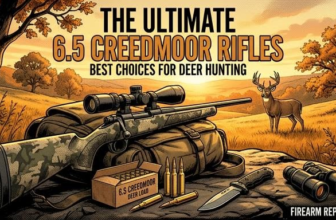
The 6.5 Creedmoor has sparked more debate in elk camps than any cartridge since the .270 Winchester, and the debate usually generates more heat than light. Here’s the straightforward assessment.
The case for 6.5 CM on elk:
Energy retention at distance is the 6.5 CM’s strongest argument. A 143gr ELD-X at 2,700 fps retains 1,822 ft-lbs at 200 yards and 1,450 ft-lbs at 300 yards – right at the commonly accepted elk threshold at 300 yards with a well-placed shot. The high BC (.625) means the bullet arrives at 300 yards with more retained velocity than most .308 hunting loads, despite starting slower. Wind drift at 300 yards in a 10 mph crosswind runs about 4.7″ – the best of the three cartridges compared here.
The 6.5 CM’s real argument for elk isn’t raw energy – it’s the quality of ammunition available. Hornady’s ELD-X, Federal’s Terminal Ascent, and Barnes’ LRX are all engineered to expand reliably at 6.5 CM’s terminal velocity range (2,000–3,000 fps impact) while retaining 85–95% of bullet weight. The Terminal Ascent 130gr, specifically, has a bonded core and a BC of .532 – it penetrates like a heavier bullet and holds together through elk shoulder. Many of the early criticisms of 6.5 CM on elk were based on standard cup-and-core bullets not designed for the velocity range; the modern bonded and monolithic options are a fundamentally different proposition.
The honest limitations:
At 300 yards and beyond, the 6.5 CM is at its margin for elk – adequate on broadside shots into the vitals, but thin on raking, quartering-to, or heavy-bone-contact scenarios. A bull elk hit through the heavy shoulder at 350 yards requires a bullet that holds together at around 2,200 fps impact velocity and still drives 18–24″ into the chest cavity. The Terminal Ascent and LRX accomplish this; the standard ELD-X may not. If you hunt 6.5 CM on elk, bullet selection is mandatory, not optional.
The other honest limitation is follow-up capacity. Elk are not quick to go down even with perfect hits, and a second shot is often the difference between a recovery and a lost animal. In thick timber at close range, a faster cycling, heavier-hitting cartridge provides more margin for a follow-up. The 6.5 CM works, but the margin is thinner than with the two cartridges below.
Best use case: Elk hunting where shots are inside 300 yards, bullet selection is bonded or monolithic, and rifle weight is a genuine priority (backcountry hunters covering miles). Also appropriate where the same rifle will handle deer and pronghorn on the same trip and elk is the occasional exception. See our 6.5 Creedmoor Caliber Guide for full ballistic data.
.308 Winchester for Elk: The Proven Standard
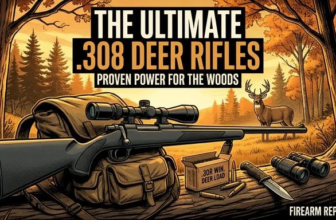
The .308 has been used on elk for 60+ years across every terrain type in North America, and its track record is extensive enough to be genuinely informative. It’s not the most exciting cartridge in the elk camp conversation, but it’s the one with the deepest real-world data set.
The case for .308 on elk:
Energy and bullet diameter are where the .308 distinguishes itself from the 6.5 CM. A 180gr Nosler Partition at 2,620 fps generates 2,743 ft-lbs at the muzzle, 2,143 ft-lbs at 200 yards, and 1,662 ft-lbs at 300 yards – roughly 15–20% more energy than 6.5 CM at equivalent distances. More importantly, the .30-caliber bullet (.308″ diameter) creates a meaningfully larger wound channel than the 6.5mm (.264″ diameter). On a broadside lung shot, the difference is marginal – both create fatal hemorrhage. On a shoulder-heavy quartering shot at 200 yards, the larger diameter and heavier bullet of the .308 drives deeper and more reliably through bone.
The .308’s bullet selection for elk is exceptional. Nosler Partition 180gr has been the standard elk bullet for 70 years for a reason – the dual-core construction with a partition separating the front and rear cores allows the front core to expand while the rear core drives deep, consistently penetrating 20–24″ even through heavy bone. Federal Trophy Bonded Bear Claw 180gr, Barnes TSX 180gr, and Swift A-Frame 180gr are all proven performers on large game. The depth and breadth of purpose-built .308 elk ammunition is unmatched.
At practical elk hunting distances (inside 300 yards in most timber and mountain terrain), the .308 kills elk reliably and consistently. It’s the right call for hunters in dense timber where shots are inside 200 yards, hunters who want maximum confidence on any shot angle, and hunters who already own and shoot a .308 deer rifle.
The honest limitations:
Wind drift and long-range drop are where the .308 gives ground to both the 6.5 CM and 7mm PRC. A 10 mph crosswind moves a 180gr .308 load about 7.5″ at 400 yards versus 6.2″ for the 143gr 6.5 CM and just 4.5″ for the 175gr 7mm PRC. At 400 yards, the .308 drops roughly 37″ from a 200-yard zero versus 28″ for 6.5 CM and 23″ for 7mm PRC. For hunters who regularly shoot past 350 yards in open terrain with variable wind, the .308’s trajectory and drift become real liabilities.
Recoil in the .308 runs 16–18 ft-lbs in a typical hunting rifle – manageable for most hunters, but 25–30% more than 6.5 CM and meaningfully more than the 7mm PRC in a heavier rifle configuration. For hunters shooting 50+ rounds of practice annually, the cumulative effect on technique is real.
Best use case: Timber elk hunting where shots are inside 250 yards, hunters who want maximum confidence on any shot angle without premium bullet selection, hunters who already have a .308 they shoot well, and any scenario where the same rifle will see black bear or moose alongside elk. See our .308 Winchester Caliber Guide for full context.
7mm PRC for Elk: The Modern Premium Answer
The 7mm PRC (Precision Rifle Cartridge) was introduced by Hornady in 2022 and has become the fastest-growing elk hunting cartridge in the market. It occupies the space between the manageable short-action cartridges (6.5 CM, .308) and the full magnum calibers (.300 Win Mag, .338 Lapua), offering genuine long-range capability with recoil that most hunters can manage.
The case for 7mm PRC on elk:
Energy is the headline. A 175gr ELD-X at 2,960 fps generates 3,402 ft-lbs at the muzzle, 2,740 ft-lbs at 200 yards, and 2,192 ft-lbs at 300 yards – roughly 30–35% more energy than 6.5 CM at comparable distances and 25–30% more than .308. At 400 yards, the 7mm PRC retains 1,743 ft-lbs – well above the elk threshold, with margin to spare. Energy at 500 yards is still 1,368 ft-lbs, at the threshold but not below it.
The 7mm PRC’s BC is the other defining characteristic. The 175gr ELD-X carries a BC of .689 – the highest of any standard hunting projectile in this comparison. Wind drift at 400 yards in a 10 mph crosswind is just 4.5″ versus 6.2″ for 6.5 CM and 7.5″ for .308. Combined with a muzzle velocity of 2,960 fps, the 7mm PRC drops just 23″ at 400 yards from a 200-yard zero compared to 28″ for 6.5 CM and 37″ for .308. For hunters who regularly shoot past 350 yards at elk in open terrain, these differences matter significantly.
Terminal performance on elk is the 7mm PRC’s strongest suit. The 7mm bore diameter (.284″) is larger than 6.5mm (.264″) and close to .30-caliber (.308″). A 175gr bonded bullet at 2,960 fps creates a wound channel meaningfully larger than the 6.5 CM’s 143gr at 2,700 fps, and the extra energy provides more margin on raking shots through heavy bone. Most elk hunters who have switched to the 7mm PRC from 6.5 CM or .308 describe a noticeably higher rate of immediate incapacitation on well-placed shots – the extra energy and bullet diameter translate to faster blood loss and shorter tracking distances.
Recoil is the 7mm PRC’s most important trade-off to address directly. In a standard 8-lb hunting rifle, the 7mm PRC generates approximately 22–24 ft-lbs of recoil energy – roughly 40–50% more than 6.5 CM and 25–30% more than .308. That’s meaningful but manageable for most adult hunters. It’s not in .300 Win Mag territory (28–32 ft-lbs), and a quality recoil pad and good stock fit make it shootable for extended range sessions. Hunters with shoulder injuries or significant recoil sensitivity should shoot it before committing to it.
The honest limitations:
Ammunition availability is the 7mm PRC’s current limitation. Introduced in 2022, it’s widely stocked at major retailers (Cabela’s, Bass Pro, Sportsman’s Warehouse) but not at every rural hardware store. In remote hunting areas, the variety of available loads is still catching up to the .308 and 6.5 CM ecosystems. If you’re hunting in remote Alaska or backcountry units where resupply isn’t possible, carry more than you need.
Rifle selection is still narrower than .308 or 6.5 CM. Tikka, Bergara, Browning, Christensen, Weatherby, and Savage all chamber the 7mm PRC, but budget options under $700 are limited. The entry price is higher. See our 7mm PRC Caliber Guide for the current rifle and ammunition landscape.
Best use case: Open-country elk hunting where shots past 300 yards are likely, hunters who want maximum confidence at any shot angle and distance without stepping into .300 Win Mag recoil, and hunters who want one rifle that handles deer, elk, and potential moose or bear on the same trip with genuine margin. The 7mm PRC is increasingly the answer when someone asks “what’s the best elk cartridge that isn’t a .300 Win Mag?”
Head-to-Head: The Numbers
| Metric | 6.5 CM 143gr ELD-X | .308 Win 180gr Part. | 7mm PRC 175gr ELD-X |
|---|---|---|---|
| Muzzle Velocity | 2,700 fps | 2,620 fps | 2,960 fps |
| Muzzle Energy | 2,315 ft-lbs | 2,743 ft-lbs | 3,402 ft-lbs |
| Energy @ 200 yds | 1,822 ft-lbs | 2,143 ft-lbs | 2,740 ft-lbs |
| Energy @ 300 yds | 1,450 ft-lbs | 1,662 ft-lbs | 2,192 ft-lbs |
| Energy @ 400 yds | 1,145 ft-lbs | 1,303 ft-lbs | 1,743 ft-lbs |
| Drop @ 300 yds* | –9.0″ | –12.5″ | –7.0″ |
| Drop @ 400 yds* | –27″ | –37″ | –23″ |
| Wind @ 400 yds† | 6.2″ | 7.5″ | 4.5″ |
| Bullet BC | .625 | .474 | .689 |
| Recoil (7.5-lb rifle) | ~13 ft-lbs | ~17 ft-lbs | ~23 ft-lbs |
| Bullet Diameter | .264″ | .308″ | .284″ |
Drop from 200-yard zero. †Wind drift in 10 mph full-value crosswind.
Real-World Scenario Analysis
Scenario 1: Colorado Timber Elk, Shots Inside 200 Yards
Dense spruce-fir timber, average shot distance 120 yards, most shots inside 200 yards, heavy cover requiring quick second shots. Elk are often moving.
Winner: .308 Winchester. At 120 yards, the 6.5 CM’s wind advantage doesn’t exist and the 7mm PRC’s long-range ballistics are wasted. The .308’s heavier bullet crashes through timber and brush more reliably on marginal deflection scenarios, and its proven terminal performance at close range with a 180gr Partition is the right tool for the job. The extra recoil is irrelevant on an adrenaline-fueled close-range elk shot. The 6.5 CM works here too, but the .308 provides more margin on difficult shot angles that close-range timber hunting inevitably presents.
Scenario 2: Wyoming Basin Elk, Shots to 400 Yards
Open sagebrush basins, glassing bulls at 600 yards, shots typically 250–400 yards across open draws with variable 15–20 mph wind. Pack-out is long.
Winner: 7mm PRC. At 350 yards in a 15 mph crosswind, the 7mm PRC drifts 6.7″ versus 9.3″ for .308 – a meaningful difference on an 18″ kill zone. Energy at 400 yards (1,743 ft-lbs) provides genuine margin versus the .308’s 1,303 ft-lbs. The 6.5 CM is marginal for elk past 350 yards and requires ideal shot placement; the 7mm PRC provides real confidence past 400 yards. The extra recoil is worth the performance gain for this specific use case.
Scenario 3: Montana Backcountry, 12 Miles in, Variable Distances
Seven-day backcountry horseback hunt, rifle is one component of a heavy load, shots could be 80 yards in timber or 350 yards across a mountain park. You won’t get a second tag if you wound and lose the elk.
Winner: 6.5 Creedmoor or 7mm PRC, depending on weight priority. The backcountry scenario forces a genuine trade-off between capability and carry weight. A 6.5 CM in a Christensen Mesa or Savage Ultralite weighs 5.8–6.5 lbs – 1–1.5 lbs lighter than most 7mm PRC platforms. Over 12 miles a day, that matters. If shots are likely inside 300 yards and the rifle will double for deer on the same trip, 6.5 CM with Federal Terminal Ascent 130gr is a defensible choice. If shots past 350 yards are realistic, the 7mm PRC in a lightweight platform (Christensen Arms Ridgeline, Weatherby Model 307) at 6.5–7 lbs is worth the extra weight. The .308 is the wrong answer here – it gives up ballistic performance to the 7mm PRC and weight savings to the 6.5 CM simultaneously.
Scenario 4: New Mexico Public Land Elk, First Tag, Budget Matters
First elk tag on public land, mixed terrain, likely shot inside 250 yards, already owns a .308 deer rifle. Budget for a new rifle is limited.
Winner: Use the .308 you already have. The most expensive rifle you own is the one collecting dust while you buy a new one. A .308 hunting rifle the hunter already shoots well, zeroed to a 180gr Nosler Partition or Federal Trophy Bonded Bear Claw, kills elk inside 250 yards cleanly and reliably. There’s no performance gain from buying a 6.5 CM or 7mm PRC that justifies the cost for this specific scenario. Put the rifle budget toward an elk pack, better boots, or more scouting time.
Bullet Selection: More Important Than Cartridge Choice
The most consistent theme across all three cartridges is that bullet selection matters more than cartridge selection for elk. A poorly constructed cup-and-core bullet from any cartridge underperforms compared to a well-constructed bonded or monolithic bullet from a smaller cartridge.
For 6.5 Creedmoor on elk – mandatory bonded or monolithic:
- Federal Terminal Ascent 130gr: best all-around choice, BC of .532, bonded core, proven on elk
- Barnes LRX 127gr: all-copper monolithic, 100% weight retention, ideal for raking shots
- Nosler AccuBond 129gr: bonded with high BC (.485), reliable expansion at velocity extremes
- Avoid: standard ELD-X, SST, or cup-and-core designs for elk at extended ranges
For .308 Winchester on elk – proven performers:
- Nosler Partition 180gr: the 70-year standard, dual-core design survives heavy bone reliably
- Federal Trophy Bonded Bear Claw 180gr: bonded, excellent penetration, proven track record
- Barnes TSX 180gr: all-copper, 100% weight retention, handles any shot angle
- Hornady ELD-X 178gr: acceptable on broadside shots inside 250 yards, marginal on bone
For 7mm PRC on elk – excellent selection available:
- Hornady ELD-X 175gr: the standard factory load, excellent BC, reliable expansion to 400 yards
- Federal Terminal Ascent 155gr: bonded core, very high BC (.536), outstanding long-range performance
- Berger Hunting VLD 168gr: high BC (.617), designed for deep penetration via delayed expansion
- Barnes LRX 139gr: all-copper, excellent for angled shots through heavy bone
Rifle Recommendations for Each Cartridge
For 6.5 Creedmoor elk hunters: Tikka T3x Lite ($875) is the value choice – lightest rifle at the price, excellent factory trigger, sub-MOA accuracy. Christensen Arms Mesa ($1,500) or Savage 110 Ultralite ($1,175) for backcountry hunters prioritizing weight. Bergara B-14 Hunter ($1,050) for hunters who want Rem 700-pattern aftermarket compatibility.
For .308 Winchester elk hunters: Tikka T3x Lite ($875) or Browning X-Bolt Hunter ($975) cover the mid-range well. Winchester Model 70 Featherweight ($950) for hunters who want controlled-round feed action for reliability in cold, dirty conditions. Bergara B-14 Hunter ($1,050) for the best accuracy in the price range.
For 7mm PRC elk hunters: Browning X-Bolt Speed ($1,050–$1,150) is the value entry point. Bergara B-14 Hunter is available in 7mm PRC around $1,100 and provides Rem 700 platform flexibility. Christensen Arms Mesa ($1,500–$1,600) for backcountry weight priority. Weatherby Model 307 ($1,100–$1,300) for hunters who want a purpose-built long-range hunting platform.
For detailed rifle comparisons by caliber, see our Elk Hunting Rifles Guide and Best One-Rifle Solution for Hunting.
The Decision Framework
Rather than a single winner, here’s the honest decision tree:
Choose 6.5 Creedmoor if:
- You already own one and shoot it well
- Shots are inside 300 yards and bullet selection will be Terminal Ascent or LRX
- Rifle weight is a hard constraint (backcountry, mountain hunting)
- The same rifle handles deer and elk on the same license
- Budget limits you to under $900 for the rifle
Choose .308 Winchester if:
- You already own one and shoot it well (stop here – don’t buy a new rifle)
- Shots are inside 250 yards in heavy timber
- You want the largest selection of proven elk ammunition
- The same rifle will see black bear, moose, or other large game on the same trip
- Budget is the primary constraint
Choose 7mm PRC if:
- Shots routinely extend past 300 yards in open terrain
- You’re buying a dedicated elk rifle and want maximum performance without .300 Win Mag recoil
- Wind is a consistent factor in your hunting area
- You want the best long-range elk cartridge that remains manageable for most hunters
- Budget allows $1,000+ for the rifle
Pros and Cons Summary
6.5 Creedmoor ✓ Lowest recoil of the three – best practice habits ✓ Best wind performance inside 300 yards ✓ Lightest rifle options available ✓ Adequate for elk with proper bullet selection inside 300 yards ✗ Marginal energy past 300 yards – thin margin on difficult shots ✗ Requires bonded/monolithic bullets for elk – no room for suboptimal selection ✗ Smallest bullet diameter – least margin on heavy-bone contact
.308 Winchester ✓ Proven on elk for 60+ years – deepest real-world data set ✓ Largest selection of purpose-built elk ammunition ✓ Most capable on heavy-bone contact at typical hunting distances ✓ Widely available everywhere – rural store reliability ✗ Most wind drift and drop past 300 yards of the three ✗ Marginal past 350 yards in open terrain with variable wind ✗ More recoil than 6.5 CM – relevant for extended practice
7mm PRC ✓ Best energy retention at distance of the three ✓ Best ballistic coefficient – least wind drift and drop ✓ Most margin on difficult shot angles at any distance ✓ Genuine 400–500-yard elk capability with confidence ✗ Most recoil of the three (22–24 ft-lbs) ✗ Still developing ammunition and rifle selection vs. .308 and 6.5 CM ✗ Higher entry price for rifle options
Frequently Asked Questions
Q: Is 6.5 Creedmoor enough for elk hunting?
A: Yes, with appropriate bullet selection and shot distance discipline. The key qualifications: use bonded or monolithic bullets (Federal Terminal Ascent 130gr or Barnes LRX 127gr), keep shots inside 300 yards until you’ve established field accuracy at that distance, and prioritize broadside or slight quartering-away shots. Thousands of elk are taken cleanly with 6.5 CM every season. The cartridge is adequate, not ideal – the margin is thinner than with .308 or 7mm PRC, and bullet selection is mandatory rather than optional. See our Elk Hunting Rifles Guide for more detail.
Q: Is .308 or 6.5 Creedmoor better for elk?
A: Inside 250 yards, .308 provides more margin on difficult shot angles due to its heavier bullet and larger diameter. Past 300 yards in open terrain, 6.5 CM’s better BC and wind performance offset the energy difference. For most elk hunting scenarios inside 300 yards, the practical difference with quality bullets from both cartridges is marginal. If you shoot one significantly better than the other, shoot it. See our 6.5 Creedmoor vs .308 Winchester guide for a full side-by-side.
Q: What’s the maximum ethical range for elk with 6.5 Creedmoor?
A: With Federal Terminal Ascent 130gr or Hornady ELD-X 143gr from a quality rifle, 350 yards is the practical ethical maximum for most hunters in field conditions. At 350 yards, energy runs approximately 1,600 ft-lbs – above the threshold but without much margin. A hunter who has practiced extensively from field positions at 350 yards and can confirm 6–8″ groups consistently can extend this with confidence; a hunter who rarely shoots past 200 yards should not. The cartridge can reach further ballistically; the ethical limit is determined by the hunter’s demonstrated field accuracy.
Q: Why is 7mm PRC getting so popular for elk hunting?
A: It solves the specific problem that serious elk hunters have identified for years: .308 and 6.5 CM are marginal past 300 yards in open terrain, but .300 Win Mag and larger magnums generate recoil that affects practice habits and field accuracy. The 7mm PRC threads the needle – meaningfully more energy and better BC than either short-action cartridge, with recoil that’s heavy but manageable (22–24 ft-lbs versus 28–32 ft-lbs for .300 Win Mag). It’s essentially the answer to “what would you design if .308 and .300 Win Mag had a purpose-built offspring for open-country big game?” See our 7mm PRC Caliber Guide for the full picture.
Q: Do I need a new rifle for elk, or can I use my deer rifle?
A: In most cases, use the deer rifle you already shoot well. A .308 or 6.5 CM deer rifle with appropriate elk bullets (Nosler Partition, Federal Terminal Ascent) kills elk cleanly inside 300 yards. The most common elk hunting mistake is buying a new magnum rifle shortly before the season and not having enough practice time to shoot it well under field conditions. A hunter who shoots their .308 deer rifle 100 rounds per year will outperform a hunter who bought a 7mm PRC three weeks before the season every time. Familiarity with your trigger, zero, and field positions matters more than cartridge selection within the adequate range.
Q: What’s the best all-around elk rifle and caliber combination in 2025?
A: For most hunters buying a purpose-built elk rifle: 7mm PRC in a Browning X-Bolt Speed or Bergara B-14 Hunter, scoped with a Vortex Viper HD 3-9×40 or Leupold VX-3HD 3-9×40, loaded with Hornady Precision Hunter 175gr ELD-X or Federal Terminal Ascent 155gr. This combination covers shots from 50 to 450 yards with confidence, weighs under 8.5 lbs scoped, and costs $1,400–$1,600 total. For backcountry hunters where weight is the constraint, Christensen Mesa in 6.5 CM or 7mm PRC with Federal Terminal Ascent. For budget hunters using an existing rifle, .308 with Nosler Partition 180gr.