 Maksym Kovaliov
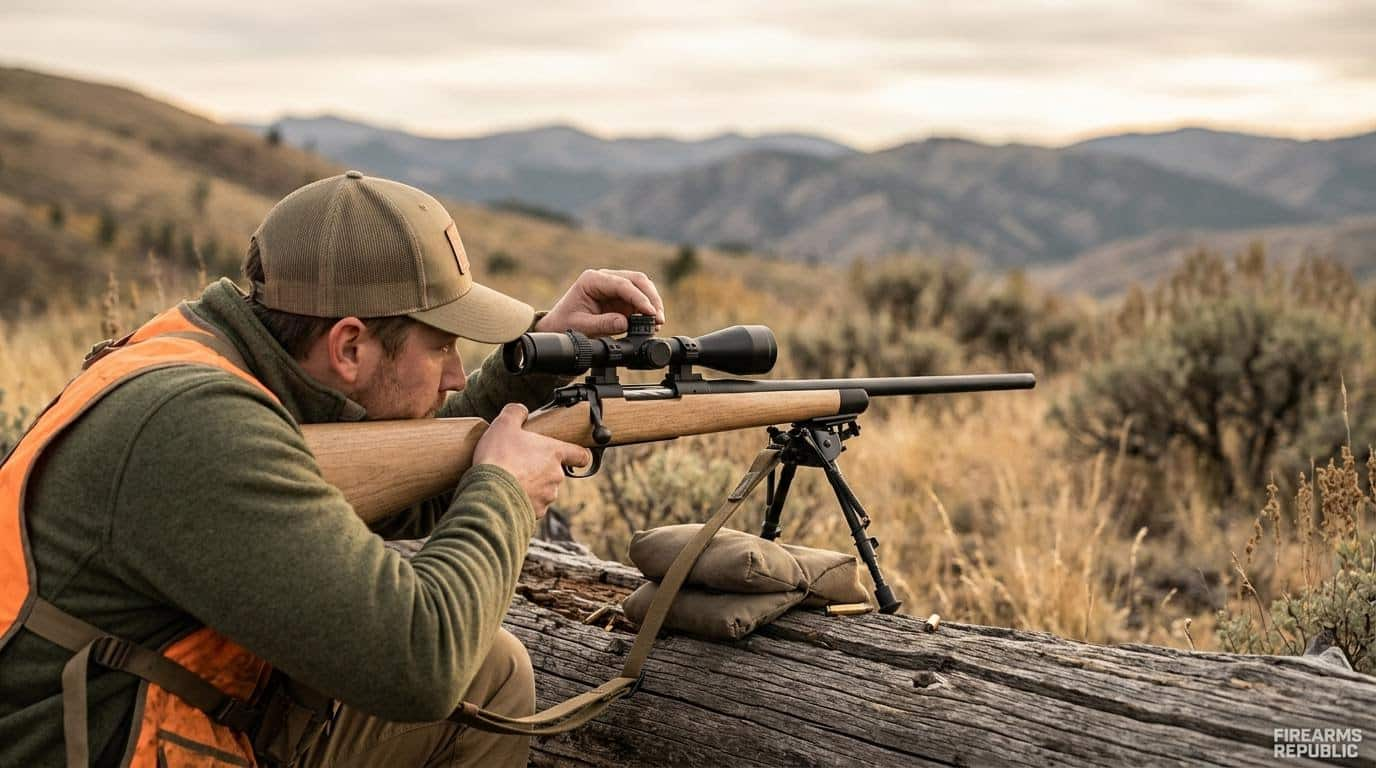
Long-range shooting is the fastest-growing discipline in the shooting sports, and it’s also the most misunderstood. The internet version – sub-half-MOA factory rifles, $3,000 scopes, and first-round hits at a mile – bears little resemblance to what actually happens when a new shooter shows up at a 600-yard range for the first time. What actually happens: the shooter discovers that their breathing, trigger discipline, and position stability – not the rifle – are the limiting factors. The good news is that the skills are learnable, the equipment ceiling for genuine 1,000-yard capability is lower than marketing suggests, and the progression from “I can hit at 200 yards” to “I’m consistently hitting at 800 yards” is structured and achievable over a single season of deliberate practice. This guide covers what you actually need – equipment, fundamentals, data, and a realistic practice progression – to shoot accurately from 500 to 1,000 yards. No fluff, no gear worship. Just the framework that works.
What Long-Range Shooting Actually Requires
Before equipment, it’s worth being honest about the skill requirements. Long-range accuracy is not primarily an equipment problem. A factory Tikka T3x Lite in 6.5 Creedmoor with a $400 scope, shooting quality factory ammunition, is mechanically capable of 1 MOA at 1,000 yards – that’s a 10-inch group at 1,000 yards, which is a head-sized target. The question is whether the shooter can execute consistently enough to realize that mechanical capability.
The three variables that actually limit long-range accuracy:
Trigger control is the dominant variable at distance. At 100 yards, a half-pound of excess trigger force moves the shot 0.25 inches – half a MOA, invisible on most targets. At 800 yards, that same trigger error moves the shot 2 inches. The shot break must be a surprise – the trigger press builds smoothly until the rifle fires, not a conscious “now” moment where the shooter anticipates the shot. This takes deliberate dry-fire practice to develop and consistent live-fire feedback to maintain.
Wind reading is the variable that separates good long-range shooters from great ones. A 10 mph full-value crosswind moves a 6.5 Creedmoor 143gr ELD-X bullet approximately 20 inches at 800 yards and 32 inches at 1,000 yards. No ballistic calculator can tell you the wind speed at 600 yards downrange – you have to read it from mirage, grass, and flags, and you will be wrong sometimes. Long-range shooting at 800+ yards is not a solved physics problem you plug numbers into; it’s an applied skill that requires range time in actual wind conditions to develop. There is no substitute.
Position stability defines how consistently you can repeat the fundamentals. A prone position behind a bipod and rear bag is the most stable field position available; a kneeling shot without support introduces 3–5 times more position variability. Long-range shooting practice should start in the most stable position possible and only add positional challenge after the fundamentals are established in that platform.
Equipment: What You Actually Need vs. What You’re Told You Need
The Rifle
For genuine 1,000-yard shooting, a factory bolt-action rifle capable of sub-MOA groups with quality ammunition is sufficient. You do not need a custom action, hand-lapped barrel, or bedded chassis to shoot well at 1,000 yards. You need a rifle that shoots consistently – same point of impact, same group size, shot to shot and session to session.
The best value 1,000-yard capable platforms:
Bergara B-14 HMR ($1,100–$1,300) is the benchmark factory long-range rifle. The mini-chassis aluminum bedding block, 24″ fluted heavy-sporter barrel, and AICS-compatible magazine combine a legitimate 0.5 MOA shooter with Remington 700 footprint for full aftermarket compatibility. Most B-14 HMRs in 6.5 Creedmoor produce 0.4–0.6 MOA groups with quality match ammunition – that’s a 4–6″ group at 1,000 yards in ideal conditions. See our Bergara B-14 Series Guide for the full platform breakdown.
Savage 110 Tactical ($850–$950) is the value entry point. The MDT aluminum chassis, AccuTrigger adjusted to 2.5 lbs, and 24″ threaded heavy barrel in 6.5 Creedmoor or .308 provide a capable long-range platform for hunters and target shooters who want sub-$1,000 access to the discipline. Most 110 Tacticals produce 0.6–0.8 MOA with quality ammunition. See our Savage 110 Series Guide for platform details.
Ruger Precision Rifle ($1,400–$1,600) is the semi-custom approach in a factory package. The folding adjustable stock, AICS magazine, 24″ cold hammer-forged barrel, and hybrid muzzle brake make it a purpose-built long-range target rifle. Most RPRs in 6.5 Creedmoor produce 0.4–0.6 MOA. The fully adjustable stock (LOP, comb height, cheek piece) allows a consistent, repeatable position that matters for 1,000-yard shooting.
What to avoid: Hunting-weight rifles (6–6.5 lbs) are mechanically accurate enough for 1,000 yards, but the light barrel heats up faster, the lighter stock is less stable in a bipod, and the sporter profile makes consistent cheek weld harder to repeat. A 7.5–9 lb rifle in a chassis or with a heavier barrel is noticeably easier to shoot well at distance.
The Cartridge
For 1,000-yard shooting, cartridge selection matters more than at shorter ranges. The primary criteria: bullet BC high enough to stay supersonic past 1,000 yards, sufficient velocity from a reasonable barrel length, and manageable recoil for extended practice sessions.
6.5 Creedmoor is the default recommendation and the right one for most shooters entering long-range work. The 140–147gr match bullets have BCs of .610–.697 (depending on manufacturer and projectile). The 140gr Berger Hybrid (.617 G1 BC) stays supersonic past 1,200 yards from a 24″ barrel. Recoil is 12–14 ft-lbs in a 8-lb rifle – comfortable enough to shoot 50–80 rounds in a session without fatigue affecting technique. Factory match ammunition (Hornady Match 140gr ELD-M, Federal Gold Medal Match 140gr, Berger Match Grade 140gr Hybrid) is consistent and accurate. Barrel life runs 2,500–3,500 rounds before accuracy degradation. See our 6.5 Creedmoor Caliber Guide for complete ballistics.
6mm Creedmoor provides higher BCs and less recoil than 6.5 Creedmoor at the cost of shorter barrel life (1,500–2,000 rounds). The 108gr Berger Hybrid (.536 G1) and 105gr Hornady ELD-M (.530 G1) are accurate and have sufficient BC for 1,000-yard work. Recoil is approximately 8–10 ft-lbs. For PRS competition shooters who will shoot high volumes and replace barrels regularly, 6mm Creedmoor is the dominant choice. For hunters and casual long-range shooters who want long barrel life, 6.5 CM is better. See our 6mm Creedmoor caliber context in the AR Platform guides.
.308 Winchester is the traditional long-range cartridge and remains capable at 1,000 yards with the right bullet selection. The Sierra 175gr MatchKing (.505 G1 BC) is the benchmark military and civilian 1,000-yard .308 bullet. The .308’s limitation at extreme range is the BC ceiling – the heaviest practical .308 match bullets top out around .520 G1, which produces more wind drift and drop at 1,000 yards than 6.5 CM. A 10 mph wind moves a 175gr .308 approximately 33 inches at 1,000 yards versus 20 inches for 140gr 6.5 CM. For 500–800 yard shooting, the difference is manageable; at 1,000 yards in variable wind, the 6.5 CM’s advantage is real. See our .308 Winchester Caliber Guide for full context.
6.5 PRC and 7mm PRC offer higher velocity and better BC than 6.5 Creedmoor, extending the comfortable supersonic range and reducing wind drift further. The trade-off is barrel life (6.5 PRC: 1,500–2,000 rounds; 7mm PRC: 2,000–2,500 rounds) and cost. For hunters who will shoot 200–300 rounds per year and never replace a barrel, these cartridges are appropriate. For target shooters shooting 1,000+ rounds annually, the barrel replacement cost becomes a real consideration.
The Optic
The scope is the most important equipment purchase for long-range shooting, and it’s where the performance ceiling actually lives for most shooters. A $200 scope on a $2,000 rifle limits the system to $200 performance. The long-range scope requirements are specific:
Magnification: 15–25x maximum for 1,000-yard shooting. More magnification amplifies mirage, position movement, and atmospheric distortion. 5–25x or 4.5–27x variable scopes are the practical choice – run 15–18x for most long-range work and back down to 10x in heavy mirage conditions.
First Focal Plane (FFP) reticle: At long range, dialing elevation for distance and holding for wind simultaneously is faster and more accurate with an FFP reticle where the reticle subtensions are accurate at all magnification settings. A second focal plane reticle is only accurate at the designated magnification (usually max power), which limits flexibility.
Turret system: Exposed elevation and windage turrets with positive clicks and zero-stop return-to-zero capability are necessary for practical long-range shooting. The shooter needs to dial from a 100-yard zero to a 600-yard elevation quickly and return to zero reliably afterward. Capped turrets (most hunting scopes) are not appropriate for dial-up long-range work.
Recommended scopes:
Value tier ($500–$900): Vortex Viper PST Gen II 5-25×50 ($750) is the benchmark value long-range scope – FFP, exposed turrets, 0.1 MRAD clicks, reliable zero return, and glass quality that matches scopes costing twice as much. Most long-range shooters who’ve used this scope don’t feel undergunned by the optic. The Primary Arms Platinum 4-14×44 ACSS ($500) is the budget entry point for FFP with exposed turrets.
Performance tier ($1,000–$2,000): Leupold Mark 5HD 5-25×56 ($1,800) and Vortex Razor HD Gen III 4.5-27×56 ($3,500 – slightly above range but the reference standard) represent the top tier of practical long-range optic performance. At this price, glass clarity in low light and mirage conditions is meaningfully better than the value tier. For hunters who use the same scope for dawn elk hunting and afternoon 1,000-yard practice, the premium is justified. See our Best Scopes for Long-Range Shooting guide for full optic comparisons.
Supporting Equipment
Bipod: A quality bipod is the foundation of a stable prone position. The Harris S-BRM ($100–$120) is the standard – notched legs for cant adjustment, sling stud attachment, and reliable lockup. The Atlas BT10 ($230) is the precision upgrade with ARCA rail compatibility and independent leg adjustment. Avoid cheap bipods that shift under recoil or don’t lock positively.
Rear bag: A rear bag filled with sand, buckwheat hulls, or similar provides the stable rear support that turns a bipod-only position into a locked-in platform. Wiebad bags ($45–$80) and Armageddon Gear bags ($50–$100) are the standard choices. A filled sock works for learning; a quality bag makes a measurable accuracy difference.
Ballistic calculator: Applied Ballistics (AB) and Hornady’s 4DOF calculator are the two accurate solutions. Kestrel weather meters with AB integration ($600–$800) are the field-standard solution for precision shooters. At the entry level, the free Hornady 4DOF calculator and the Applied Ballistics Mobile app ($30) provide accurate solutions for known atmospheric conditions.
Shooting mat: For prone shooting at gravel or hard-surface ranges, an 8mm foam shooting mat ($40–$80) protects elbows and allows consistent position. Not glamorous, genuinely useful.
The Data: Building Your DOPE
DOPE stands for Data On Previous Engagements – your confirmed, actual drop and drift data at specific distances with your specific rifle, load, and environmental conditions. No ballistic calculator produces DOPE; it produces a starting estimate. DOPE is what you verify at the range and write down. It’s the difference between knowing your rifle hits 4.8 MRAD at 800 yards and trusting a calculator’s estimate of 4.7 MRAD.
Building Your Data Card
Step 1: Establish a 100-yard zero. A 100-yard zero is the standard reference point for long-range data. Zero the rifle in calm conditions on a still day; confirm the zero over three 5-shot groups. Record the exact conditions (temperature, altitude, barometric pressure) – your zero shifts slightly with significant elevation or temperature changes.
Step 2: Collect truing data. Shoot your rifle at 300, 500, and 600 yards on a calm day (under 5 mph wind), recording actual point of impact versus ballistic calculator prediction. If the calculator predicts 1.8 MRAD at 500 yards and you’re hitting 1.9 MRAD, your actual ballistic coefficient is lower than the published number. Enter the correction into the calculator (called “truing”) until predictions match actual impacts. Most factory bullets have BC variance of 2–5% from published specs – truing eliminates this error.
Step 3: Build the card. Once trued, run the calculator for your specific conditions to generate elevation solutions at 100-yard increments from 100 to 1,000 yards. Print this on a small laminated card attached to the rifle stock or scope turret cap. Your DOPE card should show: distance, MRAD elevation dial, and standard wind calls (5 mph and 10 mph full-value) at each distance.
Step 4: Confirm at distance. Shoot at each major distance (300, 500, 600, 800, 1,000) and confirm your data holds. Mark confirmed distances on the card differently from calculator estimates. Only shoot at animals or targets you’ve confirmed data for – don’t trust calculator estimates at new distances without prior confirmation.
DOPE Example: 6.5 Creedmoor 140gr ELD-M
Standard conditions (59°F, sea level, standard pressure):
| Distance | Elevation (MRAD) | 10 mph Wind (MRAD) | Velocity (fps) |
|---|---|---|---|
| 100 yds | 0 (zero) | 0.1 | 2,710 |
| 200 yds | +0.3 | 0.2 | 2,530 |
| 300 yds | +1.0 | 0.4 | 2,355 |
| 400 yds | +2.0 | 0.6 | 2,185 |
| 500 yds | +3.3 | 0.9 | 2,020 |
| 600 yds | +4.9 | 1.2 | 1,865 |
| 700 yds | +6.7 | 1.5 | 1,715 |
| 800 yds | +8.9 | 1.9 | 1,570 |
| 900 yds | +11.3 | 2.3 | 1,435 |
| 1,000 yds | +14.1 | 2.8 | 1,305 |
Note: These are starting estimates for calculator truing. Your rifle’s actual data will differ based on muzzle velocity, atmospheric conditions, and BC variance. Always confirm at distance.
The Fundamentals: What To Practice
Natural Point of Aim
Before firing, establish natural point of aim (NPA). Close your eyes, settle into your position, and open them. If the crosshair has drifted off the target, you’re fighting your position – your body’s natural alignment is not toward the target, and muscle tension is creating artificial alignment that will shift under recoil. Move your entire body (not just the rifle) until the crosshair is on target when your eyes open. This eliminates the most common source of consistent shot stringing.
Breathing Control
The standard protocol: take a full breath, exhale to approximately 50–60% of full exhale (the natural respiratory pause), and break the shot in that 3–5 second window. Do not hold a full breath – the pressure from held breath raises heart rate and introduces tremor. Do not exhale completely – at the bottom of exhale, the diaphragm creates tension. The natural respiratory pause is the most stable moment in the breathing cycle.
At 1,000 yards, a single heartbeat moves the crosshair approximately 0.3 MRAD – enough to miss a 12″ target. Experienced long-range shooters break shots between heartbeats. This takes practice to develop but is trainable through dry-fire and cadence awareness.
Trigger Technique at Distance
The most important single skill in long-range shooting is consistent trigger press. The shot must break as a surprise – the shooter maintains consistent pressure on the trigger while holding the reticle on target, and the rifle fires without the shooter anticipating or flinching in response to the break.
The specific failure mode to watch for: the shooter develops a pattern of pressing the trigger to the break point, pausing when the reticle drifts, and then slapping the trigger when the reticle returns to center. This is called “chasing the crosshair” and it guarantees inconsistent shots. The correct response to reticle drift is to relax the trigger pressure, let the position settle, and start the press again from the beginning.
Dry-fire practice with a snap cap is the most efficient way to develop trigger discipline. Thirty minutes of dry-fire practice daily produces faster results than several range sessions per week, because it removes the flinch response and allows pure trigger technique training without the noise and blast feedback that degrades learning in early shooters.
Calling Shots
At long range, the shooter must call every shot – know where the reticle was at the moment of firing and predict where the bullet hit before looking through the spotting scope. A called shot of “center, slight left” followed by a spotting scope reading of “left edge” confirms the wind call was slightly off. A called shot of “center” followed by a miss confirms a position problem rather than a wind problem. Inexperienced shooters who can’t call shots reliably make adjustments based on incomplete information – they fix the wrong variable.
Develop the habit immediately. After every shot, call it aloud: “Center,” “Half MOA left,” “High right.” Write it down. Compare to the spotter’s read. The feedback loop between called shots and actual impacts is the fastest path to consistent long-range accuracy improvement.
Practice Progression: From 200 to 1,000 Yards
A structured progression produces better results faster than random long-range practice. The framework:
Phase 1 (Weeks 1–4): Establish fundamentals at 100–200 yards Shoot 50-round sessions at 100 yards focused entirely on trigger technique and position. Use a 1-inch dot target and aim for consistent group size, not location. When you’re producing 5-shot groups under 0.6 MOA consistently from prone, move to 200 yards and confirm your data. This phase is boring and essential – shooters who skip it struggle at distance for months.
Phase 2 (Weeks 5–10): Extend to 300–500 yards Begin dialing for elevation and recording actual impacts versus calculator predictions. This is where you true your ballistic data and develop the habit of building a DOPE card. Wind reading begins to matter at 500 yards – a 10 mph crosswind moves the 6.5 CM bullet about 9 inches, which is outside the 10-inch circle of a man-sized target. Practice calling shots consistently. Shoot 3–5 round groups at each distance and record all data.
Phase 3 (Weeks 11–20): 600–800 yards and wind reading development Wind becomes the dominant variable here. Practice reading mirage (the heat shimmer visible through a scope at high magnification – its movement direction and speed indicates wind at the target), vegetation movement, and flag behavior at the range. Shoot in variable conditions deliberately – a still morning session and a windy afternoon session teach fundamentally different skills. Develop the ability to hold wind in the reticle (wind hold) rather than dial windage – dialing wind is appropriate for known, steady conditions; holding is faster in variable conditions.
Phase 4 (Month 5+): 800–1,000 yards At this distance, the combination of wind reading, trigger technique, and position stability all have to be working simultaneously. A single failure in any element breaks the shot. The practice format changes: fewer rounds per session (20–30), more deliberate analysis between shots, and weather/condition logging. Shoot at consistent intervals (once per week) rather than sporadically – the skill requires maintenance and degrades without regular practice.
Common Mistakes at Long Range
Adjusting for every miss. At 800+ yards, a miss can be caused by wind, trigger technique, position, mirage, or a called bad shot. Making a scope adjustment for every miss without diagnosing the cause produces a zero that drifts away from true. Shoot 3-round groups before adjusting; analyze the pattern before changing anything.
Insufficient rear support. A bipod alone is not a stable two-point rest – the rear of the rifle is moving. A filled rear bag under the stock’s toe dramatically reduces wobble and makes the firing position repeatable. This is the single most common equipment oversight for new long-range shooters.
Shooting in ideal conditions only. A shooter who only practices on calm days is not training wind reading. The skill requires range time in variable conditions, which means accepting that some sessions will have poor results because you’re learning to read wind, not just confirming that your zero is correct.
Trusting the calculator over confirmed data. A ballistic calculator is a starting estimate. Atmospheric conditions, altitude, temperature extremes, and BC variance all shift actual impact from calculator predictions. Your confirmed DOPE card at your specific location in your specific conditions is always more reliable than a calculator output for the same conditions.
Too much magnification. Running a 25x scope at maximum magnification in mirage conditions makes the reticle dance uncontrollably. Reduce magnification until the reticle is stable enough to call shots – usually 15–18x for most long-range work. More magnification is not inherently better past the point where the reticle becomes too mobile to read.
PRS and Precision Rifle Competition
Precision Rifle Series (PRS) and National Rifle League (NRL) competition is the organized shooting sport built around long-range bolt-gun shooting from field positions. Matches involve shooting steel targets at distances from 100 to 1,000+ yards from time-limited field positions – barricades, cars, ladders, and kneeling – rather than from a bench.
PRS competition is the fastest way to develop long-range shooting skills because the pressure of a timer and scored targets creates performance-under-stress practice that no casual range session replicates. A shooter who has done 10 PRS matches shoots fundamentally better from field positions than a shooter who has shot 10,000 rounds from a bench over the same period.
Entry-level PRS/NRL competition uses the same rifles and equipment as the setups above – a chassis rifle in 6.5 Creedmoor with a quality FFP scope is entirely competitive at club-level matches. For hunters who want to improve their field shooting accuracy for western big game, three or four club-level PRS matches per season is the most effective training available. Our PRS Competition Guide covers entry-level equipment and match format in detail.
Pros and Cons of Long-Range Shooting
Strengths: ✓ Develops fundamental skills (trigger, position, wind) that improve all shooting ✓ PRS competition provides the best available field-shooting training for hunters ✓ Equipment ceiling lower than marketing suggests – sub-$1,500 rifle + $750 scope is genuinely capable at 1,000 yards ✓ Intellectually engaging – wind reading and ballistics are learnable applied physics ✓ Confidence at long range makes short-range hunting shots feel straightforward
Honest limitations: ✗ Wind reading cannot be shortcut – requires significant range time in actual wind ✗ Fundamentals must be solid before distance adds value – skipping the foundation produces frustration ✗ Quality long-range optic costs more than the rifle at most price points ✗ 1,000-yard sessions require facilities not available at most public ranges ✗ Barrel life is a real cost consideration for high-volume precision cartridges
Frequently Asked Questions
Q: What’s the minimum equipment to start shooting at 500–600 yards?
A: A factory bolt-action rifle capable of sub-MOA accuracy (Bergara B-14 Hunter, Savage 110 Tactical, or Tikka T3x Lite), a quality FFP scope with exposed turrets (Vortex Viper PST Gen II 5-25×50 is the value standard), a Harris bipod, a rear bag, and quality match ammunition. Total system cost of $1,500–$2,200 is genuinely capable at 600 yards. The bigger requirement is range access with targets at distance – most public ranges cap at 200 yards. Private ranges, gun clubs, and F-Class clubs are the usual access points.
Q: Is 6.5 Creedmoor good for 1,000 yards?
A: Yes – it’s the best factory cartridge for 1,000-yard target shooting that balances performance, barrel life, and ammunition availability. The 140gr Berger Hybrid or Hornady ELD-M stays supersonic past 1,200 yards from a 24″ barrel. Wind drift at 1,000 yards in a 10 mph crosswind is approximately 20 inches – manageable with accurate wind reading. Factory match ammunition (Hornady Match, Federal Gold Medal Match) shoots sub-MOA in quality barrels. The 6.5 CM dominates club-level PRS competition for exactly these reasons. See our 6.5 Creedmoor Caliber Guide for the full 1,000-yard ballistic picture.
Q: Do I need to reload to shoot long-range accurately?
A: No – quality factory match ammunition is accurate enough for 1,000-yard shooting. Hornady Match 140gr ELD-M, Federal Gold Medal Match 140gr Sierra MatchKing, and Berger Match Grade 140gr Hybrid all produce sub-MOA accuracy in quality barrels and are consistent enough for precision work. Reloading offers the ability to optimize for your specific barrel’s preferences and reduce per-round cost, but it’s not a prerequisite for getting started. Most competitive PRS shooters eventually reload for consistency and cost reasons; it’s a second-year decision, not a first-year requirement.
Q: How important is barrel length for long-range shooting?
A: Meaningful but not critical. In 6.5 Creedmoor, a 24″ barrel produces approximately 2,710 fps with 140gr match bullets; an 18″ barrel produces approximately 2,550 fps – a 160 fps difference. At 1,000 yards, the 18″ barrel requires roughly 0.8 MRAD more elevation dial and produces approximately 5% more wind drift than the 24″ barrel. These differences are real but manageable with confirmed DOPE. A 24″ barrel is the right choice for a dedicated long-range rifle; an 18–20″ barrel on a hunting rifle doesn’t preclude 1,000-yard shooting, it just changes the solutions.
Q: What’s a realistic first-session group size at 500 yards?
A: For a shooter with solid 100-yard fundamentals and a quality rifle, 2–3 MOA at 500 yards (10–15″) on a first long-range session is typical. Wind reading and position variability at 500 yards without previous experience at distance produces results worse than the rifle is mechanically capable of. Expect improvement over the first 4–6 sessions as position, trigger technique, and wind reading develop simultaneously. A shooter who can produce consistent 1 MOA groups at 100 yards should expect to achieve 1.5 MOA at 500 yards within 3–4 range sessions with focused practice.
Q: How does elevation affect long-range shooting?
A: Significantly. At 5,000 feet elevation (Denver), air density is approximately 80% of sea level, which reduces drag on the bullet and requires less elevation dial at distance compared to sea level. A ballistic solution built at sea level requires re-truing at elevation. The practical implication: western hunters and shooters who travel between significantly different elevations need to re-true their DOPE or use an altitude-corrected ballistic calculator (Kestrel with Applied Ballistics handles this automatically). A 6.5 Creedmoor solution at sea level at 800 yards requires approximately 0.6–0.8 MRAD less elevation at 8,000 feet elevation – not a trivial difference.