 Firearms Republic
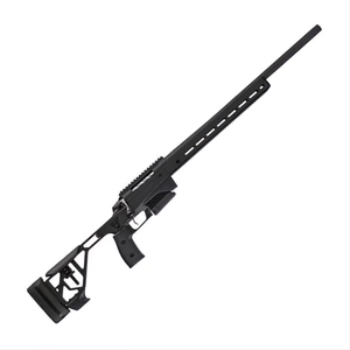
The Mossberg MVP Precision in .224 Valkyrie is one of the few factory chassis-style bolt guns ever built for a cartridge that mostly lives in AR-15 uppers. It combines a 20-inch medium bull barrel with a 1:7 twist, an adjustable Luth-AR MBA-3 stock, a 20 MOA rail, and a magazine well that accepts 6.8 SPC-pattern AR magazines. Launch MSRP was $1,407, and the listings I found from dealers run roughly $1,090–$1,300 when one is in stock. This review covers what that money buys, what an independent test actually measured, and where spec-sheet claims need a correction.
| Specification | Details |
|---|---|
| Model number | 28025 |
| Barrel | 20″ medium bull, free-floated, threaded 1/2×28 with thread cap |
| Twist | 1:7 |
| Weight | About 9.2 lbs (retailer listings) |
| Overall length | About 38.6–39.3″ (listings vary) |
| Trigger | Mossberg LBA, user-adjustable 3–7 lbs |
| Magazine | 10+1; accepts 6.8 SPC-pattern AR magazines; ships with one 10-round Magpul |
| Stock | Luth-AR MBA-3 on an aluminum chassis; adjustable length of pull, cast, and comb height |
| Forend | Slim free-floated M-LOK |
| Rail | Integral 20 MOA Picatinny |
| Finish | Matte blue barreled action, black anodized chassis |
| Price | $1,407 launch MSRP; about $1,090–$1,300 in listings (verify with your dealer) |
Quick Verdict
✓ Best for: Bench and positional shooters who want a bolt-action .224 Valkyrie with ten-round AR-style magazines and full stock adjustment
✓ Key strength: The magazine system and the fit-to-the-shooter stock
✗ Not ideal for: Walking hunts, budget buyers, and anyone who needs the full velocity Federal prints for this cartridgeThe MVP Precision makes sense for a shooter who wants a bolt gun that behaves like a precision rifle without a custom build. It does not make sense as a lightweight field rifle. At more than nine pounds before optic and bipod, it is a supported-position tool.
Where the MVP Precision Fits in the .224 Valkyrie World
Federal introduced the .224 Valkyrie in 2017 as a necked-down 6.8 SPC-family case that pushes heavy-for-caliber .224 bullets in an AR-15-size action. Mossberg came out for 2018 with two rifles in the cartridge: the semi-auto MMR Pro and this bolt-action MVP Precision. That timing matters, because for years the Valkyrie was an AR story, and the bolt-action options were this Mossberg, a handful of Mossberg MVP siblings, and Savage’s 110 Prairie Hunter. If you want the platform background first, our AR-15 Platform Guide covers the semi-auto side of the family.
The pitch is simple. A .224 bullet at 90 grains carries a lot more ballistic coefficient than the 55–77 grain bullets that dominate the .223 Remington world, and it does so with light recoil. Against the .22-250 Remington, the Valkyrie gives up raw speed with light bullets but offers a magazine-fed, AR-compatible package. Against newer small-bore cartridges such as the 6mm ARC and the 6.5 Grendel, it has fewer factory loads and a smaller ammunition shelf, which is the honest cost of choosing it.
What the Independent Test Measured
Shooting Times tested a preproduction MVP Precision with Federal’s original Valkyrie loads. The rifle averaged 1.02 inches overall across three factory loads (five-shot groups at 100 yards), and the result depended heavily on the load. Federal Gold Medal 90-grain MatchKing averaged 0.83 inch, and American Eagle 75-grain TMJ averaged 0.84 inch. Federal Fusion 90-grain soft point opened to 1.40 inches, which the tester called disappointing given that bullet’s hunting reputation.
The velocity numbers are the part buyers should read twice. The 90-grain MatchKing measured 2,505 fps against a listed 2,700 fps, the 75-grain TMJ measured 2,851 fps against 3,000 fps, and the 90-grain Fusion measured 2,528 fps against 2,700 fps. Federal’s printed figures come from a longer barrel, so a 20-inch rifle running roughly 150–200 fps under them is expected, not a defect. It does mean you should not plan around the 1,300-yard supersonic claim associated with the cartridge. Treat that number as a 24-inch-barrel figure, and verify drop on your own chronograph.
One caution on the source: this was a preproduction sample, and the tester noted that it arrived without a manual. Production rifles may differ, so use these results as a baseline, not a guarantee.
The Magazine System
This is the feature that separates the MVP Precision from most bolt guns. It accepts standard 6.8 SPC-pattern AR magazines, and it ships with one 10-round Magpul. That is not the same as a standard .223 or 5.56 AR magazine, and mixing them up is a common mistake in spec sheets. Buy magazines marked for 6.8 SPC or .224 Valkyrie, and confirm feeding with your chosen bullet before relying on them in the field.
The practical benefits are real. Magazines are cheap and easy to find, a second magazine costs far less than a proprietary bolt-gun magazine, and anyone who also runs a Valkyrie AR upper can share magazines between rifles. If you are weighing a bolt gun against a build, our Best AR-15 Builds guide shows what a semi-auto Valkyrie costs by tier. One hunting note: some jurisdictions limit magazine capacity for big game or predators, and the Shooting Times author pointed out that five-round magazines may be required in some areas. Check your state rules before the season.
Real-World Uses
Varmint and prairie dog shooting. The medium bull barrel and adjustable stock suit long strings from a bench or bipod, and light bullets such as the 75-grain TMJ shot well in testing. For a broader look at the category, see our Varmint Hunting Rifles Guide. Verdict: a good fit if you can tolerate the weight.
Coyote and predator hunting. The cartridge is capable here, but bullet choice matters more than the rifle. The poor Fusion group in the test is a reminder to confirm your hunting load groups well before you hunt. Our Predator and Coyote Hunting Rifles guide compares the main options, and Night Hunting Rifles and Optics covers the thermal and night-vision side, where a rail-equipped rifle like this one is easy to outfit. Verdict: capable with a verified load, but heavy for stand-hunting walks.
Pronghorn and open-country game. Some hunters use the Valkyrie on pronghorn at moderate range. Minimum caliber rules differ by state, and the cartridge carries less energy than larger rounds, so read the regulations and our Pronghorn Hunting Rifles guide before choosing it. Verdict: a specialist choice, not a default.
Long-range steel. This is the intended home for the 90-grain MatchKing and the 20 MOA rail. Our Long-Range Shooting Guide explains the optic and zeroing side of 500–1,000 yard work. Verdict: strong at the distances where the Valkyrie earns its reputation, with the velocity caveat above.
Suppressed use. The barrel is threaded 1/2×28 and ships with a thread cap, so it is ready for a muzzle device or suppressor. A bolt action avoids the gas blowback of a suppressed AR, which is a genuine advantage. See the Suppressor Buyer’s Guide for selection, and Best Suppressed Hunting Setups for complete systems.
Handling and Ergonomics
At roughly 9.2 pounds, this rifle is stable and calm under recoil, and the Valkyrie’s light recoil makes it easy to spot your own hits. The Luth-AR MBA-3 stock adjusts for length of pull from about 13 to 16.5 inches, plus cast and comb height, and it does so without tools. That is a real advantage for shared rifles, for shooters of different sizes, and for anyone using high-mounted optics. The Magpul MOE+ grip, oversized trigger guard, and scalloped tactical bolt handle round out a package built for gloved hands and positional work.
The LBA trigger adjusts from 3 to 7 pounds, and the test rifle broke at just over three pounds. That is serviceable for hunting and field work, but it is not a match-grade pull. Shooters chasing the smallest groups often swap it, so confirm the fit of any aftermarket trigger before you buy.
The same tester reported two handling flaws worth knowing. The bolt release spring was stiff enough to be a thumbnail hazard, and the sliding-plate extractor can pop out of its mortise during cleaning, launching a small detent ball and spring. Neither is a deal breaker, but take care when you clean the bolt face, and do it over a mat.
Upgrade Path
Start with optics. A rifle with a built-in 20 MOA rail wants a quality scope with enough elevation travel for long strings, and glass is where most of the rifle’s potential is won or lost. Next, add a bipod through the M-LOK forend, and then consider a trigger swap if you plan to shoot small groups. A suppressor is the other common addition, given the threaded muzzle. Buy extra 6.8-pattern magazines early, since a single included magazine is not enough for a range day.
Pros and Cons
Strengths:
✓ Ten-round magazines in a standard AR-style pattern
✓ Fully adjustable Luth-AR MBA-3 stock without tools
✓ 1:7 twist handles the heavy 90-grain bullets this cartridge was built for
✓ Threaded 1/2×28 muzzle, free-floated barrel, and M-LOK forend
✓ Integral 20 MOA rail
✓ Shot sub-inch groups with two of three factory loads in testing
Limitations:
✗ About 9.2 pounds before optic, which is heavy for hunting
✗ Velocities ran well below Federal’s printed figures from the 20-inch barrel
✗ LBA trigger is adequate, not match-grade
✗ Stiff bolt release spring and a loose-prone extractor during cleaning
✗ Narrow factory ammunition selection compared with .223 Remington
✗ Dealer stock is thin, so availability and price vary
Competitors and Alternatives
| Feature | Mossberg MVP Precision | Mossberg MVP LR | Savage 110 Prairie Hunter |
|---|---|---|---|
| Barrel | 20″ medium bull | 20″ fluted bull | 22″ heavy |
| Twist | 1:7 | 1:7 | Not confirmed in the sources I checked |
| Magazine | 10+1, AR-style | 10+1, AR-style | 3-round proprietary |
| Trigger | LBA 3–7 lbs | Not confirmed | AccuTrigger 1.5–6 lbs |
| Price reference | $1,407 launch MSRP | About $891 listed MSRP | $759 launch MSRP |
The Savage 110 Prairie Hunter is the most direct bolt-action rival. It has a longer 22-inch barrel, an AccuTrigger, and a lower launch price, but it uses a three-round magazine and weighs about 8.75 pounds, and its availability is spotty. If you prefer Savage’s platform, our Savage 110 Series Guide explains the family, and Ruger American vs Savage 110 shows how the budget alternatives compare. Within Mossberg’s own lineup, the MVP LR lists for less with a 20-inch fluted bull barrel; I could not confirm its stock and trigger details, so compare spec sheets if price is the deciding factor.
If you are open to other cartridges, the .22 ARC covers similar ground in cheaper, easier-to-find rifles. The Savage 110 Core Predator .22 ARC, Ruger American Gen II Predator .22 ARC, and Howa 1500 Mini Action .22 ARC are worth a look, and our .22 ARC for Hunting guide explains the trade-offs honestly. Another way to see the same action in a different caliber is our review of the Mossberg MVP Patrol .300 AAC Blackout.
Who Should Buy This Rifle
Buy it if you shoot from a bench, bipod, or prone position and want a bolt-action .224 Valkyrie with a comfortable adjustable stock and cheap ten-round magazines. It also suits shooters who already own Valkyrie magazines from an AR build. Skip it if you carry a rifle far in the field, if you need maximum velocity from the cartridge, or if budget matters most. A used or discounted rifle in good condition can improve the value picture, but check the bolt, extractor, and magazine fit before you pay.
Frequently Asked Questions
Does the Mossberg MVP Precision use standard AR-15 magazines?
It uses AR-style magazines, but they must be the 6.8 SPC pattern, not standard .223 or 5.56 magazines. The rifle ships with one 10-round Magpul magazine, and extra 6.8-pattern magazines are inexpensive and widely sold. Confirm feeding with your chosen bullet before hunting.
What barrel length and twist does the MVP Precision have in .224 Valkyrie?
The barrel is 20 inches long with a 1:7 twist, a medium bull profile, and a 1/2×28 threaded muzzle. A 1:7 twist suits the heavy 90-grain bullets the cartridge was designed around, and the thread pitch matches common .22-caliber suppressors and muzzle devices.
How accurate is the Mossberg MVP Precision?
Shooting Times measured a 1.02-inch average at 100 yards with three factory loads, and two of them averaged under an inch. Federal 90-grain MatchKing averaged 0.83 inch, while Fusion 90-grain opened to 1.40 inches. The test used a preproduction rifle, so treat the numbers as a baseline and test your own loads.
How fast does 90-grain ammunition run from the 20-inch barrel?
Expect roughly 2,500 fps. Shooting Times recorded 2,505 fps with the 90-grain MatchKing and 2,528 fps with the 90-grain Fusion, about 170-200 fps below Federal’s printed 2,700 fps. Federal’s figure comes from a longer barrel, so check drop on your own chronograph.
Is the MVP Precision good for hunting?
It is capable for varmints and predators but heavy for carrying, at about 9.2 pounds before optic and bipod. It works best from a stand, a blind, or a bipod. Pick a hunting bullet that groups well in your rifle, because one factory hunting load opened up in testing, and check state rules for caliber and magazine limits.
How much does the Mossberg MVP Precision cost?
The launch MSRP was $1,407, and dealer listings I found ranged from about $1,090 to $1,300. Stock is limited, and one large retailer showed it out of stock online, so prices and availability change. Compare current listings and check your local dealer before you buy.
Final Verdict
The Mossberg MVP Precision is a well-equipped, adjustable bolt-action .224 Valkyrie for bench, bipod, and positional work. The ten-round AR-style magazines and the toolless Luth-AR stock are the reasons to buy it, and the weight, the modest velocity from a 20-inch barrel, and the thin availability are the reasons to hesitate. Choose it if you want a precision-style bolt gun in this cartridge without a custom build. Pass if you want a light hunting rifle or the full velocity of a 24-inch barrel.
Compare Before You Buy
Other Mossberg and budget bolt guns worth cross-shopping include the Mossberg Patriot Predator .308 Winchester, the Mossberg Patriot Predator 6.5 Creedmoor, and the Savage 110 PPR 6.5 Creedmoor, which is a precision-oriented option in a more common cartridge.
For more background, see our Ruger American Rifle Guide, the 6.5 Creedmoor Caliber Guide, and AR-15 vs AR-10.