 Maksym Kovaliov
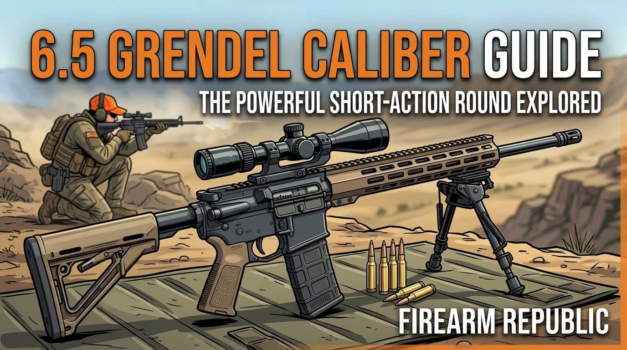
The 6.5 Grendel is the cartridge that proved the AR-15 platform could reach far beyond its .223 Remington roots – and it did it 15 years before the 6mm ARC made headlines. Developed by Alexander Arms and Bill Alexander in 2003, the Grendel was designed with a single ambitious goal: make a cartridge that fits the AR-15 bolt face, feeds from a modified magazine, and shoots high-BC 6.5mm bullets with enough velocity to be genuinely effective at 800 yards. It succeeded, and in doing so it became the quiet favorite of a dedicated community of precision AR-15 shooters, deer hunters, and military advisors who needed compact semi-auto capability at extended range. Today the 6.5 Grendel occupies a specific and well-earned niche – it’s not the fastest, not the flattest, and not the most powerful cartridge you can run in an AR-15. What it is, at $1.10–$1.60 per round for quality factory loads, is the most balanced long-range AR-15 cartridge available, combining solid BC bullets, manageable recoil, adequate hunting energy, and a factory ammo selection that has steadily grown over two decades. This guide covers everything you need to know to decide if the Grendel belongs in your safe.
What Is the 6.5 Grendel?
The 6.5 Grendel began life as a competition cartridge designed specifically for the Compton 1,000-yard AR-15 match held in California in the early 2000s. Bill Alexander of Alexander Arms collaborated with competitive shooters Arne Brennan and Janne Pohjoispää to develop a cartridge that could hit steel at 1,000 yards reliably from an AR-15-format rifle. The solution was to take the PPC family of cases – specifically the 220 Russian via the 6mm PPC – and neck it up to accept 6.5mm (.264 caliber) bullets, producing a short, fat case with excellent powder capacity relative to its dimensions.
The resulting cartridge has a 1.520″ case length and fits in a modified AR-15 lower with a Grendel-specific bolt, barrel, and magazine. The bolt face diameter of .378″ is larger than a standard .223 bolt and the same as the 6mm ARC – this single dimension is what limits Grendel compatibility to dedicated upper assemblies rather than simple barrel swaps. The case design is inherently efficient: the fat, short case burns powder cleanly and maintains consistent velocities, contributing to the cartridge’s reputation for low shot-to-shot velocity variation – a critical factor for long-range precision.
Alexander Arms held the original trademark on “Grendel,” which created early confusion in the marketplace. SAAMI standardized the cartridge in 2012 under the name 6.5 Grendel Type II, which subtly adjusted the headspace specification to improve multi-manufacturer compatibility. Modern rifles and factory ammo are built to the SAAMI Type II standard; virtually all current production is interchangeable.
Ballistics: The Numbers That Matter
The 6.5 Grendel’s ballistic identity is built around 123gr bullets – this is the sweet spot where the cartridge’s case capacity, twist rate requirements, and BC potential intersect most effectively. From a 24″ barrel, a 123gr Hornady ELD-M exits at approximately 2,580 fps. From the more common 18″ AR-15 barrel, expect roughly 2,380–2,430 fps. These are modest velocities by magnum standards, but the BC of quality 6.5mm 123gr bullets – G7 BC of .252–.270 depending on projectile – produces wind performance that consistently surprises shooters coming from .223 backgrounds.
| Load | MV (24″, fps) | 500 yd Velocity | 500 yd Energy | 500 yd Drop (100 yd zero) | 10 mph Wind @ 500 yd |
|---|---|---|---|---|---|
| 123gr ELD-M (24″) | 2,580 | 1,990 | 1,082 ft-lbs | -57″ | 7.8″ |
| 123gr SST (24″) | 2,580 | 1,955 | 1,044 ft-lbs | -58″ | 8.1″ |
| 130gr ELD-M (24″) | 2,475 | 1,935 | 1,080 ft-lbs | -62″ | 7.5″ |
| 100gr HPT (24″) | 2,850 | 2,085 | 965 ft-lbs | -46″ | 9.6″ |
| 90gr TNT (24″) | 3,000 | 2,070 | 857 ft-lbs | -41″ | 11.2″ |
| 123gr ELD-M (18″) | 2,410 | 1,855 | 941 ft-lbs | -64″ | 8.5″ |
The honest ballistic picture: the 6.5 Grendel performs meaningfully better than .223 Remington at distance but falls short of the 6.5 Creedmoor in both velocity and energy. The 123gr ELD-M at 500 yards carries approximately 1,082 ft-lbs – enough for deer inside that range, but below the 6.5 CM’s 140gr at 1,440 ft-lbs and the 6mm ARC’s 108gr at 1,208 ft-lbs. Wind drift at 500 yards with 123gr bullets runs 7.8″ in a 10 mph crosswind – better than .308 (10.2″) but worse than 6mm ARC (5.8″) and 6.5 CM (6.8″).
What this means practically: the 6.5 Grendel is a 600–800 yard precision cartridge and a 400-yard hunting cartridge in capable hands. It is not a 1,000-yard competition cartridge in the way the 6mm ARC is, and it is not a 700-yard hunting cartridge in the way the 6.5 Creedmoor is. It sits in the middle with a combination of characteristics that works exceptionally well for its intended applications.
6.5 Grendel vs. The Competition
6.5 Grendel vs. 6mm ARC
These two cartridges share the same bolt face and magazine platform, making them direct competitors for the AR-15 precision role. The 6mm ARC wins on wind performance – the 108gr ELD-M’s G7 BC of .368 vs. the Grendel’s 123gr at .252–.270 is a genuine and significant difference past 600 yards. The 6.5 Grendel wins on hunting energy retention, with the heavier 6.5mm bullets carrying more downrange impact. The Grendel also has a 17-year head start on component and factory ammo development, giving reloaders more tested load data and more bullet options. For a pure precision competition build, the 6mm ARC has a real advantage. For hunters who want a capable medium-game AR-15 that also reaches to 600 yards on steel, the Grendel is the more balanced choice. Full comparison in our 6mm ARC Caliber Guide.
6.5 Grendel vs. .223 Remington / 5.56 NATO
The ballistic gap between these cartridges is enormous past 400 yards. A 77gr .223 load carries roughly 500 ft-lbs at 500 yards and drifts 14–16 inches in a 10 mph crosswind. The 6.5 Grendel with 123gr ELD-M carries 1,082 ft-lbs and drifts 7.8 inches at the same distance – more than double the energy and half the wind drift. For any shooter who regularly engages targets or game past 400 yards, the Grendel’s performance improvement is substantial. The trade-offs are reduced magazine capacity (26 rounds vs. 30 for .223), slightly increased recoil, higher per-round cost, and the need for a dedicated upper assembly. See our .223 Remington Caliber Guide for the full .223 picture.
6.5 Grendel vs. 6.5 Creedmoor
The comparison here is really platform vs. platform as much as cartridge vs. cartridge. The 6.5 Creedmoor operates in bolt-action and AR-10 rifles – heavier, longer platforms. The 6.5 Grendel operates in the lighter, more compact AR-15. If you need a semi-auto rifle under 7 lbs with genuine 600-yard reach, the Grendel in an AR-15 gets you there. If you need maximum performance at 800+ yards with hunting versatility past 500 yards, the 6.5 CM in a bolt gun or AR-10 is the better answer. The two cartridges serve meaningfully different needs and are rarely direct substitutes. See our 6.5 Creedmoor Caliber Guide for the full picture.
6.5 Grendel vs. .300 Blackout
These cartridges have almost no overlap in purpose. The .300 Blackout is an optimized suppressed subsonic cartridge for close-range use, with supersonic effectiveness inside 300 yards. The 6.5 Grendel is a long-range precision cartridge with its performance beginning where the .300 Blackout’s effectiveness ends. If your primary use case is suppressed CQB or hunting inside 200 yards, the .300 Blackout is the better tool. If you want reach to 600+ yards, there is no comparison. See our .300 Blackout Caliber Guide for a full breakdown of that cartridge.
Factory Ammunition: What to Buy
The 6.5 Grendel has the deepest factory ammo selection of any long-range AR-15 cartridge – a direct result of its 20-year head start over the 6mm ARC. Hornady, Federal, Wolf, Fiocchi, Lapua, and several boutique manufacturers all load for it. Availability at major retailers is solid; rural availability is improving but still behind established calibers.
For precision and competition:
Hornady 123gr ELD-M ($28–$33/20 rounds) is the benchmark match load and what most precision Grendel shooters use. Consistent velocities and the ELD-M’s reliable BC performance make it the default for anyone shooting steel past 500 yards. Hornady’s 123gr A-MAX (where still available) is functionally similar. Lapua 130gr Scenar ($38–$45/20 rounds) is the premium competition option – Lapua brass combined with a high-BC 130gr projectile produces excellent ES figures and is the choice of serious long-range competitors who have optimized their rifles for it.
For hunting:
Hornady 123gr SST ($26–$30/20 rounds) is the primary hunting load and a proven deer cartridge. The SST expands reliably at Grendel velocities – important because the lower impact velocity at extended ranges can cause some bullets to fail to expand. Federal 120gr Trophy Bonded is the bonded option for hunters who want maximum penetration on larger deer or hogs. Hornady 90gr V-MAX and 100gr HPT are varmint options that push to 3,000+ fps and are highly effective on prairie dogs, coyotes, and similar game.
Budget and practice:
Wolf 123gr FMJ steel case runs $15–$18/20 rounds and is the most affordable way to practice with the Grendel. It’s not a precision load – expect 2–3 MOA – but it confirms zero and builds trigger time at a fraction of the cost of brass-cased ammo. Fiocchi 123gr FMJ brass-case practice ammo runs $20–$24/20 rounds and offers better accuracy than steel case while remaining affordable for volume training sessions.
| Load | Best For | Typical Price | Typical Accuracy |
|---|---|---|---|
| Hornady 123gr ELD-M | Precision/Competition | $30/20 | 0.6–0.8 MOA |
| Lapua 130gr Scenar | Precision/Competition | $42/20 | 0.5–0.7 MOA |
| Hornady 123gr SST | Deer Hunting | $28/20 | 0.8–1.0 MOA |
| Federal 120gr Trophy Bonded | Hunting (bonded) | $36/20 | 0.8–1.1 MOA |
| Hornady 100gr HPT | Varmint/Coyote | $27/20 | 0.8–1.0 MOA |
| Fiocchi 123gr FMJ | Budget Practice | $22/20 | 1.5–2.5 MOA |
| Wolf 123gr FMJ (steel) | Budget Practice | $16/20 | 2.0–3.0 MOA |
Reloading the 6.5 Grendel
The 6.5 Grendel is one of the most rewarding cartridges to reload – the fat, efficient case design produces inherently low ES and SD figures with moderate effort, and the component selection is mature enough that quality data and proven loads are widely available. Many Grendel shooters report single-digit SD from carefully developed handloads, which translates directly to smaller groups at distance.
Brass: Lapua 6.5 Grendel brass ($90–$100/100) is the premium standard and worth the investment for serious precision work. It’s dimensionally consistent, has tight primer pockets that hold through multiple firings, and typically lasts 10–15 firings with proper care. Hornady brass is the practical alternative at $45–$55/100 – adequate for hunting and intermediate precision work. Starline brass is a domestic option at $50–$60/100 with consistency comparable to Hornady. Avoid mixed headstamp brass for precision loads; the case weight variation introduces velocity inconsistency.
Powder: The Grendel’s case capacity is moderate and works best with medium-burn-rate powders. Hodgdon H4350 is the community standard for 123–130gr bullets – it produces excellent velocity-to-pressure ratios and meters consistently. Expect 2,550–2,600 fps with 123gr ELD-M and approximately 28–29gr H4350 from a 24″ barrel. Reloder 16 is an excellent temperature-stable alternative that performs similarly to H4350 with slightly better cold-weather consistency – relevant for hunters who take rifles into cold conditions. H335 and BL-C(2) work well with lighter 90–100gr varmint bullets and push velocities above 3,000 fps.
Bullets: The 123gr ELD-M is the match bullet of choice. Hornady 123gr A-MAX (where available) and Sierra 123gr MatchKing are proven alternatives. Berger 130gr AR Hybrid OTM is popular among competitors who want to maximize BC within the Grendel’s case capacity. For hunting, the 123gr SST and 123gr InterLock are both field-proven on deer. For varmints, the 90gr V-MAX and 95gr V-MAX produce explosive fragmentation at Grendel velocities. Avoid bullets heavier than 130gr – the case capacity doesn’t produce sufficient velocity to make them worthwhile and the longer bullets require seating deep enough to compromise case volume.
Twist rate: Standard 6.5 Grendel rifles come with 1:8 twist, which stabilizes the full 90–130gr bullet range reliably. Some older Alexander Arms barrels used a 1:9 twist suited to lighter 100–110gr bullets; verify your barrel’s twist before loading heavy match bullets and test stability at distance if you’re running the heavier end of the weight range.
Semi-auto considerations: The same semi-auto reloading principles that apply to the 6mm ARC apply here. Use standard small rifle primers, not magnum. Seat bullets to a consistent COAL that feeds reliably from your specific magazine. Crimp lightly if your semi-auto shows signs of bullet setback under the force of feeding. An adjustable gas block set to the minimum for reliable function extends bolt carrier group life noticeably.
Best Applications for the 6.5 Grendel
Deer Hunting with an AR-15
The 6.5 Grendel’s most popular application is deer hunting, and for good reason – it’s the best all-around deer hunting cartridge available in the AR-15 format. The 123gr SST or 123gr InterLock at 2,400–2,500 fps impact velocity produces clean, reliable kills on whitetail and mule deer inside 300 yards with the kind of terminal performance that hunters expect from a dedicated deer cartridge. Inside that range, the Grendel hits harder and expands more consistently than any .224 bore AR-15 load. For hunters in states that allow deer hunting with AR-15-pattern rifles – and the list of such states has expanded significantly over the past decade – the Grendel is the most practical choice that combines hunting effectiveness with the platform ergonomics they prefer. Extend that range to 350–400 yards with careful shot selection and quality bullets. Our Whitetail Deer Hunting Rifles guide and Deer Hunting AR-15 Calibers guide cover the full cartridge comparison for this application.
Hog Hunting
The semi-auto AR-15 platform is the tool of choice for feral hog hunting in the American South and Southwest, and the Grendel raises the capability ceiling significantly over .223. Feral hogs are tough animals with heavy shoulder shields; the 6.5 Grendel’s 123gr bullets penetrate reliably even on quartering shots that defeat lighter .224 projectiles. For hunters who work out of vehicles or blinds on large properties and may take 200–350 yard shots on hogs, the Grendel’s combination of semi-auto follow-up capability and expanded range is a genuine working advantage. See our Hog Hunting Rifle Guide for full platform and setup recommendations.
Varmint and Predator Hunting
At the lighter end of its bullet range, the Grendel is a high-performance varmint cartridge. The 90gr V-MAX at 3,000+ fps from a 24″ barrel is devastating on prairie dogs and ground squirrels to 350 yards, with a flat enough trajectory that holdover becomes minimal inside that range. For coyote hunters, the 100gr HPT and 123gr SST are both effective well past what .223 can achieve cleanly. The semi-auto format makes follow-up shots natural and fast – relevant when multiple coyotes work a call simultaneously. Our Coyote Hunting Rifles guide and Varmint Hunting Rifles Guide cover specific setups in detail.
Long-Range Target Shooting – 500 to 800 Yards
The 6.5 Grendel in a quality semi-auto build is a credible 800-yard target cartridge. With 123gr ELD-M handloads running consistent sub-10 fps SD, precision shooters regularly print sub-MOA groups at 300 yards and connect reliably on 18″ steel at 600 and 800 yards. The wind drift at these distances is real and requires attention – at 600 yards in a 10 mph wind, the Grendel drifts roughly 11–12 inches with 123gr bullets – but it is predictable and manageable with a quality wind meter and practiced technique. The 800-yard ceiling is honest; past that distance, the 6mm ARC’s BC advantage compounds and the Grendel falls short of what precision competitors need for 1,000-yard stages. For recreational long-range shooting and informal competition, however, 800 yards covers the vast majority of steel layouts. Our Long-Range Shooting Guide covers the full framework.
Military and Special Operations Use
The 6.5 Grendel’s original design brief was military – specifically to give infantry soldiers a compact, lightweight rifle capable of defeating soft body armor and engaging targets past 600 yards, tasks at which the 5.56 NATO was demonstrably limited after Afghanistan. The US Army evaluated the Grendel and related cartridges in the mid-2000s, ultimately choosing the 6.8 SPC for different reasons. However, several allied and special operations units adopted the Grendel, and it continues to see service use where the combination of AR-15 platform weight, extended range, and terminal performance matters. This military heritage contributes to the cartridge’s unusually thorough ballistic documentation and the depth of precision load development available for it.
Compact Backcountry Hunting
A lightweight AR-15 in 6.5 Grendel can be assembled under 7 lbs with an 18″ barrel and minimalist furniture – a practical backcountry rifle that offers semi-auto follow-up shots, reasonable 400-yard capability, and better terminal performance than any .224 bore alternative. The honest limitation is that shots on elk or large deer past 350 yards push the energy envelope. For hunters who pursue deer, black bear, or smaller game in terrain where quick follow-up shots are valued and shots stay inside 350 yards, the Grendel AR-15 is a capable and underappreciated option. See our Mountain / Backcountry Hunting Rifles guide for full platform comparisons.
Rifles and Platforms for the 6.5 Grendel
Like the 6mm ARC, the 6.5 Grendel requires a dedicated upper assembly – Grendel-specific bolt, barrel, and magazines – while using a standard AR-15 lower receiver. The component ecosystem is significantly more developed than the 6mm ARC’s thanks to two decades of production.
Factory rifles:
Alexander Arms remains the originator and a primary factory rifle source – their complete rifles in 6.5 Grendel run $1,200–$1,800 and represent well-documented, purpose-built platforms. The Ruger American Ranch in 6.5 Grendel ($600–$700) is a bolt-action option that delivers excellent Grendel performance in a conventional hunting package for those who don’t require semi-auto. CMMG offers complete semi-auto Grendel rifles in the $1,100–$1,500 range. Howa Mini Action bolt guns chamber the Grendel and are popular with hunters who want a compact traditional platform. Palmetto State Armory produces Grendel uppers and complete rifles in the $700–$1,000 range that deliver solid accuracy at accessible price points.
AR-15 upper builds:
The upper build path is the most popular for Grendel shooters who already own AR-15 lowers. Core requirements: a 6.5 Grendel barrel (1:8 twist, 16–24″), a Type II Grendel bolt carrier group, and Type II Grendel magazines. Quality barrels from Criterion, Ballistic Advantage, and Wilson Combat run $200–$500. Complete upper assemblies from Aero Precision, Bear Creek Arsenal, and Alexander Arms run $450–$900. The total investment for a quality upper swap onto an existing lower is $600–$1,000 – meaningfully less than a complete rifle purchase.
Magazine considerations:
ASC (American Shooting Components) Grendel magazines are the most widely available and function reliably in most builds. PMAG makes a Grendel-compatible 17-round magazine that has become popular for its durability. Verify magazine compatibility with your specific upper/lower combination before stocking up – minor dimensional differences between lower manufacturers can affect feeding reliability with some magazine brands.
Barrel Life and Platform Maintenance
The 6.5 Grendel runs at moderate pressure (52,000 PSI SAAMI, though some factory ammo and handloads approach higher pressures) and the efficient case design is relatively gentle on barrel throats. Semi-auto barrels typically last 3,500–4,500 rounds before precision degrades, placing it ahead of the 6mm ARC (2,500–3,500 rounds) and behind the .308 Winchester (4,000–6,000 rounds). Bolt-action Grendel barrels see 4,500–6,000 rounds in most reports.
For hunters and recreational shooters running 200–500 rounds per year, barrel life is essentially a non-issue – a barrel lasts a decade or more at that round count. For competition shooters running 2,000+ rounds annually, plan for barrel replacement every 18–24 months. Replacement barrels from quality makers run $250–$500, making ongoing maintenance costs reasonable.
Gas system maintenance follows the same principles as any AR-15 cartridge: run an adjustable gas block, use the minimum gas for reliable function, clean the gas tube regularly, and replace the bolt carrier group components at manufacturer-recommended intervals. The Grendel’s larger bolt face means slightly different carrier group wear patterns than 5.56 – check Grendel-specific BCG maintenance intervals from your manufacturer.
Who Should Choose the 6.5 Grendel?
The 6.5 Grendel is your cartridge if:
You want an AR-15 platform deer hunting cartridge that is effective to 350–400 yards with the terminal performance and penetration to handle angled shots reliably. You’re a hog or predator hunter who wants semi-auto follow-up capability with real reach past 300 yards. You’re a long-range recreational shooter who wants a capable 600–800 yard AR-15 cartridge with two decades of refined load data behind it. You’re building on an existing AR-15 lower and want a precision upper with a well-supported component ecosystem. You reload and want access to the deepest Grendel-specific development data, including Lapua brass availability that the newer 6mm ARC currently lacks.
Look elsewhere if:
You primarily shoot targets past 800 yards in competition – the 6mm ARC’s BC advantage compounds meaningfully at that range and the Grendel begins to fall short. You hunt elk or game larger than deer regularly – the 6.5 Grendel’s energy retention at hunting distances makes it a borderline elk cartridge at best, and the 6.5 Creedmoor in a bolt gun or AR-10 is a significantly better tool for that application. You want factory ammo available everywhere in rural America – the Grendel has better distribution than the 6mm ARC but still trails .223, .308, and 6.5 CM at rural sporting goods stores. You’re new to reloading and want the most developed, most widely supported cartridge ecosystem – the .308 Winchester and 6.5 Creedmoor still lead in data depth and component variety.
Frequently Asked Questions
Is the 6.5 Grendel good for deer hunting?
Yes – it’s the best dedicated deer hunting cartridge available in the AR-15 platform. With 123gr SST or bonded hunting bullets, it delivers clean kills on deer inside 350 yards with terminal performance that .223 simply cannot match. Use quality expanding bullets, prioritize broadside shots, and stay inside 400 yards for ethical confidence. It’s not the right choice for elk or game significantly larger than deer, where the energy margins become tight.
What’s the difference between 6.5 Grendel Type I and Type II?
Type I refers to the original Alexander Arms specification; Type II is the SAAMI-standardized version adopted in 2012 with a very slight headspace difference. In practice, Type II firearms can safely fire Type I brass and vice versa – the difference is so small that it’s functionally irrelevant for shooters. All current production rifles and factory ammo are Type II. If you have older Alexander Arms brass or a very early Alexander Arms rifle, it is still safe to use with modern Type II ammunition and components.
What twist rate does the 6.5 Grendel need?
A 1:8 twist is the standard and handles the full 90–130gr bullet range reliably. Older Alexander Arms rifles sometimes used 1:9, which handles up to approximately 110–115gr bullets adequately but may destabilize some longer 123gr match projectiles. If you have a 1:9 twist barrel and want to run 123gr ELD-M, test stability carefully at 200–300 yards before committing to long-range use – a keyholing or destabilized bullet is a clear sign the twist rate is insufficient for that projectile.
How many rounds per magazine does the 6.5 Grendel hold?
Standard ASC Grendel magazines are available in 10, 17, and 26-round configurations. PMAG Grendel magazines hold 17 rounds. The 26-round ASC magazine is the highest-capacity standard option. Magazine capacity is lower than the 30-round standard AR-15 .223 magazine due to the larger case diameter – this is the primary practical trade-off compared to running a standard AR-15 caliber.
Can I use .223 magazines for 6.5 Grendel?
No. The 6.5 Grendel’s larger case diameter requires Grendel-specific magazines. Standard AR-15 .223/5.56 magazines will not feed Grendel reliably and should not be used. Grendel magazines are also compatible with the 6mm ARC, making them interchangeable if you run both cartridges on the same lower.
What is the effective range of the 6.5 Grendel on deer?
With 123gr SST or comparable expanding bullets, the Grendel produces reliable terminal performance on deer to approximately 350–400 yards. Inside that distance, impact velocity is sufficient for consistent bullet expansion and the energy level stays above 900–1,000 ft-lbs. Past 400 yards, velocity drops to the point where some bullets may not expand reliably – if stretching shots to 400 yards, use bullets specifically designed for lower-velocity expansion like the ELD-X rather than the SST.
Related Caliber Guides
- 6mm ARC Caliber Guide
- 6.5 Creedmoor Caliber Guide
- .223 Remington Caliber Guide
- .308 Winchester Caliber Guide
- .300 Blackout Caliber Guide
- AR-15 Caliber Selection Guide
Related Application Guides
- Whitetail Deer Hunting Rifles
- Deer Hunting AR-15 Calibers
- Hog Hunting Rifle Guide
- Varmint Hunting Rifles Guide
- Coyote Hunting Rifles
- Long-Range Shooting Guide
- Mountain / Backcountry Hunting Rifles