 Maksym Kovaliov
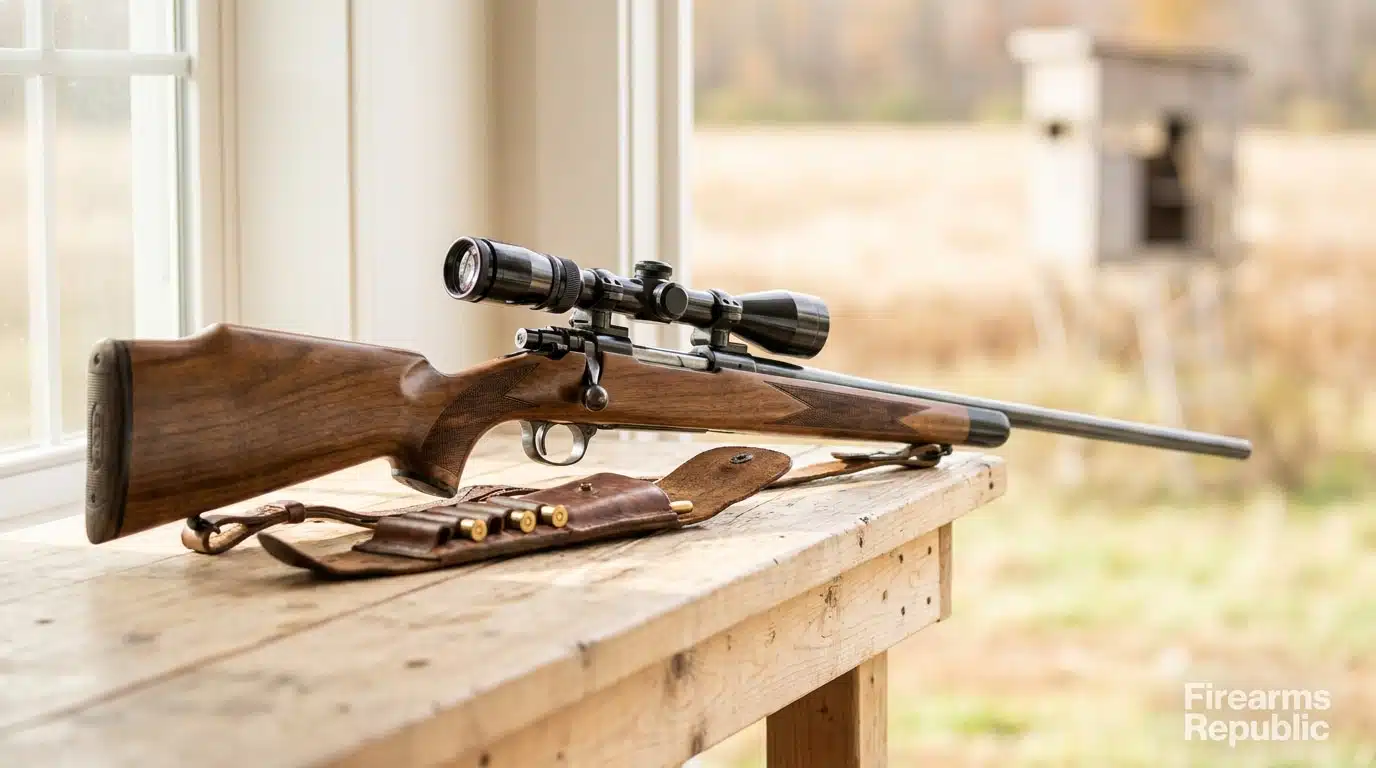
Whitetail deer hunting is the most popular big game hunt in North America by a wide margin – more hunters, more licenses sold, more rifle rounds fired in the fall than any other pursuit. It is also one of the most cartridge-forgiving applications in the hunting world. Whitetail deer weigh 100–300 lbs, are soft-bodied relative to elk and bear, and are typically shot at ranges from 50 to 250 yards in the vast majority of hunting situations. Almost any centerfire rifle cartridge from .243 Win upward will take deer cleanly with proper shot placement and quality bullets. The question is not “what will work” – dozens of cartridges will work. The question is what works best for your specific terrain, shot distances, hunting style, and budget, without more recoil, cost, or complexity than the application actually demands. This guide breaks down the best whitetail deer rifles and cartridges by hunting scenario, with honest assessments of what each brings to the field and where each falls short.
What You Actually Need to Kill Whitetail Deer
Before getting into specific cartridges and rifles, it is worth establishing what the application actually requires – because overbuilding for whitetail is as common as underpreparing, and both waste money.
Energy: Most hunting authorities cite 1,000 ft-lbs at impact as a practical minimum for deer-sized game. Almost every centerfire deer cartridge exceeds this at 300 yards or more. A .243 Win with 100gr ELD-X carries 1,352 ft-lbs at 300 yards. A .30-06 with 180gr ELD-X carries 2,400+ ft-lbs at the same distance. Both work. The .30-06 has roughly 1,000 ft-lbs more energy than the deer requires.
Bullet construction: This matters more than cartridge selection for many hunters. A quality bonded or controlled-expansion bullet in a .243 Win outperforms a cheap cup-and-core 150gr .30-06 on a quartering shot at 200 yards. Federal Fusion, Hornady ELD-X, Nosler AccuBond, and Federal Trophy Bonded are the workhorses. Core-Lokt and Power Point are proven at close range. Cheap cup-and-core loads fail on shoulder hits and steep quartering angles at all calibers.
Accuracy: A rifle that shoots 1.5 MOA with your hunting load is adequate for shots inside 200 yards. A rifle that shoots 0.7 MOA extends confident range to 350 yards. Accuracy matters more than caliber selection for most whitetail hunters.
Recoil management: A hunter who flinches because of excessive recoil misses or wounds deer more often than one shooting a smaller cartridge accurately. For youth hunters and recoil-sensitive adults, matching cartridge to shooter is more important than maximizing terminal performance on an animal that a .243 Win kills cleanly.
Best Cartridges for Whitetail Deer by Hunting Scenario
Close-Range Timber and Brush Hunting (Under 150 Yards)
In dense eastern hardwoods, southern pine thickets, and midwestern fence-line hunting, most shots occur inside 100 yards with many under 50 yards. In this environment, cartridge selection is genuinely wide open – the primary concerns are reliability, reasonable cost, and a bullet that does not disintegrate on a twig before reaching the deer.
Best choices:
The .30-30 Winchester remains a legitimate and time-tested choice for close-range timber hunting in lever-action rifles. At 150 yards and under, 150–170gr flat-nose bullets deliver enough energy for clean kills and the tube-magazine lever-action platform handles quickly in the brush. It is not a 200-yard cartridge and its ballistics past that range are genuinely limited – but inside its envelope it has taken more whitetail than any other cartridge in American history. The Henry Lever Action and Marlin 336 are the classic platforms.
The .308 Winchester with 150–165gr bonded loads is the standard for hunters who want more range capability alongside close-range work. At 100 yards it hits with 2,400+ ft-lbs – significantly more than deer require, which means clean kills even on marginal shots. The Ruger American, Savage 110, and Tikka T3x all deliver sub-MOA accuracy in .308 at prices from $450 to $900. See our .308 Winchester Caliber Guide.
The 7mm-08 Remington is the recoil-friendly alternative for timber hunting – 11–13 ft-lbs vs. the .308’s 14–16 ft-lbs, with equivalent effectiveness on deer inside 200 yards. Recommended particularly for youth hunters and smaller-framed adults. See our 7mm-08 Remington Caliber Guide.
Agricultural Fields and Food Plots (100–250 Yards)
The majority of American deer hunters sit in stands overlooking agricultural fields, food plots, and field edges where shots range from 75 to 250 yards with occasional opportunities to 300 yards. This is the sweet spot for the modern short-action deer cartridge.
Best choices:
The 6.5 Creedmoor is the most complete deer cartridge for this application – 9–11 ft-lbs of recoil, sub-MOA accuracy from most production rifles, and 140gr ELD-X or AccuBond loads that produce clean kills to 400 yards with confidence. At 250 yards, the 140gr ELD-X carries 1,900+ ft-lbs and is moving at 2,500+ fps – the ELD-X’s full expansion velocity range. Ammo availability is excellent. The Ruger American Gen II ($599–$649), Tikka T3x Lite ($800–$875), and Bergara B-14 Hunter ($750–$850) are the primary platforms. See our 6.5 Creedmoor Caliber Guide.
The .243 Winchester is the first-choice cartridge for youth hunters and recoil-sensitive adults in this scenario. At 250 yards, the 100gr ELD-X carries 1,600+ ft-lbs and is fully adequate for deer with broadside or slight quartering shots. Federal Fusion and Hornady ELD-X are the recommended loads. The Savage Axis II ($380–$450), Ruger American ($450–$550), and Mossberg Patriot Bantam ($350–$420) are the top platforms in this tier. See our .243 Winchester Caliber Guide.
The .308 Winchester remains the most universally available option and is capable across this entire range. At 250 yards with 165gr bonded loads, it hits with 2,200+ ft-lbs – well above what deer require and providing margin for shots that are slightly off optimal angles. For hunters who value universal ammo availability and the ability to source a box of hunting ammo anywhere in rural America, the .308 remains the practical default.
Open Country – Long Fields, Cut-Over, and Power Line Hunting (200–400 Yards)
Some whitetail habitats in the South, Midwest, and West feature long shooting lanes – clear-cuts, river bottoms, power line rights-of-way – where shots to 350 yards are regular and occasional 400-yard opportunities present themselves. This is where cartridge selection begins to matter more.
Best choices:
The 6.5 Creedmoor handles this scenario with margin to spare. The 140gr ELD-X zeroed at 200 yards drops approximately 9 inches at 350 yards – a known and manageable holdover for hunters who have practiced. Wind drift at 350 yards in a 10 mph crosswind runs 5–6 inches – predictable with experience. This is the cartridge’s core application and why it displaced the .308 for deer hunting among precision-conscious hunters.
The .30-06 Springfield with 150–165gr loads earns its keep at this range tier. The 165gr ELD-X carries 1,886 ft-lbs at 400 yards – more than the 6.5 CM at the same distance and with wider wound channels. For hunters who want more terminal authority on large-framed northern deer or shots that may not be perfectly placed, the .30-06’s additional energy is tangible. See our .30-06 Springfield Caliber Guide.
The 7mm-08 Remington with 140gr ELD-X pushes to 350 yards confidently but begins to lose energy margin past that distance. It remains a capable choice for hunters whose shots rarely exceed 300 yards.
Texas Hill Country and Open Pasture (250–500 Yards)
Portions of Texas, Oklahoma, Kansas, and the agricultural plains produce whitetail hunting conditions where 300–500 yard shots are routine – deer move through open terrain at distances that demand flat trajectories and wind-resistant bullets.
Best choices:
The 6.5 Creedmoor is the correct cartridge for this application and dominates whitetail hunting in this terrain. The 140gr ELD-X at 400 yards carries approximately 1,500 ft-lbs and impacts at 2,300+ fps – well within the ELD-X’s expansion range and producing reliable kills on deer. Wind drift is manageable with practice. A precision-tuned Ruger American Gen II or Bergara B-14 with a quality 4–16x scope and handloads or Federal Premium factory ammo is the go-to setup for Texas flat-country hunting.
The 6.5 PRC is the step up for hunters who regularly shoot past 400 yards or want more energy margin at extended ranges. At 400 yards the 143gr ELD-X carries 2,100+ ft-lbs vs. the 6.5 CM’s 1,500 ft-lbs – a significant energy increase that provides more confidence on running shots and less-than-ideal angles. The recoil increase (15–17 ft-lbs vs. 9–11 ft-lbs) is real but manageable. See our 6.5 PRC Caliber Guide.
The 7mm PRC provides maximum performance for hunters who want the most capable deer cartridge available with manageable recoil. At 400 yards the 175gr ELD-X carries 2,400+ ft-lbs – more than the 6.5 PRC and adequate for any deer at any realistic hunting distance. For hunters who may encounter large-framed Texas bucks running at 450 yards in crosswind, the 7mm PRC’s combination of flat trajectory, BC, and energy is best-in-class. See our 7mm PRC Caliber Guide.
Best Rifles for Whitetail Deer by Budget
Budget: Under $500
Savage Axis II ($380–$450): The best value deer rifle available. AccuTrigger adjustable from 2.5–6 lbs straight from the factory, 1 MOA guaranteed accuracy, and available in 6.5 CM, .308 Win, .243 Win, and 7mm-08. The synthetic stock handles weather well and the action is reliable. Not a refined experience – the trigger is the only standout feature – but it shoots consistently and takes deer cleanly. Youth model available with shorter length of pull in .243 Win.
Ruger American ($450–$550): A step up from the Axis II in fit and finish. The American Gen II in 6.5 CM adds AICS-compatible magazines, a threaded barrel, and a better stock feel. Accuracy runs 0.7–0.9 MOA with quality ammo. The most recommended starter deer rifle for hunters who want capability beyond close-range work without breaking $600.
Mossberg Patriot Bantam ($350–$420): Specifically designed for youth hunters with a 12″ length of pull that fits smaller-framed shooters properly. Available in .243 Win and 7mm-08. A rifle that fits the shooter produces better accuracy and less perceived recoil than an adult-length rifle used by a teenager.
Mid-Range: $600–$1,000
Bergara B-14 Hunter ($750–$850): Consistent sub-MOA accuracy from a hunting-weight rifle with a clean trigger and a modern synthetic stock. Available in 6.5 CM, .308 Win, .30-06, and 7mm Rem Mag. Bergara’s manufacturing consistency makes this the go-to recommendation for hunters who want better accuracy than budget rifles provide without spending premium prices. See our Bergara B-14 Series Guide.
Tikka T3x Lite ($800–$875): The best factory trigger in this price range. The T3x bolt cycles smoother than any production rifle under $1,000 and the accuracy is consistently sub-MOA. At 6.1 lbs bare, it is light enough for all-day carries and the detachable magazine is a practical hunting feature. Available in 6.5 CM, .308 Win, .30-06, 7mm-08, and .243 Win. The top recommendation for hunters who value a premium shooting experience at mid-range pricing. See our Tikka T3x Complete Guide.
Winchester Model 70 Featherweight ($900–$1,000): The controlled-round-feed action and three-position safety of the Model 70 have a devoted following among serious hunters who value reliability above refinement. At 6.5 lbs with a walnut or synthetic stock depending on configuration, it is a pleasure to carry and the classic American deer rifle aesthetic for those who value it. Available in .308 Win, .30-06, 6.5 CM, and 7mm-08.
Premium: $1,000–$2,000
Christensen Arms Mesa ($1,300–$1,450): Carbon fiber barrel and synthetic stock in a 6.5 lb package that delivers sub-MOA accuracy and long-range capability. The carbon barrel runs cooler between shots than steel, which matters for follow-up shots on running deer. Available in 6.5 CM, 6.5 PRC, 7mm PRC, .308 Win, and .300 Win Mag. The best balance of lightweight construction, accuracy, and accessible pricing in the carbon-barrel category.
Bergara B-14 Wilderness ($850–$950) and B-14 Ridgeback ($1,100–$1,300): The Wilderness adds a Softtouch stock and improved metal finish for hunting in wet conditions. The Ridgeback moves to a more adjustable stock with improved ergonomics. Both maintain Bergara’s sub-MOA accuracy standard. See our Bergara B-14 Series Guide.
Proof Research Elevation ($3,500+) and Fierce Carbon Rival ($2,500–$3,000): At the premium end, carbon-wrapped barrels, carbon stocks, and premium actions produce sub-7 lb rifles with sub-MOA accuracy that genuinely feel different to carry through miles of deer country. For hunters who invest in serious western deer and elk hunts where the rifle is carried more than it is shot, the weight savings are real and appreciated.
AR-15 and Semi-Auto Options for Whitetail
Semi-automatic deer rifles have gained significant ground in the American South and Midwest where they are legal for deer, and the AR-15 platform dominates this segment.
Where AR-15 deer hunting makes sense: In states that allow it, the semi-auto platform’s fast follow-up shot capability is a genuine advantage for deer hunting in agricultural settings where running shots at 50–150 yards are common. Feral hog hunters who combine deer and hog seasons on the same platform find the semi-auto’s magazine capacity and rapid fire rate practical for both applications.
Best AR-15 deer cartridges:
The 6.5 Grendel is the most capable deer cartridge in the AR-15 platform – 140gr ELD-X or 123gr SST loads deliver clean kills to 350 yards with terminal performance that the .223 Rem cannot approach. See our 6.5 Grendel Caliber Guide.
The 6mm ARC offers better wind performance than the Grendel with 108gr ELD-M loads but slightly less energy at hunting distances. For deer hunting inside 300 yards, the practical difference is minimal. See our 6mm ARC Caliber Guide.
The .223 Remington is legal for deer in approximately 20 states and capable inside 150 yards with quality bonded bullets and broadside shots. It is a marginal deer cartridge and the 6.5 Grendel or 6mm ARC is the better choice for hunters who want confident effectiveness. See our .223 Remington Caliber Guide and Deer Hunting AR-15 Calibers guide for full AR-15 deer hunting context.
Optics for Whitetail Deer Hunting
The right scope matters as much as the right rifle. A $1,500 rifle with a $150 scope underperforms a $500 rifle with a $500 scope in most hunting situations.
For close-to-moderate range (under 200 yards):
A 2–7x or 3–9x fixed or variable scope with a 1-inch tube is adequate for all whitetail hunting inside 200 yards. Leupold VX-3HD 2.5–8×36, Vortex Crossfire II 3–9×40, and Nikon Prostaff scopes in this range deliver the clarity and durability needed for hunting use without overpaying for precision features that close-range deer hunting does not require.
For moderate to long range (150–400 yards):
A 3–12x or 4–16x scope with exposed elevation turrets or a BDC reticle allows precise holdover at 300–400 yards without mental arithmetic. Vortex Viper HD 4–16×44, Leupold VX-5HD 3–15×44, and Nightforce SHV 4–14×56 cover the mid-tier to premium range for this application. A first focal plane reticle allows accurate holdover at any magnification – relevant for variable light conditions in early morning and late evening hunting. See our Best Hunting Scopes guide for full optic recommendations.
Zero distance matters: A 100-yard zero puts the .308 Win approximately 2 inches high at 150 yards and 7 inches low at 300 yards. A 200-yard zero keeps most deer cartridges within ±3 inches from 0–250 yards – the practical maximum before holdover becomes significant. For hunters who want a simple field zero, 200 yards for standard deer cartridges is the most practical choice.
Shot Placement – The Factor That Matters More Than Cartridge
No cartridge discussion is complete without addressing the variable that determines more kills and cleanly recovered deer than any other: shot placement. A 6.5 Creedmoor through both lungs on a broadside deer at 200 yards kills quickly and recovers cleanly. The same cartridge through a shoulder blade at a steep quartering angle on a running deer may wound. A .30-06 through both lungs is equally decisive; through a gut on a quartering-away shot, it creates a long tracking job regardless of energy figures.
The heart-lung zone is the correct target in all conditions. It is the largest vital zone on the deer’s body (roughly 8–10 inches in diameter on an adult whitetail), is accessible from broadside and slight quartering angles, and produces rapid incapacitation when hit. Shoulder shots – marketed as “drop-them-in-their-tracks” hits – damage significant amounts of meat and require a bullet heavy enough to reliably break the shoulder bones and still reach the vitals. They are a style choice, not a necessity.
Avoid shots at running deer past 150 yards. The combination of a moving target, range estimation uncertainty, and the narrow window of a running deer’s vital zone creates unacceptable wounding risk at extended distances for most hunters. The exception is a trained hunter who practices on moving targets regularly – a small minority.
Know your maximum effective range – the distance at which you can put a shot into a 6-inch circle from a field position (kneeling, sitting, off shooting sticks) 90% of the time. For most hunters who practice seasonally, this is 200–250 yards. Build confidence at that range before assuming you can make clean 400-yard shots on a deer.
Recommended Setups by Hunter Profile
The New or Youth Hunter: Rifle: Ruger American or Savage Axis II in .243 Win or 7mm-08 Scope: Vortex Crossfire II 3–9×40 Ammo: Federal Fusion 100gr (.243) or Federal Fusion 140gr (7mm-08) Why: Manageable recoil, affordable ammo for practice, sufficient effectiveness on deer inside 250 yards
The Experienced Deer Hunter – Versatile Setup: Rifle: Tikka T3x Lite in 6.5 CM Scope: Vortex Viper HD 4–16×44 Ammo: Hornady 140gr ELD-X or Federal 140gr Terminal Ascent Why: Best factory trigger under $1,000, sub-MOA accuracy, 6.5 CM handles deer to 400 yards confidently
The Timber Hunter – Close Range: Rifle: Henry Lever Action .30-30 or Ruger American .308 Win Scope: Leupold VX-3HD 2.5–8×36 or iron sights Ammo: .30-30: Hornady LEVERevolution 160gr FTX; .308: Federal 165gr Trophy Bonded Why: Fast-handling, reliable, no range requirement beyond 150 yards
The Long-Range Open Country Hunter: Rifle: Bergara B-14 HMR or Christensen Mesa in 6.5 CM or 6.5 PRC Scope: Nightforce SHV 4–14×56 or Leupold VX-5HD 3–15×44 Ammo: Hornady 143gr ELD-X (6.5 PRC) or Federal 140gr Terminal Ascent (6.5 CM) Why: Sub-MOA accuracy, flat trajectory, wind-resistant bullets for 300–500 yard shooting lanes
The AR-15 Deer Hunter: Rifle: PSA or Aero Precision AR-15 upper in 6.5 Grendel Scope: Vortex Strike Eagle 1–6×24 or similar LPVO Ammo: Hornady 123gr SST Why: Semi-auto follow-up shots, effective to 300 yards, handles hogs on the same setup
Frequently Asked Questions
Q: What is the minimum caliber for whitetail deer?
A: Most states set a minimum of .22 centerfire (which includes .223 Rem where legal for deer), though many states specify energy minimums or prohibit .22-caliber centerfire for deer entirely. Practical minimums most experienced hunters and guides recommend are .243 Win or 7mm-08 for youth hunters and .25-06 or larger for adults who want comfortable ethical margin. The .243 Win with 95–100gr bonded bullets handles deer effectively to 300 yards with good shot placement.
Q: How far can I shoot deer with a .308 Winchester?
A: With 165–180gr bonded hunting loads and a quality rifle, ethical shots on deer extend to approximately 400 yards in calm conditions for a skilled shooter who has confirmed their zero and holdover at that range. At 400 yards the 165gr Trophy Bonded carries 1,800+ ft-lbs – more than adequate. Wind reading and range estimation precision are the limiting factors past 300 yards, not the cartridge’s capability.
Q: Do I need a .300 Win Mag for whitetail deer?
A: No. The .300 Win Mag is significantly more cartridge than whitetail deer require at any realistic hunting distance. A 6.5 CM, .308 Win, or .30-06 kills deer at every range the .300 Win Mag does, with less recoil, lower ammo cost, and equivalent effectiveness on deer-sized game. The .300 Win Mag earns its keep on elk, moose, and large bear – not whitetail. Use it if you already own one or if deer hunting is combined with elk hunting on the same trip. Don’t buy it specifically for deer.
Q: What is the best deer rifle for a first-time hunter?
A: The Ruger American in 6.5 CM or the Savage Axis II in .243 Win or 7mm-08 cover the field. Both shoot accurately enough for 200-yard deer hunting, cost under $550, and generate recoil that most hunters manage comfortably through a full season. Pair with a Vortex Crossfire II 3–9×40 ($150–$180) for a complete setup under $700 that handles the vast majority of whitetail hunting scenarios. Our Best Rifles for New Shooters guide covers this topic in full.
Q: Is a bolt-action or semi-automatic better for deer hunting?
A: Bolt-action is the practical default for most deer hunters – more rifle variety, lighter weight, better trigger options at every price point, and mechanical simplicity that requires less maintenance. Semi-automatic is the better choice for specific scenarios: hunting in states where AR-pattern rifles are practical for combined deer and hog seasons, hunters who regularly take running shots at close range where follow-up shot speed matters, or hunters who prioritize platform consistency with a defensive or competition rifle they already own. Most deer hunters who own semi-autos for deer hunting find they rarely need the rapid follow-up shot capability in practice.
Q: What bullet weight should I use for deer with a 6.5 Creedmoor?
A: The 140gr class is the correct weight for deer hunting with the 6.5 CM. The 140gr ELD-X, 143gr ELD-X, and 140gr AccuBond are the primary hunting loads. They carry sufficient BC for flat trajectory to 400 yards, expand reliably at 6.5 CM impact velocities, and penetrate adequately on quartering shots. Avoid the 147gr ELD-M – it is a match projectile not designed for hunting expansion. The lighter 120gr loads are varmint-oriented and produce unreliable expansion on deer at the lower impact velocities present at 200+ yards.